

Free bodybuilding supplements: what actually works safely
The supplement aisle is full of promises, and the word “free” makes those promises even harder to resist. But here’s the reality: most free bodybuilding supplement offers come loaded with catches, and many of the products being handed out wouldn’t move the needle even if you paid full price. We’ve looked at the actual science, the common scam patterns, and the handful of ingredients that genuinely earn their place in a serious stack. This guide cuts through the noise so you can make smarter choices, protect your wallet, and actually see results.
Table of Contents
- How to find truly free bodybuilding supplements (and avoid scams)
- Evidence-based free supplements: What actually works
- Supplements to skip: What free offers don’t tell you
- Quick comparison: Free supplement options and their impact
- The uncomfortable truth: Why ‘free’ rarely means better for your gains
- Upgrade your stack with evidence-based choices
- Frequently asked questions
Key Takeaways
| Point | Details |
|---|---|
| Truly free offers are rare | Most free bodybuilding supplements are limited to samples with requirements or hidden catches. |
| Creatine is top performer | Real muscle and strength gains come from evidence-backed ingredients like creatine. |
| Food-first approach wins | Supplements have limited impact compared to consistent training and nutrition. |
| Be aware of scams | Always review sample offer details to avoid unwanted costs or risks. |
How to find truly free bodybuilding supplements (and avoid scams)
Truly free bodybuilding supplements are rare and typically limited to promotional samples from brands running awareness campaigns or clearing inventory. That’s the honest starting point. What most people encounter when searching for free supplements isn’t generosity. It’s a marketing funnel.
The most common model is the “pay shipping” trial offer. You hand over your credit card for a $4.99 shipping fee, and suddenly you’re enrolled in a monthly subscription at $60 or more. The fine print is buried, the cancellation process is deliberately painful, and you’re left fighting your bank instead of lifting weights.
Beyond the subscription trap, there’s the data-harvesting angle. Some brands offer free samples purely to collect your email, phone number, and purchasing habits. That’s not inherently evil, but it means your inbox becomes a target, and the product quality is often secondary to the list-building goal.
A word of caution: Auto-subscription programs tied to free trials, including some well-known brands, have generated thousands of consumer complaints. Always read the full terms before entering payment information for any “free” offer.
So what are the legitimate paths? Here’s a straightforward breakdown:
Legit free supplement paths:
- Brand feedback programs on reputable fitness forums (often genuine single-use samples)
- Ambassador or athlete trial programs from established companies
- Single-serving samples at gyms, expos, or health events
- Verified sample offer examples from trusted coupon and freebie aggregator sites
Risky paths to avoid:
- “Pay only shipping” offers with vague subscription terms
- Sites with no physical address, no third-party testing info, and no ingredient transparency
- Offers that promise dramatic results from a single sample
- Any brand that makes it hard to find identifying fraudulent offers or contact information
Red flags that should stop you cold: no ingredient label visible before checkout, no mention of manufacturing standards, and testimonials that read like they were written by the same person.
Pro Tip: Search fitness forums like Reddit’s r/Fitness or Bodybuilding.com’s forum for threads where brands post legitimate feedback sample programs. These tend to be real, no-strings-attached offers from companies that want genuine user reviews.
Once you understand the landscape of free supplement offers, it helps to know which ingredients are actually worth seeking out.
Evidence-based free supplements: What actually works
Let’s be direct. The list of supplements with strong, consistent evidence for muscle building is short. Most of what gets marketed aggressively, especially in free sample campaigns, sits somewhere between “mildly useful” and “complete placebo.”
Creatine monohydrate is the clear leader. Creatine monohydrate is the most evidence-based natural supplement for bodybuilding, with decades of research backing its safety and effectiveness. It works by increasing phosphocreatine stores in your muscles, which fuels short, intense efforts like heavy sets and sprints. The result is more reps, more weight, and over time, more muscle.
The numbers are real. Studies show creatine increases lean body mass by approximately 2.7 to 3.4 kg when combined with consistent resistance training. That’s meaningful, not marginal. And creatine is one of the few supplements that occasionally shows up in legitimate free sample programs, including powder formats from brands like Animal.
HMB (beta-hydroxy beta-methylbutyrate) is more complicated. HMB elevates testosterone with a standardized mean difference of 0.82, but the evidence is mixed for trained athletes. Where HMB shows the most promise is with beginners or people returning after a break. For experienced lifters, the effect is often negligible.
Protein supplements earn their place only when your diet falls short. If you’re consistently hitting 0.7 to 1 gram of protein per pound of bodyweight through food, adding a protein powder won’t do much. But if your intake is genuinely low, a quality protein supplement is one of the most direct ways to support muscle repair and growth.
Here’s a quick science-based breakdown:
| Supplement | Evidence level | Best for | Free sample availability |
|---|---|---|---|
| Creatine monohydrate | Strong | All resistance trainers | Occasional |
| Protein powder | Strong (if deficient) | Low protein intake | Common |
| HMB | Moderate | Beginners only | Rare |
| BCAAs | Weak | Most people | Very common |
| Glutamine | Weak | Healthy athletes | Common |
Pro Tip: Combine creatine with consistent resistance training for best gains. Taking creatine without training is like filling a gas tank on a car that never moves. The supplement supports the work. It doesn’t replace it.
Knowing what works is only half the battle. Understanding what doesn’t is just as essential.
Supplements to skip: What free offers don’t tell you
Here’s where the frustration really sets in. The supplements most aggressively promoted through free sample campaigns are often the ones with the weakest evidence. That’s not a coincidence. Products with real, measurable effects don’t need the same marketing push.
Glutamine is a prime example. It’s one of the most abundant amino acids in your body, and your muscles produce it naturally. Supplementing with it when you already eat enough protein adds almost nothing for healthy athletes. Yet it shows up constantly in free sample packs.
BCAAs (branched-chain amino acids) are another overhyped category. If your total protein intake is adequate, BCAAs offer no additional muscle-building benefit. You’re essentially paying, or in this case accepting a free sample, for something your protein powder already covers.

Beta-alanine causes a harmless but distracting tingling sensation that many people interpret as the supplement “working.” The actual evidence for meaningful performance improvement in most training contexts is thin.
Testosterone boosters and plant steroids are perhaps the most concerning category. These products often make dramatic claims with almost no clinical backing.
According to the National Center for Complementary and Integrative Health, there is no clear evidence supporting glutamine, BCAAs when protein intake is adequate, beta-alanine, or natural testosterone boosters for muscle building, and many bodybuilding supplements lack adequate efficacy or safety data.
Here are the free supplement offers worth skipping:
- Testosterone boosters: Big claims, little science, potential hormonal side effects
- Plant sterol complexes: Marketed as natural steroids with no credible muscle-building data
- Glutamine powders: Redundant for anyone eating enough protein
- BCAA drinks: Expensive urine if your diet is already protein-sufficient
- Pre-workout blends in samples: Often underdosed proprietary blends with no transparency
If you do decide to try any supplement, free or otherwise, look for NSF Certified for Sport or USP Verified seals. These third-party testing programs verify that what’s on the label is actually in the bottle, and that it’s free from banned substances.
After separating the wheat from the chaff, it’s crucial to see how your supplement choices stack up.
Quick comparison: Free supplement options and their impact
Here’s the full picture in one place. Use this to make a fast, informed decision about what belongs in your routine.
| Supplement | Evidence | Sample availability | Best use case | Key caution |
|---|---|---|---|---|
| Creatine monohydrate | Strong | Occasional | All resistance trainers | Load with water |
| Protein powder | Strong | Common | Low dietary protein | Check for fillers |
| HMB | Moderate | Rare | Beginners, returning lifters | Limited effect for trained athletes |
| BCAAs | Weak | Very common | Rarely justified | Redundant if protein is adequate |
| Glutamine | Weak | Common | Not recommended | No benefit for healthy athletes |
| Test boosters | Very weak | Occasional | Avoid | Safety concerns |
According to comparing supplement effectiveness research, creatine consistently outperforms every other supplement category for lean muscle gain, with protein following closely when dietary intake is insufficient.
Ranked recommendations based on your goals:
- Creatine monohydrate if you train with weights regularly. This is the single highest-return supplement decision you can make.
- Protein supplement if your daily food intake consistently falls below your protein target. Food first, powder second.
- HMB if you’re a complete beginner or returning after a long layoff. Don’t expect much if you’ve been training for over a year.
- Everything else: Hold off until the top three are dialed in.
And a word on the food-first philosophy: whole foods beat supplements for most people, most of the time. Eggs, chicken, rice, vegetables, and consistent sleep will outperform any free sample stack. If you want to understand why whole foods vs. supplements matters for long-term energy and performance, the answer is almost always the same. The data on creatine benefits is strong, but it works best on top of a solid nutritional foundation, not instead of one.
All the information is in your hands. Here’s how to make the best decision for your routine.
The uncomfortable truth: Why ‘free’ rarely means better for your gains
I’ve watched people spend months chasing free samples, cycling through products that did nothing, when a bag of creatine and a better diet would have changed everything. The obsession with free is understandable. Supplements are expensive, and the marketing is relentless. But free doesn’t mean effective.
Nutrition and consistent training account for roughly five times more impact on your results than any supplement stack. That’s not a guess. That’s what the evidence shows. Supplements are the finishing touch, not the foundation.
Prioritize food first. Supplements are secondary, accounting for roughly one-fifth the impact of training and nutrition combined. If the basics aren’t locked in, no free sample will fix that.
The brands handing out the most free samples are often the ones selling products with the weakest science behind them. Real results come from creatine and protein, and only when the training and diet are already working.
Pro Tip: If you do supplement, use only third-party tested products. NSF or USP certification means someone outside the company verified the label. That matters more than any discount or free offer. For a deeper look at building lasting vitality without stimulants, the answer is almost always about quality over quantity.
With this honest perspective in mind, you may be curious about how our approach to supplementation aligns with the science.
Upgrade your stack with evidence-based choices
Chasing random freebies and unverified samples is a frustrating cycle that rarely leads anywhere useful. If you’re serious about your performance and your health, the next step is switching to supplements where you actually know what’s inside.
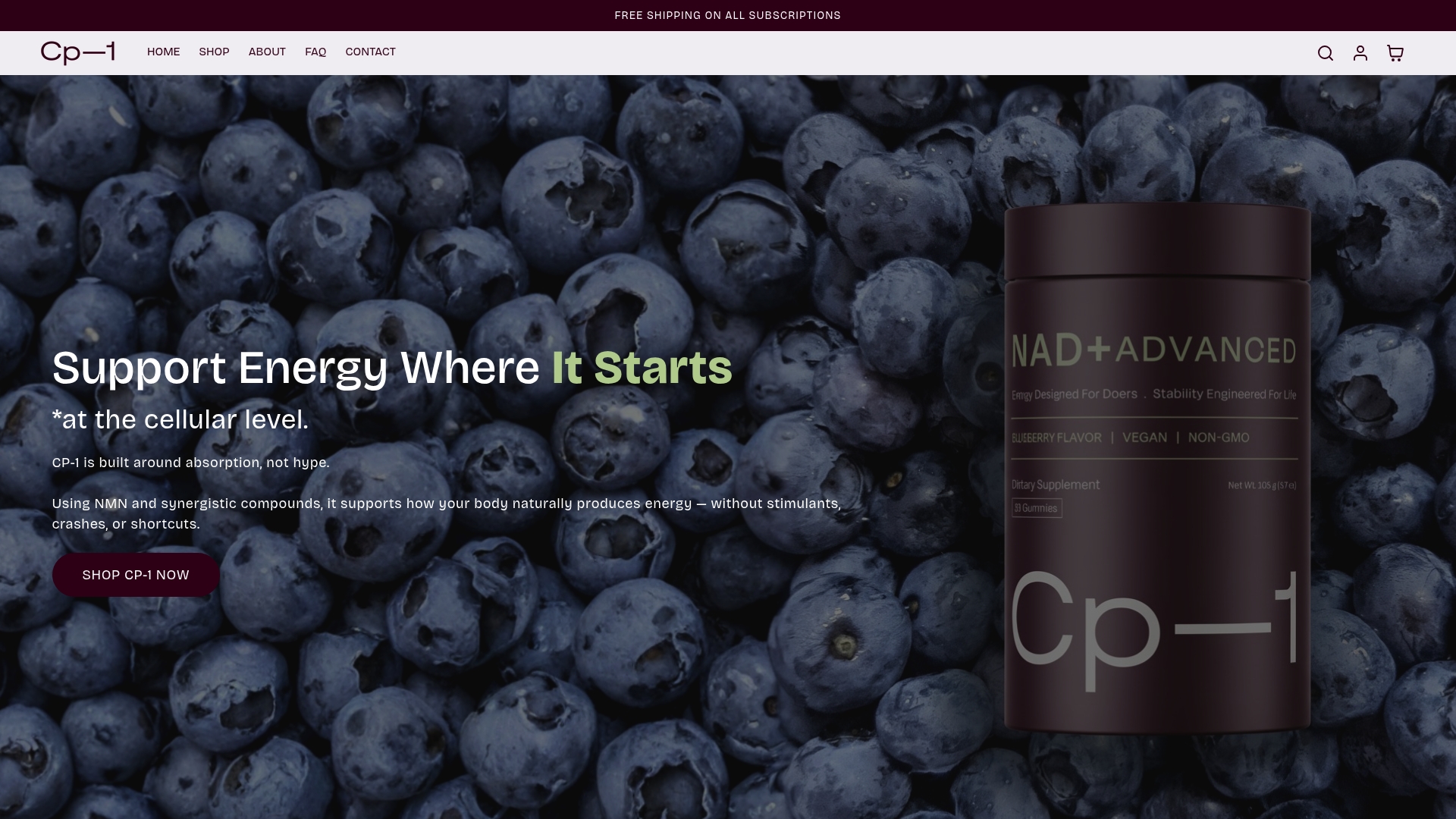
At CP-1, every ingredient is chosen because the science supports it, not because it photographs well on a marketing deck. Our CP-1 NAD+ Advanced Supplement is third-party tested, vegan, non-GMO, and made in the US. If you want to understand exactly why each ingredient earns its place, our ingredient science page lays it all out without the hype. No auto-subscriptions. No buried fine print. Just transparency and results you can actually track.
Frequently asked questions
Are there truly free bodybuilding supplements?
Yes, but they’re rare. Truly free bodybuilding supplements are typically limited to single-use promotional samples from brands, often requiring a sign-up or feedback submission.
Is creatine safe and effective for building muscle?
Creatine is safe for most healthy adults and consistently shown to increase lean muscle mass when paired with resistance training. Creatine monohydrate remains the most evidence-backed natural supplement available.
Should I take BCAAs or glutamine if offered for free?
Most people get no meaningful muscle-building benefit from BCAAs or glutamine if their diet already provides adequate protein. The evidence for these supplements is weak for healthy athletes eating enough.
How can I avoid scams with free bodybuilding supplements?
Always check for third-party testing certifications, read the full terms before entering payment info, and be skeptical of any offer that requires a credit card for “free” products. Auto-subscription traps are the most common complaint tied to free supplement offers.