
Most people assume that if you want more energy, you need caffeine. That logic is so baked into supplement culture that questioning it feels almost radical. But here’s the problem: stimulants like caffeine and synephrine don’t actually create energy. They borrow it. They push your nervous system harder, and eventually, you pay that debt back with a crash, jittery anxiety, or disrupted sleep. Non-stimulant energy solutions, especially those built around NMN (Nicotinamide Mononucleotide) and mitochondrial support, work differently. They help your cells generate energy from the inside out. No spike, no crash, no dependency. This guide breaks down exactly how that works and why it matters.
Table of Contents
- What are non-stimulant energy boosters?
- How non-stimulant energy supports the body and brain
- Non-stimulant vs stimulant: direct comparison
- Who should choose non-stimulant energy and how to get started
- Why ‘energy’ shouldn’t mean a stimulant rush
- Try evidence-based non-stimulant energy with CP-1
- Frequently asked questions
Key Takeaways
| Point | Details |
|---|---|
| Sustainable energy boost | Non-stimulant supplements support lasting energy by improving cellular function, not just masking fatigue. |
| Brain and body benefits | Ingredients like NMN and Lion’s Mane in CP-1 enhance focus and endurance through proven biological pathways. |
| Reduced crash and side effects | Non-stimulant options avoid the jitters and crashes common with stimulants like caffeine. |
| Choose evidence-based formulas | Select products with clear ingredient science for the best results in your daily routine. |
What are non-stimulant energy boosters?
Now that we’ve recognized the pitfalls of traditional stimulants, let’s clarify what non-stimulant energy actually means.
A stimulant works by activating your central nervous system. Caffeine, for example, blocks adenosine receptors, which are the receptors that signal tiredness, and forces your brain into alertness. Synephrine and other adrenergic compounds trigger adrenaline-like responses. The result feels like energy, but it’s really just your body being pushed past its natural state. When the stimulant wears off, fatigue often returns harder than before.
Non-stimulant energy boosters take a completely different route. Instead of forcing alertness through neurochemical manipulation, they support the biological systems that produce energy naturally. Think of it as fixing the engine rather than flooring the gas pedal.
The most important pathway here is NAD+ (Nicotinamide Adenine Dinucleotide), a coenzyme your cells use to convert food into usable energy inside the mitochondria. NAD+ levels decline with age, which is a major reason why energy and mental sharpness tend to drop over time. NMN is a direct precursor to NAD+, meaning your body uses it to rebuild those depleted levels. NMN in CP-1 boosts cellular energy by elevating NAD+ levels, supporting mitochondrial function, energy expenditure, endurance, and cognitive clarity without stimulant effects, and those benefits accumulate over time.
Other well-researched non-stimulant ingredients include:
- NMN: Raises NAD+ to fuel mitochondrial energy production
- Creatine: Replenishes ATP (your cells’ direct energy currency) for physical output
- Lion’s Mane mushroom: Supports nerve growth factor and cognitive function
- Coenzyme Q10: Assists mitochondria in producing energy efficiently
- Reishi and turkey tail mushrooms: Provide adaptogenic and immune support
One thing worth knowing: non-stimulant energy is cumulative. You won’t feel a jolt in 20 minutes. Instead, you build a stronger cellular foundation over days and weeks. That’s a feature, not a flaw. You can explore the full NMN supplement details to see how these ingredients work together.
| Energy booster | Mode of action | Onset | Duration | Key effects |
|---|---|---|---|---|
| Caffeine | Adenosine receptor blockade | 15-30 min | 4-6 hours | Alertness, jitters, crash |
| NMN | NAD+ elevation, mitochondrial support | Days to weeks | Cumulative | Sustained energy, clarity |
| Creatine | ATP replenishment | Days | Cumulative | Physical power, endurance |
| Lion’s Mane | Nerve growth factor support | Weeks | Cumulative | Focus, cognitive resilience |
| Synephrine | Adrenergic stimulation | 30-60 min | 3-5 hours | Thermogenesis, anxiety risk |
How non-stimulant energy supports the body and brain
With a definition in place, let’s see exactly how non-stimulant energy boosters affect your body and mind.

At the cellular level, NMN’s primary job is to restore NAD+. When NAD+ is abundant, your mitochondria run more efficiently. That means better conversion of nutrients into ATP, less oxidative stress, and more consistent physical output throughout the day. Research on NAD+ and cognitive clarity shows this isn’t just theory. Improved mitochondrial function translates to real-world endurance and reduced fatigue.
For the brain specifically, the picture gets even more interesting. Stimulants push focus by flooding your system with dopamine and norepinephrine. That feels sharp in the short term, but repeated overstimulation of those pathways carries real risks, including tolerance, mood swings, and dependency. Non-stimulant nootropics work differently.
Stimulants hijack dopamine and norepinephrine pathways to force focus, but repeated overactivation creates tolerance and emotional instability. Non-stimulant ingredients like Lion’s Mane support focus through neurogenesis and stress adaptation, building capacity rather than borrowing it.
Lion’s Mane brain support works by promoting nerve growth factor (NGF), which supports the growth and maintenance of neurons. That’s a fundamentally different mechanism than stimulant-driven focus. It’s slower, but it builds actual cognitive capacity rather than just masking fatigue.
Here are the three main outcomes you can expect from consistent non-stimulant energy support:
- Physical endurance: Better mitochondrial efficiency means you can sustain effort longer without early fatigue signals
- Cognitive clarity: NGF support and NAD+ restoration improve working memory, attention, and mental stamina
- Emotional steadiness: Without the cortisol spikes and crashes of stimulants, mood stays more stable throughout the day
Pro Tip: Don’t judge a non-stimulant supplement after one dose. Track your energy, focus, and mood over two to four weeks. The changes are real, but they’re gradual and cumulative, which is exactly what you want from a long-term wellness strategy.
Non-stimulant vs stimulant: direct comparison
Understanding mechanism is one thing, but how do non-stimulant boosters stack up directly against stimulants in practice?
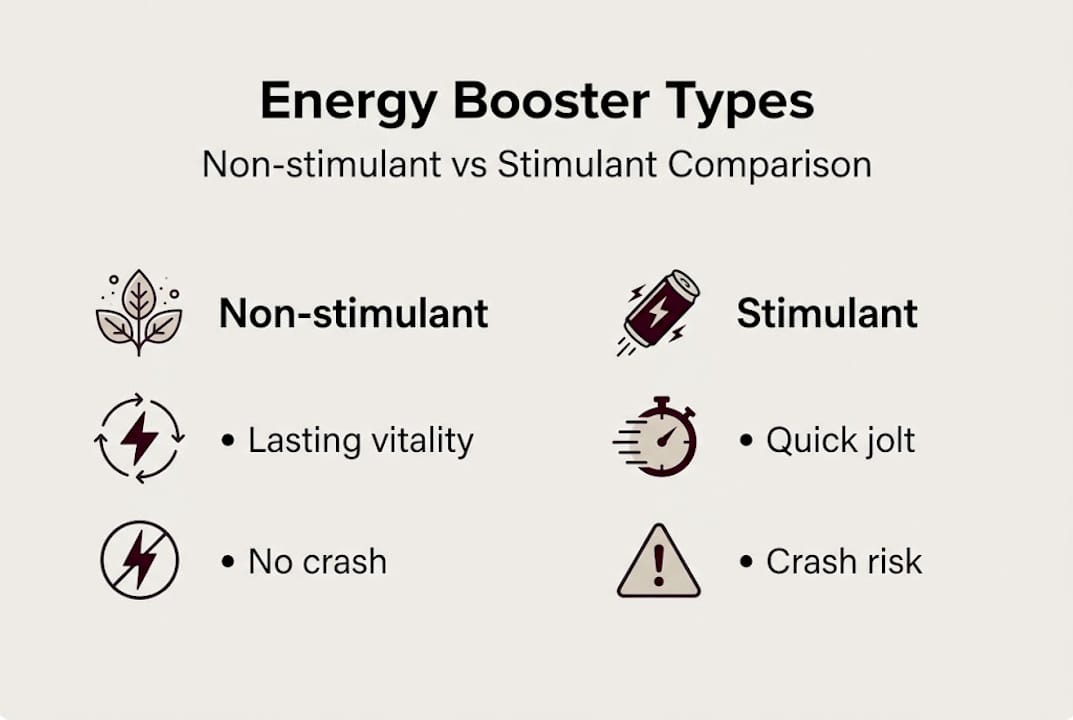
The honest answer is that they serve different purposes, and knowing which fits your goals matters. Stimulants are fast and obvious. You feel them. Non-stimulants are quieter but often more durable. Here’s a direct comparison:
| Factor | Non-stimulant (NMN, creatine) | Stimulant (caffeine, synephrine) |
|---|---|---|
| Onset | Days to weeks | 15-60 minutes |
| Duration | Cumulative, long-term | 3-6 hours |
| Habit-forming | No | Yes (caffeine tolerance) |
| Side effects | Minimal, well-tolerated | Jitters, anxiety, sleep disruption |
| Brain impact | Neurogenesis, NAD+ support | DA/NE stimulation, tolerance risk |
| Best for | Long-term vitality, cognition | Short-term alertness, acute performance |
For most goals that health-conscious people care about, non-stimulant approaches hold up well:
- Long-term focus and cognitive performance: Non-stimulants win. Building NAD+ and NGF support creates durable mental capacity.
- Stress adaptation and mood stability: Adaptogens and mitochondrial support outperform stimulants, which often worsen stress response.
- Endurance and sustained output: Non-stimulants like creatine and NMN support ATP and mitochondrial function without the cardiovascular strain of stimulants.
- Immediate pre-workout kick: Stimulants have the edge here, though at the cost of dependency and recovery.
One important caution: not every non-stimulant formula is worth your money. As the expert take on non-stim formulas makes clear, marketing hype in this space often exceeds the actual evidence. Some blends use underdosed or poorly researched ingredients just to fill a label. Stick to products built around proven isolates with transparent dosing and third-party testing.
Ingredient transparency isn’t optional. If a company won’t tell you exactly what’s in their formula and at what dose, that’s a red flag. Real science doesn’t need to hide behind proprietary blends.
Who should choose non-stimulant energy and how to get started
Having weighed the options, here’s how to decide if non-stimulant energy fits your lifestyle and how to try it yourself.
Non-stimulant energy is a strong fit if you:
- Are sensitive to caffeine or experience anxiety, heart palpitations, or sleep issues with stimulants
- Want cognitive support that builds over time rather than spikes and fades
- Are focused on long-term health optimization and cellular longevity
- Train regularly and want endurance support without cardiovascular stress
- Are in your 30s or older and noticing that your natural energy and mental sharpness have shifted
NMN research findings confirm that non-stimulant pre-workout and wellness ingredients improve endurance, power output, and reduce fatigue, with NMN specifically showing increased energy expenditure in research models. That’s not marketing copy. That’s peer-reviewed data.
Here’s how to make the transition from stimulant-based to non-stimulant energy support:
- Audit your current stack. Write down every supplement and beverage that contains caffeine or stimulants. Knowing what you’re working with helps you taper gradually rather than quitting cold turkey, which can cause withdrawal headaches.
- Introduce a quality non-stimulant formula. Start with starting with NMN at the recommended dose. Consistency matters more than timing. Take it daily.
- Track results over four to six weeks. Use a simple journal or notes app to log energy levels, focus quality, mood, and sleep. You’re looking for a trend, not a single day’s performance.
Pro Tip: If you’re tapering off caffeine, reduce your intake by 25% each week rather than stopping all at once. This minimizes withdrawal effects while your non-stimulant foundation builds up.
Always check for third-party testing and clear research backing before committing to any supplement. Quality manufacturing, vegan and non-GMO certifications, and US-based production are markers worth looking for.
Why ‘energy’ shouldn’t mean a stimulant rush
With the facts on the table, here’s a deeper take on what real energy should mean.
I’ve watched the supplement industry sell the same idea for decades: energy equals a rush. A jolt. Something you feel immediately, or it doesn’t count. That framing is wrong, and it’s kept a lot of people stuck in a caffeine cycle that never actually solves the underlying problem.
Real energy is waking up clear-headed without needing a stimulant to function. It’s maintaining focus through the afternoon without a second cup of coffee. It’s feeling physically capable and mentally present at the end of a long day. That kind of energy doesn’t come from blocking adenosine receptors. It comes from well-supported mitochondria, healthy NAD+ levels, and a brain that’s being nourished rather than pushed.
The real-world results with CP-1 reflect this. People don’t report a buzz. They report feeling like themselves again, steadier, sharper, and more resilient over time. That’s the kind of energy worth building. Not a borrowed rush, but something that’s genuinely yours.
Try evidence-based non-stimulant energy with CP-1
If you’re ready to put knowledge into action, here’s where to get started.
CP-1 was built specifically for people who are done with the stimulant cycle and want something that actually supports their biology. The formula combines NMN, Lion’s Mane, Reishi, Turkey Tail, and CoQ10, all at research-informed doses, with third-party testing and full ingredient transparency.
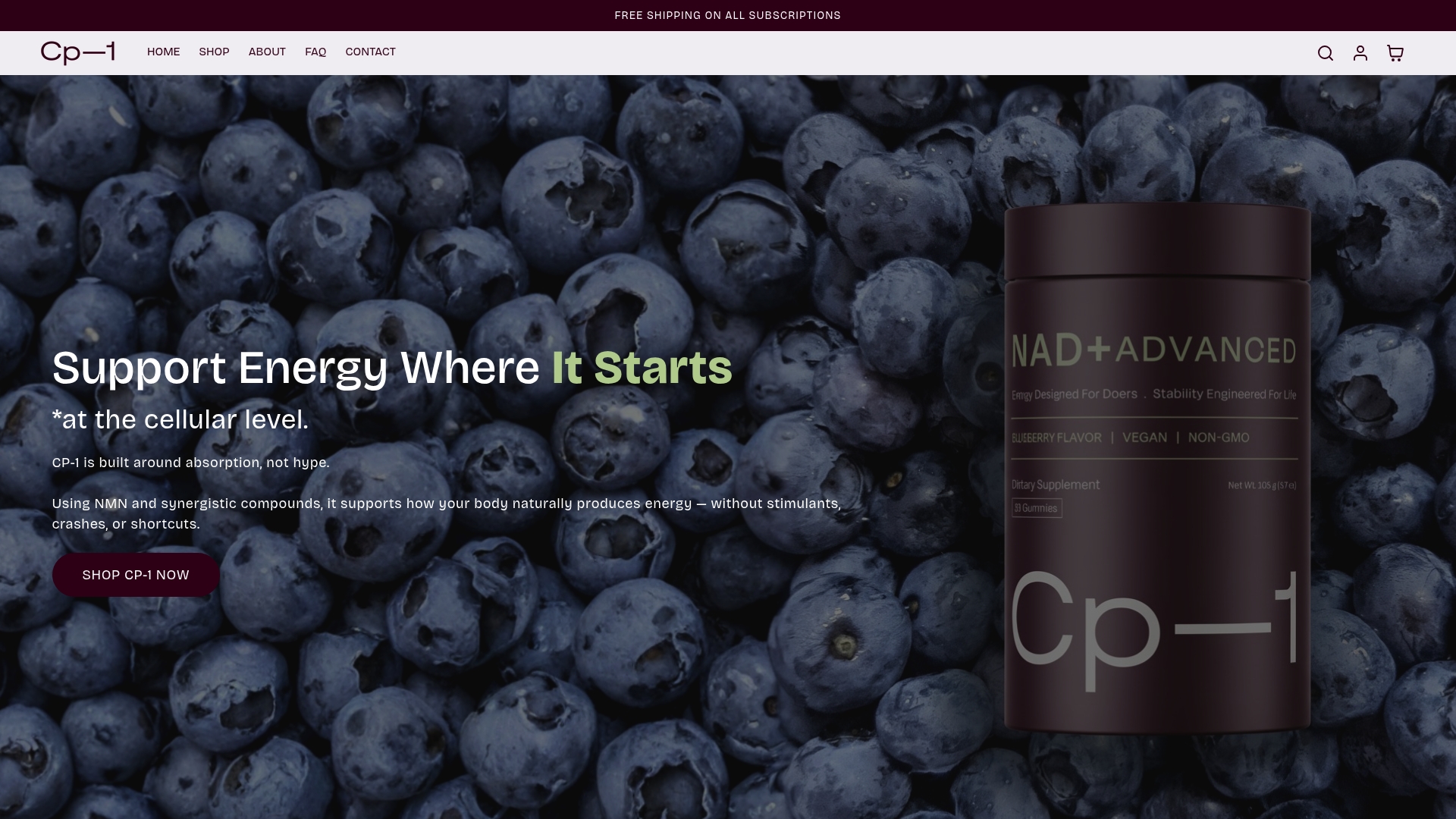
This isn’t a product designed for a marketing deck. It’s formulated for the person taking it every day. If you want cumulative, stimulant-free energy support backed by real science, shop CP-1 NMN and read through the see CP-1 science to understand exactly what’s in it and why. Your energy baseline can genuinely improve. Give it the time it deserves.
Frequently asked questions
What makes non-stimulant energy different from caffeine?
Non-stimulant energy works by supporting cellular processes like NAD+ production and mitochondrial function, while caffeine forces alertness by blocking adenosine receptors. CP-1 demonstrates how NMN builds energy from the inside out, with benefits that accumulate rather than spike and crash.
Is there a quick boost with non-stimulant supplements?
Non-stimulant supplements typically don’t deliver an immediate kick, and that’s by design. As stimulant-free pre-workouts analysis confirms, the best results come from consistent use over time, not a single-dose effect.
Are non-stimulant energy supplements safe for daily use?
Yes, evidence-backed non-stimulant supplements like NMN are designed for daily ongoing support. NMN endurance research shows strong safety profiles alongside measurable improvements in energy expenditure and fatigue reduction.
Who should avoid stimulants in their supplements?
Anyone sensitive to caffeine, managing heart concerns, or prioritizing long-term vitality without dependency or crashes should strongly consider switching to non-stimulant alternatives.
How do I start with non-stimulant energy products like CP-1?
Start at the recommended daily dose, stay consistent, and track your energy, mood, and focus over several weeks. Gradual, cumulative improvement is the goal.