
To increase longevity naturally, prioritize consistent movement, a plant-forward diet with adequate protein, seven-plus hours of sleep, stress reduction, social connection, and regular preventive care. That’s the short version. The Physical Activity Guidelines for Americans and Harvard Health’s five pillars both point to the same handful of levers, and a 2026 eClinicalMedicine analysis found that tiny daily upgrades, not dramatic overhauls, moved the needle most for people starting from poor habits.
Here’s where to put your energy first:
- Move most days. Aerobic activity plus resistance training twice a week does more for lifespan than either alone.
- Eat plant-forward with real protein. Half your plate in vegetables, adequate protein at every meal, less refined carbohydrate.
- Sleep 7 to 9 hours, consistently. A stable wake time beats chasing a “perfect” bedtime.
- Protect your social ties. Isolation carries mortality risk comparable to smoking in several long-running studies.
- Don’t smoke, limit alcohol. Still the single highest-yield behavior change available to most adults.
- Keep up with screenings. Blood pressure, cholesterol, and cancer screenings catch problems while they’re still cheap to fix.
Key Takeaways
The most effective way to increase longevity naturally is stacking small, consistent changes across movement, nutrition, sleep, stress management, and preventive care rather than chasing one dramatic fix.
| Point | Details |
|---|---|
| Start small, not big | Tiny daily changes in sleep, exercise, and diet were tied to roughly a year of added life expectancy in people with poor baseline habits. |
| Combine cardio and resistance training | Aim for 150 minutes of moderate cardio plus two resistance sessions weekly, especially after 40. |
| Protein matters more with age | Target 1.0 to 1.2 g/kg of body weight daily to preserve muscle and bone density. |
| Protect sleep consistency | A steady wake time often beats chasing a perfect number of hours. |
| Don’t smoke, screen regularly | Quitting smoking remains the single highest-yield longevity behavior available. |
| Supplements are a complement, not a fix | CP-1’s NAD+ Advanced Supplement offers an evidence-framed option for cellular energy and cognitive support alongside lifestyle basics. |
Table of Contents
- Nutrition Strategies to Increase Longevity Naturally
- What Exercise Actually Extends Your Lifespan?
- How Many Hours of Sleep Do You Need for Longevity?
- Does Social Connection Really Affect How Long You Live?
- Which Preventive Screenings Matter Most for a Longer Life?
- Do Supplements Like NMN Actually Support Longevity?
- How Do You Build Longevity Habits That Actually Stick?
- A One-Week Starter Plan You Can Copy Today
- Where CP-1 Fits Once Your Basics Are Covered
- Sources
Nutrition Strategies to Increase Longevity Naturally
The dietary pattern with the strongest track record isn’t a fad. Plant-forward, Mediterranean-style eating is consistently linked to lower all-cause mortality, a finding Harvard Health has summarized from JAMA Network Open research on dietary patterns. The takeaway isn’t complicated: more vegetables, more whole grains, more legumes, less processed and red meat.
Protein matters more as you age. Adults over 40 should target roughly 1.0 to 1.2 grams per kilogram of body weight daily, according to guidance from Stanford Medicine on healthy aging. For a 165-pound person, that’s around 75 to 90 grams spread across three meals and a snack, not stacked into one dinner where your body can’t use it efficiently.
By the numbers: Small, cumulative diet upgrades (more vegetables, more whole grains, less added sugar) were part of the combination of changes tied to roughly one added year of life expectancy in the eClinicalMedicine analysis covering people with previously poor habits.
Simple rules beat complicated meal plans. Fill half your plate with vegetables, a quarter with whole grains, a quarter with healthy protein, an approach Harvard Medical School’s Healthy Eating Plate has promoted for years. Anchor meals with protein, fiber, and healthy fat to blunt glucose spikes from refined carbs. Support your gut microbiome with fiber-rich and fermented foods, drink water consistently through the day, and if you’re curious about time-restricted eating, treat it as optional. It works for some people’s schedules and derails others; it’s not a prerequisite for longevity.
Pro Tip: Swap your afternoon processed snack for a handful of nuts plus a piece of fruit or plain yogurt. It’s a two-minute change that hits protein, fiber, and blood sugar stability at once.
What Exercise Actually Extends Your Lifespan?

Combine aerobic activity, 150 minutes of moderate intensity or 75 minutes vigorous per week, with resistance training at least twice weekly if you’re over 40. That combination outperforms cardio alone because muscle and bone density decline steadily after 40, and resistance work is the primary countermeasure. It also creates the demand that makes your protein target actually useful.
A sample week that fits into most schedules:
- Monday: 30-minute brisk walk
- Tuesday: 30 to 40 minutes of resistance training (full body)
- Wednesday: 30-minute walk or bike ride
- Thursday: 30 to 40 minutes of resistance training
- Friday: rest or light stretching
- Saturday: 40 to 60 minutes of any activity you enjoy
- Sunday: rest
Exercise targets at a glance:
- 150 min/week moderate cardio, or 75 min vigorous
- 2+ resistance sessions per week
- Protein intake matched to activity (1.0 to 1.2 g/kg for adults over 40)
Pro Tip: If you’re sedentary now, don’t aim for 45 minutes on day one. NBC News reporting on recent studies found that going from zero to just 10 minutes of daily activity produces a disproportionately large drop in mortality risk, and benefits taper off past roughly 40 to 50 minutes a day anyway.
How Many Hours of Sleep Do You Need for Longevity?
Aim for 7 to 9 hours, but treat consistency as the bigger lever. Harvard Health notes that holding a steady wake time is often more achievable, and just as valuable, as chasing a flawless sleep schedule.
A short sleep-hygiene checklist:
- Wake up at the same time every day, weekends included
- Get morning sunlight within an hour of waking
- Set a screen curfew 30 to 60 minutes before bed
- Build a short wind-down ritual (reading, stretching, dim lights)
- Limit alcohol in the hours before bed. It fragments sleep even when it helps you fall asleep faster
Hydration plays a supporting role here too. Large observational research covering more than 11,000 adults links good hydration habits to better long-term health outcomes, even though it’s not a headline pillar on its own. Pair rest days with resistance training, use short naps if you’re sleep-deprived, and keep active recovery days easy on purpose.
Pro Tip: Track wake time for two weeks before you touch anything else about your sleep. Most people find their real problem is inconsistency, not duration.
Does Social Connection Really Affect How Long You Live?
Prioritize the stress regulators your body actually responds to: movement, sleep, and trusted relationships, ahead of relaxation apps or standalone mindfulness routines. Research summarized in Harvard’s longevity coverage ties social connection and optimism to longer, healthier lives, and the effect holds up alongside diet and exercise, not beneath them.
Dr. Nir Barzilai points to physical and social behaviors, movement, sleep, and time with trusted people, as more dependable stress regulators than mental-only interventions on their own.
Habits worth building:
- Schedule one recurring, low-pressure social contact weekly (a standing call, a walk with a friend)
- Join a group activity tied to something you already enjoy, not a forced networking event
- Take short movement breaks during stressful workdays to reset your nervous system
- Add light cognitive engagement daily: a puzzle, a new recipe, a language app
If stress tips into persistent anxiety or depression, that’s a conversation for a clinician, not a habit tracker. Ignoring it undercuts every other change on this list.
Pro Tip: Pick a friend who’s also trying to build healthier habits and check in weekly. Shared accountability beats solo willpower most of the time.
Which Preventive Screenings Matter Most for a Longer Life?
Keep up with recommended screenings and vaccinations, and if you smoke, quitting is the single highest-yield change available to you. Johns Hopkins Medicine’s summary of large cohort data found four behaviors, not smoking, maintaining a BMI under 25, moving about 30 minutes daily, and eating a Mediterranean-style diet, strongly linked to increased survival, with not smoking carrying the largest individual effect.
Priority checks for midlife:
- Blood pressure and cholesterol, annually
- Diabetes screening, especially with a family history
- Colonoscopy starting at the age your provider recommends
- Age-appropriate vaccinations, updated yearly
- Reduce exposure to air pollution and secondhand smoke where you can
- Improve indoor air quality with ventilation or a filter in high-traffic rooms
- Cut down on household chemical exposure, especially in cleaning products
Seek immediate care for chest pain, sudden vision changes, or unexplained weight loss. Otherwise, book an annual wellness visit and build an actual relationship with a provider who knows your history.
Do Supplements Like NMN Actually Support Longevity?
Supplements can complement lifestyle changes. They don’t replace diet, movement, sleep, and preventive care, and no honest brand should tell you otherwise. That’s a limitation, not a dodge.
The evidence base for individual ingredients varies. NMN is studied for its role in supporting NAD+ levels, which decline with age and matter for cellular energy production. Mushroom extracts like lion’s mane and reishi are studied for cognitive resilience and stress adaptation. None of this rises to “cures aging.” It’s supportive, not corrective.
If you’re evaluating supplements, look for:
- Third-party testing for purity and potency
- Vegan and non-GMO ingredient sourcing
- US manufacturing under GMP certification
- Transparent, honest dosing on the label, not a proprietary blend hiding the actual amounts
CP-1’s NAD+ Advanced Supplement combines NMN with lion’s mane, reishi, turkey tail, and CoQ10, an evidence-framed formulation for people already prioritizing cellular energy and cognitive support as part of a broader routine. It’s manufactured in the US under GMP standards with third-party testing. If you’re on medication, check for interactions and talk to a healthcare provider before adding anything new, especially with NMN alongside prescriptions like metformin.
Pro Tip: Introduce one new supplement at a time, and give it four to six weeks before judging whether it’s doing anything. Stacking five changes at once makes it impossible to know what’s actually working.
| Point | Details |
|---|---|
| Supplements support, don’t replace | Diet, sleep, and movement remain the foundation; supplements fill gaps around the edges. |
| Check the label, not the marketing | Third-party testing and transparent dosing matter more than bold claims. |
| CP-1 as one evidence-framed option | Combines NMN, mushroom extracts, and CoQ10 for cellular energy and cognitive support. |
How Do You Build Longevity Habits That Actually Stick?
Incremental, consistent changes beat dramatic overhauls. Professor Glenn Gaesser’s research notes that past behavior predicts future behavior better than motivation does, which is why one sustainable micro-habit outperforms five habits you’ll quit in three weeks.
A four-step method for testing new habits:
- Pick one pillar: sleep, movement, nutrition, or stress
- Choose a 2 to 10 minute version of the change
- Schedule a specific trigger (after coffee, before bed, at lunch)
- Measure it daily for 14 to 30 days before adding anything else
Examples by pillar:
- Sleep: move bedtime 15 minutes earlier
- Movement: a 10-minute walk after lunch
- Nutrition: add one cup of vegetables at dinner
- Stress: a five-minute call with a friend twice a week
Pro Tip: Use a simple paper checkbox or a habit-tracking app. Complexity is the enemy here. If tracking takes more than 10 seconds, you’ll abandon it before the habit forms.
A One-Week Starter Plan You Can Copy Today
You don’t need a perfect plan, just a plan you’ll actually follow. Scale each item to your fitness level and time available.
- Movement: 10 to 30 minutes daily (walk, resistance session, or both)
- Nutrition swap: one meal a day built around the half-plate vegetable rule
- Sleep: fixed wake time, every single day this week
- Social/stress practice: one recurring check-in with a friend or family member
Copy this checklist into a notes app or habit tracker:
- [ ] Move today (any amount counts)
- [ ] One vegetable-forward meal
- [ ] Consistent wake time
- [ ] One social touchpoint this week
- [ ] Screen curfew before bed
Why these steps reflect our approach
We built this guide around evidence, not trends. Small, sustained changes work better than overhauls, and that’s the same philosophy behind everything we make.
Where CP-1 Fits Once Your Basics Are Covered
Once you’ve got movement, sleep, and nutrition running consistently, a supplement can round out the gaps that diet alone doesn’t always close, particularly around cellular energy as NAD+ levels naturally decline with age.
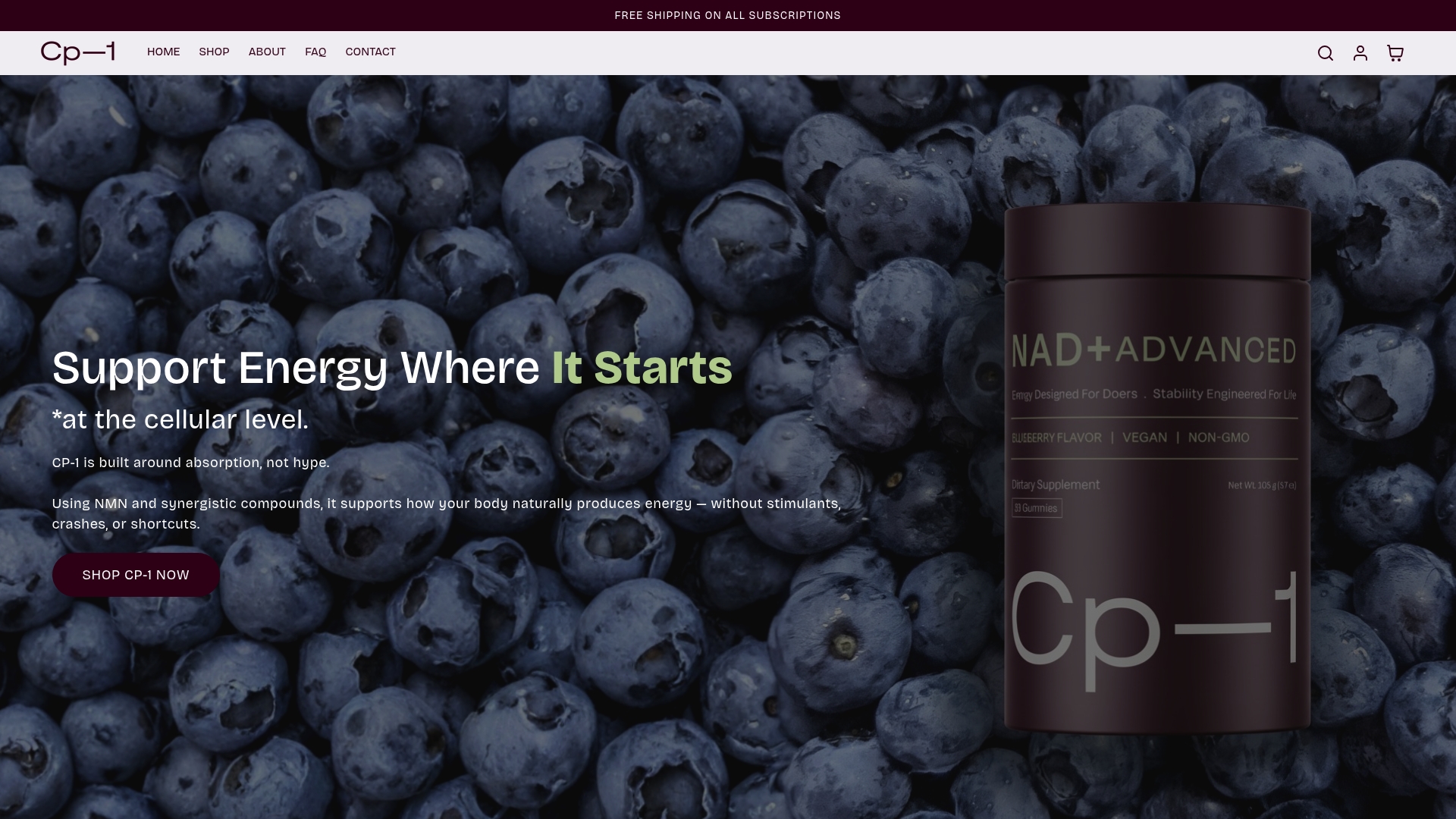
CP-1’s NAD+ Advanced Supplement combines NMN with lion’s mane, reishi, and turkey tail mushroom extracts plus CoQ10, formulated to support cellular energy production, cognitive clarity, and immune resilience. It’s vegan, non-GMO, manufactured in the US under GMP certification, and third-party tested, so you’re not guessing what’s actually in the gummy. We’re not claiming it reverses aging; we’re saying it’s built with honest dosing for people who’ve already put in the work on the fundamentals covered in this guide. If you want the details on ingredients, sourcing, and how it fits into a daily routine, check out the full product page and see if it makes sense for your routine.
Sources
For deeper context beyond this guide, these sources cover the research in more detail:
- Scientific American: Want to live longer? The tiniest of lifestyle changes can dramatically boost longevity
- Harvard Health: The 5 pillars of longevity
- Stanford Medicine: Healthy habits for longevity in your 40s and 50s
- Johns Hopkins Medicine: 4 top ways to live longer
- NBC News: Want to live longer? Making small changes might be enough, two large studies find
This article is general information, not a substitute for advice from a qualified doctor. Consult a qualified healthcare professional about your own circumstances before acting on anything here.