
Yes, NMN is lawful for use in dietary supplements in the United States. The FDA confirmed this on September 29, 2025, reversing a position it had held since late 2022. NMN still carries New Dietary Ingredient (NDI) status, which means manufacturers have real paperwork obligations, and not every product on the market is playing by the rules.
I’ve spent enough time reading supplement labels and watching this industry cut corners to know that “legal” and “trustworthy” aren’t the same word. The FDA’s letter settled the legal question. It didn’t vet every bottle sitting on a shelf.
Here’s what to do with that information right now:
- Check whether your NMN supplier can show you a current Certificate of Analysis (COA).
- Look for a supplier that references its NDIN filing or relies on a supplier whose ingredient already cleared that process.
- Talk to your doctor before starting NMN if you take other medications or have an existing health condition; nutritional therapy can often complement safe supplement use to support your broader health goals (Nutritional Therapy | Compassion Chiroprac).
Key Takeaways
NMN is legally sold in U.S. dietary supplements following FDA’s September 2025 reversal, but buyers still need to verify NDIN compliance and third-party testing before trusting any specific brand.
| Point | Details |
|---|---|
| FDA reversal is final for now | FDA confirmed on September 29, 2025 that NMN is not excluded from the supplement definition. |
| NDI status still applies | Manufacturers need an NDIN filing or must source from a supplier that already has one. |
| Legal doesn’t mean vetted | Always check for a current COA, named testing lab, and GMP certification before buying. |
| Watch for drug-style claims | Supplements can’t legally claim to treat or cure disease, regardless of ingredient legality. |
| CP-1 meets compliance markers | CP-1’s NAD+ Advanced Supplement uses U.S.-based GMP manufacturing and third-party testing alongside NMN, lion’s mane, reishi, turkey tail, and CoQ10. |
Table of Contents
- Is NMN Legal in the USA? What the FDA Actually Decided
- Can I Buy NMN Supplements Legally in the USA Right Now?
- What Are NDI and NDIN Requirements for NMN Manufacturers?
- Is NMN Safe to Use, and What Should the Label Tell You?
- How CP-1 Evaluates Regulatory Compliance and Product Quality
- Do Any States Restrict or Regulate NMN Supplements?
- Is NMN Classified as a Supplement or a Drug?
- What Happens if a Company Breaks NMN Supplement Rules?
- How Does NMN Legality Affect Importing and Exporting Products?
- What Can You Do if You Bought an Adulterated NMN Product?
- Why the Real Risk With NMN Isn’t Legal, It’s Quality
- Where CP-1 Fits Into a Compliant NMN Purchase
- Frequently Asked Questions
- Sources
Is NMN Legal in the USA? What the FDA Actually Decided
The short version: FDA looked at the statute again and concluded NMN doesn’t fall under the “drug exclusion” clause of the Dietary Supplement Health and Education Act. That clause, sometimes called the race-to-market rule, blocks an ingredient from supplement status if it was already authorized for investigation as a new drug before anyone marketed it as a supplement. FDA’s earlier read said NMN got excluded this way in 2022. Its new read says that was wrong.
The agency’s formal response to citizen petitions leans on a specific fact: evidence showed NMN products were marketed in the U.S. as early as 2017, before the drug investigation that triggered the original exclusion. FDA also clarified that the earlier marketing did not need to have been technically “lawful” to count for this exclusion analysis. It just had to have happened.
A few things FDA did not do:
- It didn’t define exactly what counts as “substantial clinical investigations” in general terms, so future ingredients in similar gray zones still face case-by-case fights.
- It didn’t issue sweeping interpretive guidance that other ingredient categories can lean on.
- It didn’t say every NMN product currently for sale is automatically compliant.
Quick fact: Natural Products Association reported that FDA granted key parts of the citizen petition and explicitly stated it will no longer treat NMN as excluded under DSHEA’s race-to-market clause, a reversal industry groups had pushed for since 2022.
Can I Buy NMN Supplements Legally in the USA Right Now?
Yes. NMN supplements can be sold legally in the United States when the manufacturer meets dietary supplement requirements, including NDI obligations. That’s the plain answer. The messier answer is why some retailers pulled NMN products off shelves in the first place and why that inventory hasn’t all rushed back yet.
Big marketplaces don’t like ambiguity. When FDA’s 2022 position created legal uncertainty, retailers treated NMN as a liability risk rather than fight it out ingredient by ingredient. Retailers often lag behind agency clarity because internal risk reviews move slower than regulatory news. Expect gradual relisting on Amazon and similar platforms rather than an overnight flood.
Before you buy, run through this quick checklist:
- Ask for the current COA and confirm it matches the batch number on your bottle.
- Search for the brand’s NDIN reference or confirmation that their supplier already filed one.
- Confirm the product was made in a GMP-certified facility with third-party testing, not just “quality tested” marketing language.
Pro Tip: Save the COA and batch number from every bottle you buy. If a formula ever gets flagged for adulteration, that paperwork is your fastest path to a refund or replacement.
What Are NDI and NDIN Requirements for NMN Manufacturers?
An NDI, or New Dietary Ingredient, is any dietary ingredient that wasn’t sold in the U.S. supplement market before October 15, 1994. NMN falls into this bucket. Before a company can market a genuinely new NDI in interstate commerce, it typically must file a New Dietary Ingredient Notification (NDIN) with FDA at least 75 days ahead of time, unless it’s sourcing from a supplier whose ingredient already cleared that notification.
This isn’t paperwork for paperwork’s sake. It’s the mechanism that lets FDA review safety data before an ingredient reaches your kitchen counter.
The practical stakes for consumers:
- A brand that skips the NDIN process, or can’t point to a supplier who filed one, is operating in a legal gray zone even after FDA’s reversal.
- Products from noncompliant manufacturers risk enforcement action, forced removal from marketplaces, or adulteration claims down the line.
- Legal commentators at Venable note that the reversal actually raises the compliance bar. NMN brands now face more scrutiny of their supply chains and paperwork, not less.
If you want to check the primary documents yourself, Regulations for the NMN citizen petition, including FDA’s responses and supporting materials. It’s dense reading, but it’s the ground truth rather than a summary of a summary.
Is NMN Safe to Use, and What Should the Label Tell You?
Clinical research on NMN is still developing. Clinicaltrials on NAD+ precursors, and most published trials so far are small and short in duration. That doesn’t mean NMN is dangerous. It means the long-term picture isn’t fully written yet, and anyone telling you otherwise is overselling the science.

Forbes Health’s rundown on NMN notes commonly reported mild effects like nausea, headache, or fatigue at higher doses, alongside the point that regulatory status shifted after 2022. If you take medication for blood sugar, blood pressure, or anything metabolic, talk to your doctor before adding NMN. Supplements interact with prescriptions more often than labels admit.
Quick fact: small human trials and ongoing registered studies represent the current evidence base for NMN. That’s meaningfully different from “large-scale, long-term proof,” and any brand implying otherwise is stretching the truth.
Here’s your quality checklist before you trust a bottle:
- Third-party COA available on request or posted publicly.
- Named independent testing lab, not a vague “tested for purity” claim.
- GMP-certified manufacturing facility, ideally U.S.-based.
- Clear sourcing information for the raw NMN ingredient.
- Dosing spelled out in milligrams per serving, not hidden behind a proprietary blend.
For a deeper look at how NMN stacks up against related NAD+ boosters, our comparison of NMN and NAD supplements breaks down the differences in absorption and evidence.
How the NMN Legal Timeline Unfolded
- 2017: Evidence shows NMN products already being marketed in the U.S., a fact that later became central to FDA’s reversal.
- 2020 to 2022: Clinical interest grows, and early NDIN activity begins as more brands enter the category.
- November 2022: FDA takes the position that NMN is excluded from the supplement definition under the drug preclusion clause.
- 2023: Industry groups, including NPA, file a citizen petition challenging that exclusion.
- September 29, 2025: FDA formally reverses course, confirming NMN is not excluded and remains available as a dietary supplement ingredient.
How CP-1 Evaluates Regulatory Compliance and Product Quality
We look for the same three things every time we assess an NMN product: third-party COAs, U.S.-based GMP manufacturing, and transparent NDIN claims from the supplier. Anything less doesn’t earn a place on our shelf, or a recommendation in our writing.
We only stand behind formulas we’d hand to our own families. That means checking the paperwork nobody else bothers to ask for, and telling readers to talk to their doctor before mixing NMN with any prescription medication.
Do Any States Restrict or Regulate NMN Supplements?
There’s no state-level ban on NMN as of this writing. Supplement regulation in the U.S. runs primarily through federal law under DSHEA, with FDA as the main enforcement body, so most of the legal action happens at the federal level rather than state capitals.
That said, states aren’t entirely hands-off. State attorneys general can and do pursue consumer protection cases against supplement companies for false advertising or mislabeling, independent of what FDA does. California’s Proposition 65 requires warning labels for certain substances the state considers hazardous, and while NMN itself isn’t currently on that list, formulations with other flagged ingredients could trigger disclosure requirements. A handful of states also run their own supplement registries or require specific disclosures for products sold at retail within their borders, mostly aimed at protein powders and weight-loss formulas rather than NAD+ precursors specifically.
The practical takeaway for supplement users: state law is unlikely to change whether you can legally buy NMN, but it can affect labeling details and give you an additional avenue for complaints if a product misleads you. If you ever want to report a suspicious NMN brand, your state attorney general’s consumer protection office is worth contacting alongside FDA’s own reporting channels. Federal reversal doesn’t erase state-level consumer protection law. It just means NMN itself isn’t the target of state restrictions right now.
Is NMN Classified as a Supplement or a Drug?
This distinction confuses a lot of people, and it’s worth untangling clearly. A dietary supplement is regulated under DSHEA and doesn’t require FDA approval before it hits the market. The manufacturer is responsible for ensuring safety and truthful labeling, and FDA acts after the fact if something goes wrong. A drug, by contrast, requires pre-market approval through clinical trials before anyone can sell or prescribe it.
NMN almost became a drug-only ingredient because of the race-to-market clause. If a company had gotten a New Drug Investigation authorized for NMN before anyone sold it as a supplement, the ingredient would have been legally locked out of the supplement category, permanently, regardless of how safe or beneficial it turned out to be. That’s exactly what FDA initially concluded happened in 2022, and exactly what got reversed in September 2025.
Here’s the practical distinction that matters to you as a buyer: no NMN product sold as a dietary supplement can legally claim to treat, cure, or prevent any disease. If a label says NMN “reverses aging” or “cures fatigue,” that crosses into drug-claim territory, and it’s a red flag regardless of what the FDA said about the ingredient’s legal status. Supplements can describe structure and function, things like “supports cellular energy,” but not disease treatment. Watch label language as closely as you watch the ingredient list. Our guide to NMN’s role in energy and cognition explains what legitimate structure and function claims look like.
What Happens if a Company Breaks NMN Supplement Rules?
FDA has several enforcement tools, and it uses them more aggressively when an ingredient category gets public attention, which NMN certainly has after 2025. Warning letters are the most common first step. FDA sends one when it finds a company making illegal drug claims, skipping NDIN filing, or violating GMP manufacturing standards. These letters are public record and often show up in FDA’s warning letter database within weeks.
If a company ignores a warning letter, FDA can escalate to seizure of product, injunctions against continued sales, or in more serious cases involving actual health harm, criminal referral to the Department of Justice. Products found to be adulterated (contaminated, mislabeled on dosage, or containing an unapproved NDI) can be pulled from interstate commerce entirely.
For NMN specifically, the highest-risk violation right now is skipping the NDIN process altogether. A brand that never filed a notification, and can’t point to a supplier that did, is exposed even though the ingredient category itself is legal. FDA doesn’t need to prove NMN is dangerous to take action. It only needs to show the company didn’t follow notification procedure.
Retailers add their own layer of enforcement. Amazon, for instance, can suspend a seller’s listing for regulatory noncompliance faster than FDA can issue a warning letter, and marketplace policies often exceed the federal minimum out of self-protection. That’s part of why relisting NMN products across major platforms is happening gradually rather than all at once.
How Does NMN Legality Affect Importing and Exporting Products?
NMN’s confirmed lawful status affects import shipments the same way it affects domestic sales: FDA can now allow shipments through customs without treating the ingredient as an excluded substance. Before September 2025, customs officials had legal grounds to detain or refuse NMN shipments citing the drug exclusion issue, which created real friction for companies sourcing raw NMN powder from overseas manufacturers, primarily in China, where most of the world’s supply gets synthesized.
That friction hasn’t disappeared entirely. Imported NMN still has to meet the same NDI and quality standards as domestically produced ingredient, and customs inspectors can still flag shipments for testing, documentation gaps, or mislabeled country-of-origin claims. A supplier importing bulk NMN powder needs paperwork showing the ingredient’s source, purity testing, and, ideally, a link back to an existing NDIN filing.
For consumers, the export side matters less directly, but it’s worth knowing that other countries have their own rules. For example, some markets in the European Union classify NMN differently, occasionally restricting it. This is a separate legal question from U.S. status and shouldn’t be confused with it. If you’re buying NMN while traveling internationally or ordering from an overseas retailer shipping into the U.S., stick to sellers who can document the ingredient’s origin and compliance. A cheap import with no traceable supply chain is exactly the kind of product most likely to get flagged, delayed, or seized.
What Can You Do if You Bought an Adulterated NMN Product?
You have more recourse than most people realize. If an NMN product turns out to be mislabeled (wrong dosage, undisclosed fillers, contamination, or false health claims) you can file a complaint directly with FDA’s MedWatch or Safety Reporting Portal, which the agency uses to track adulterated supplement reports. This isn’t just paperwork into a void. Enough reports on a specific brand or batch can trigger an actual investigation.
You also have consumer protection options outside FDA. Most credit card issuers and platforms like Amazon offer buyer protection for products that don’t match their description, and “third-party tested” or “GMP certified” claims that turn out to be false generally qualify. State attorneys general accept consumer complaints about deceptive supplement marketing too, and several have pursued cases against supplement companies for false advertising independent of FDA action.
Keep your receipt, the product’s batch number, and the label claims when you file any complaint. If the seller offered a COA that doesn’t match independent lab results you’ve seen reported elsewhere, that discrepancy is exactly the kind of evidence that strengthens a refund request or a formal complaint. Buying from a brand that publishes its testing data upfront isn’t just a nice-to-have. It’s the difference between having documentation ready if something goes wrong and starting from zero.
Why the Real Risk With NMN Isn’t Legal, It’s Quality
The FDA’s 2025 reversal settled a legal argument that had dragged on for three years, and I think most coverage of it missed the more important story underneath. Legality was never really the thing protecting consumers. Paperwork discipline was, and still is.

Conventional advice on this topic stops at “check if it’s legal now.” That’s necessary but nowhere near sufficient. A brand can be perfectly legal and still cut corners on sourcing, skip third-party testing, or hide behind a proprietary blend that tells you nothing about actual dosing. The NDIN requirement matters more than the underlying legal status debate, because it’s the mechanism that actually forces a paper trail.
If you take one thing from this, prioritize supplier transparency over legal status. Legal status is now settled for the whole category. Transparency still varies wildly brand to brand, and that’s the variable actually worth your scrutiny before you swallow anything.
Where CP-1 Fits Into a Compliant NMN Purchase
You don’t have to choose between a legally sound NMN product and one built with real ingredient integrity. CP-1’s NAD+ Advanced Supplement pairs NMN with lion’s mane, reishi, and turkey tail mushroom extracts plus CoQ10, manufactured in the United States under GMP-certified standards, with vegan and non-GMO ingredients throughout.
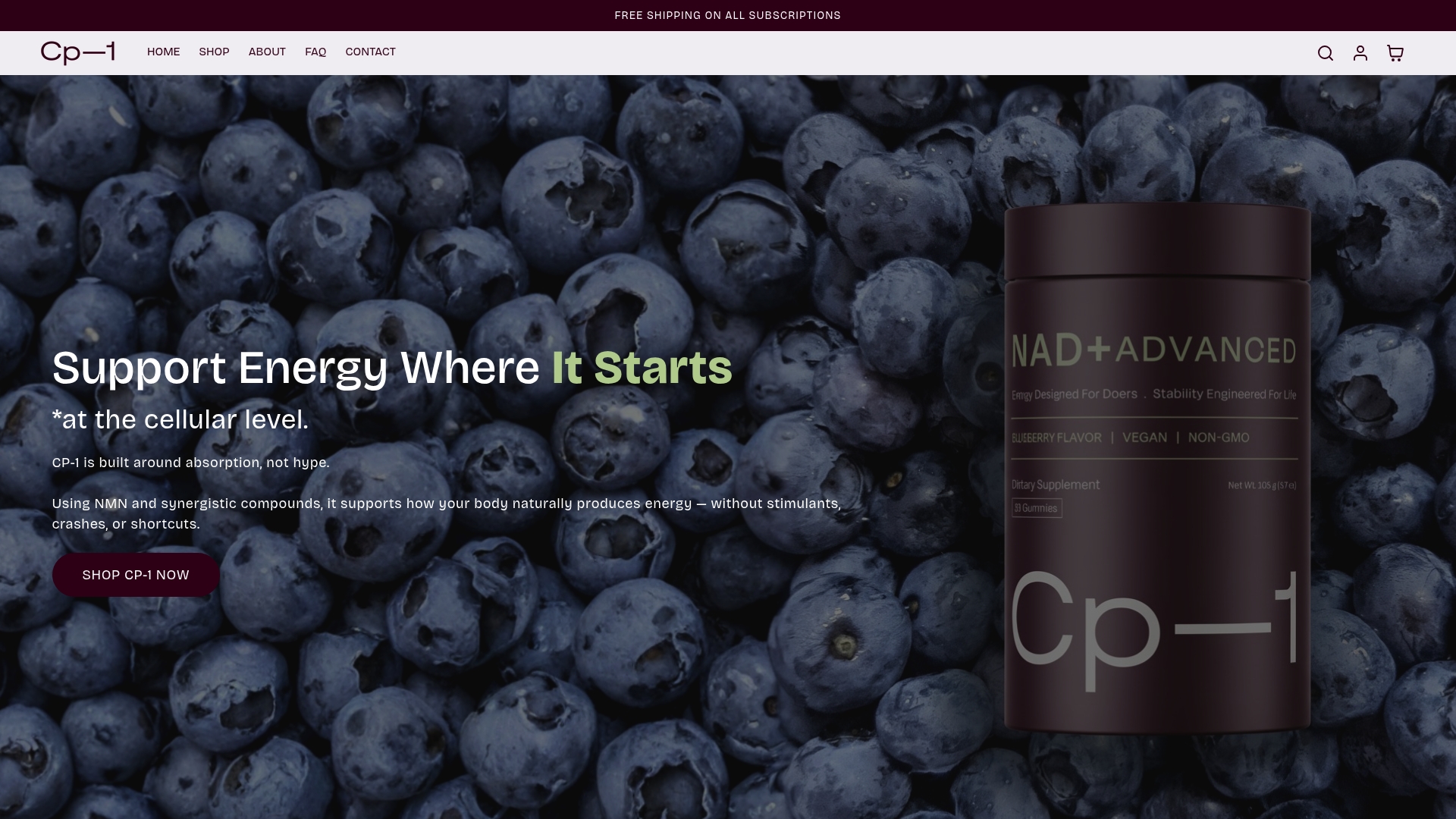
We built CP-1 around absorption and honest dosing rather than proprietary-blend guesswork, which means the label tells you what’s actually in the gummy and how much. Every batch is backed by third-party testing, and we make it straightforward to review our manufacturing claims before you buy. If you’ve read this far, you already know what to look for in a compliant NMN supplement: transparent sourcing, real testing documentation, and a manufacturer that isn’t hiding behind vague marketing language. Visit the CP-1 product page to check our current lab documentation and see subscription options for ongoing NAD+ support.
Frequently Asked Questions
Is NMN legal in the USA as of 2026? Yes. FDA’s September 2025 decision confirmed NMN is lawful in dietary supplements, and that status hasn’t changed heading into 2026.
Is NMN legal in the US for online purchases specifically? Yes, buying NMN online is legal as long as the seller operates within U.S. supplement regulations. Marketplace availability is catching up gradually as retailers complete their own compliance reviews.
Is NMN safe to use daily? Small clinical trials suggest reasonable tolerability, but long-term data is still limited. Talk to your doctor before daily use, especially if you take other medications.
Can I buy NMN supplements legally if a brand has no NDIN? The ingredient category is legal, but a specific brand without a filed NDIN, or without sourcing from a supplier that has one, carries real compliance risk. Ask before you buy.
What’s the difference between NMN regulations in the USA and other countries? U.S. rules run through DSHEA and FDA’s NDI framework. Other markets, including parts of the European Union, classify NMN differently, so international rules shouldn’t be assumed to match U.S. law.
This article is general information, not a substitute for advice from a qualified doctor. Consult a qualified healthcare professional about your own circumstances before acting on anything here.