

Optimize your mitochondrial health checklist: energy & wellness
There’s so much noise out there about energy, focus, and longevity that most people have no idea where to actually start. You’ve probably read dozens of articles, bought supplements that did nothing, and still felt like your energy was running on empty by early afternoon. Here’s the truth: most of that advice skips the one thing that matters most at the cellular level, your mitochondria. These tiny organelles produce over 90% of your body’s usable energy. When they’re struggling, everything struggles. This checklist cuts through the confusion and gives you proven, practical steps to actually move the needle on mitochondrial function, energy output, and cognitive clarity.
Table of Contents
- Understand your mitochondrial health baseline
- Choose evidence-backed supplements and nutrients
- Lifestyle habits that boost mitochondrial health
- Compare and personalize your mitochondrial checklist
- A real-world rethink: why most mitochondrial checklists fall short
- Get started with advanced mitochondrial supplements
- Frequently asked questions
Key Takeaways
| Point | Details |
|---|---|
| Assess your baseline | Tracking your energy and symptoms gives you a practical starting point for improvement. |
| Prioritize evidence-backed supplements | NAD+, CoQ10, and PQQ can effectively enhance mitochondrial function when used responsibly. |
| Establish daily habits | Lifestyle choices like balanced nutrition and regular exercise are essential for mitochondrial health. |
| Personalize your checklist | Customize your approach based on your progress and biofeedback for best results. |
| Consider advanced solutions | Innovative supplements and science-driven products can help you reach energy and cognitive goals. |
Understand your mitochondrial health baseline
Before you change anything, you need to know where you stand. Most people skip this step entirely and wonder why their protocols stall out after a few weeks. Establishing a baseline gives you something real to measure progress against.
Mitochondrial dysfunction rarely shows up all at once. It creeps in through patterns you might be dismissing as normal. Here are the most common signs your mitochondria may be underperforming:
- Persistent fatigue even after a full night of sleep
- Brain fog or difficulty concentrating mid-morning
- Slow recovery after exercise or mild physical exertion
- Energy crashes in the afternoon without any obvious trigger
- Cold extremities or poor circulation, which can reflect impaired cellular energy output
- Low motivation and reduced mental stamina throughout the day
If three or more of these resonate with you regularly, your mitochondria are telling you something. The good news is that this is fixable, but only if you actually track it.
Keeping a simple daily log is the most underrated tool in any biohacker’s toolkit. Rate your energy, focus, and recovery on a scale of 1 to 10 each morning and again in the afternoon. Do this for two weeks before making any changes. You’ll start to see patterns you never noticed before, like which mornings are sharp and which ones are foggy, whether sleep quality correlates with afternoon crashes, or how your body responds to different foods.
Structured self-assessment increases energy awareness and makes your optimization efforts far more targeted. This isn’t about obsessing over data. It’s about making smarter decisions with information you already have access to.
Once you have two weeks of data, look for your lowest-performing days and ask what they have in common. Poor sleep? High stress? Skipped meals? Those patterns are your optimization targets.
Pro Tip: Before reaching for stimulants to push through fatigue, build a daily energy workflow around consistent sleep times, strategic meal timing, and light movement. Non-stimulant strategies tend to produce more consistent and lasting improvements than caffeine or other stimulants ever will.
Choose evidence-backed supplements and nutrients
Once you know your starting point, targeted supplementation becomes a precision tool rather than a guessing game. Not all supplements are worth your money. These four have the most credible science behind them for mitochondrial support.
- NMN (Nicotinamide Mononucleotide): A precursor to NAD+ (nicotinamide adenine dinucleotide), which is the molecule your mitochondria need to produce ATP (cellular energy). NAD+ levels decline with age, and supplementing with NMN is one of the most direct ways to support its replenishment.
- CoQ10 (Coenzyme Q10): Found in every cell, CoQ10 acts as an electron carrier in the mitochondrial energy chain. Research consistently links CoQ10 deficiency to fatigue and cognitive decline, particularly in adults over 40.
- PQQ (Pyrroloquinoline quinone): One of the few compounds shown to stimulate mitochondrial biogenesis, meaning it encourages your body to actually grow new mitochondria. That’s a big deal for long-term energy capacity.
- Alpha lipoic acid: A potent antioxidant that protects mitochondria from oxidative damage and helps recycle other antioxidants like vitamins C and E. It also supports glucose metabolism, which feeds directly into energy production.
Dosing matters. Most research on NMN uses doses between 250mg and 500mg daily. CoQ10 studies typically use 100mg to 300mg. PQQ research clusters around 10mg to 20mg. Always check third-party testing and manufacturing standards before buying anything.
Non-stimulant energy options like these offer sustainable improvements without the crashes, dependency, or adrenal stress that stimulants create over time.
Pro Tip: Don’t supplement in isolation. Stack these nutrients with lifestyle habits that support mitochondrial biogenesis, specifically high-intensity interval training, time-restricted eating, and cold exposure. These habits amplify the effectiveness of the supplements you’re taking.
Lifestyle habits that boost mitochondrial health
Supplements can help, but daily routines are often the foundational element in mitochondrial optimization. You can take every supplement on this list and still underperform if your habits are working against you. Here’s what actually moves the needle.
- Practice intermittent fasting or time-restricted eating. Giving your cells a break from constant fuel forces them to upregulate mitochondrial efficiency. Even a 14 to 16 hour fasting window has measurable effects on cellular energy output.
- Prioritize healthy fats over refined carbohydrates. Mitochondria burn fat more cleanly than glucose. A diet rich in olive oil, avocados, fatty fish, and nuts supports the type of fuel your cells prefer.
- Do HIIT (high-intensity interval training) at least twice a week. Short bursts of intense effort are one of the most powerful triggers for mitochondrial biogenesis. Your cells respond to the demand by building more mitochondria.
- Add resistance training. Building muscle increases the density of mitochondria in muscle tissue, which directly raises your metabolic capacity and energy ceiling.
- Protect your sleep architecture. Deep sleep is when cellular repair happens. Aim for 7 to 9 hours, keep a consistent bedtime, and limit blue light exposure for at least an hour before bed to protect circadian rhythm alignment.
- Manage stress through recovery practices. Chronic stress floods your body with cortisol, which damages mitochondrial membranes over time. Breathwork, meditation, cold showers, and simple outdoor walks all help reduce that load.
“Mitochondria don’t respond to what you do once. They respond to what you do consistently. Build the habits first, then stack supplements on top.”
Integrating structured workflows for energy and clarity means treating your day like a system, not a series of random choices.

Compare and personalize your mitochondrial checklist
After reviewing supplements and lifestyle approaches, you need to see how the pieces fit together and tailor your plan to where you actually are right now.
| Checklist element | Beginner focus | Advanced focus |
|---|---|---|
| Symptom tracking | Daily log, 1 to 10 scale | Wearables, HRV monitoring |
| Core supplements | CoQ10, Alpha lipoic acid | NMN, PQQ stacked with CoQ10 |
| Exercise protocol | 2x weekly HIIT | HIIT + resistance + zone 2 cardio |
| Diet strategy | Reduce refined carbs, increase healthy fats | Time-restricted eating + targeted macros |
| Sleep optimization | Consistent bedtime, limit screens | Sleep tracking, temperature optimization |
| Stress management | Daily walks, basic breathwork | HRV-guided recovery, cold therapy |
Interpreting your biofeedback is where most people fall short. Don’t just collect data, act on it. If your afternoon energy scores haven’t improved after three weeks of a new supplement, something in your stack or timing is off. Adjust one variable at a time so you know what’s actually working.
A personalized energy checklist built around your real symptoms and progress data is dramatically more effective than copying someone else’s protocol. Your mitochondria are unique to you.
Common pitfalls to avoid:
- Changing too many things at once. You’ll never know what worked.
- Ignoring sleep while obsessing over supplements. Supplements can’t fix a broken sleep schedule.
- Expecting fast results. Mitochondrial adaptation takes weeks, not days.
- Buying cheap, untested supplements. Bioavailability and purity matter enormously with sustainable energy habits.
A real-world rethink: why most mitochondrial checklists fall short
I’ve seen a lot of mitochondrial health guides. Most of them are designed to look thorough but are really just ingredient lists dressed up as advice. They hand you a stack of supplements and a vague mention of sleep hygiene, then call it a protocol.
What they consistently miss is the feedback loop. Real optimization isn’t linear. It’s a process of testing, noticing, and adjusting. The experienced biohackers I respect most aren’t the ones with the most expensive stacks. They’re the ones who’ve learned to read their own data and act on it.
I also think most checklists underestimate how personal this work is. What raises one person’s NAD+ levels and sharpens their focus might do almost nothing for someone else. That’s not a failure of the supplement. It’s a signal that the protocol needs adjusting.
This workflow insight is what separates people who optimize from people who just supplement. Build your system around your body’s actual responses, not around what worked for someone in a study.
Get started with advanced mitochondrial supplements
If you’re ready to stop guessing and start using a formula actually built for cellular energy support, it’s worth looking at what we put into CP-1.
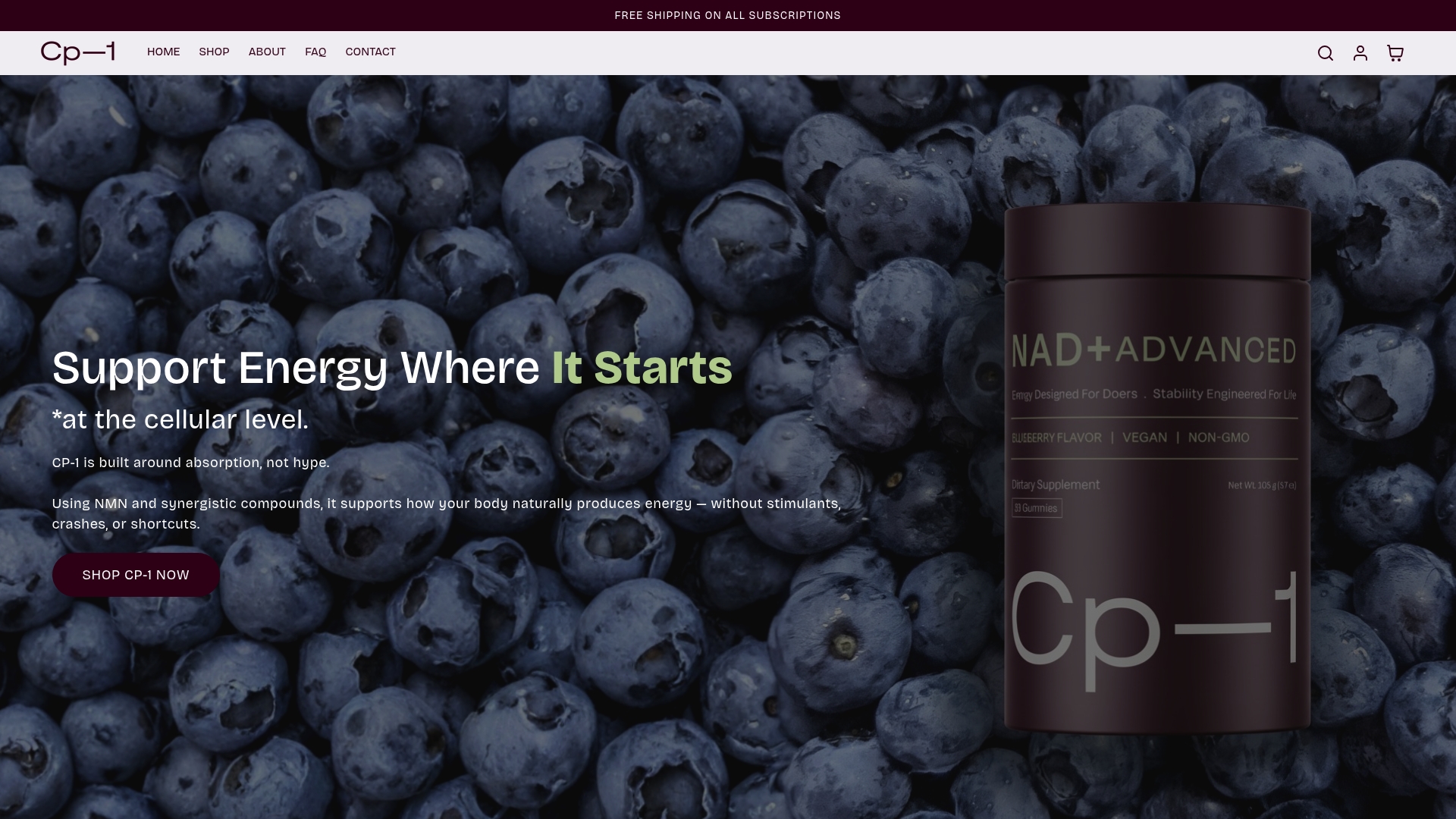
The NAD+ Advanced Supplement combines NMN, CoQ10, lion’s mane, reishi, and turkey tail mushroom extracts into a single, third-party tested, vegan formula made in the US. Every ingredient was chosen because the science supports it, not because it looks good on a label. You can review the full ingredients and science behind each component before you buy. If you’ve been doing the work but still feel like your energy isn’t where it should be, visit CP-1 and see if the formula is the missing piece.
Frequently asked questions
What are the early signs of poor mitochondrial health?
Low energy, persistent fatigue, brain fog, and slow recovery from exercise often signal mitochondrial dysfunction. Structured self-assessment through daily tracking helps you catch these patterns early before they become bigger problems.
Which supplements are best for boosting mitochondrial function?
NAD+, CoQ10, PQQ, and Alpha lipoic acid are among the most evidence-backed options for supporting mitochondrial health. Non-stimulant energy approaches using these compounds offer sustainable improvements without the drawbacks of stimulants.
How can I personalize my mitochondrial health checklist?
Track symptoms, energy levels, and progress regularly, adapting your supplement and lifestyle choices based on biofeedback. Personalization enhances checklist effectiveness because your biology responds differently than someone else’s will.
Are lifestyle changes or supplements more effective for mitochondria?
Both are important; consistent lifestyle habits typically form the foundation, with supplements providing targeted support. Integrating structured workflows into your daily routine ensures that neither approach is working in isolation.