
Mushroom blends are used mainly for three things: propping up immune defenses, supporting mental clarity, and building resistance to daily stress and fatigue. The evidence behind these claims is real but uneven. Preclinical research is strong; human trials are smaller and depend heavily on species, extraction method, and dose. If you take prescription medication, especially blood thinners or immune therapies, talk to your doctor before adding a blend.
TL;DR:
- Most mushroom blends rely on species like lion’s mane and reishi, but potency varies significantly depending on extraction method and ingredient disclosure.
- Human evidence for immune and cognitive benefits comes mainly from animal and small trials, with larger, high-quality studies still needed.
- Look for products with transparent labeling of extraction methods, beta-glucan content, and third-party testing to ensure quality and potency.
- The effectiveness of mushroom compounds depends on proper extraction techniques like dual extraction, and whole mushrooms differ from extracts in active compound concentration.
- Safety considerations include potential interactions with medications, allergic reactions, and avoiding proprietary blends that do not disclose dosages.
Table of Contents
- What Are the Main Health Benefits of Mushroom Blends?
- What Do the Common Mushroom Species in Blends Actually Do?
- How Do Mushroom Blends Actually Work?
- How Should You Use a Mushroom Blend Day to Day?
- What Does the Research Actually Show About Safety?
- How Do You Choose a High-Quality Mushroom Blend?
- Why Ingredient Transparency Matters More Than the Ingredient List Itself
- A Straightforward Option If You Want Mushrooms Plus Cellular Energy Support
- Sources
- FAQ
What Are the Main Health Benefits of Mushroom Blends?
The appeal of mushroom blends comes down to a handful of biological mechanisms that show up across different species, even though the strength of the evidence differs from one to the next.
Immune support gets the most attention, and for good reason. Beta-glucans, the long-chain sugars found in mushroom cell walls, interact with immune cell receptors and appear to fine-tune how the body responds to pathogens. A broad clinical review of medicinal mushrooms found consistent immunomodulatory and antioxidant activity across species, though the authors note most of that data comes from lab and animal studies rather than large human trials.
Cognitive support is the second major draw, largely tied to lion’s mane and its unique compounds, hericenones and erinacines. These are thought to stimulate nerve growth factor (NGF), a protein involved in maintaining and repairing neurons, which is the proposed mechanism behind lion’s mane’s reputation for mental clarity.
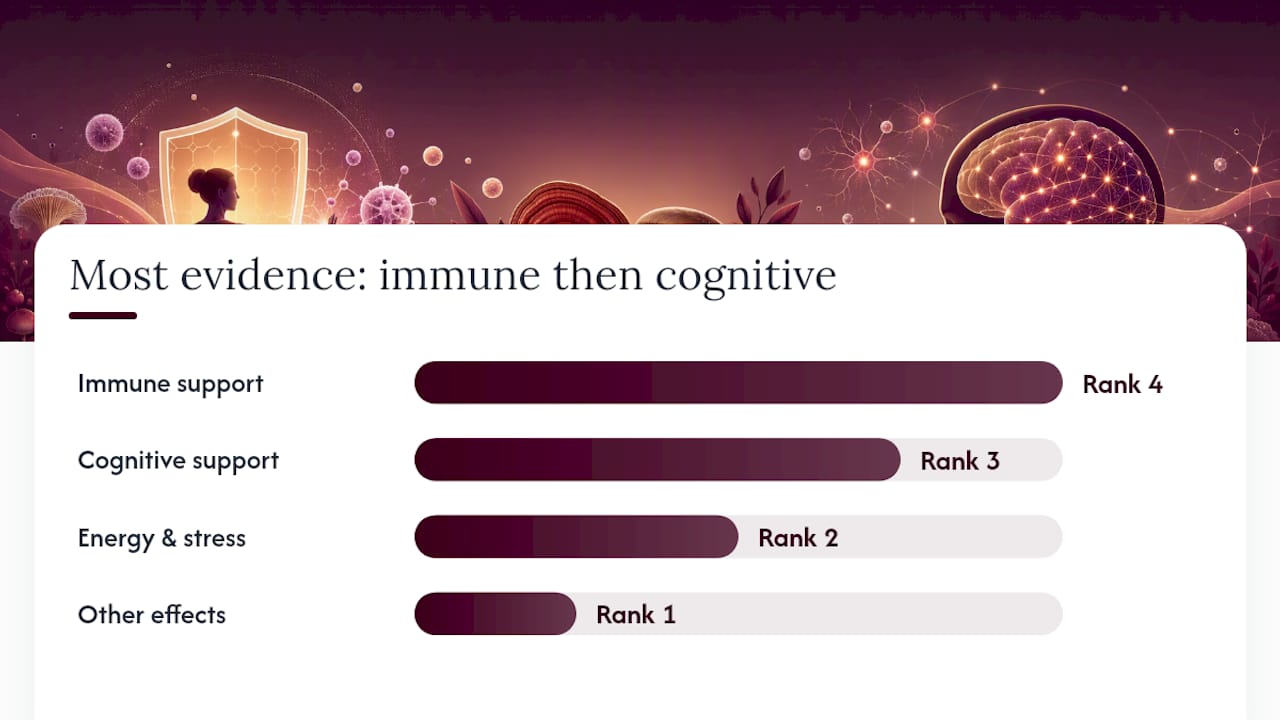
Energy and stress resilience round out the picture. Cordyceps has a plausible link to mitochondrial ATP production, the cellular energy currency your muscles burn through during exercise. Reishi works differently, acting more like a calming agent that may support sleep quality and stress recovery rather than active output.
A few other things worth keeping in mind:
- Antioxidant and anti-inflammatory compounds in mushrooms may support cardiovascular markers, though this is an area with thinner human data.
- Whole mushrooms and mushroom extracts are not interchangeable. Extracts concentrate specific compounds; whole foods deliver a broader, more diluted mix.
- Product-to-product variability is significant. Two blends listing the same six species can differ wildly in actual potency.
Statistic Callout: Harvard Health points out that mushroom coffee and supplement products are marketed for energy, focus, sleep, and immune support, but the supporting evidence remains limited and varies by species and preparation.
What Do the Common Mushroom Species in Blends Actually Do?
Most blends on the market pull from the same six species, and each one earns its spot for a different reason. Knowing what each contributes helps you read a label with intention instead of guessing.
- Lion’s mane: Associated with memory and focus support through NGF-related pathways. Human trials remain small, but the mechanism is consistent across studies.
- Reishi: Known as the “calming” mushroom, often used for stress resilience, sleep quality, and gentle immune modulation rather than a jolt of energy.
- Cordyceps: Popular with athletes for endurance and reduced perceived fatigue, tied to its role in cellular energy metabolism.
- Turkey tail: Carries some of the more substantial clinical signal of the group. A narrative review of adjunctive mushroom use alongside conventional cancer treatment found potential quality-of-life improvements and reduced side effects in some trials, though the authors called for larger studies before drawing firm conclusions.
- Chaga: Prized for antioxidant content and a possible role in supporting healthy cholesterol and metabolic markers.
- Maitake: Shows early signals for blood sugar and metabolic support, though it’s studied less extensively than lion’s mane or reishi.
Consumer nutrition outlets commonly cite daily dosing in the 500 to 2,000 milligram range for most single-species products, though this varies by extract concentration and the specific health goal.
Pro Tip: If you’re targeting one specific outcome, like focus or sleep, look for a product where that species is listed first on the ingredient panel. Blends often bury the star ingredient behind cheaper filler mushrooms.
How Do Mushroom Blends Actually Work?
The active compounds inside a mushroom determine what it can plausibly do for you, and the extraction method determines whether those compounds ever make it into the capsule or scoop you’re consuming.
The main players are beta-glucans and triterpenes (linked to immune and cardiovascular activity), hericenones and erinacines (lion’s mane’s cognitive compounds), and ergothioneine, an antioxidant amino acid found across several medicinal species. Not all beta-glucans behave the same way. Their branching pattern and molecular backbone affect how strongly they interact with immune receptors, which is one reason two products with the “same” ingredient can perform differently.
Extraction method matters just as much as ingredient list:
- Hot water extraction pulls out polysaccharides like beta-glucans, the compounds most tied to immune activity.
- Alcohol extraction pulls out triterpenes and other fat-soluble compounds humans can’t easily digest from raw mushroom material.
- Dual extraction uses both methods to capture a fuller spectrum of actives, which the FDA notes is why some products list water and alcohol extraction on the label.
- Fruiting body vs. mycelium-on-grain is a major quality fork. Mycelium grown on grain often carries residual starch that inflates the total weight while diluting the actual mushroom content per milligram.
A “powdered mushroom” label can mean wildly different things depending on which of these choices a brand made.
How Should You Use a Mushroom Blend Day to Day?
Mushroom blends show up in four common forms, and each fits a different kind of routine. Powders mix into coffee or smoothies and work well for people who already have a morning ritual to build around. Capsules and gummies suit anyone who wants consistent dosing without measuring anything. Tinctures absorb faster but require more attention to concentration since they’re often more potent per drop.
- Start with one form and one goal. Pick a single blend targeting your main concern, whether that’s focus, immunity, or energy, rather than stacking several products at once.
- Stay conservative on dose. Many labels fall in the 500 to 2,000 milligram daily range, and starting at the low end lets you gauge tolerance before increasing.
- Match timing to purpose. Cordyceps or lion’s mane in morning coffee suits energy and focus goals; reishi in the evening fits better with wind-down and sleep support.
- Give it real time. Cognitive and immune effects, if they appear, typically build over weeks to months, not days. Track how you feel weekly rather than expecting an overnight shift.
What Does the Research Actually Show About Safety?
The honest answer is that human evidence trails behind the marketing. A regulatory-focused safety review concludes there’s little high-quality evidence that supplements reproduce the effects seen with whole mushrooms in food, and standardization across multi-mushroom blends is still weak.
Statistic Callout: That same review flags gastrointestinal discomfort, nausea, and allergic reactions as the most commonly reported side effects, alongside a broader caution that safety data for combination blends is thinner than for single-species extracts.
A few practical safety notes worth keeping in mind:
- Mushroom compounds can interact with blood thinners, immunotherapy drugs, and blood-pressure medications, so check with a clinician if you’re on any of these.
- Rare allergic reactions are possible, especially with high-dose extracts.
- Avoid products with proprietary blends that hide individual mushroom amounts. If you can’t see the dose, you can’t judge the risk.
- Start at the lowest labeled dose for the first week or two before increasing.
How Do You Choose a High-Quality Mushroom Blend?
Label quality varies more in this category than almost any other supplement aisle, which makes a short checklist worth memorizing before you buy.
- Favor fruiting-body extracts over vague “mycelium-on-grain” listings unless the brand discloses active-compound content.
- Look for disclosed beta-glucan or polysaccharide percentages, not just a species name with no numbers attached.
- Confirm the extraction method (dual extraction is generally the more complete option) and check whether the species list matches what’s actually inside.
- Prioritize brands offering third-party Certificates of Analysis (COAs) and GMP-certified manufacturing, both markers the FDA highlights as signs of a transparent product.
- Treat “proprietary blend” language as a caution flag rather than a selling point.
Pro Tip: If a COA isn’t posted on the product page, email the company and ask for one covering heavy metals and pesticide residue. A brand confident in its sourcing will send it without hesitation.
Why Ingredient Transparency Matters More Than the Ingredient List Itself
Hugo here. After going through the research on this category, the thing that stands out isn’t which mushroom is “best.” It’s how much the same species can vary from one bottle to the next depending on extraction and sourcing decisions most shoppers never see.
The industry has a transparency problem, not a science problem. The compounds behind lion’s mane’s cognitive reputation and turkey tail’s immune signal are well documented in the clinical literature. What’s inconsistent is whether a given product actually delivers a meaningful dose of those compounds, or just enough mushroom powder to put a name on the label. That’s why extraction method and species transparency matter more than flashy claims about “10 mushroom blends” or “immune superfoods.” A six-species blend with disclosed beta-glucan content and a real COA beats a ten-species blend that tells you nothing about potency.
If you’re serious about cognitive or immune support, read the back of the label like it’s the whole pitch, because it is.
— Hugo
A Straightforward Option If You Want Mushrooms Plus Cellular Energy Support
If you’ve read this far, you already know the real differentiator in this category is transparency, not the length of the ingredient list. CP-1 was built around that idea. The CP-1 NAD+ Advanced Supplement combines lion’s mane, reishi, and turkey tail extracts with NMN and CoQ10, pairing mushroom-based cognitive and immune support with ingredients aimed at cellular energy production and NAD+ levels.
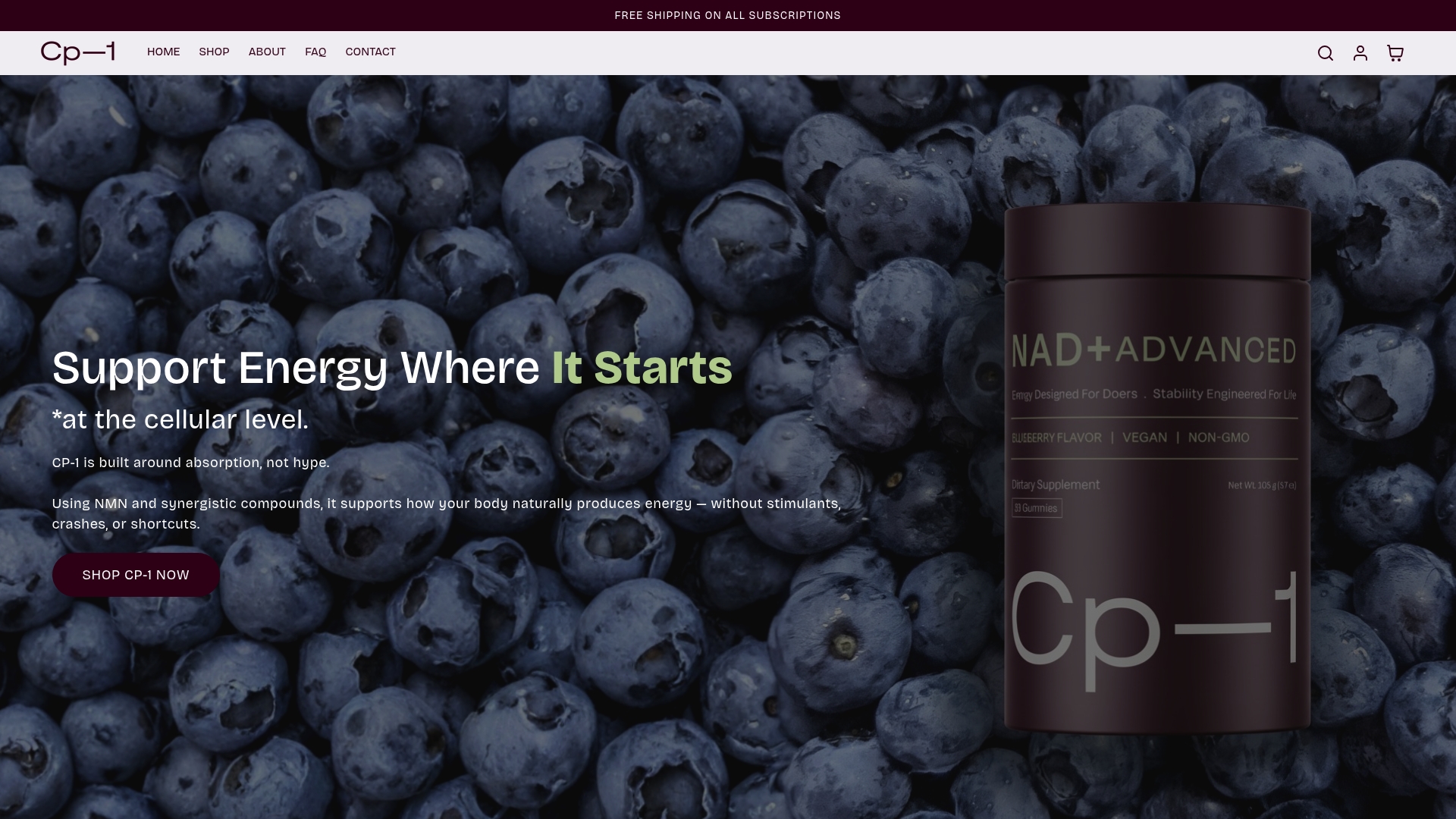
Every batch is manufactured under GMP-certified standards, using vegan, non-GMO ingredients and third-party testing, the same quality markers this article recommends you check for on any mushroom product. That means you’re not just trusting a label claim. You can pair a daily gummy with the kind of lifestyle habits that make cognitive and stress-resilience benefits more likely to show up over time, from consistent sleep to steady exercise. If you want to see the sourcing and testing details for yourself, visit the CP-1 product page to check current lab results before you order.
This article is general information, not a substitute for advice from a qualified doctor. Consult a qualified healthcare professional about your own circumstances before acting on anything here.
Sources
- Medicinal Mushrooms: Bioactive Compounds, Use, and Clinical Trials - PMC
- Mushroom coffee: Worth a taste? - Harvard Health
- Mushroom dietary supplements - OPSS
- Mushroom Supplements: Benefits, Risks And When To Avoid - Forbes
FAQ
What Is a Mushroom Blend Good For?
Mushroom blends are primarily used for immune support, cognitive clarity, and stress or energy resilience, with each species contributing a different mechanism, though most human evidence remains limited compared to preclinical research.
What Are the Side Effects of Mushroom Blends?
The most commonly reported side effects are gastrointestinal discomfort, nausea, and allergic reactions, with rare but possible interactions for people on blood thinners or immune-related medications.
What Are the Benefits of a 7 Mushroom Blend?
A seven-species blend typically combines immune-focused mushrooms like turkey tail and reishi with cognitive and energy species like lion’s mane and cordyceps, but more species doesn’t guarantee more potency unless the label discloses actual beta-glucan and extract content.
What Is a 10 Mushroom Blend Good For?
A ten-mushroom blend aims to cover a broader range of immune, cognitive, and antioxidant support in one product, though a longer species list is only meaningful if the brand discloses extraction method and active compound levels rather than just naming ingredients.