
Early human trials show NMN can modestly improve sleep quality for some middle-aged and older adults when taken consistently for several weeks. The strongest evidence comes from 12-week randomized controlled trials using the Pittsburgh Sleep Quality Index, or PSQI, and the benefit is real but limited to certain sleep measures, not a full cure for insomnia. If you’re curious whether it will work for you, the practical move is to test it yourself: pick a timing, track your sleep for a month, and see what actually changes.
TL;DR:
- NMN’s sleep benefits are moderate, primarily improving daytime alertness and physical function rather than directly inducing sleep, with effects emerging after several weeks.
- Most evidence involves older adults with NAD+ declining from aging, making younger individuals less certain to experience significant sleep improvements.
- Afternoon dosing of NMN may enhance daytime drowsiness and physical resilience better than morning intake, based on trial data.
- Short-term safety appears positive at 250 mg/day, but long-term effects and interactions with medications remain unstudied.
- Personal testing with consistent tracking over 12 weeks is recommended to determine if NMN improves your sleep or daytime function.
Table of Contents
- NMN and Sleep: A Quick Look at the Evidence
- Inside the Trials: What Was Measured and What Changed
- How NMN Might Affect Sleep: The Biology Behind the Claim
- When to Take NMN for Sleep: Timing and Dosing That Match the Trials
- Is NMN Safe? Side Effects and What to Watch For
- Does Age Change How NMN Affects Sleep?
- NMN Versus Melatonin and Other Sleep Aids: How Do They Compare?
- Can NMN Interact With Sleep Medications or Other Supplements?
- What Happens to Sleep With Long-Term NMN Use?
- Do Diet and Exercise Change How Well NMN Works for Sleep?
- How to Test NMN for Sleep Yourself: A Simple Protocol
- What to Look for in an NMN Supplement
- A Realistic Take on NMN and Sleep
- Where CP-1 Fits if You Decide to Try NMN
- Primary Sources for Further Reading
- Sources
- FAQ
NMN and Sleep: A Quick Look at the Evidence
Three human studies anchor almost everything we currently know about NMN and sleep, and none of them are massive. That’s worth sitting with before you get excited about the results.
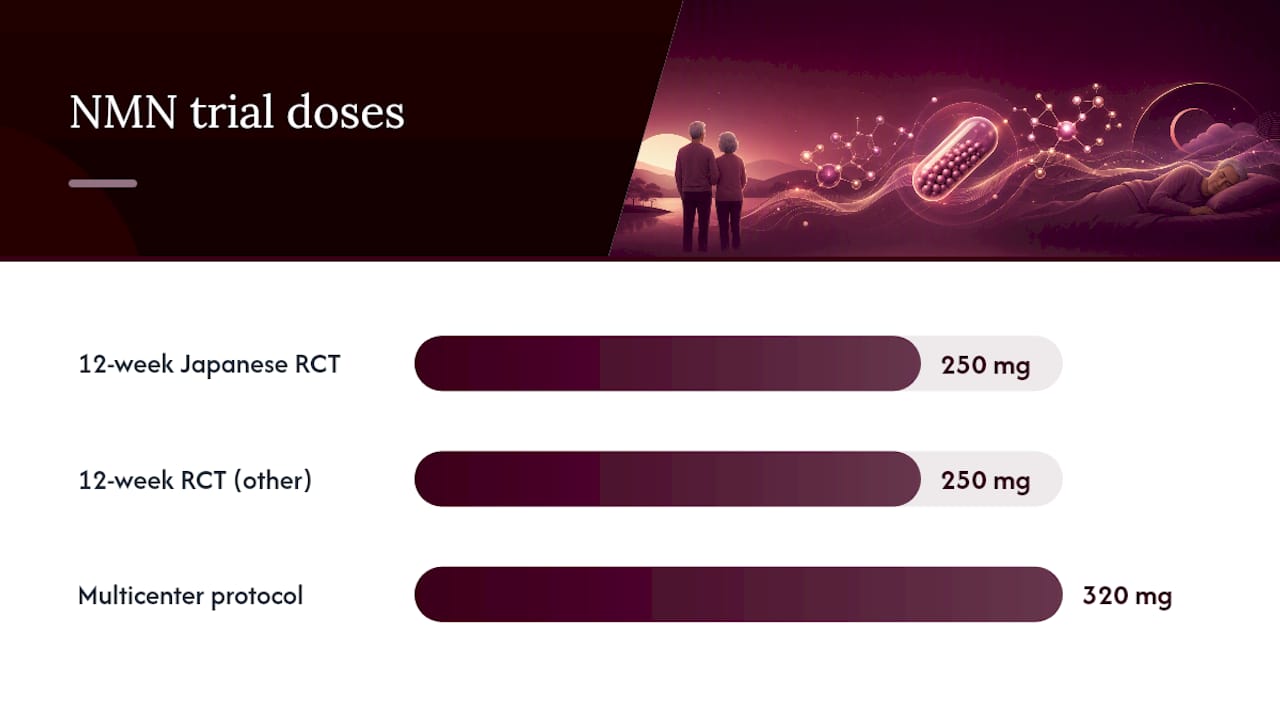
- A 12-week randomized, double-blind, placebo-controlled trial gave 108 older Japanese adults 250 mg/day of NMN and split them into morning and afternoon dosing groups, then measured drowsiness, PSQI scores, and a physical test called the five-times sit-to-stand (5-STS).
- A separate double-blind RCT also used 250 mg/day for 12 weeks in older adults, tracking blood NAD+ metabolites alongside global PSQI scores and daytime dysfunction.
- A multicenter randomized trial protocol targeting chronic insomnia specifically, using a higher 320 mg/day dose, is now underway with PSQI, the Insomnia Severity Index (ISI), the Epworth Sleepiness Scale, and polysomnography (an overnight sleep study) as endpoints.
The subscales that moved most consistently across the completed trials were global PSQI score and daytime dysfunction, the part of the questionnaire that asks how tired and unfocused you feel during the day, rather than direct measures of sleep onset latency. Most participants didn’t report changes until several weeks in. Nobody saw a dramatic shift in week one or two.
Sample size matters here. The afternoon-dosing NMN trial found a moderate effect size for drowsiness and a stronger one for physical performance on the 5-STS in the group taking NMN after lunch. That’s a real, measurable signal, but the total sample was modest and subdivided into several groups, so each subgroup was small. Effect sizes like these are worth taking seriously, not worth mistaking for a guarantee.
Inside the Trials: What Was Measured and What Changed
The 2022 Japanese trial is the one most people cite, and it’s worth understanding exactly what it did. Researchers split 108 older adults into three groups: NMN taken in the morning, NMN taken in the afternoon, and a placebo group. Everyone took 250 mg/day for 12 weeks. The afternoon group, labeled NMN_PM in the paper, showed the biggest improvements in self-reported drowsiness and in the 5-STS, a simple test where you time how fast someone can stand up and sit down five times in a row. That test is a decent proxy for lower-body strength and overall physical resilience, which matters because tired, weak older adults often report worse subjective sleep even when their actual sleep architecture hasn’t changed much.
Here’s the part that surprises people: the sleep benefit in this trial wasn’t really about falling asleep faster or staying asleep longer. It showed up as less daytime drowsiness and better physical function, which the researchers link back to PSQI daytime dysfunction scores. In other words, participants felt more rested and capable during the day, which is one piece of sleep quality but not the whole picture. If you’re hoping NMN will knock you out cold at 10 p.m., this particular study isn’t the one to point to.
The second major trial, published as a double-blind, placebo-controlled study, took a more biochemical approach. Researchers gave older adults 250 mg/day of NMN for 12 weeks and drew blood to measure NAD+ metabolites directly, the actual molecular currency NMN is supposed to boost. They found significant increases in those blood markers alongside improved global PSQI scores and, again, better daytime dysfunction scores compared to placebo. This is one of the few trials that connects a measurable biological change (more NAD+ in the blood) with a measurable sleep outcome, which gives the mechanism story more weight than pure speculation. Sleep wasn’t the primary endpoint of this trial, though. It was walking speed and general aging markers, with sleep quality riding along as a secondary measure. That distinction changes how much weight you should put on the sleep numbers: they’re real, but they weren’t the main thing the study was built to detect.
The third piece of the puzzle isn’t finished yet. A multicenter, randomized, double-blinded trial protocol has been published (meaning the study design is public, but results aren’t in) that will enroll around 400 people diagnosed with chronic insomnia, not just older adults with mild sleep complaints. This trial uses a higher dose, 320 mg/day, for 60 days, and it’s the first one built specifically to test NMN against clinically diagnosed insomnia rather than measuring sleep as a side benefit. The endpoints are more rigorous too: PSQI, the Insomnia Severity Index, the Epworth Sleepiness Scale for daytime sleepiness, and actual polysomnography, an overnight lab sleep study that tracks brain waves, breathing, and movement. If this trial reports positive results, it will be the strongest evidence yet, because it’s testing the actual condition people search for NMN and insomnia solutions to solve.
What none of this evidence tells us yet: how NMN performs in younger adults with sleep issues, how it interacts with common sleep medications, or what happens after a year of continuous use. Every completed trial so far has run 12 weeks or less, used older adult populations (mostly Japanese cohorts), and treated sleep as either a secondary outcome or a narrowly defined subscale. That’s not a knock on the research. It’s simply the honest boundary of what “NMN and sleep studies” currently means in the scientific literature.
How NMN Might Affect Sleep: The Biology Behind the Claim
NMN is a direct precursor to NAD+, a molecule your cells need for energy production and hundreds of metabolic reactions, and NAD+ levels decline steadily with age. That decline is the entire reason NMN supplementation exists as a category, and it’s also the thread that connects NMN to sleep specifically.
Here’s the chain, broken into plain steps:
- NMN raises NAD+ levels in the body after it’s absorbed and converted.
- Higher NAD+ activates a protein called SIRT1, sometimes called a “longevity enzyme” because it regulates cellular repair and metabolism.
- SIRT1 directly interacts with BMAL1 and PER2, two genes that form the core machinery of your circadian clock, the internal 24-hour rhythm that governs when you feel sleepy and when you feel alert.
- When SIRT1 activity is low, as it tends to be in aging cells with less NAD+ to work with, circadian gene expression becomes less precise, which is one plausible reason older adults often report fragmented or lighter sleep.
- Preclinical mouse studies also link NMN to changes in neurotransmitter regulation and reduced oxidative stress in brain tissue, both of which play a role in sleep regulation, though this work hasn’t been confirmed in humans.
This is a genuinely elegant mechanism, and it’s why researchers got interested in NMN and sleep in the first place. But mechanism and outcome are two different things. A pathway existing in a mouse’s brain or in a petri dish doesn’t guarantee it plays out the same way when a 62-year-old human takes a chewable gummy with breakfast. The clinical trials we covered above are the actual test of whether this biology translates into something you’d notice, and so far, they show modest, specific improvements rather than a wholesale fix for poor sleep.
Pro Tip: Don’t judge NMN’s effect on sleep by how you feel after one night. NAD+ levels build gradually with consistent daily use, and the trials that found benefits ran for a minimum of 12 weeks. Give it at least a month before deciding it isn’t doing anything.
The age-related decline angle also explains why almost every completed trial recruited older adults specifically. NAD+ levels in a healthy 30-year-old are already fairly robust, so the theoretical “boost” from NMN has less room to matter. For someone in their 60s or 70s, whose NAD+ has already dropped by a meaningful margin over the decades, the same dose has more biological ground to make up. That’s the working theory anyway, and it’s a big part of why “how does NMN affect sleep” doesn’t have a single universal answer. It depends heavily on your starting point.
When to Take NMN for Sleep: Timing and Dosing That Match the Trials
The doses used across human trials cluster in a narrow range: 250 mg/day is the most common figure, used in both of the completed 12-week studies, while the ongoing chronic insomnia protocol steps up to 320 mg/day over a shorter 60-day window. No completed human trial has tested doses above that range for sleep specifically, so anything higher is outside what the evidence actually supports.
Timing is where things get genuinely interesting, and where a lot of generic advice gets it backward. In the 12-week Japanese trial, the group taking NMN in the afternoon showed larger improvements in drowsiness and physical function than the group taking it in the morning. That’s a specific, trial-documented finding, not a guess. The likely explanation ties back to how NMN converts to NAD+: plasma NMN rises quickly after ingestion, then converts to usable NAD+ over the following hours, so the exact clock time you take it may shift when that NAD+ boost peaks relative to your body’s circadian cycle.
That said, general clinical caution around NAD+ boosters still leans toward morning dosing for people who are prone to nighttime wakefulness, since NMN supports cellular energy production, and a poorly timed energy boost close to bedtime is a reasonable thing to want to avoid if you’re sensitive to it.
Here’s a straightforward way to structure your own test, based on what the trials actually did:
- Pick your starting dose. 250 mg/day is the figure with the most trial backing; don’t feel pressure to go higher.
- Choose your timing based on your main concern. If daytime drowsiness and low energy bother you more than nighttime sleep, afternoon dosing has trial support behind it. If you’re worried about NMN keeping you wired at night, take it in the morning, ideally within an hour of waking.
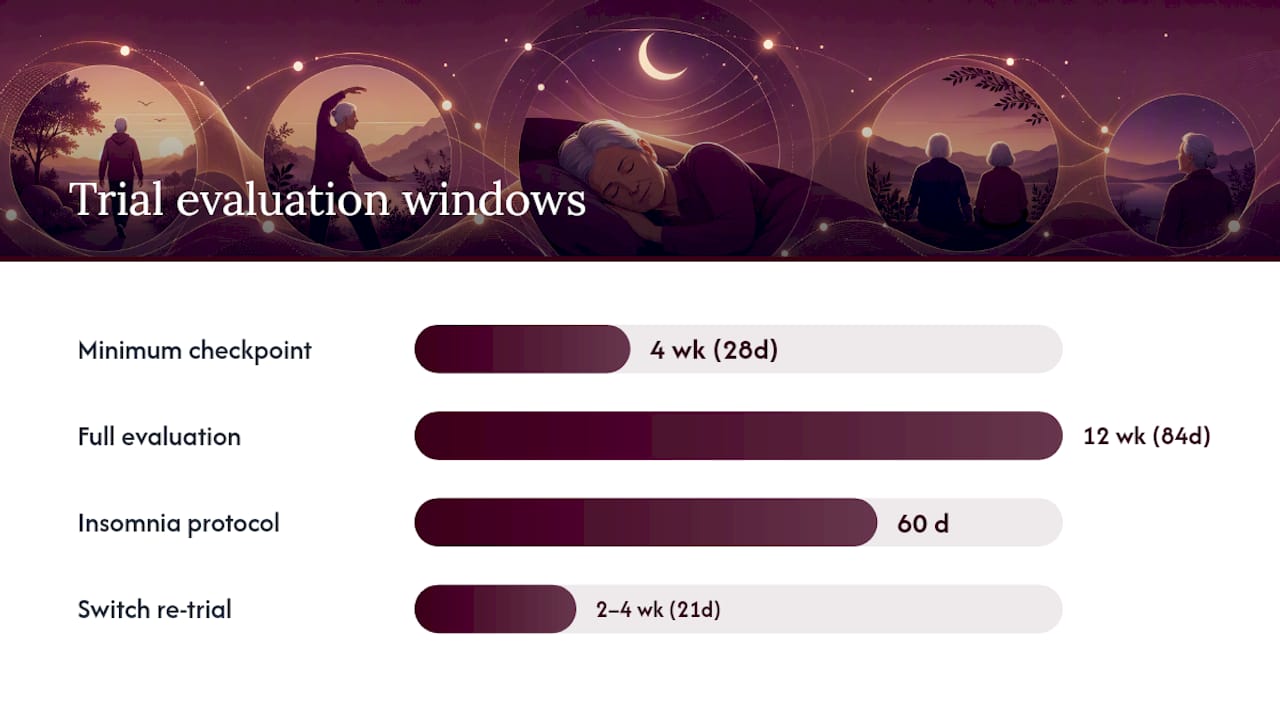
- Commit to a minimum window. Give it 4 weeks at the earliest checkpoint and up to 12 weeks for a full evaluation, matching the duration of the actual studies.
- Track weekly, not daily. Use a short sleep log or the PSQI questionnaire itself, which is freely available online, and score yourself weekly so you’re not overreacting to one bad night.
- Adjust once, not constantly. If you notice nighttime wakefulness in the first week or two, switch to morning dosing and give that new schedule its own 2 to 4 week trial before judging it.
Pro Tip: Split dosing (half in the morning, half in the afternoon) hasn’t been directly tested in trials, but it’s a reasonable middle-ground option if you’re sensitive to timing effects and want to hedge your bet while you figure out what works for your body.
Is NMN Safe? Side Effects and What to Watch For
Short-term trial data is reassuring, but it’s also thinner than you’d want for a supplement people take daily for years. The completed 12-week trials reported few adverse events among participants, and nothing that stood out as a red flag at the 250 mg/day dose. That’s the good news.
The honest caveat: none of the human trials have run longer than 12 weeks, and the ongoing chronic insomnia protocol only extends to 60 days. Nobody has published long-term safety data on years of continuous NMN use. If you’re planning to take it indefinitely, you’re operating slightly ahead of the research, which isn’t unusual for supplements but is worth knowing going in.
A few practical safety points worth flagging before you start:
- Medication interactions haven’t been formally studied. If you take prescription drugs, especially anything affecting blood sugar, blood pressure, or blood clotting, check with your doctor before adding NMN, since NAD+ pathways intersect with several metabolic processes those medications also target.
- Pregnancy, lactation, and serious illness are reasons to skip it or check first. No trial has included these populations, so there’s no safety data to lean on either way.
- A liver function check is a reasonable ask if your doctor flags any concern, given that NAD+ metabolism runs partly through the liver, though no trial has reported liver-related adverse events at the doses studied.
- Watch for the opposite problem: unexpected sleepiness. A small number of people report feeling more sedated after starting NMN rather than more energized, likely tied to how their individual NAD+ metabolism responds, and it’s a legitimate reason to adjust timing or dose downward.
One more thing worth knowing: NMN is currently sold as a dietary supplement in the United States, which means it isn’t reviewed by the FDA for safety or efficacy the way a prescription drug is. Quality varies a lot between brands. Third-party testing and clear labeling of milligrams per serving are the two things that separate a trustworthy product from a guess in a bottle.
Does Age Change How NMN Affects Sleep?
Every completed human trial on NMN and sleep has recruited older adults, typically in their 60s and 70s, which means the evidence base is genuinely age-specific rather than universal. That’s not an accident. NAD+ levels decline with age, so the theoretical benefit of NMN supplementation is expected to be largest in people whose baseline NAD+ has already dropped significantly.
For middle-aged adults, roughly 40s and 50s, there’s no dedicated trial data on NMN and sleep specifically. The mechanistic case, tied to gradually declining NAD+ and slowly loosening circadian gene regulation, still applies, just with less certainty about how much benefit you’d actually notice. Younger adults with naturally higher NAD+ reserves have even less established rationale for a sleep-specific benefit, since the biological “gap” NMN is theorized to fill is smaller to begin with.
This matters for how you interpret your own results. If you’re in your 40s trying NMN for sleep, you’re essentially running a personal experiment in a population the published research hasn’t directly tested. That doesn’t mean it won’t work. It means your expectations should be calibrated by the fact that the strongest data comes from people considerably older than you, and your mileage may genuinely vary in either direction.
NMN Versus Melatonin and Other Sleep Aids: How Do They Compare?
Melatonin works fast and directly: it’s the hormone your brain releases to signal bedtime, and taking it supplements that signal, typically producing noticeable effects within 30 to 60 minutes. NMN works nothing like that. It doesn’t sedate you or directly trigger sleep onset. Its documented effects, per the trials covered earlier, center on daytime dysfunction and drowsiness after weeks of consistent use, not a fast-acting nudge toward sleep at night.
Common over-the-counter sleep aids like diphenhydramine (found in many “PM” pain relievers) work by blocking histamine receptors, producing sedation within an hour, but with a well-documented next-day grogginess problem, especially in older adults. NMN’s trial data shows the opposite pattern: less daytime drowsiness over time, not more.
Prescription sleep medications and cognitive behavioral therapy for insomnia (CBT-I) remain the interventions with the deepest evidence behind them for diagnosed insomnia, and CBT-I in particular has decades of trial support with no drug-interaction risk at all. NMN isn’t positioned to replace either of those, based on current data. It’s better understood as a slower-acting, mechanism-based supplement aimed at the underlying cellular aging process that may contribute to sleep decline, rather than a nightly sedative. If you need to fall asleep tonight, NMN and insomnia solutions built around it are not the fast answer. If you’re looking for a longer-term lever tied to cellular energy and circadian gene function, it occupies a different lane entirely.
Can NMN Interact With Sleep Medications or Other Supplements?
No published trial has formally tested NMN alongside common sleep medications, which means the honest answer is that this interaction question remains largely unmapped territory. That gap matters more than it might seem, given how many older adults juggle multiple prescriptions.
A few categories worth flagging to a doctor or pharmacist before combining:
- Melatonin and other sleep supplements: no documented dangerous interaction, but stacking multiple sleep-focused supplements makes it hard to know which one is doing what if you notice a change.
- Blood sugar and blood pressure medications: NAD+ metabolism touches metabolic pathways that overlap with how these drugs work, so a conversation with your prescriber is a reasonable precaution.
- Blood thinners: no direct evidence of interaction, but any supplement affecting cellular metabolism broadly deserves a mention to whoever manages your anticoagulant therapy.
- Other NAD+ precursors, like NR (nicotinamide riboside): taking NMN alongside NR isn’t studied and likely just duplicates the same pathway rather than adding benefit.
The safest approach, especially if you’re managing any chronic condition, is a five-minute conversation with your doctor or pharmacist before adding NMN to an existing medication list. This is especially true if you’re already taking something specifically for sleep, since layering a new variable on top makes it harder to isolate what’s actually working, or what’s causing a new side effect if one shows up.
What Happens to Sleep With Long-Term NMN Use?
Here’s the direct answer: nobody knows yet, at least not from controlled human data. Every completed trial on NMN and sleep tops out at 12 weeks, and the ongoing chronic insomnia protocol runs 60 days. There is no published randomized trial tracking NMN’s effect on sleep patterns or circadian rhythm over a year or longer.
What we can reasonably extrapolate from the mechanism: since NMN’s proposed effect runs through NAD+ levels and SIRT1 activity, and both of those decline gradually rather than dropping off a cliff, any benefit would likely need to be sustained through continuous daily use rather than a short course. Stopping supplementation would presumably let NAD+ levels drift back toward baseline over time, though the exact timeline for that isn’t documented either.
This is one of the bigger open questions in the entire NMN sleep optimization conversation. Does a sustained NAD+ boost meaningfully protect circadian gene expression over years, potentially slowing the sleep fragmentation many people experience as they age? Or does the body adapt and plateau after a few months, with diminishing returns after the initial adjustment period? Until a long-term trial answers that, anyone taking NMN for sleep over a year or more is participating in an informal, personal experiment rather than following an established, evidence-backed protocol.
Do Diet and Exercise Change How Well NMN Works for Sleep?
NAD+ metabolism doesn’t operate in isolation, and that has real implications for anyone hoping NMN will single-handedly fix a sleep problem rooted in other habits. Exercise is a particularly strong variable here: physical activity independently raises NAD+ levels and improves sleep quality on its own, which means an active person starting NMN is stacking two NAD+ boosting inputs at once, while a sedentary person is relying on the supplement alone to do more work.
Diet matters too, though less dramatically. Chronic caloric excess and poor metabolic health are both linked to lower baseline NAD+ levels, so someone eating a diet that already strains their metabolism is starting from a deeper deficit that a single daily dose of NMN is unlikely to fully close.
Alcohol close to bedtime is worth calling out specifically, since it fragments sleep architecture in ways that have nothing to do with NAD+ and everything to do with how alcohol disrupts REM sleep. No amount of NMN counteracts that. If your sleep quality genuinely matters to you, the supplement is one input among several, not a substitute for the basics: consistent sleep and wake times, regular movement, and cutting back on things that actively sabotage sleep architecture regardless of what supplements you’re taking.
How to Test NMN for Sleep Yourself: A Simple Protocol
If you want to find out whether NMN actually helps your sleep, run it like a small personal experiment rather than just popping a supplement and hoping. Here’s a structure that mirrors what the actual trials did, scaled down for home use.
- Check in with your doctor first, especially if you take any regular medication, and mention you’re planning to try NMN for sleep specifically.
- Choose a product with visible third-party testing and a clearly labeled dose per serving. This matters more than brand marketing claims.
- Log your baseline sleep for 7 to 14 days before starting anything. Note bedtime, wake time, how many times you woke up, and how rested you felt the next day.
- Pick your dose and timing. Start at 250 mg/day, matching the most common trial dose, and choose morning or afternoon based on your main concern (see the timing section above).
- Commit to a minimum 4 week window, with 12 weeks as your full evaluation point if you want data that matches the actual trials.
- Score yourself weekly using the PSQI or the shorter Insomnia Severity Index (ISI), both available free online, rather than relying on gut feeling alone.
- Compare week 4 and week 12 scores against your baseline, watching specifically for changes in daytime dysfunction, not just nighttime sleep duration.
| What to track | Tool | When to check |
|---|---|---|
| Overall sleep quality | PSQI questionnaire | Baseline, week 4, week 12 |
| Insomnia severity | ISI questionnaire | Baseline, week 4, week 12 |
| Daytime drowsiness | Simple 1 to 10 self-rating | Daily or weekly |
| Nighttime wakefulness | Sleep log or wearable device | Nightly |
| Physical energy/function | Notice stamina during normal activity | Weekly |
If you see no meaningful change in either PSQI or daytime function by week 12, that’s a legitimate signal to stop and consider other approaches to your sleep, whether that’s CBT-I, a conversation about melatonin, or a deeper look at sleep hygiene habits.
What to Look for in an NMN Supplement
The founder of the company behind this supplement has experience in the supplement industry and understands that the ingredient on a label and the ingredient that actually shows up in your bloodstream may differ. That gap is exactly why third-party testing matters more than marketing copy when you’re choosing an NMN product.
A few concrete things worth checking before buying:
- A certificate of analysis from an independent lab, not just an in-house quality claim, confirming the NMN content matches what’s on the label.
- Manufacturing under GMP certification, the FDA’s Good Manufacturing Practice standard, which governs consistency and cleanliness in production.
- Where the product is manufactured. U.S.-based manufacturing tends to come with more consistent oversight than supplements sourced from unregulated overseas suppliers.
- Vegan and non-GMO status, if that matters to your dietary preferences, since NMN sourcing can vary between synthetic and fermentation-based production.
- The actual milligram dose per serving, checked against the 250 mg/day figure used in the completed sleep trials, so you know whether you’re matching trial conditions or guessing.
None of this guarantees a specific outcome for your sleep. What it guarantees is that if NMN is going to do anything for you, you’re actually getting a real, tested dose of it, rather than a diluted or mislabeled product riding on the same research everyone else cites.
A Realistic Take on NMN and Sleep
The research on NMN and sleep is more honest than most supplement marketing wants it to be, and that’s exactly why it’s worth paying attention to. Two completed trials and one serious ongoing protocol show a real, measurable, but narrow benefit, mostly around daytime function rather than a dramatic fix for insomnia. Anyone promising you’ll sleep like you did at 25 is overselling data that simply doesn’t say that yet.
What actually works is treating NMN as one lever among several, not a standalone fix. Pair it with consistent sleep and wake times, regular exercise, and a real conversation with your doctor if you’re managing other conditions or medications. Track your own results with something concrete, like the PSQI, instead of relying on vague impressions of “feeling better,” because placebo effects are real and self-reported sleep is notoriously unreliable without structure.
If you try NMN for sleep, give it the same 12-week runway the actual trials used before drawing conclusions, and don’t be afraid to adjust timing if something feels off. The evidence is promising enough to justify a careful, personal test. It isn’t strong enough yet to justify blind faith.
— Hugo
Where CP-1 Fits if You Decide to Try NMN
If you’ve read this far and you’re ready to test NMN for sleep yourself, the product you choose matters as much as the protocol. This NAD+ Advanced Supplement is a chewable gummy containing NMN alongside lion’s mane, reishi, turkey tail, and CoQ10, and it is manufactured under GMP certification with a vegan and non-GMO formulation.
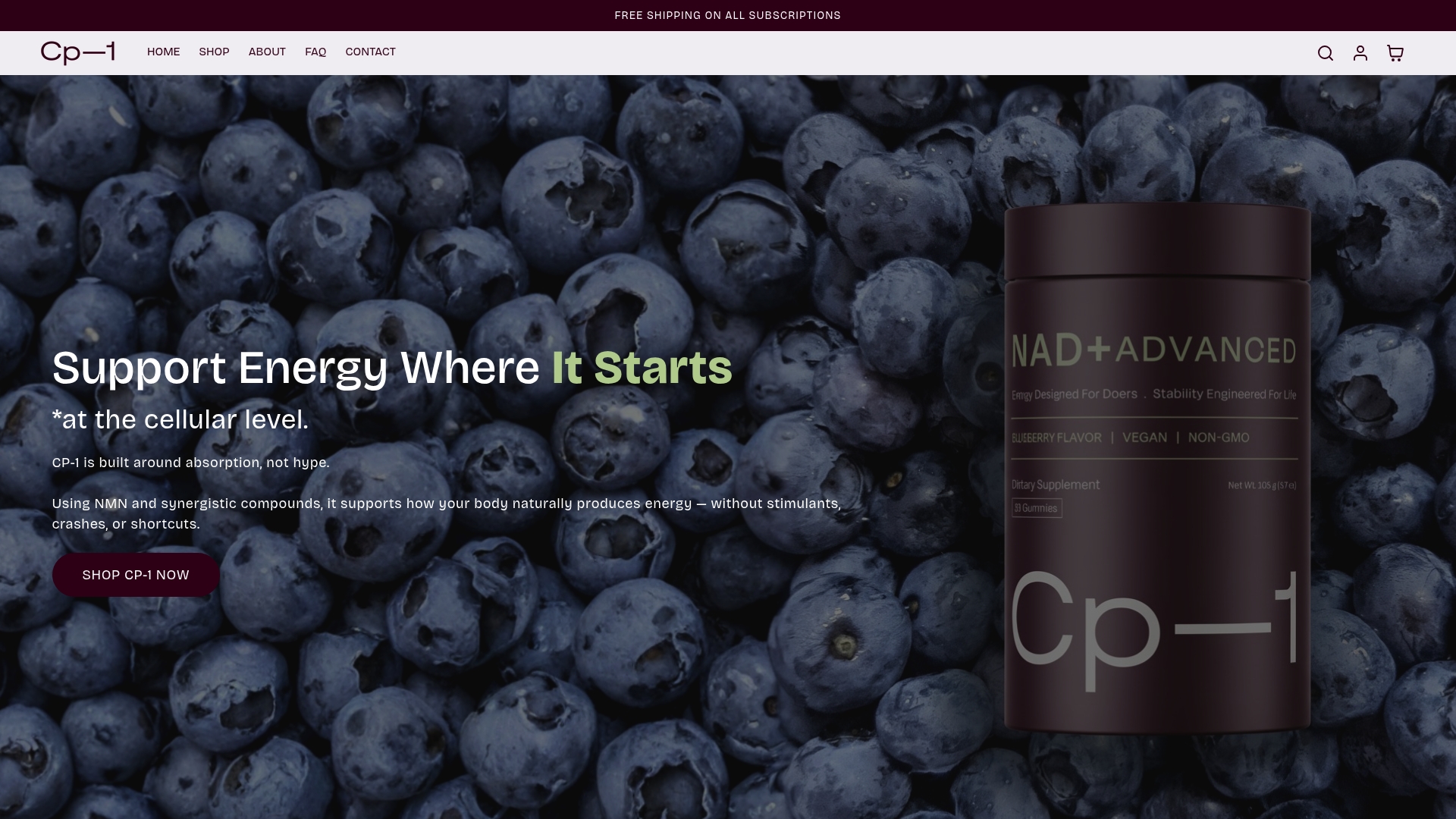
CP-1 doesn’t claim its gummy is identical to the exact capsule formulations used in the clinical trials covered above, and it shouldn’t. What it does offer is transparency: real ingredient disclosure, third-party testing, and honest dosing information you can check for yourself before you commit to a daily routine. That’s the baseline you should demand from any NMN product, regardless of where you buy it. If you’re ready to start your own sleep experiment, visit the CP-1 product page to review the current formulation, dosing per serving, and batch testing details before you begin your 12-week trial.
Primary Sources for Further Reading
If you want to read the original research rather than take a summary at face value, these are the actual trial publications behind this article:
Reading the full papers gives you the actual statistical detail behind the summaries here. If you have a specific medical condition or take prescription medication, bring these papers to your doctor rather than interpreting the numbers alone.
FAQ
Will taking NMN keep me awake at night?
Trial data doesn’t show NMN causing widespread nighttime wakefulness, but a small number of people report feeling more alert after taking it, which is why afternoon or morning dosing (rather than right before bed) is the more common approach in completed studies.
Is it okay to take NMN before bed?
No completed trial has specifically tested NMN taken immediately before bed, and the trial showing the strongest sleep-related benefits used afternoon dosing, not nighttime dosing, so sticking closer to that schedule is the better-supported choice.
Is there a downside to taking NMN?
The main downside is uncertainty rather than documented harm: short-term trials report few adverse events at 250 mg/day, but no study has tracked safety beyond 12 weeks, so long-term risk simply isn’t established yet.
Why do I feel sleepy after taking NMN?
Some people report increased sedation rather than increased energy after starting NMN, likely due to individual differences in how their NAD+ metabolism responds, and adjusting your dose or switching timing is a reasonable first step if this happens to you.