
NMN shows its clearest human benefit so far for postmenopausal women with metabolic risk. A small randomized trial found improved muscle insulin sensitivity after supplementation, and short-term safety data look favorable. It is not proven as an everyday anti-aging fix. If you are pregnant, breastfeeding, on hormone therapy, or have a hormone-sensitive cancer history, talk to your doctor before you start anything.
TL;DR:
- NMN significantly improves muscle insulin sensitivity in postmenopausal women with prediabetes over 10 weeks, but does not affect fasting glucose or liver insulin response.
- Human studies on NMN are small and short-term, mainly focusing on blood NAD+ levels, muscle function, and hair growth, with no extensive safety data for long-term use.
- Effective dosages in trials range from 250 to 500 mg daily, with a cautious approach starting at the lower end and monitoring specific health markers.
- NMN supplements should be third-party tested, from GMP-certified sources, and contain transparent ingredient amounts to ensure quality and safety.
- Women with hormone-sensitive cancers, pregnant or breastfeeding women, and those on hormone therapy should consult a doctor before using NMN due to insufficient safety data.
Table of Contents
- How does NMN work to raise NAD+ in women’s bodies?
- What do human clinical trials actually show for women?
- What benefits can women realistically expect from NMN?
- Is NMN safe for women, and who should avoid it?
- What NMN dosage do women use in clinical studies?
- How do you choose a quality NMN supplement?
- Where does Cp-1 fit into the NMN research picture?
- A candid take on NMN for women right now
- Get the quality checklist built into one formula
- Sources
How does NMN work to raise NAD+ in women’s bodies?
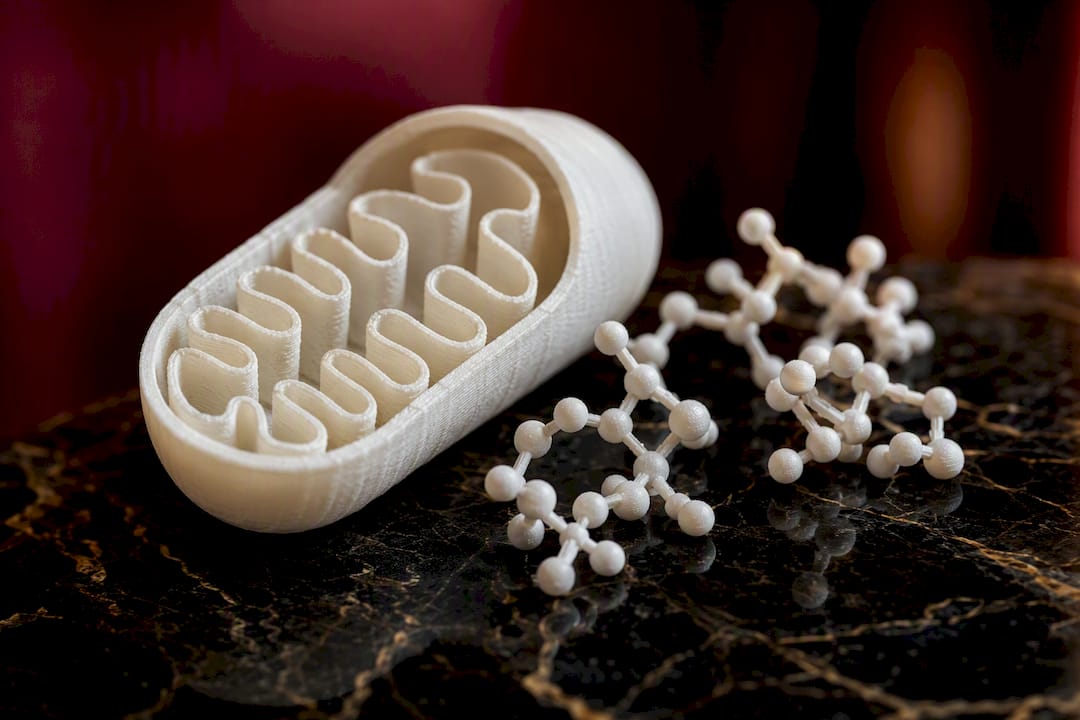
NMN, or nicotinamide mononucleotide, is a direct precursor to NAD+, a molecule your cells cannot function without. Every mitochondrion in your body burns through NAD+ to convert food into usable energy, and levels decline steadily with age. Human trials confirm oral NMN actually does what it claims on a biochemical level: one study found that 250 mg per day for 12 weeks raised blood NAD+ metabolites in older adults, with some exploratory gains in gait speed and grip strength.
Once inside your cells, NAD+ fuels sirtuins, a family of proteins (SIRT1 and SIRT3 are the two researchers care about most) that regulate mitochondrial repair, inflammation control, and DNA maintenance. Think of sirtuins as your cells’ maintenance crew. They can only work as fast as their fuel supply allows, and that fuel is NAD+.
This is where things get specifically relevant to you as a woman. Estrogen and SIRT1 interact directly, and the drop in estrogen during menopause appears to accelerate NAD+ decline on top of the decline you’d already expect from age alone. That double hit shows up downstream in metabolic markers, insulin handling, and energy at the cellular level. It is a big part of why researchers picked postmenopausal women, specifically, for the trial that has generated the most excitement in this space. NMN’s mechanism is well documented in preclinical and mechanistic reviews, though most of that foundational work started in animal models before moving to humans. For a deeper mechanistic breakdown, Cp-1’s guide to NMN’s role in aging covers the cellular energy pathway in more detail.
Your body also gets trace amounts of NAD+ precursors from food, but the amounts in milk, meat, and vegetables are nowhere near what trials use. That gap is exactly why supplementation, not diet alone, is how researchers study this.
What do human clinical trials actually show for women?
The trial to know, if you know only one, comes from a team that studied a group of postmenopausal women with overweight or obesity and prediabetes. Over 10 weeks, women taking NMN showed measurably improved muscle insulin sensitivity compared to the placebo group, according to a randomized, placebo-controlled study summarized by the NIDDK. That is a real, mechanistic outcome in a real human trial, not a mouse study extrapolated to people.
But read the fine print before you get too excited. The same trial found no significant change in fasting glucose or liver insulin response. Muscle tissue responded; other metabolic tissues didn’t budge in this particular sample. That distinction matters for setting realistic expectations, especially if your goal is broader metabolic repair rather than muscle-specific insulin handling.
Beyond that trial, the rest of the human evidence base leans male or mixed-sex, and skews small. A 12-week study using 250 mg per day in older adults (a group that included men) found NAD+ levels rose in blood and some physical performance markers ticked up. A separate 12-week, single-arm study looked at 15 Japanese women aged 40 to 50, using 500 mg per day, and found improved hair diameter and density, plus subjective reports of better hair quality, published in a peer-reviewed hair study.
Here’s what all these trials have in common, and why you should read every headline about NMN with a healthy dose of skepticism:
- Sample sizes are small, often under 30 participants total.
- Trial durations max out around 12 weeks. Nobody has published long-term human safety data.
- Endpoints are narrow and specific (muscle insulin sensitivity, blood NAD+ levels, hair diameter) rather than broad wellness outcomes.
- The hair study had no placebo arm, so the improvements can’t be fully separated from expectation effects.
None of this means the findings are meaningless. It means you should treat NMN as a research-backed but early-stage intervention, not a settled question.
What benefits can women realistically expect from NMN?
The strongest, most female-specific signal by far is metabolic: improved muscle insulin sensitivity in postmenopausal women with prediabetes and excess weight. If that describes your situation, this is the outcome with the most direct clinical backing behind it.
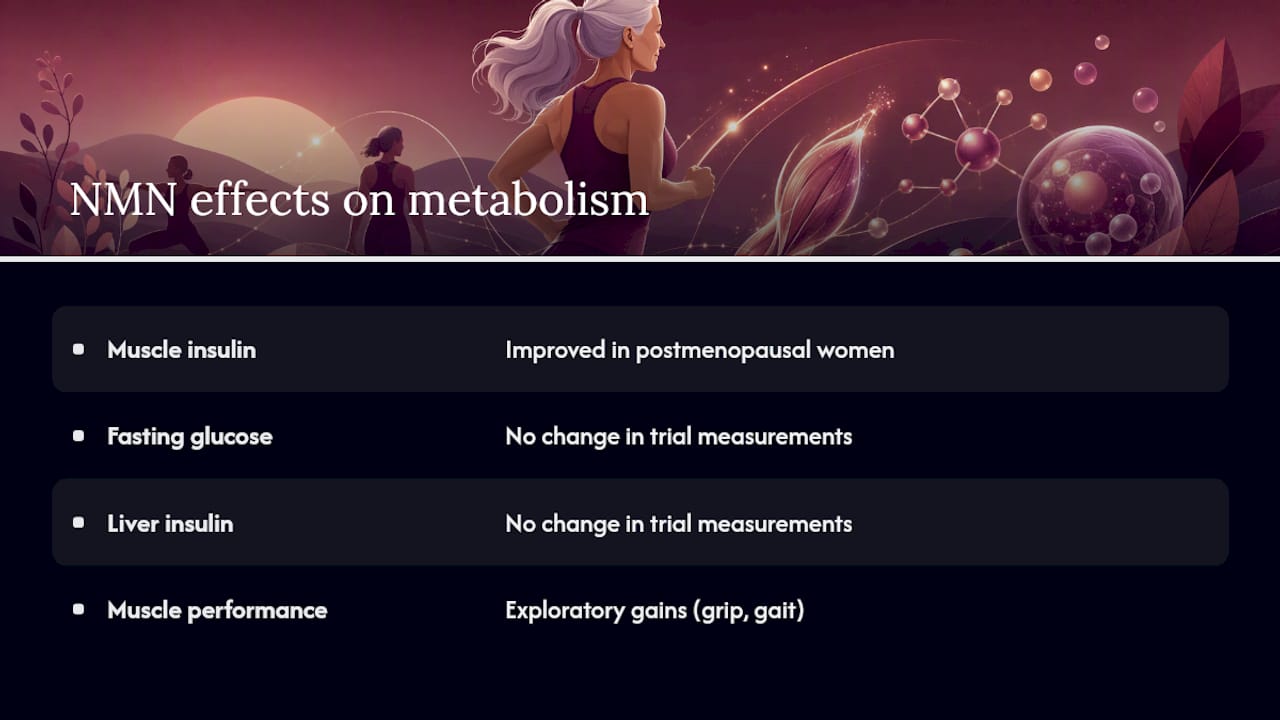
Energy and muscle performance come next, though the evidence here is thinner and drawn mostly from older-adult and endurance-exercise studies rather than women-specific trials. Grip strength and gait speed improvements are encouraging but exploratory, meaning researchers flagged them as worth studying further rather than confirmed effects.
Cognitive and mood benefits get talked about constantly in supplement marketing, and the mechanism (better mitochondrial function in neurons) is plausible. Direct human trial data in women measuring cognition or mood, though, is essentially absent right now. Anyone promising sharper focus or better memory from NMN is speaking ahead of the evidence.
Hair and appearance sit in an interesting middle ground. The single-arm study in middle-aged women found real improvements in hair diameter and density, which is a genuinely novel result. It just needs replication with a placebo group before anyone calls it settled science.
Cardiovascular markers round out the list, and here the story is mechanistic plausibility without confirmatory human trials. NAD+ supports vascular cell function in preclinical models, but no large trial has tracked blood pressure or arterial health in women taking NMN over time.
Is NMN safe for women, and who should avoid it?
Across the trials published so far, NMN has a good short-term safety record. Clinical trial reviews report mostly mild adverse events, and the doses used (typically 250 to 500 mg per day) were generally well tolerated over periods up to 12 weeks. That said, “generally well tolerated for 12 weeks” is a very different statement from “safe for years of daily use,” and nobody can honestly claim the second one yet.
On the regulatory side, NMN sits in a gray area worth understanding. It is sold as a dietary supplement, not an FDA-approved drug, and it is not approved to treat, prevent, or cure any metabolic disease. Consumer health reporting has also noted increased FDA scrutiny around NMN’s supplement classification in recent years, which is part of why sourcing from a transparent, quality-tested brand matters more than usual in this category.
A few groups need a direct conversation with a clinician before touching NMN at all:
- Pregnant or breastfeeding women, since no trials have studied safety in these groups.
- Anyone with a personal or family history of hormone-sensitive cancers, given NAD+'s role in cell proliferation pathways.
- Immunocompromised individuals or anyone with a surgery scheduled in the near future.
- Women on hormone replacement therapy, given the estrogen-SIRT1 interaction discussed earlier.
If you take prescription medications, check with the prescriber before adding NMN. There isn’t a well-mapped drug interaction profile yet, and that uncertainty cuts both ways.
Pro Tip: Bring the actual supplement label, not just the ingredient name, to your next doctor’s appointment. Milligram amounts and co-ingredients (like the mushroom extracts and CoQ10 in some formulas) matter for interaction checks, and “NMN” alone doesn’t tell your doctor enough.
What NMN dosage do women use in clinical studies?
Trial doses cluster in a fairly narrow band, which makes translating research into a starting plan more straightforward than with a lot of supplement categories. The postmenopausal insulin-sensitivity trial used a defined daily dose over 10 weeks and measured muscle-specific outcomes at the end. The hair study used 500 mg per day for 12 weeks. The blood NAD+ and performance trial used 250 mg per day for 12 weeks.
Here’s a practical way to translate that into your own approach:
- Start at the lower end. A 250 mg daily dose has the most human trial data behind it and is the reasonable starting point for most healthy women.
- Hold steady for 6 to 12 weeks before judging results. Every trial that showed measurable change ran at least that long; expecting results in a week or two sets you up for disappointment.
- Track something specific, not “how I feel.” If your goal is metabolic, ask your doctor about fasting insulin or A1C before and after. If it’s energy or muscle, track grip strength or a simple fitness marker.
- Reassess at 12 weeks. If you see no change on your chosen marker and no side effects, some women consider a modest increase toward 500 mg, ideally with clinician input.
- Stop and call your doctor if you notice any unusual symptoms, gastrointestinal or otherwise, rather than pushing through and hoping it resolves.
How do you choose a quality NMN supplement?
Not every NMN product on the market is what the label claims, and this is a category where quality control genuinely separates real benefit from an expensive placebo. A few checks before you buy:
- Look for third-party testing and a certificate of analysis (COA) confirming the NMN amount matches the label.
- Confirm GMP-certified manufacturing, ideally with a US-based facility, and check whether the brand states its sourcing openly.
- Compare the milligram dose per serving against trial doses (250 to 500 mg per day is the range with actual human data behind it), not against a “proprietary blend” that hides the number.
- Consider the form: gummies tend to have better palatability and compliance than capsules for people who dislike swallowing pills, though absorption depends more on formulation quality than delivery format.
- Treat any product with a proprietary blend, no listed milligram amounts, or no available COA as a red flag, no matter how polished the marketing looks.
Where does Cp-1 fit into the NMN research picture?
Cp-1 operates in the health supplement and nootropics space, built around cellular energy, cognitive support, and long-term wellness rather than short-term stimulation. The flagship formula pairs NMN with lion’s mane, reishi, and turkey tail mushroom extracts plus CoQ10, targeting NAD+ production alongside mitochondrial energy and immune support in one product rather than requiring you to stack several.
The company backs its formula with third-party testing, vegan and non-GMO certifications, and US-based manufacturing, the same checklist items covered above. For readers who want the fuller biochemical breakdown behind the formula, Cp-1’s science guide to NMN walks through the energy and cognition pathways in plain language. Hugo’s coverage on the Cp-1 blog focuses specifically on translating NMN research into practical guidance for supplement users navigating this fast-moving category.
A candid take on NMN for women right now
If you’re a postmenopausal woman carrying metabolic risk, the muscle insulin sensitivity finding is real enough to justify a conversation with your doctor. If you’re mainly chasing broad anti-aging promises, temper expectations. NMN is not a substitute for sleep, protein intake, or resistance training. It might complement them; it will not replace them.
— Hugo
Get the quality checklist built into one formula
Everything covered in the buying checklist above (verified NMN dosing, third-party testing, transparent sourcing) is exactly what Cp-1’s NAD+ Advanced Supplement was built around, rather than something bolted on after the fact.
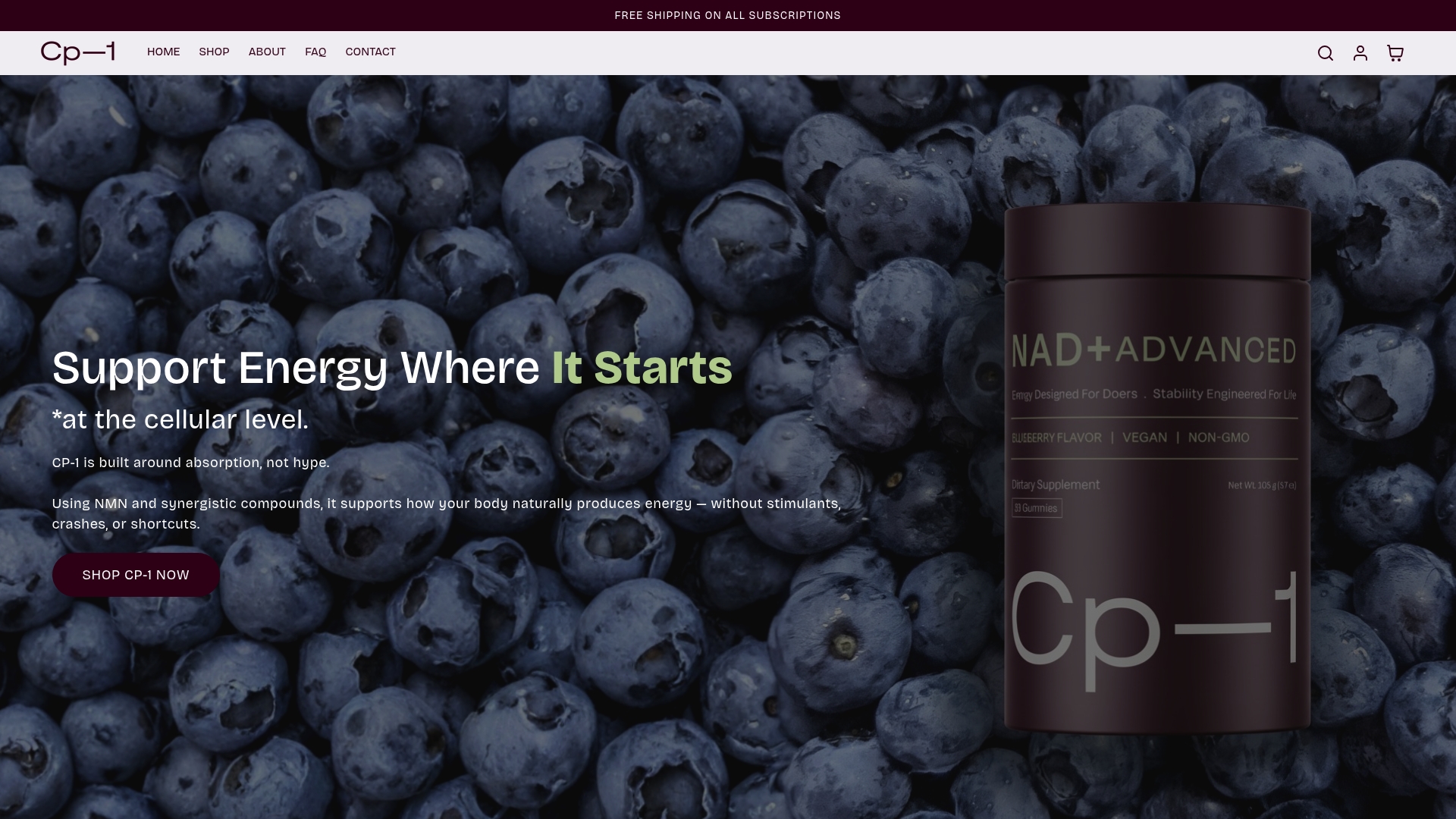
The gummy formula combines NMN with lion’s mane, reishi, and turkey tail mushroom extracts and CoQ10, targeting cellular energy, cognitive clarity, and immune resilience in a single daily serving instead of a shelf full of separate bottles. Every batch is vegan, non-GMO, and manufactured in a GMP-certified US facility, with third-party testing behind the label claims discussed throughout this article. If you’re managing menopause-related metabolic changes or simply want a NAD+ precursor sourced honestly, check the current formula and dosing on Cp-1’s product page before you buy, and run it by your doctor first if you fall into any of the caution groups covered above. Pairing supplementation with solid nutrition fundamentals matters too. Nourished’s guide to protein needs in perimenopause is a useful companion read for the lifestyle side of this equation.
Sources
- A treatment that may improve muscle insulin sensitivity in postmenopausal women - NIDDK
- Oral NMN supplementation effectively elevates blood NAD+ and partially improves muscle performance in older adults (PMC article)
- Oral Supplementation of Nicotinamide Mononucleotide (NMN) Improves Hair Quality and Subjective Perception of Hair Appearance in Middle-Aged Women (MDPI)
- NMN: Benefits, Side Effects And Dosage - Forbes Health