
Most people assume that feeling exhausted, foggy, and slower by their 40s is just part of getting older. But that assumption is increasingly being challenged by real science. Researchers are finding that a lot of what we call “aging” is actually driven by measurable, addressable changes at the cellular level. One of the most talked-about molecules in this space is NMN, short for Nicotinamide Mononucleotide. This article breaks down what NMN is, how it works, what human studies actually show, and what you need to know before deciding if it belongs in your stack.
Table of Contents
- What is NMN? The science explained
- How NMN works in your body
- Benefits and limitations of NMN: What human research really shows
- NMN versus NR and regulatory reality check
- Our perspective: The nuanced truth about NMN in 2026
- Explore advanced NAD+ support with CP-1
- Frequently asked questions
Key Takeaways
| Point | Details |
|---|---|
| NMN boosts NAD+ | NMN is a direct precursor for NAD+, the coenzyme essential for cellular energy and repair. |
| Age-related support | Supplementing NMN may help address NAD+ decline, supporting energy, metabolism, and cognitive health. |
| Human research findings | Studies show NMN safely elevates NAD+ and offers modest health benefits, but no anti-aging miracle. |
| Know your options | NMN and NR both raise NAD+ levels, but differ in research, availability, and regulation. |
| Science is evolving | NMN’s regulatory status and long-term effects are still emerging, so stay informed and adjust as research advances. |
What is NMN? The science explained
NMN is not a trendy buzzword cooked up by a marketing team. It is a naturally occurring compound found in small amounts in foods like edamame, broccoli, and avocado. At its core, NMN is a direct precursor to NAD+, a coenzyme your body depends on for energy metabolism, DNA repair, and activating sirtuins, which are proteins sometimes called longevity genes.
NAD+ (Nicotinamide Adenine Dinucleotide) is essentially the fuel your cells use to do almost everything. Without enough of it, mitochondria slow down, DNA repair gets sloppy, and your body’s ability to regulate inflammation and metabolism starts to break down. The problem is that NAD+ declines up to 50% by middle age. That is not a small drop. It is a significant biological shift that shows up as fatigue, slower recovery, and cognitive drag.
Here is a quick breakdown of what NMN does at the molecular level:
- Precursor function: NMN converts into NAD+ through enzymatic reactions inside your cells
- Sirtuin activation: Higher NAD+ levels activate SIRT1 and SIRT3, proteins tied to metabolic regulation and stress resistance
- DNA repair support: NAD+ feeds PARP enzymes that patch DNA strand breaks
- Circadian regulation: NAD+ helps maintain the clock genes that govern your sleep-wake cycle
| Molecule | Role | Found in |
|---|---|---|
| NMN | NAD+ precursor | Foods, supplements |
| NAD+ | Cellular energy coenzyme | All living cells |
| Sirtuins | Longevity-linked proteins | Activated by NAD+ |
“NMN is one of the most promising tools for addressing the root cause of age-related energy decline, not just masking the symptoms.”
The reason scientists are excited about NMN is that supplementing with it offers a direct way to push NAD+ levels back up. That is a fundamentally different approach from stimulants or adaptogens. You are not tricking your nervous system. You are replenishing something your cells genuinely need.
How NMN works in your body
With a foundation in the science, we can look closer at how NMN actually operates inside you, starting from the moment you take it.
Once you swallow an NMN supplement, absorption begins quickly in the small intestine. Research suggests NMN is absorbed via the Slc12a8 transporter and distributed to tissues including the liver, brain, and muscle. From there, it either enters cells directly or gets converted to NR (Nicotinamide Riboside) first, then back to NMN, and finally into NAD+. The pathway sounds convoluted, but the end result is a measurable rise in cellular NAD+.
Here is the sequence of events after you take NMN:
- Intestinal absorption: NMN is taken up in the small intestine within minutes of ingestion
- Tissue distribution: It travels through the bloodstream to target tissues like muscle, brain, and liver
- Cellular entry: NMN enters cells directly or via conversion to NR
- Enzymatic conversion: NMNAT enzymes convert NMN into NAD+
- Downstream activation: Elevated NAD+ activates sirtuins, supports mitochondrial function, and regulates circadian genes
What this means practically is that your mitochondria, the energy-producing organelles in every cell, get more substrate to work with. SIRT1 activation improves how your body handles metabolic stress. And your brain, which is one of the most metabolically demanding organs you have, benefits from better energy availability and potentially improved neurotransmitter regulation.

One thing worth noting: individual results vary. Gut health, age, and baseline NAD+ levels all influence how effectively NMN converts and gets used. If you have been chasing lasting vitality without stimulants, understanding this mechanism is the first step to knowing whether NMN fits your biology.
Pro Tip: Taking NMN in the morning may align better with your circadian rhythm since NAD+ plays a role in regulating clock genes. Some researchers suggest morning dosing could optimize its effects on energy and metabolism.
Benefits and limitations of NMN: What human research really shows
Understanding the mechanisms is key, but what do actual studies on NMN users reveal about real-world effects?
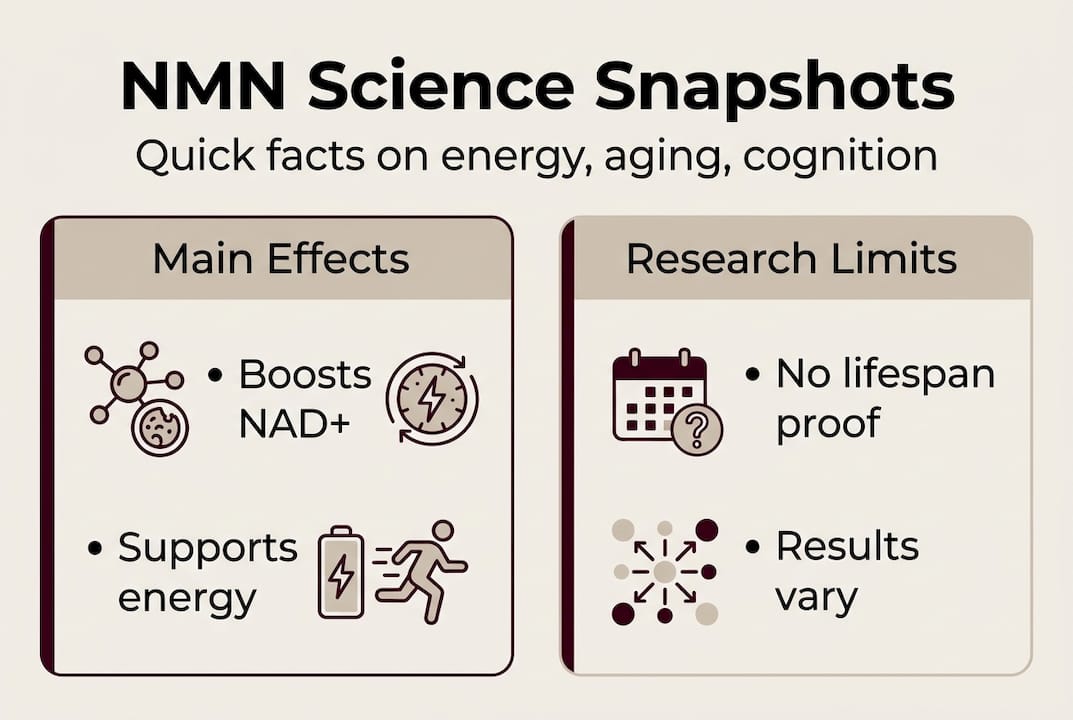
The honest answer is: promising, but not miraculous. Human trials conducted between 2021 and 2026 have shown that doses of 100 to 1250 mg per day are safe and well-tolerated, reliably elevate NAD+ levels, and produce modest benefits in areas like blood pressure, insulin sensitivity, sleep quality, and fatigue reduction. No serious adverse effects have been recorded in studies lasting up to 24 weeks.
Here is what the human data actually supports:
- NAD+ elevation: Consistent across studies, with increases of 40 to 90% at doses of 300 to 1200 mg per day
- Blood pressure: Modest reductions observed in some trials, particularly in older adults
- Insulin sensitivity: Some improvement noted, especially in metabolically compromised individuals
- Fatigue and sleep: Self-reported improvements in several studies
- Walking speed: Slight improvements in older adults in at least one trial
| Outcome | Evidence strength | Notes |
|---|---|---|
| NAD+ elevation | Strong | Consistent across trials |
| Energy and fatigue | Moderate | Subjective; varies by individual |
| Insulin sensitivity | Moderate | More pronounced in older adults |
| Muscle mass or strength | Weak | No consistent benefit found |
| Lifespan extension | None in humans | Animal data only |
What NMN does not do, at least not in current human studies, is increase muscle mass or physical strength in older adults. That claim gets thrown around in supplement marketing and it is not backed by the data. The CP-1 NAD+ Advanced Supplement approach is built around what the evidence actually supports, not what sounds good on a label.
Key stat: NAD+ levels can rise 40 to 90% with consistent NMN use at appropriate doses. That is a real, measurable biological change, even if the downstream benefits are still being quantified.
Effectiveness also appears to depend on your starting point. Older adults and those with metabolic health challenges tend to see more pronounced responses than younger, already-healthy individuals. That is not a knock on NMN. It just means context matters.
NMN versus NR and regulatory reality check
To make an informed decision, it is critical to know how NMN stacks up against similar compounds and why regulations are evolving.
NMN and NR (Nicotinamide Riboside) are both NAD+ precursors and both genuinely raise NAD+ levels. But they are not identical. NR has more clinical trials behind it, may use different cellular uptake pathways, and currently faces fewer regulatory hurdles in the U.S. NMN, on the other hand, has been removed from the supplement market by the FDA due to its investigation as a potential pharmaceutical drug. That is not a safety issue. It is a regulatory one, and it matters a lot for what you can actually buy.
| Feature | NMN | NR |
|---|---|---|
| NAD+ boosting | Yes | Yes |
| Human trials | Growing | More established |
| U.S. supplement status | Restricted (FDA) | Available |
| Cellular uptake | Direct or via NR | Via NR pathway |
| Liposomal delivery | Available | Available |
Here is what to keep in mind when comparing these two:
- NR is currently the more accessible NAD+ precursor in the U.S. supplement market
- Liposomal delivery formats may improve absorption for both NMN and NR
- Your goals and health status should drive the choice, not just marketing
- Stacking NAD+ precursors with CoQ10 and other mitochondrial support ingredients may amplify results
Pro Tip: If you are evaluating a NAD+ supplement comparison, look beyond the headline ingredient. Formulas that pair NAD+ precursors with mitochondrial cofactors like CoQ10 tend to deliver more complete cellular energy support.
The regulatory situation is worth watching closely. The fact that pharmaceutical companies are investing in NMN as a drug candidate signals that the science is being taken seriously. But it also means the supplement landscape is shifting. Staying informed is not optional if you are serious about optimizing your biology.
Our perspective: The nuanced truth about NMN in 2026
Given the science, you might ask what to actually expect as a health-focused individual or biohacker. Here is our honest take.
NMN is real science, not hype. But it is also not a shortcut. Efficacy varies by age, genetics, and baseline NAD+ levels, and the people who get the most out of NAD+ support are typically those who pair it with the basics: quality sleep, regular exercise, and time-restricted eating. Supplements work best when they are amplifying a solid foundation, not compensating for a broken one.
What most NMN articles miss is the monitoring piece. If you are serious about this, get a baseline NAD+ blood test. Track your response. That is how biohackers actually learn what works for their body, not by reading a label and hoping for the best.
Long-term data on NMN in humans is still limited. The short-term studies are encouraging, but nobody should be making 10-year plans based on 24-week trials. Stay updated as the research evolves. And if you want to understand how cellular energy support connects to energy lessons from supplements and broader wellness, that context matters more than chasing any single molecule.
Explore advanced NAD+ support with CP-1
With a nuanced view in mind, you may be considering the next step for boosting NAD+ and supporting overall cellular health. If you are looking for a science-driven option that goes beyond a single ingredient, we built CP-1 for exactly that reason.
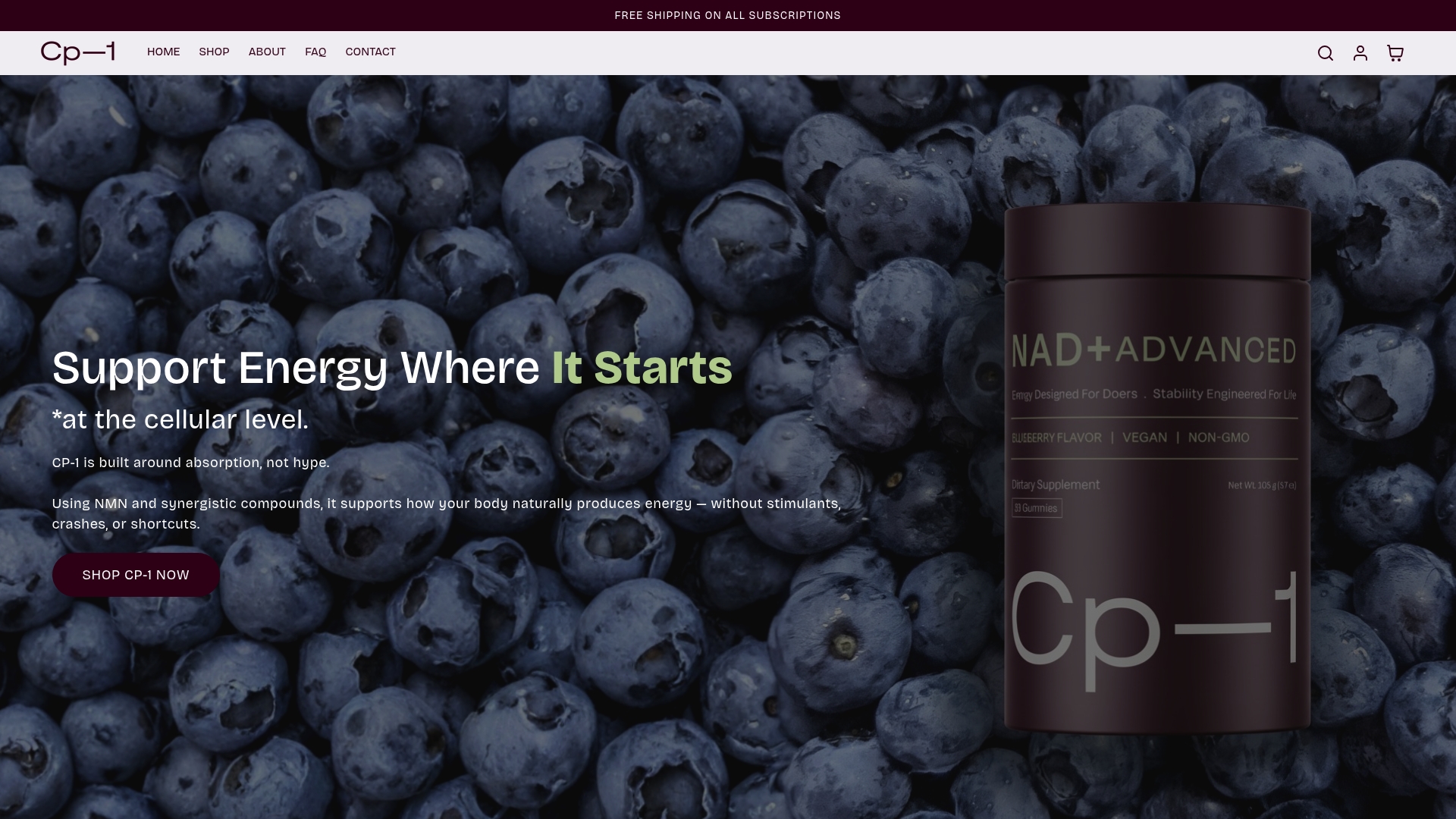
CP-1 combines NMN with CoQ10, lion’s mane, reishi, and turkey tail mushroom extracts to support mitochondrial energy, cognitive clarity, and immune resilience in one formula. Everything is third-party tested, vegan, non-GMO, and made in the U.S. You can explore the full ingredients and science behind every ingredient, or go straight to the CP-1 NAD+ Advanced Supplement to see if it fits your goals. If you want the full picture, explore CP-1 and see what we are building.
Frequently asked questions
Is NMN safe to take daily?
Current studies up to 24 weeks find NMN safe and well-tolerated at doses of 100 to 1250 mg per day, with no serious side effects reported.
Can NMN reverse aging?
In humans, there is no evidence NMN reverses aging or extends lifespan. It may support energy and certain age-related factors, but that is very different from reversal.
How is NMN different from NR?
Both raise NAD+ but may use different cellular pathways. NR has more clinical trials and remains available as a U.S. supplement, while NMN has been restricted by the FDA due to drug investigation status.
Are results from NMN immediate?
NAD+ levels can rise relatively quickly, but benefits like improved energy or metabolism typically require consistent use over weeks, not days.
Why was NMN removed from supplements in the U.S.?
The FDA removed NMN from the supplement market because it is under investigation as a drug, not because of any identified safety concern.