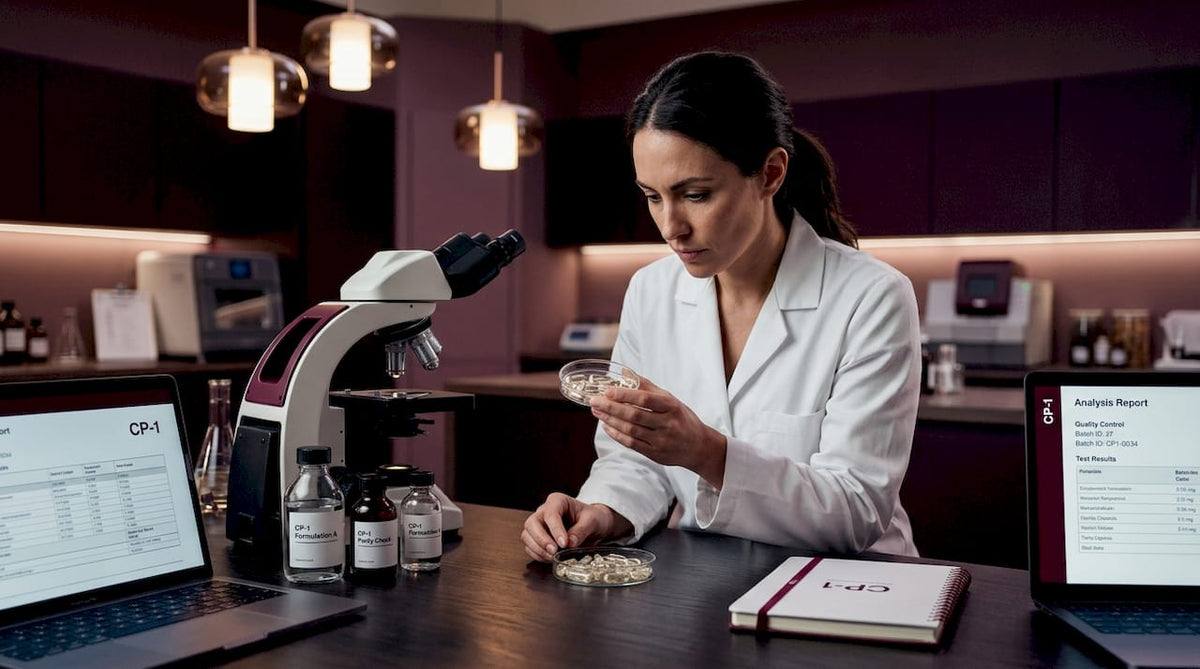
Third-party testing is defined as the independent evaluation of a product by a laboratory or certifying body that has no financial relationship with the manufacturer or seller. For dietary supplements, this process verifies ingredient identity, label accuracy, potency, and the absence of harmful contaminants. Organizations like NSF International and ConsumerLab conduct this work. Unlike FDA pre-market approval, which does not exist for supplements, third-party testing fills a critical verification gap that protects consumers from products that simply do not deliver what they promise.
What is third-party testing and what does it actually verify?
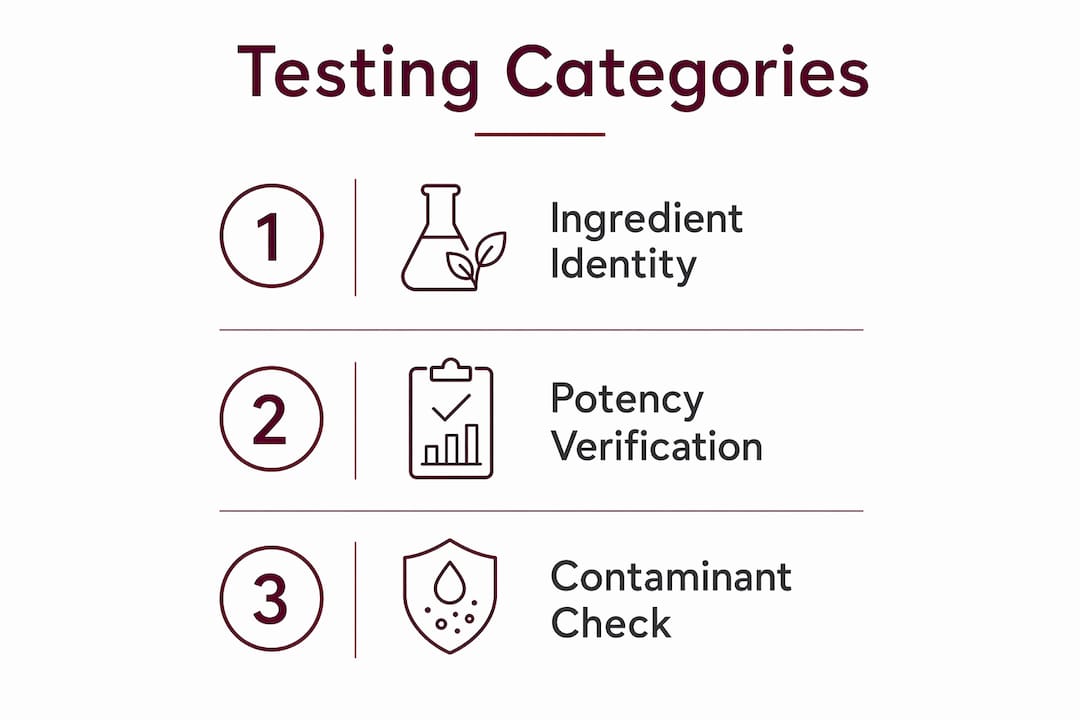
Third-party supplement testing covers three core categories: ingredient identity, potency verification, and contaminant screening. Each category addresses a different failure point in the supplement supply chain, and understanding all three tells you exactly how much confidence to place in a product.
Ingredient identity confirms that what is listed on the label is actually present in the capsule. This matters more than most people realize. Botanical extracts in particular are frequently adulterated or substituted with cheaper materials that look identical in powder form. A lab running identity testing uses methods like high-performance liquid chromatography (HPLC) to confirm the molecular fingerprint of each ingredient.

Potency verification checks whether the amount of each ingredient matches the label claim. A supplement listing 500 mg of NMN (Nicotinamide Mononucleotide) should contain 500 mg, not 200 mg or 800 mg. NSF certifications test vitamins, minerals, botanicals, amino acids, and extracts specifically for this kind of label accuracy.
Contaminant screening is where third-party testing earns its most serious credibility. Labs test for:
- Heavy metals (lead, arsenic, cadmium, mercury)
- Microbial contamination (E. coli, Salmonella, mold, yeast)
- Pesticide residues from agricultural sourcing
- Undeclared pharmaceutical ingredients or stimulants
The contaminant risk is real. Supplements are not sterile pharmaceutical products, and raw ingredient sourcing from overseas markets introduces genuine exposure to toxic metals and microbial hazards. Independent lab verification reduces conflicts of interest that exist when manufacturers test their own products.
| Testing Category | What It Checks | Why It Matters |
|---|---|---|
| Ingredient identity | Confirms correct ingredients are present | Prevents adulteration and substitution |
| Potency/label accuracy | Verifies amounts match label claims | Ensures you get the dose you paid for |
| Contaminant screening | Tests for heavy metals, microbes, pesticides | Protects against direct health hazards |
| GMP compliance | Audits manufacturing process and facility | Confirms consistent production standards |
Pro Tip: When evaluating a supplement brand, ask specifically which of these three categories their third-party testing covers. A brand that only tests for contaminants but not potency is giving you half the picture.
How third-party testing differs from FDA approval and manufacturer testing
The FDA does not approve dietary supplements before they reach store shelves. This is the single most misunderstood fact in the supplement industry. Manufacturers are responsible for ensuring their products are safe, but no federal agency reviews or approves a supplement formula before it is sold to you. Third-party testing adds verification that the FDA system does not require.
Manufacturer self-testing has an obvious structural problem: the company testing its own product has a financial interest in passing results. This is not an accusation of fraud. It is simply a conflict of interest that independent testing removes by design. When an outside lab with no stake in the outcome runs the same tests, the result carries more weight.
Here is how to think about the three layers of quality assurance in supplements:
- Manufacturer testing is internal quality control. It may be rigorous or minimal depending on the company. You have no way to verify it without seeing the actual data.
- FDA oversight applies after a product is on the market. The FDA can act if a supplement causes harm, but it does not pre-screen products for safety or accuracy.
- Third-party testing is independent verification conducted by labs like NSF International, USP (United States Pharmacopeia), or ConsumerLab. It is the only layer that provides externally validated, unbiased results.
One critical limitation to understand: third-party testing is a quality signal, not a health claim. A certified supplement has been verified to contain what it says and be free of major contaminants. It has not been proven to produce a specific clinical outcome in your body. Those are two entirely different questions, and conflating them is one of the most common mistakes supplement buyers make.
Pro Tip: If a brand uses third-party testing as proof that their product “works,” that is a red flag. Testing confirms quality and purity. Clinical effectiveness is a separate question answered by human trials, not lab analysis.
How to recognize trusted third-party certification marks
Not all third-party testing claims are equal. The phrase “third-party tested” appears on thousands of supplement labels, but testing programs vary widely in rigor. Some programs only verify batch identity. Others conduct thorough facility audits, repeated testing across multiple production runs, and contaminant screening for dozens of substances. Knowing which certification marks carry real weight is the practical skill that separates informed buyers from everyone else.
These are the certifications worth recognizing:
- NSF Contents Certified: Confirms that the product contains the ingredients listed on the label in the declared amounts. This is NSF’s entry-level supplement certification and covers label accuracy.
- NSF Certified for Sport®: The most rigorous NSF mark for supplements. It requires ongoing audits and lab testing and is recognized by the NFL, NBA, MLB, and other major sports organizations. It screens for over 270 substances banned in sport.
- USP Verified: The United States Pharmacopeia mark confirms ingredient identity, potency, purity, and that the product will dissolve properly for absorption. USP has been setting pharmaceutical standards since 1820.
- ConsumerLab Approved: ConsumerLab independently purchases and tests products without manufacturer involvement. Their approval seal means the product passed testing for their specific quality criteria.
Brands like Centrum, Nature Made, and Nature’s Bounty display certification marks on their labels, and consumers can verify these directly through each testing program’s public database.
Transparency is the other half of this equation. A credible brand makes its Certificates of Analysis (COAs) accessible. A COA is the actual lab document showing test results for a specific production batch. Brands lacking accessible test results often rely on marketing language rather than independent findings. If a company cannot or will not share a COA, treat their testing claims with skepticism.
The verification checklist for any supplement you are considering:
- Does the label display a recognized certification mark (NSF, USP, ConsumerLab)?
- Can you find the product in the certifying organization’s public database?
- Does the brand publish COAs for individual production batches?
- Does the testing scope cover potency, identity, AND contaminants, or only one category?
Why third-party testing matters for your purchasing decisions
Third-party testing matters because independent verification mitigates real risks from microbial hazards and toxic metals while encouraging consistent manufacturing quality. This is not a theoretical benefit. The supplement industry has documented cases of products containing undeclared stimulants, heavy metal levels above safe limits, and ingredients present at a fraction of the labeled dose. Independent testing is the mechanism that catches these problems before they reach you.
Label accuracy directly affects your health decisions. If you are taking a supplement to support NAD+ production and the NMN content is 40% of what the label claims, you are not getting the physiological effect you are aiming for. You are spending money on a product that cannot deliver its stated purpose. Verified potency is not a luxury feature. It is the baseline requirement for a supplement to be worth taking.
Third-party certification also creates a market incentive for quality. Brands that invest in rigorous independent testing signal to the market that they are willing to be held accountable. This separates companies building real products from those building marketing decks. For health-conscious consumers who care about supplement quality and safety, certification is one of the clearest signals available at the point of purchase.
The ongoing audit requirement in programs like NSF Certified for Sport® is particularly valuable. A single batch test tells you about one production run. Repeated testing across multiple batches tells you about a company’s manufacturing consistency. That consistency is what you actually need when you are taking a supplement daily for months at a time.
Key takeaways
Third-party testing is the only independent quality verification available to supplement consumers, and certification marks from NSF, USP, or ConsumerLab are the most reliable signals of a product’s safety and label accuracy.
| Point | Details |
|---|---|
| Third-party testing definition | An independent lab verifies ingredient identity, potency, and contaminant absence with no manufacturer involvement. |
| FDA does not pre-approve supplements | Third-party certification fills the regulatory gap that federal law leaves open for dietary supplements. |
| Not all certifications are equal | NSF Certified for Sport® and USP Verified require more rigorous, repeated testing than basic “third-party tested” claims. |
| Testing confirms quality, not efficacy | A certified supplement contains what it claims. Whether it produces a clinical outcome is a separate question. |
| Verify before you buy | Check the certifying organization’s public database and request COAs to confirm testing claims are real. |
What I’ve learned about reading third-party testing claims honestly
I spent years frustrated by the supplement industry before building CP-1. The frustration was not abstract. It was the experience of spending real money on products that either did nothing or made me feel worse, and then discovering the testing claims on those labels were essentially meaningless. “Third-party tested” printed on a bottle can mean almost anything. It can mean a single contaminant screen on one batch, or it can mean a full NSF audit with potency verification across every production run. The label does not tell you which one.
What I tell people now is this: the certification mark matters more than the phrase. NSF, USP, and ConsumerLab have defined standards and public databases. You can look up a product and confirm it passed. That is a real quality signal. A generic “tested by an independent lab” claim with no named certifying body and no accessible COA is marketing, not verification.
The other thing worth saying plainly is that third-party testing tells you about what is in the bottle. It does not tell you whether the formula is well-designed, whether the doses are clinically relevant, or whether the ingredients work synergistically. Those questions require a different kind of research. When I look at a supplement, I want both: verified quality through independent testing, and a formula built on actual science rather than label appeal. One without the other is not enough.
If you are serious about your health, learn to evaluate US-made supplement quality alongside testing credentials. Manufacturing location and standards matter alongside what the lab report says.
— Hugo
How CP-1 approaches supplement quality and transparency
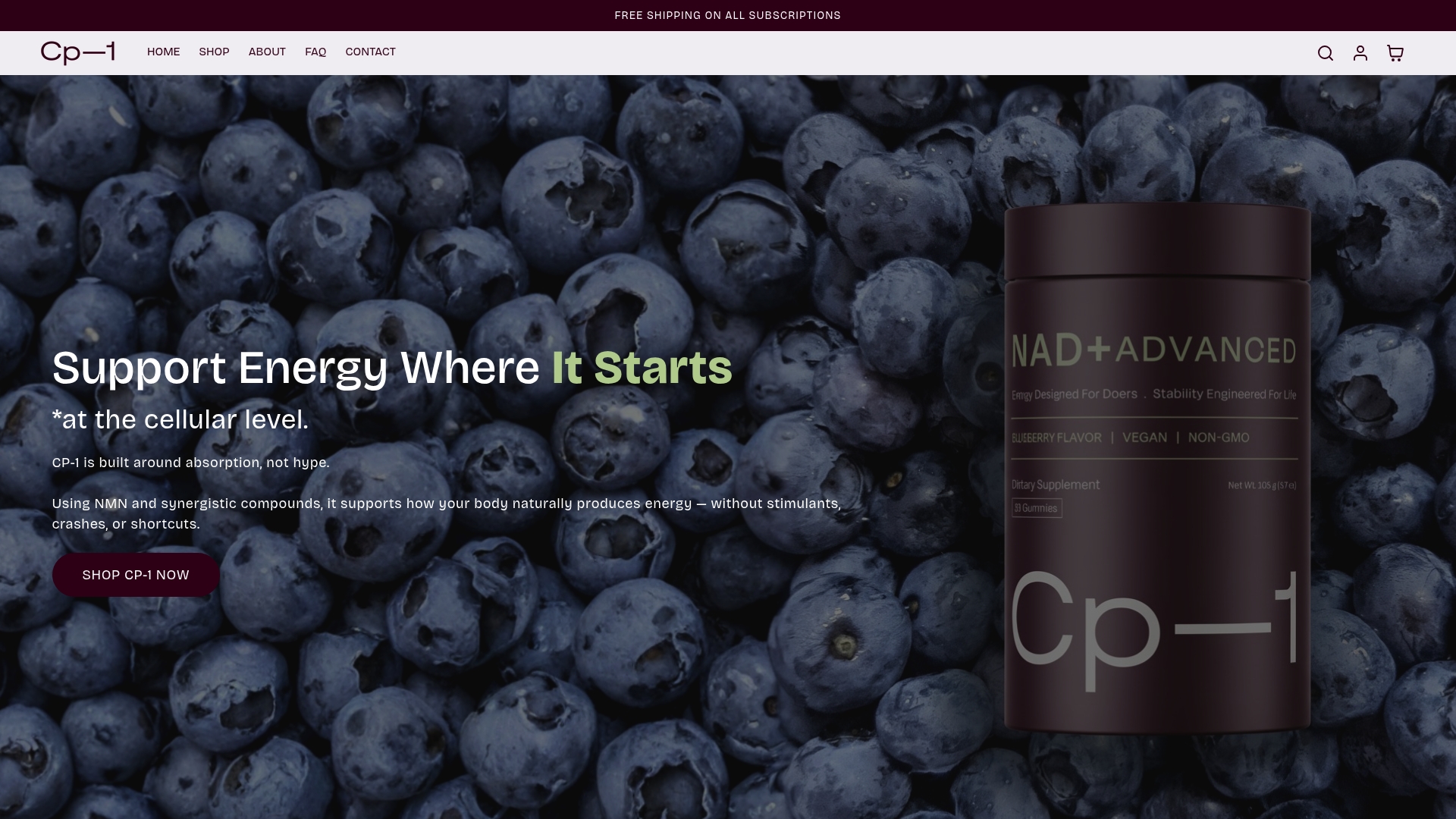
At CP-1, third-party testing is not a marketing checkbox. Every batch of CP-1 goes through independent verification covering ingredient identity, potency, and contaminant screening because the formula contains active compounds like NMN, lion’s mane mushroom extract, and CoQ10 that need to be present at the right levels to do anything meaningful. You can read more about what makes a supplement worth taking and how CP-1 approaches quality from sourcing through production. If you want a supplement built for real results rather than a marketing deck, explore CP-1 and see exactly what goes into it.
FAQ
What is third-party testing in simple terms?
Third-party testing is when an independent laboratory, unconnected to the manufacturer, tests a product to verify its ingredients, potency, and safety. It removes the conflict of interest that exists when companies test their own products.
Does third-party testing mean the FDA has approved a supplement?
No. The FDA does not pre-approve dietary supplements before sale. Third-party testing is a separate, voluntary quality verification process conducted by organizations like NSF International or USP.
Which third-party certifications are most trustworthy?
NSF Certified for Sport®, USP Verified, and ConsumerLab Approved are the most rigorous and widely recognized. Each maintains a public database where consumers can confirm whether a specific product has passed testing.
What does a Certificate of Analysis (COA) show?
A COA is the actual lab document for a specific production batch, showing test results for ingredient identity, potency, and contaminant levels. Reputable brands make COAs available on request or directly on their website.
Does third-party testing prove a supplement works?
No. Third-party testing confirms quality and purity but does not establish clinical effectiveness. Whether an ingredient produces a specific health outcome is determined by human clinical trials, not laboratory quality testing.