

How Supplements Enhance Wellness and Cognitive Performance
Most people treat supplements like a fire extinguisher: grab whatever’s on the shelf and hope it works when things go sideways. But that approach almost guarantees disappointment. The reality is that certain supplements, used strategically and chosen based on real evidence, can make a measurable difference in how you think, perform, and feel. The challenge is cutting through the noise in an industry where marketing budgets routinely dwarf research budgets. This article lays out what the science actually supports, who benefits most, and how to build a supplement strategy that works for your biology, not just your wishlist.
Table of Contents
- Supplements: An overview and FDA regulation
- Evidence-based supplements for cognition and energy
- Personalizing supplement use: Age, deficiency, and lifestyle
- Pitfalls, misconceptions, and quality control in supplement use
- A fresh perspective: Real-world lessons for health-conscious users
- Next steps: Evidence-backed supplement solutions
- Frequently asked questions
Key Takeaways
| Point | Details |
|---|---|
| Regulation matters | Supplements are regulated as foods, so quality and safety depend on independent verification, not pre-market testing. |
| Evidence over hype | Only specific supplements like caffeine/theanine and creatine show real performance benefits in trials. |
| Personalized approach | Testing for deficiencies and individualizing based on age, diet, and lifestyle optimizes supplement benefits. |
| Beware high doses | Mega-dosing vitamin D can increase health risks, especially bone loss; stick to recommended ranges. |
| Quality is key | Look for the USP Verified mark and choose supplements backed by clinical trials to safeguard your wellness. |
Supplements: An overview and FDA regulation
Before we get into what works, let’s be clear about what supplements are and aren’t. They’re not drugs. They don’t go through the same pre-market review process that pharmaceuticals do. According to the AMA’s guidance, dietary supplements are regulated as food by the FDA, meaning there’s no pre-market safety or efficacy review required. Manufacturers are largely responsible for determining whether their products are safe. That’s a significant gap between what people assume and how the system actually works.
There are currently more than 100,000 dietary supplement products on the market in the United States. That number alone should make you pause. Most of those products have never been tested in randomized controlled trials. Some contain ingredients that are genuinely beneficial. Many don’t. The point isn’t to avoid supplements altogether. The point is to approach them the same way you’d approach any other health decision: with evidence and intention.
One practical quality marker you should know about is the USP Verified mark. The United States Pharmacopeia (USP) is an independent, nonprofit organization that tests supplements for identity, potency, purity, and dissolution. Products that earn this mark have been manufactured under Good Manufacturing Practices (GMP). It doesn’t tell you whether a supplement works, but it does tell you that what’s on the label is actually in the bottle.
Here’s a quick breakdown of the major supplement categories you’ll encounter:
- Vitamins and minerals: B vitamins, Vitamin D, magnesium, zinc, iron
- Herbal and botanical extracts: Lion’s mane, reishi, ashwagandha, ginkgo biloba
- Amino acids and derivatives: L-theanine, creatine, L-carnitine
- Specialty and longevity compounds: NMN (Nicotinamide Mononucleotide), CoQ10 (Coenzyme Q10)
- Protein and performance products: Whey, casein, plant-based protein blends
- Probiotics and digestive health: Lactobacillus and Bifidobacterium strains
Understanding which category a supplement falls into helps you ask better questions about the research behind it. If you’re interested in how these fit into larger health routines, our breakdown of daily wellness workflows covers the practical side in detail.
| Category | Regulatory standard | Examples |
|---|---|---|
| Vitamins/minerals | FDA food regulations | Vitamin D, B12, magnesium |
| Botanical extracts | FDA food regulations | Lion’s mane, reishi, ashwagandha |
| Specialty compounds | FDA food regulations | NMN, CoQ10, alpha lipoic acid |
| USP Verified products | USP third-party verification | Varies by brand |
“Supplements should complement a balanced diet, not replace it.” This distinction is fundamental. No supplement corrects a consistently poor diet, chronic sleep deprivation, or a sedentary lifestyle. Those factors have to come first.
With regulatory context established, let’s look at which supplements are actually backed by solid research.
Evidence-based supplements for cognition and energy
Here’s where most articles go wrong. They list 20 supplements with loosely worded claims and call it a day. We’re going to be more precise than that.
The honest truth is that the evidence base for most nootropics (cognitive enhancers) is thin, fragmented, or based primarily on animal models. A small number of compounds, however, have earned their place through well-designed human trials. These are the ones worth understanding in depth.
Caffeine plus L-theanine is the most consistently supported combination for acute cognitive enhancement. Caffeine alone is stimulating, but it can increase anxiety and cause jitteriness in higher doses. L-theanine, an amino acid found naturally in green tea, smooths out those rough edges. At doses of 40-200mg caffeine paired with 100-200mg L-theanine, studies show meaningful improvements in attention, reaction time, and working memory, especially in sleep-deprived individuals. If you’ve ever had a rough night and needed to think clearly the next morning, this combination addresses that gap better than caffeine alone.
Creatine is primarily known as a muscle-building supplement, but its cognitive effects are underappreciated. Creatine supports the production of ATP (adenosine triphosphate), which is the primary energy currency of every cell, including neurons. At 5g per day, creatine has shown benefits for cognitive function under stress and sleep deprivation, and is particularly effective in older adults whose dietary creatine intake from meat may be lower. This isn’t a shortcut. It’s supporting a fundamental energy mechanism.

Caffeine for athletic performance deserves its own mention. At doses of 3 to 6mg per kilogram of body weight, caffeine consistently improves power output and endurance performance in elite athletes. This is one of the most replicated findings in sports nutrition science. The mechanism is well understood: caffeine blocks adenosine receptors in the brain, which reduces perceived exertion.
Pro Tip: When evaluating any nootropic or performance supplement, ask specifically whether the evidence comes from randomized controlled trials in humans. Animal data and in vitro (test tube) studies are starting points, not endpoints. If a brand can’t point you to human trial evidence, that tells you something important.
Here’s a comparison of the top evidence-backed options:
| Supplement | Evidence tier | Primary benefit | Suggested dose |
|---|---|---|---|
| Caffeine + L-theanine | Strong | Acute cognition, attention | 100mg/200mg |
| Creatine monohydrate | Strong | Energy, cognitive resilience | 5g/day |
| Caffeine alone | Strong | Athletic performance | 3-6mg/kg |
| Lion’s mane extract | Moderate | Neurogenesis support | 500-1000mg |
| Vitamin D | Moderate | Cognition, immunity, bone | 1000-2000 IU |
| B12 (methylcobalamin) | Moderate | Energy, nerve function | 500-1000mcg |
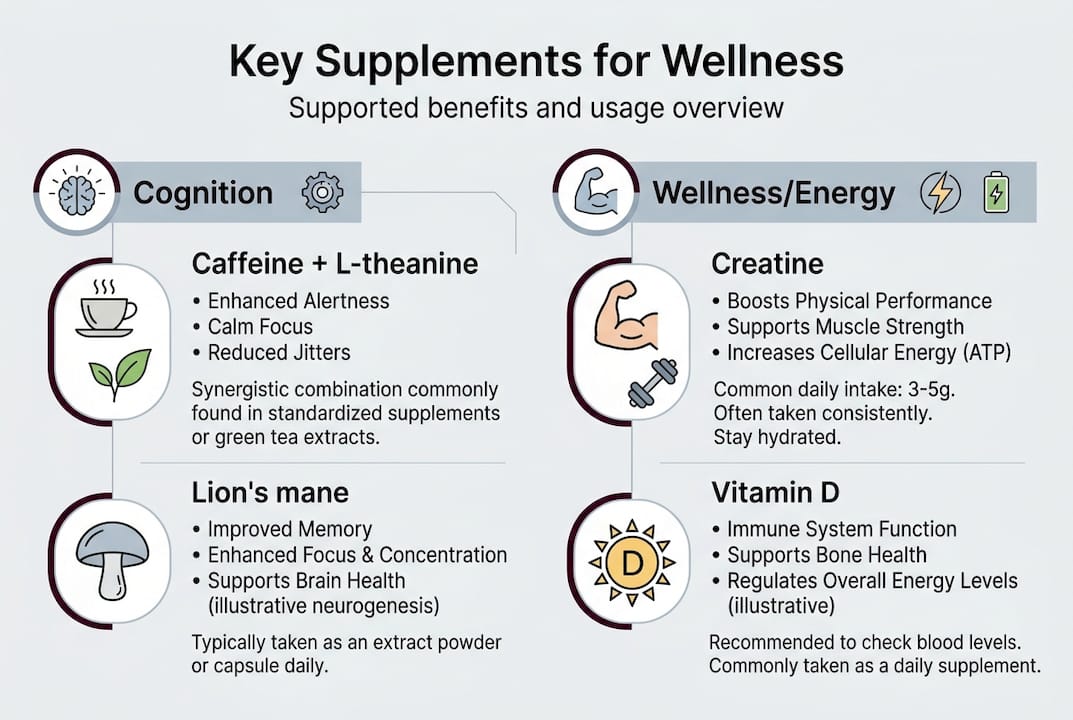
For those wanting to enhance cognition without relying on stimulants at all, we’ve covered non-stimulant cognition boosters in detail elsewhere. And if lasting energy without the crash is your goal, non-stimulant energy strategies address that specifically.
Knowing what works is one thing. Knowing what works for you is different. That’s where personalization comes in.
Personalizing supplement use: Age, deficiency, and lifestyle
No supplement protocol works the same way across every person. Age, diet, existing deficiencies, stress levels, and training volume all change what your body actually needs. One of the biggest mistakes I see in the biohacking community is copying someone else’s stack without asking whether those inputs match your own biology.
Here’s a practical approach to building a personalized strategy:
-
Get baseline bloodwork done. Before spending money on supplements, find out what you’re actually deficient in. Key markers to check: Vitamin D (25-OH), B12, ferritin, magnesium (RBC, not serum), homocysteine, and fasting glucose. Your doctor can order most of these.
-
Address true deficiencies first. If your Vitamin D is low, fix that before adding anything else. Vitamin D supplementation is specifically recommended for older adults to support bone health, and research continues to explore its possible roles in immune function and cognitive health.
-
Account for your age. Older adults have a genuinely stronger case for certain supplements. Multivitamin supplementation shows modest cognitive benefits in older adults, with COSMOS trial data suggesting it may slow cognitive aging by approximately two years. That’s not dramatic, but it’s real and measurable.
-
Align with your lifestyle. High-stress individuals or endurance athletes have different depletion patterns than sedentary office workers. Creatine, magnesium glycinate, and adaptogens like ashwagandha may address stress-related depletion in ways a basic multivitamin won’t.
-
Introduce one supplement at a time. This sounds obvious, but most people don’t do it. If you add five things at once and feel better (or worse), you have no idea what caused the change. Give each new addition four to six weeks before evaluating.
A critical caveat on Vitamin D: more is not better. High doses above 4,000 IU per day can increase the risk of bone loss and other adverse effects. Supplementing without testing is guessing.
Pro Tip: Supplements work best as a complement to solid fundamentals. No amount of NMN or lion’s mane offsets consistent sleep deprivation, chronic stress, or a diet built around processed food. Build the foundation first, then use targeted supplements to optimize from a position of relative health.
For those specifically interested in how NMN supports cellular energy and the aging process, our NMN guide breaks that down with the research context it deserves. If athletic performance and body composition are part of your goals, see our practical breakdown of safe bodybuilding supplements.
Personalizing your regimen is only part of the process. Let’s address some of the common pitfalls that trip up even experienced supplement users.
Pitfalls, misconceptions, and quality control in supplement use
The supplement industry is full of products formulated for a marketing deck, not for the person swallowing them. Here’s a candid breakdown of where people go wrong.
Common misconceptions and mistakes:
- More expensive equals more effective. Price is not correlated with efficacy. Some of the best-supported supplements (creatine, B12) are inexpensive. Some of the priciest nootropic blends have almost no human trial data.
- If it’s natural, it’s safe. Natural doesn’t mean safe, especially at concentrated extract doses. Kava, for example, is natural and carries real risk of liver damage at high doses.
- Proprietary blends are superior. Proprietary blends are often a way to hide underdosed ingredients. If you can’t see how much of each active ingredient is in a capsule, that’s a red flag.
- All brands meet the same standards. They don’t. Without USP Verification or equivalent third-party testing, you’re trusting the manufacturer’s own claims entirely.
- More is always better. Dose matters enormously. Many supplements have a therapeutic range. Below it, there’s no effect. Above it, there can be harm. This is true for fat-soluble vitamins (A, D, E, K) especially.
According to the AMA, manufacturers self-determine safety without pre-market efficacy review. That regulatory gap means the burden of due diligence is on you, the consumer.
It’s also worth noting that the evidence is strongest for a small number of specific supplements. Many nootropics currently marketed as cognitive powerhouses have limited human data, mostly extrapolated from animal studies or small, poorly controlled trials. Bacopa monnieri, lion’s mane, and phosphatidylserine show promise, but the evidence base is not yet at the same level as caffeine/theanine or creatine.
Pro Tip: Before purchasing any supplement for cognitive purposes, search for the ingredient name on PubMed or examine what review papers in peer-reviewed journals actually say. If you’re not finding randomized controlled trials in humans, apply appropriate skepticism.
A fresh perspective: Real-world lessons for health-conscious users
Here’s what I’ve personally come to understand after years of experimenting with supplements, building formulas, and paying close attention to both the science and the industry noise. The biohacking world tends to swing between two extremes: uncritical enthusiasm (“this compound will change your life”) and reflexive dismissal (“supplements are a waste of money”). Neither position serves you.
The truth is more nuanced. Certain supplements deliver real, measurable benefits within a well-structured health context. But they’re not doing the heavy lifting. Sleep, resistance training, whole-food nutrition, and stress management are still the primary drivers of cognitive performance and longevity. Supplements are an amplifier, not a substitute.
One honest lesson I’ve absorbed: most people are optimizing at the margins while neglecting the fundamentals. And the supplement industry profits from that tendency. It’s easier to sell someone a new nootropic than to convince them to fix their sleep. So they keep selling, and consumers keep buying, and results stay mediocre.
On the question of multivitamins specifically, the Harvard evidence is worth sitting with. Optimists frame multivitamins as low-risk nutritional insurance. Skeptics correctly point out there’s no demonstrated reduction in overall mortality, cardiovascular disease, or cancer risk from taking them. Both views have merit. The practical takeaway is that multivitamins may fill gaps, but they’re not a longevity strategy.
What does work as a longevity strategy is supporting mitochondrial health consistently. If you haven’t thought about mitochondria as a central target for cognitive and physical performance, the mitochondrial health checklist is a solid place to start. Healthy mitochondria produce ATP efficiently, manage oxidative stress, and support neuronal function. That’s the real game.
The most effective supplement users I know share a few traits: they test before they supplement, they track their results honestly, they prioritize quality over quantity, and they treat supplements as tools with specific purposes rather than blanket health insurance.
Next steps: Evidence-backed supplement solutions
If you’ve followed the research and are ready to act on it, the next step is choosing products that actually reflect the science rather than just referencing it loosely on a label.
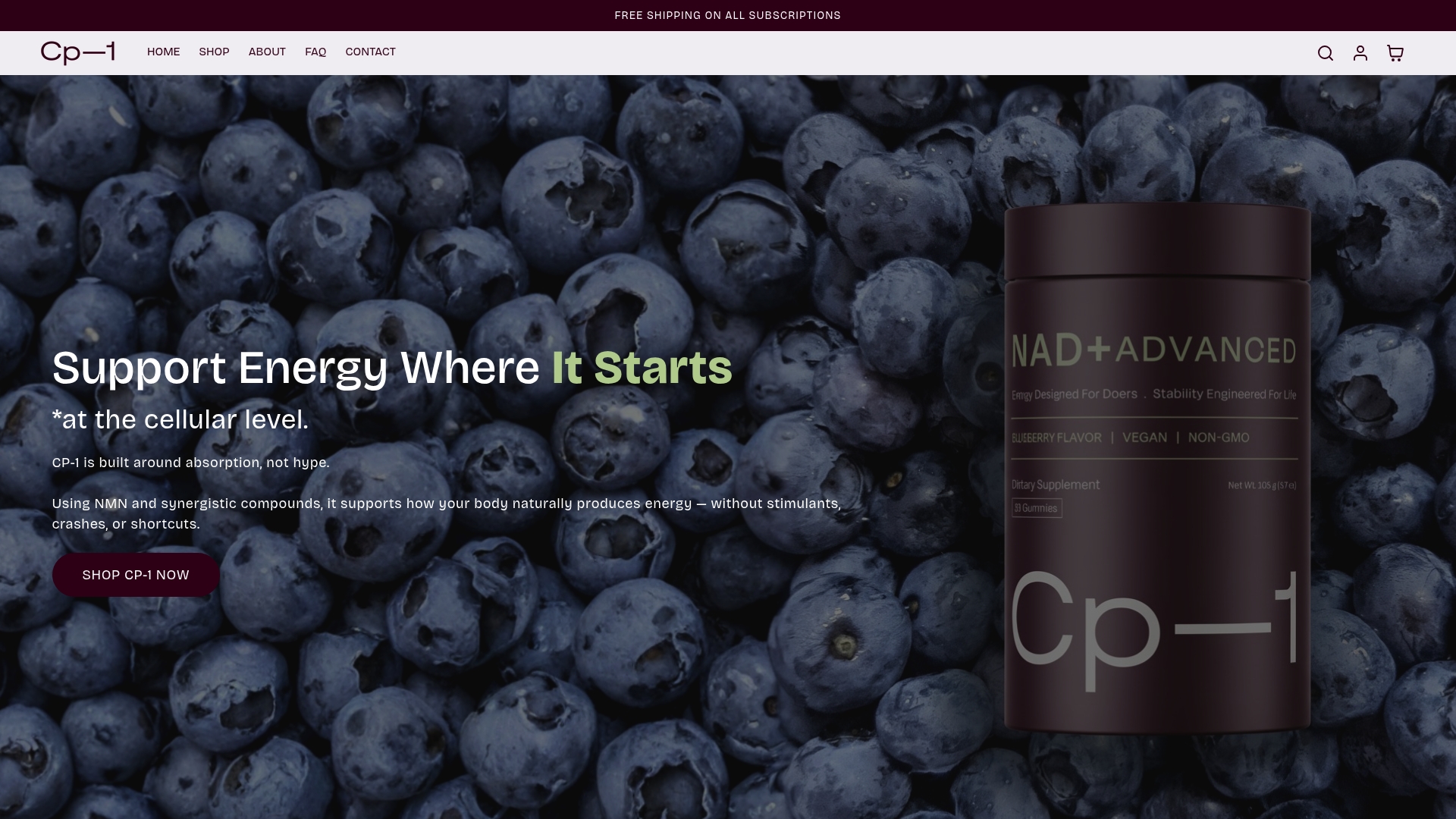
At CP-1, we built our formula around ingredients with genuine mechanistic support: NMN for NAD+ production, lion’s mane and reishi for cognitive resilience and immune support, turkey tail for gut and immune health, and CoQ10 for mitochondrial energy. Every ingredient is vegan, non-GMO, and manufactured in the US to GMP standards with third-party testing. If you’re looking for a cellular energy and cognition stack grounded in real science, the NAD+ advanced supplement is worth a serious look. This is what we formulated for ourselves first, and it shows in how we built it.
Frequently asked questions
Are dietary supplements safe for long-term wellness?
Safety varies significantly by product. Choosing supplements with the USP Verified mark and consulting a health professional gives you the best protection, since the FDA regulates supplements as food without pre-market efficacy or safety review.
Which supplement is most effective for cognitive enhancement?
The caffeine plus L-theanine combination has the strongest human trial evidence for acute cognitive enhancement, particularly for attention and performance in sleep-deprived states.
How important is testing for nutrient deficiencies before supplementing?
Very important. Individualized supplementation based on confirmed deficiencies in markers like Vitamin D or B12 produces far better outcomes than guessing and stacking randomly.
Can high-dose vitamin D supplements harm my health?
Yes. Doses above 4,000 IU per day may increase the risk of bone loss and adverse effects, even though Vitamin D supplementation at appropriate levels is beneficial, especially for older adults.
Do multivitamins lower risk for heart disease or cancer?
No. Current evidence shows multivitamins do not reduce overall mortality, cardiovascular disease risk, or cancer incidence, despite their potential benefit for filling dietary gaps in older adults.