
Fatigue hits around 2 p.m. Brain fog settles in before your most important work. You eat right, exercise, take supplements—and still feel like you’re operating at 70%. That gap between effort and output is real, and it’s frustrating. The good news: the problem usually isn’t willpower or even the wrong supplements. It’s the absence of a structured daily wellness workflow. This guide walks you through evidence-backed habits, targeted supplements, and practical systems you can build today to reclaim sustained energy and sharp cognitive performance, without hype and without overcomplicating your life.
Table of Contents
- Core ingredients for daily wellness workflows
- Step-by-step daily wellness workflow
- Personalization, common pitfalls, and troubleshooting
- Tracking progress and optimizing for results
- Why wellness workflows succeed or fail in the real world
- Optimize your workflow with trusted supplements
- Frequently asked questions
Key Takeaways
| Point | Details |
|---|---|
| Begin with core habits | Focus on sunlight, hydration, movement, and protein meals as your foundation for daily wellness. |
| Personalize your workflow | Customize steps and supplement choices based on your data, lifestyle, and biomarker feedback. |
| Track and iterate | Monitor deep work, HRV, and sleep to verify progress and refine your routine. |
| Avoid over-optimization | Prioritize basics and consistency over chasing advanced stacks and perfectionism. |
Core ingredients for daily wellness workflows
Before you build anything, you need to know what goes into a workflow that actually holds up. Think of it like a recipe. Skip a core ingredient, and the whole thing falls flat.
Biohacking productivity routines emphasize structured time blocks as the backbone of any effective daily system: morning light, hydration, cold exposure, movement, delayed caffeine, deep work cycles, and adaptogen support in the evening. That’s not a wishlist. Those are the levers that control your cortisol curve, focus window, and sleep quality.
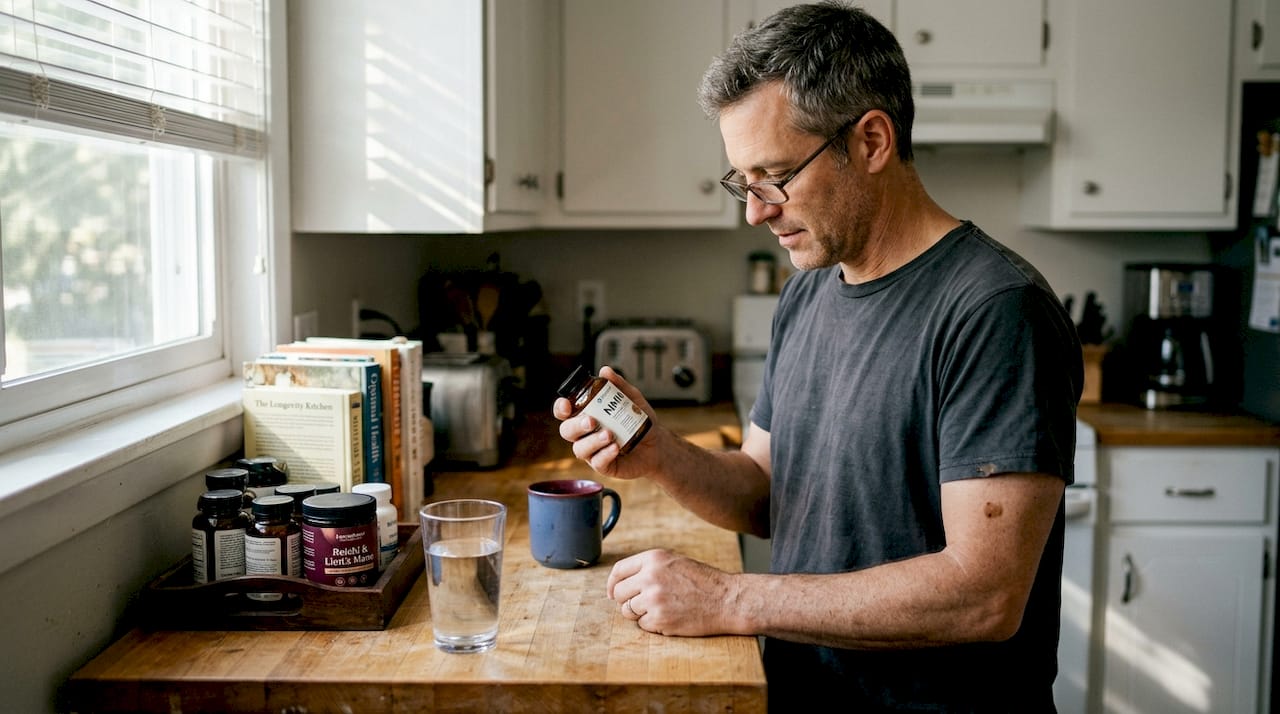
On the supplement side, productivity health essentials include L-theanine paired with caffeine, omega-3 fatty acids, magnesium, vitamin D, NMN (Nicotinamide Mononucleotide), and adaptogens. These aren’t exotic. Most are accessible, well-studied, and work synergistically with behavioral habits.
Core habits to anchor your workflow:
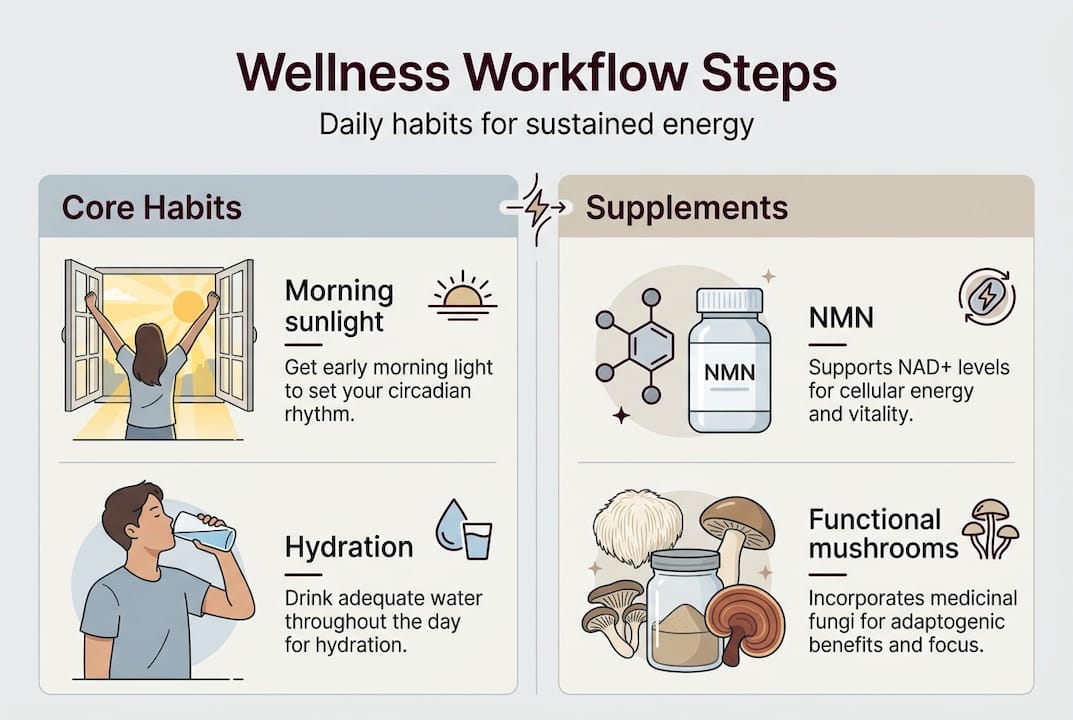
- Morning sunlight (10 to 30 minutes) to set your circadian rhythm
- 500 to 1000ml water with electrolytes within the first 30 minutes of waking
- Cold exposure (cold shower or plunge) for a neurochemical reset
- Resistance or aerobic movement before noon
- Protein-rich breakfast to stabilize blood glucose and support neurotransmitter production
- Functional mushrooms like lion’s mane and reishi for cognitive and immune support
Supplement reference table:
| Supplement | Daily dose | Primary effect |
|---|---|---|
| L-theanine + caffeine | 200mg + 100mg | Focus without jitter |
| Omega-3 (EPA/DHA) | 1000 to 2000mg | Brain health, inflammation |
| Magnesium glycinate | 300 to 400mg | Sleep, muscle recovery |
| NMN | 250 to 500mg | NAD+ support, cellular energy |
| Vitamin D3 | 2000 to 5000 IU | Mood, immunity, performance |
| Adaptogens (reishi, ashwagandha) | Per label | Stress resilience |
For people who want non-stimulant energy options, NMN and functional mushrooms are a strong starting point. They support mitochondrial function without the spike-and-crash pattern from stimulants.
Pro Tip: Personalize your workflow with a minimum of 6 habits, but don’t try to add all of them at once. Use the “never miss twice” mindset—if you skip a habit, commit to returning to it the next day. Consistency over perfection.
Step-by-step daily wellness workflow
With foundational habits and supplements covered, let’s walk through an optimal daily workflow proven by biohackers and researchers.
The core workflow that consistently appears in biohacking and longevity research follows a logical arc from wake to sleep, designed to work with your body’s natural hormonal and neurological rhythms.
Your optimized daily workflow:
- Wake (0 to 10 min): Hydrate immediately. 500ml water with a pinch of sea salt or electrolytes.
- Minutes 10 to 40: Get outside for sunlight exposure. Morning sunlight for 10 to 30 minutes sets cortisol and anchors your circadian rhythm for the entire day.
- Minutes 40 to 60: Cold exposure or breathwork (box breathing, Wim Hof). Raises alertness and neurochemical output.
- Minutes 60 to 90: Protein-forward breakfast. Aim for 30 to 50g protein. Hold off on caffeine here.
- 90 minutes post-wake: Now take your caffeine (paired with L-theanine). Adenosine has cleared enough to let caffeine work without a rebound crash.
- Hours 2 to 5: Deep work block. Protect this window. No meetings. No social media. Use a tool like Make10000Hours to log focused output.
- Midday: Post-meal walk (10 to 15 min) to regulate blood glucose. Take omega-3, vitamin D, and NMN with food.
- Afternoon (hour 7 to 8): NSDR (Non-Sleep Deep Rest, a guided rest protocol) or a short nap. Resets alertness without caffeine.
- Evening: Dim lights by 8 p.m. Take magnesium and adaptogens. Wind down with reading or light stretching.
- Sleep: Aim for 7 to 9 hours. Cool room (65 to 68°F). No screens 30 minutes before bed.
You can follow this through the daily workflow guide if you want a condensed reference version.
Evidence-based vs. advanced nootropic comparison:
| Approach | Core habits | Supplements | Complexity | Risk |
|---|---|---|---|---|
| Evidence-based | Light, movement, sleep, protein | Omega-3, Mg, D3, NMN | Low | Low |
| Advanced/nootropic stack | + Cold, NSDR, tracking | + Racetams, peptides, microdosing | High | Moderate to high |
Pro Tip: Delay caffeine for at least 90 minutes post-wake to protect your adenosine cycle. This single change eliminates most mid-afternoon crashes. If you miss a step, don’t spiral. Just never miss twice.
Personalization, common pitfalls, and troubleshooting
Even the best routines require flexibility and awareness. Here’s how to personalize and sidestep common challenges.
Personalization via tracked data consistently outperforms generic advice. That means testing actual biomarkers—vitamin D, omega-3 index, fasting glucose—before deciding what you need. It also means adjusting for your chronotype. Night owls shouldn’t force a 5 a.m. routine. The habit structure matters more than the exact start time.
Women have an additional layer: hormonal cycles affect sleep, energy, recovery, and supplement response. Adapting your workflow around your cycle’s phases (especially iron and magnesium timing) makes a real difference in results. Expert guidance supports adjusting caffeine and adaptogens for hormonal variability.
Common mistakes that derail wellness workflows:
- Over-supplementing without bloodwork to guide dosing
- Sacrificing sleep to add more morning habits
- Obsessing over wearable data instead of output metrics
- Stacking unproven nootropics without understanding interactions
- Starting with 10 new habits simultaneously and burning out by day 5
A word of caution on nootropic stacking: Some synthetic smart drugs and unproven compound stacks carry real risks, including excitotoxicity, drug interactions, and long-term receptor downregulation. The NMN science, the NMN science guide shows that even well-researched compounds like NMN work best as part of a foundation built on sleep, movement, and whole-food nutrition. Supplements amplify a good base. They can’t replace one.
Troubleshooting guide:
- Energy crashes in the afternoon: Check your caffeine timing and lunch protein content. A post-meal walk resolves most glucose-related dips.
- Poor sleep despite good habits: Audit your evening light exposure and screen use. Magnesium glycinate often helps.
- Mood or motivation issues: Look at omega-3 intake and morning sunlight. Both directly affect dopamine and serotonin pathways.
- Routine feels unsustainable: Reduce to 3 to 4 core habits. Stability beats complexity.
Tracking progress and optimizing for results
Knowing what works for you comes from tracking measurable progress. Here’s how to verify and refine your daily wellness workflow.
Feelings are subjective. Output data is not. The goal is to move from “I feel better” to “here’s the evidence.” This is where biohackers get a genuine edge over people just winging it.
Empirical benchmarks used in structured 30-day cognitive protocols include deep work minutes per day, task completion rates, HRV (heart rate variability), sleep efficiency scores, and reaction time. Track these consistently and you’ll see patterns quickly.
Metrics worth tracking:
- Deep work minutes: Log daily focused work sessions. Target 3 to 4 hours minimum.
- HRV score: A rising 7-day average signals improving recovery and nervous system resilience.
- Sleep quality: Use Oura or a similar wearable. Watch deep sleep and REM percentages.
- Fasting glucose: A CGM (continuous glucose monitor) catches energy-sapping spikes you’d never feel consciously.
- Subjective energy rating: Simple 1 to 10 scale each morning. Cross-reference with objective data.
Two interventions stand out for neurochemical impact. Cold exposure raises dopamine by 250% and norepinephrine by 530%, with effects lasting several hours. NSDR/Yoga Nidra protocols boost dopamine by 65% after just 20 minutes. These aren’t marketing claims. They’re peer-reviewed findings worth building around.
Use daily routines research to benchmark your protocol against what’s showing up in real data. And before you reach for new supplements, review safe supplement strategies to make sure your stack is actually serving your goals.
Iterate every 2 to 4 weeks. Add one variable at a time. Remove what doesn’t move your metrics. That’s how you build a workflow that actually lasts.
Why wellness workflows succeed or fail in the real world
Here’s something most wellness content won’t say directly: the supplement industry wants you chasing the next compound. New product, new promise, new stack. It creates dependency on novelty instead of results from fundamentals.
The honest truth is that evidence consistently backs basics over complicated stacks. Morning light. Consistent movement. Quality omega-3s. Seven to nine hours of sleep. These behaviors move the needle more than any capsule on the market.
I’ve seen people optimize their supplement protocol while skipping sleep. That’s backwards. A well-structured daily workflow with six consistent habits will outperform a 12-supplement stack taken inconsistently every single time.
The real failure mode isn’t laziness. It’s perfectionism. You miss one morning, feel like the whole system is broken, and abandon it. That’s where “never miss twice” matters more than any data point. Moderate, consistent effort from a personalized workflow beats optimized chaos. Start simple. Track what matters. Add complexity only when the basics are locked in.
Optimize your workflow with trusted supplements
If you’ve built your core habits and you’re ready to add evidence-backed supplemental support, this is where ingredients like NMN come in.
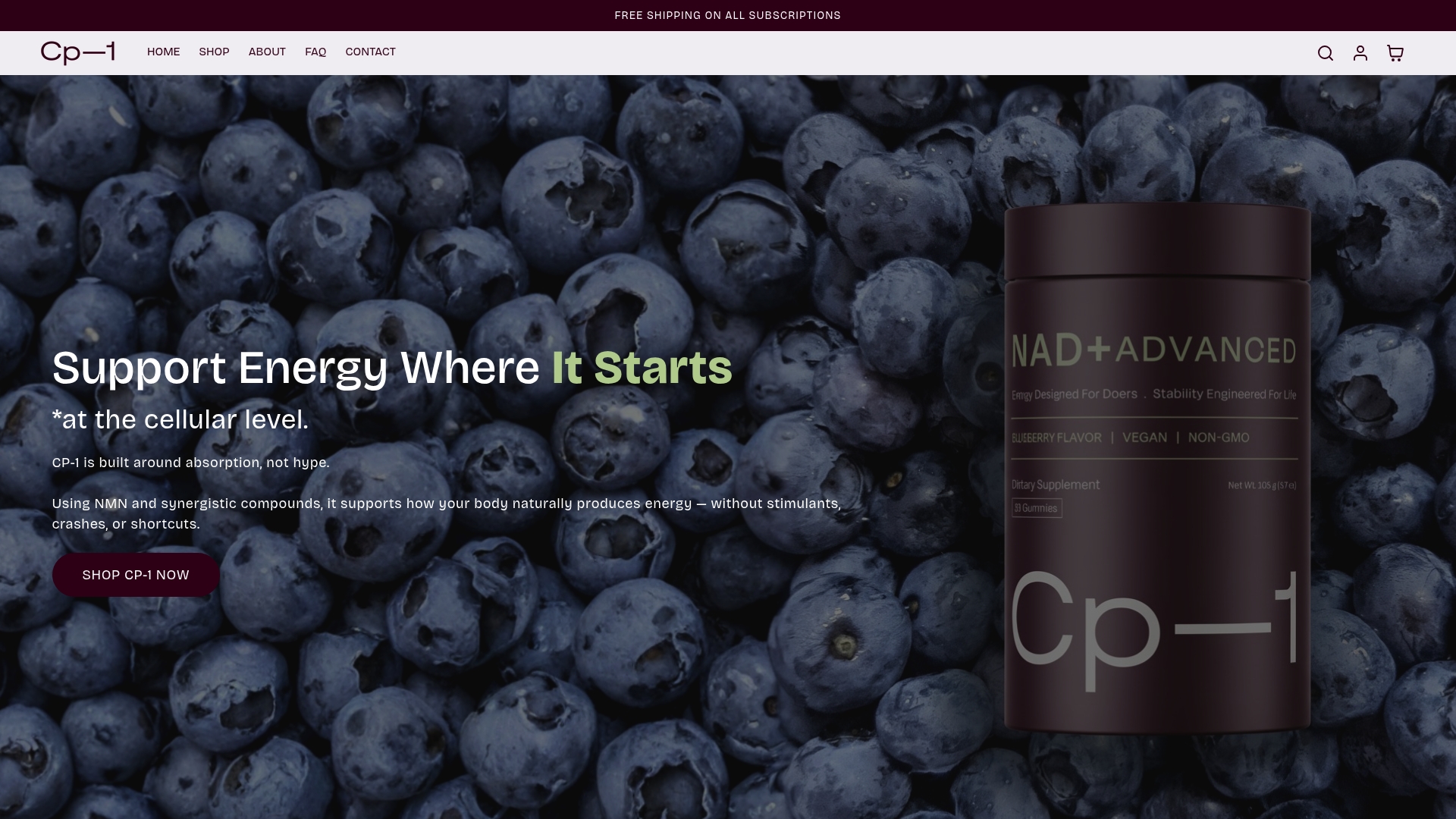
NMN (Nicotinamide Mononucleotide) supports NAD+ production, the molecule your cells use for energy conversion and DNA repair. As NAD+ naturally declines with age, NMN for energy becomes increasingly relevant for anyone trying to sustain cognitive performance and physical output. Our NAD+ supplement combines NMN with functional mushrooms and CoQ10 for mitochondrial support you can actually feel. It’s vegan, non-GMO, third-party tested, and made in the US. Explore the full range of tools and resources at CP-1 to keep building your workflow.
Frequently asked questions
How do I start a daily wellness workflow if I have limited time?
Begin with 3 core habits: morning sunlight, hydration, and a protein-rich breakfast. Add more steps as your routine stabilizes and these feel automatic.
Which supplements are safest for boosting daily energy and focus?
L-theanine paired with caffeine, omega-3s, and magnesium are the most evidence-backed options for daily energy and focus. Avoid synthetic nootropics or unproven smart drugs until you have a solid foundation.
How can I track if my wellness workflow is actually working?
Measure objective data like deep work minutes and HRV alongside sleep quality scores using a wearable like Oura. Feelings confirm data, but data drives decisions.
Are personalized workflows better than generic routines?
Yes. Tailoring based on biomarkers and personal preference consistently outperforms any generic routine, because your biology, chronotype, and lifestyle context are unique to you.