

Why advanced supplements boost cognition without stimulants
Most brain and energy supplements are built for the shelf, not for your biology. The promises are bold, the labels are crowded, and the results are often indistinguishable from a placebo. Many mainstream brain supplements lack credible evidence and rarely outperform a consistent diet or exercise routine. So what separates the garbage from the genuinely useful? Advanced supplements work differently. They use superior ingredient forms, target multiple biological pathways at once, and are built around clinical evidence, not marketing copy. This guide breaks down exactly how they work, what the science actually supports, and whether they belong in your daily routine.
Table of Contents
- What makes a supplement ‘advanced’?
- How advanced supplements target cognition and energy
- Real-world evidence: Do advanced supplements deliver?
- Limitations and skepticism: What the research really says
- A fresh perspective: Using advanced supplements wisely
- Ready to try advanced supplement solutions?
- Frequently asked questions
Key Takeaways
| Point | Details |
|---|---|
| Superior forms matter | Advanced supplements use highly bioavailable ingredients that deliver more effect to your brain and body. |
| Multi-ingredient synergy | Combining key ingredients can support cognition and energy with fewer side effects than traditional stimulants. |
| Evidence guides choices | Opt for products with published clinical data and realistic health claims over hype. |
| Lifestyle still leads | Supplements should complement—not replace—nutrition, sleep, and exercise foundations. |
What makes a supplement ‘advanced’?
To understand the claims behind advanced formulas, start with what sets them apart from regular supplements.
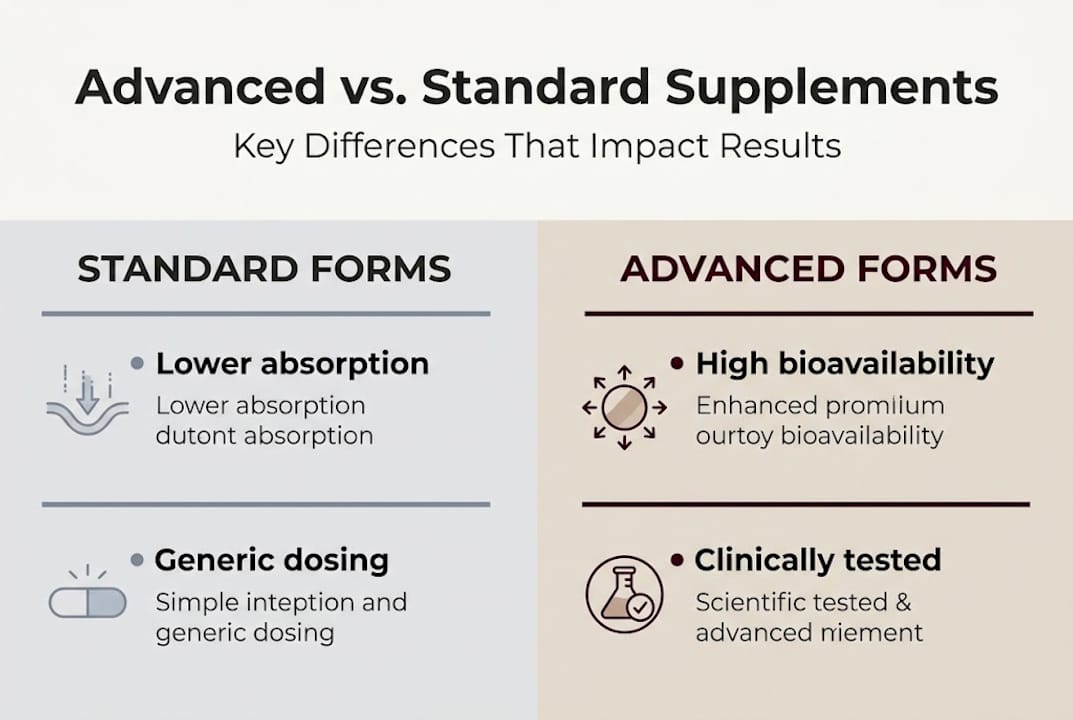
The word “advanced” gets thrown around a lot in this industry. But it has a real meaning when you know what to look for. An advanced supplement uses ingredient forms that your body can actually absorb and put to work, crosses the blood-brain barrier where needed, and combines multiple nutrients that work better together than alone.
Take magnesium as an example. Standard magnesium oxide has notoriously poor absorption. Magnesium L-threonate, on the other hand, is one of the few forms shown to cross into brain tissue. Same mineral, completely different outcome. The same logic applies to iron: ferrous bisglycinate absorbs far better than ferrous sulfate and causes less digestive discomfort. And with B vitamins, the bioactive forms like methylfolate and methylcobalamin are ready for your body to use immediately, unlike their cheaper synthetic counterparts.
Advanced supplements use superior bioavailability forms that deliver meaningfully better cognitive and energy results. That’s the core distinction.
| Ingredient | Standard form | Advanced form | Key advantage |
|---|---|---|---|
| Magnesium | Magnesium oxide | Magnesium L-threonate | Crosses blood-brain barrier |
| Iron | Ferrous sulfate | Ferrous bisglycinate | Better absorbed, gentler on gut |
| B12 | Cyanocobalamin | Methylcobalamin | Bioactive, ready to use immediately |
| Folate | Folic acid | Methylfolate | Bypasses MTHFR gene variation |
Single-ingredient products often disappoint because they ignore how the body actually functions. Cognition, energy, and neuroprotection are not driven by one nutrient. They’re the result of interconnected systems. Multi-ingredient blends that address several pathways simultaneously, like combining functional mushroom benefits with NAD+ precursors, tend to produce more noticeable and lasting effects.
Here’s what to look for when evaluating any formula:
- Clinically studied ingredient forms, not just ingredient names
- Doses that match what was used in actual trials
- Transparent labeling with no proprietary blends hiding individual amounts
- Evidence of third-party testing for purity and potency
Pro Tip: Always check for clinical evidence on the specific form AND the dose used in the trial. An ingredient with great research at 500mg means nothing if your supplement only delivers 50mg.
Understanding NMN and cognition is a good starting point if you want to see how this plays out with one of the most researched longevity ingredients available today.
How advanced supplements target cognition and energy
Now that you know the basics, let’s see how science-backed blends deliver on their promises.

Your brain runs on energy. Specifically, it runs on ATP, the molecule your mitochondria produce to power every cellular function. Advanced supplements target this process from multiple angles rather than just stimulating your nervous system and calling it a day.
Here are the main pathways they work through:
- ATP production support: Creatine donates phosphate groups to regenerate ATP, particularly during high cognitive demand. It’s one of the most studied performance nutrients and shows real benefits for mental fatigue in stressed or sleep-deprived adults.
- Neuroprotection: Ingredients like lion’s mane mushroom stimulate nerve growth factor (NGF), which supports the maintenance and repair of brain cells. This is long-game support, not a quick fix.
- Neurotransmitter balance: Amino acids like L-tyrosine serve as precursors to dopamine and norepinephrine. Bacopa monnieri supports acetylcholine activity. Both influence focus, memory, and mood without stimulating the adrenal system.
- Stress adaptation: Adaptogens for stress like Rhodiola rosea reduce cortisol’s impact on mental performance, helping you stay sharp under pressure without the crash that follows stimulant use.
- Sustained energy without stimulants: Non-stimulant energy options like CoQ10 and NMN support mitochondrial function directly, feeding the cellular machinery rather than whipping it with caffeine.
One combination that consistently shows up in the research is caffeine paired with L-theanine. Caffeine plus L-theanine improves sustained attention by roughly 14% with fewer side effects than caffeine alone. The L-theanine smooths out the jitteriness and sharpens focus without blunting alertness.
Multi-nootropic formulas matched caffeine in attention and executive function without raising blood pressure or negatively affecting mood. That’s a meaningful finding for anyone who wants mental performance without the cardiovascular or anxiety trade-offs.
| Ingredient | Primary effect | Studied dose range |
|---|---|---|
| Creatine | ATP regeneration, mental fatigue | 3 to 5g daily |
| Rhodiola rosea | Stress resilience, focus | 200 to 400mg daily |
| L-theanine | Calm focus, synergy with caffeine | 100 to 200mg daily |
| Lion’s mane | NGF stimulation, neuroprotection | 500 to 1000mg daily |
| NMN | NAD+ support, cellular energy | 250 to 500mg daily |
The takeaway is that synergy beats brute force. High doses of a single isolated nutrient rarely outperform a well-designed blend targeting multiple pathways at clinically relevant doses. The nootropic mushroom science behind ingredients like lion’s mane and reishi makes this point clearly.
Real-world evidence: Do advanced supplements deliver?
But do these advances actually matter outside the lab? Let’s look at real data and situations.
The most compelling evidence comes from randomized controlled trials, the gold standard in nutrition research. And some of the results are genuinely impressive.
Magnesium L-threonate (sold under the name Magtein) is one of the standout examples. Magtein improved cognition and reduced brain age in a 6-week randomized controlled trial, with measurable gains in working memory and episodic memory. That’s not a small claim, and it’s backed by a real trial design.
“Participants taking Magtein showed improvements in both working and episodic memory, with brain age estimates reduced compared to placebo. Effects were observed within six weeks.” — Frontiers in Nutrition, 2025 RCT
Creatine shows similarly strong data for adults under cognitive stress or with poor sleep. Older adults, vegetarians, and people with high mental workloads tend to respond best because their baseline creatine levels are often lower.
Who benefits most from advanced supplements?
- High-stress individuals who experience mental fatigue, brain fog, or difficulty concentrating under pressure
- Women with iron deficiency, where switching to a bioavailable iron form like ferrous bisglycinate can dramatically improve energy and cognitive clarity
- People with dietary restrictions, including vegans and vegetarians who may be low in B12, creatine, or omega-3s
- Adults over 40 experiencing age-related cognitive slowdown or reduced mitochondrial efficiency
- Anyone with poor sleep patterns, since creatine and adaptogens show particular benefit in sleep-deprived cognitive performance
That said, realistic expectations matter. Advanced supplements are not going to turn an unhealthy lifestyle into a high-performance one. They work best as a targeted layer on top of solid daily energy routines and foundational health habits. The research on memory improvement strategies consistently shows that supplements work best when they support, not replace, lifestyle fundamentals.
Limitations and skepticism: What the research really says
While the potential is real, it’s critical to see where the hype ends and facts begin.
Harvard’s health experts are blunt about this: most brain health supplements lack solid randomized controlled trial evidence and are frequently outperformed by lifestyle changes like exercise, quality sleep, and a nutrient-dense diet. That’s not a reason to dismiss advanced supplements entirely. It is a reason to be selective.
The COSMOS trial, one of the largest nutrition studies of its kind, found that multivitamins showed only modest episodic memory benefit and had little meaningful impact on long-term cognition in otherwise healthy adults. The lesson there is not that supplements are useless. It’s that generic formulas targeting everyone tend to help almost no one significantly.
Watch out for these red flags when evaluating any supplement:
- Proprietary blends that hide individual ingredient doses
- Claims like “clinically proven” without a linked trial or published study
- Ingredients listed without specifying the form (e.g., “magnesium” with no form listed)
- Testimonials used as primary evidence
- Formulas with 20+ ingredients at trace doses, which is often a sign of label stuffing
- No third-party testing or certificate of analysis available
Lifestyle factors still matter more than any pill. Sleep, exercise, stress management, and a whole-food diet are the foundation. Stimulant-free energy support from supplements works best when those foundations are in place.
Pro Tip: Use advanced supplements as one layer in a larger wellness strategy. If you’re sleeping four hours a night and skipping meals, no formula is going to fix that. Get the basics right first, then add targeted support on top.
A fresh perspective: Using advanced supplements wisely
So how should you ultimately approach advanced supplementation? Here’s our honest view.
Most people treat supplements like a shortcut. They find a formula with impressive-sounding ingredients, take it for two weeks, feel nothing dramatic, and quit. That’s the wrong framework entirely.
The real value of advanced supplements is precision, not power. When you identify a specific gap, whether it’s low NAD+ levels affecting your cellular energy, a mushroom compound supporting your cognitive resilience, or a bioavailable B vitamin correcting a methylation issue, and you address it with a clinically dosed formula, that’s when results become real and measurable.
Over-prioritizing supplements can actually mask bigger opportunities. If you’re chasing the latest nootropic blend but ignoring chronic stress, poor sleep, or a nutrient-poor diet, you’re optimizing the wrong variable. The most transformative results we’ve seen come from people who combine selective, science-backed formulas with solid energy workflow strategies and genuine lifestyle discipline.
Seek out evidence. Ignore the hype. And integrate advanced formulas based on your actual needs, not someone else’s marketing.
Ready to try advanced supplement solutions?
If you’re considering adding advanced supplements to your wellness strategy, here’s where to start.
We built CP-1 because we were frustrated with formulas designed for a marketing deck, not for the person swallowing them. Every ingredient in CP-1, from NMN to lion’s mane to CoQ10, is chosen based on published research, dosed at clinically relevant levels, and manufactured in the US with third-party testing.
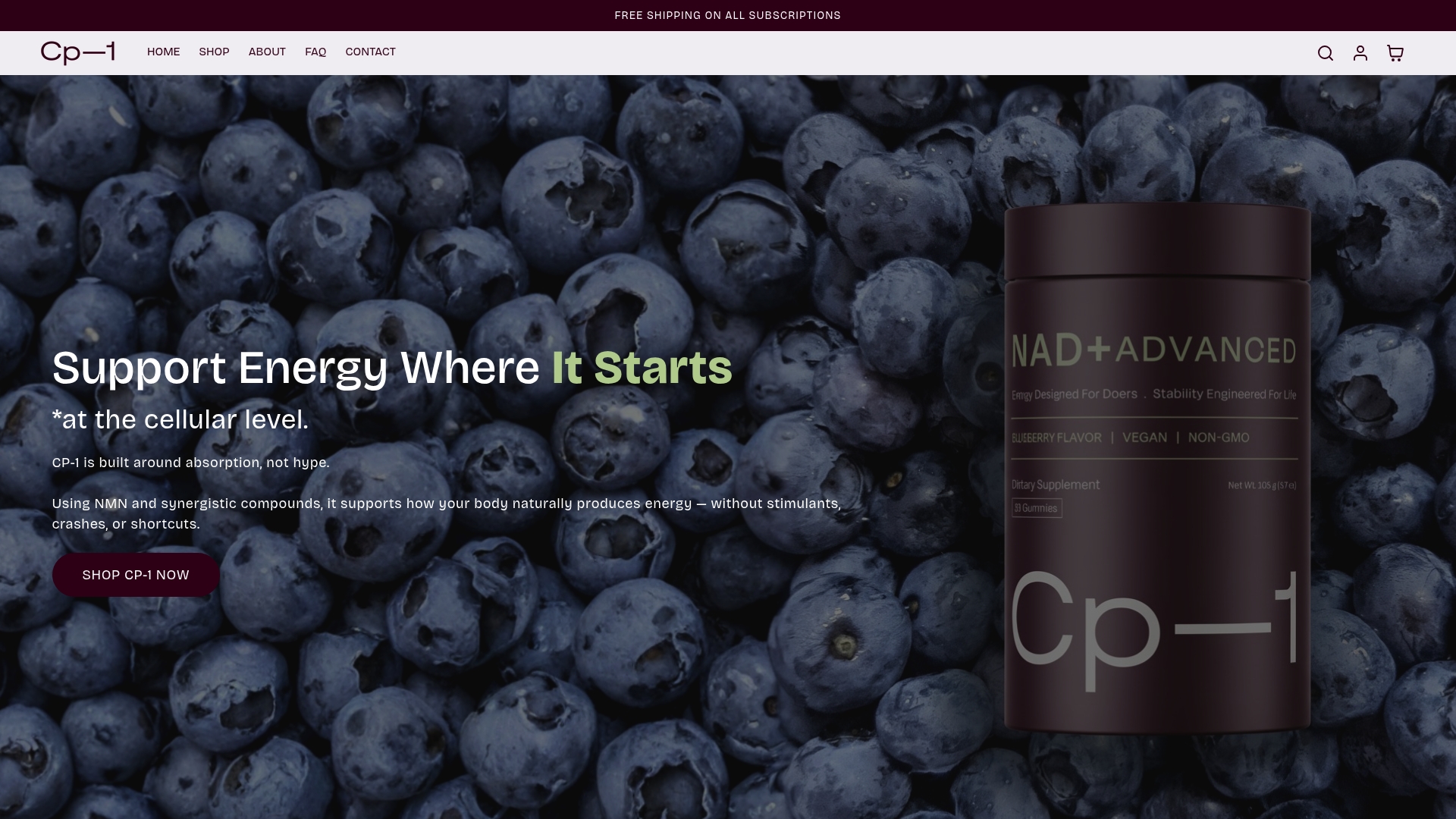
If you want to support NAD+ production, mitochondrial energy, and cognitive resilience without stimulants, our NAD+ advanced supplement is a good place to start. It’s vegan, non-GMO, and built for people who actually read the label. Explore the full range of CP-1 wellness solutions and find what fits your biology, not just your wishlist.
Frequently asked questions
What does ‘bioavailability’ mean for supplements?
Bioavailability refers to how much of a nutrient your body actually absorbs and uses from a supplement. Superior bioavailability forms like magnesium L-threonate or methylcobalamin cross the blood-brain barrier or absorb more efficiently than their standard counterparts.
Are advanced supplements safe to use daily?
Most advanced supplements are safe at clinically-backed doses, but you should check with your healthcare provider, especially if you have medical conditions. Multi-ingredient nootropics have matched caffeine in cognitive performance without raising blood pressure or causing mood side effects in clinical trials.
Can advanced cognitive supplements replace a healthy diet?
No, they should complement a balanced diet and healthy habits, not replace them. Harvard experts warn that diet and exercise still outperform most brain supplements for otherwise healthy adults.
Who benefits most from advanced supplements?
People with high stress, sleep deprivation, or specific nutrient gaps often see the greatest benefits. Multi-ingredient nootropics show particular advantage for those who need caffeine-level focus without the jitteriness or blood pressure increase.
Is there strong scientific evidence for advanced supplement claims?
Evidence is growing for certain ingredients and formulas, but many still lack large long-term studies. Multivitamins show modest episodic memory benefit in large trials like COSMOS, while targeted formulas with studied forms show stronger results in specific populations.