
Most people assume the “Made in USA” badge on a supplement bottle is mainly a patriotism signal. It’s not. Heavy metal contamination like lead and cadmium turns up regularly in plant-based protein powders, often traced directly to imported ingredients. The label you pick up at the store may say “manufactured in the USA,” yet the pea protein inside could have come from a facility with virtually no oversight. Where your supplements are actually made, and more importantly where the ingredients inside them originate, has real consequences for your health. Here’s what you actually need to know.
Table of Contents
- Decoding ‘Made in USA’: What the label really means
- Quality and safety: US facilities vs international risks
- Beyond geography: Why certification and brand reputation matter more
- US-made agility: Custom stacks, innovation, and environmental impact
- Editorial perspective: What most consumers miss about US-made
- Explore trusted US-made supplements for your biohacking journey
- Frequently asked questions
Key Takeaways
| Point | Details |
|---|---|
| US-made label standards | The FTC requires supplements labeled ‘Made in USA’ to be mostly domestically sourced and manufactured. |
| Certification trumps geography | Third-party certifications are the most reliable signals of product safety and quality—not location alone. |
| US audits and safety | US facilities are inspected more frequently than overseas plants, but imported ingredients still introduce risk. |
| Biohacker benefits | US manufacturing enables rapid innovation and custom supplement stacks favored by health enthusiasts. |
Decoding ‘Made in USA’: What the label really means
Building from those safety concerns, let’s demystify what “US-made” actually means for supplements and wellness products. The Federal Trade Commission is the governing body here, and it has a clear standard: a product can only claim “Made in USA” if “all or virtually all” of the product is made domestically. That means the significant parts, processing, and labor must be of US origin.
Here’s where it gets nuanced. Final assembly in the United States is permitted under FTC guidelines, even when key ingredients come from overseas. That’s not a loophole most consumers know about. A supplement company can legitimately encapsulate imported botanical extracts in a US facility and still put “Made in USA” on the label, because the encapsulation technically happens here.
The FTC has been ramping up enforcement. In April 2026, the agency announced a major Made in USA Sweep with multiple law enforcement actions targeting brands making misleading domestic origin claims. Consumer lawsuits are increasing alongside that federal pressure, and brands that were once casual with their labeling are suddenly paying attention.
What does this mean for you as a buyer? A lot, honestly. The label alone doesn’t tell you the full story.
| Claim type | FTC standard | Imported ingredients allowed? | Consumer risk level |
|---|---|---|---|
| “Made in USA” (unqualified) | All or virtually all domestic | No, with limited exceptions | Lower, if enforced |
| “Assembled in USA” | Final assembly domestic | Yes | Moderate |
| “Manufactured in USA” | Vague, often used loosely | Often yes | Higher |
| Third-party certified | NSF, USP, or similar | Depends on cert scope | Lowest |
So what gives you real assurance? Look at the specifics:
- Certificate of Analysis (COA): A document showing actual test results for every ingredient batch, including contaminant screens.
- Third-party certification seals: NSF International, USP, or Informed Sport provide independent verification that what’s on the label is what’s in the bottle.
- Supply chain transparency: Brands that name their ingredient suppliers or disclose sourcing regions are telling you something important about their standards.
- Current Good Manufacturing Practice (cGMP) compliance: US-based facilities are required to follow FDA cGMP regulations, but the key word is “required.” Not all do, and inspections are inconsistent.
“The ‘Made in USA’ label is meaningful, but it’s not a complete quality guarantee on its own. The real signal is what a brand does to verify what goes inside the product, not just where the final step happens.”
The takeaway here is straightforward. The label matters and it’s legally binding, but it’s the first layer of trust, not the last. Use it as a starting point, not a destination.
Quality and safety: US facilities vs international risks
With the labeling standard clarified, compare how US manufacturing actually impacts quality and safety versus international sources.
Let’s talk real data. Consumer Reports research found troubling lead and cadmium levels in plant-based protein powders, with contamination frequently traced to imported pea protein. China produces roughly 90% of the world’s vitamin C, and a significant portion of global pea protein supply also routes through there. These aren’t fringe concerns. This is mainstream supplement supply chain reality.
The imported ingredient risk extends beyond protein powders. A salmonella outbreak linked to contaminated moringa sourced from India resulted in 65 confirmed illnesses and a major supplement recall. Moringa is widely marketed as a clean, green superfood. The contamination had nothing to do with the final product’s branding and everything to do with the raw ingredient source.
Here’s the meaningful comparison between manufacturing origins:
| Safety factor | US-based facility | International facility |
|---|---|---|
| FDA audit frequency | Higher; US-based receives ~85% of FDA facility audits | Lower; foreign facilities inspected less often |
| Heavy metal risk | Lower, especially with domestic ingredient sourcing | Higher, particularly for plant-based ingredients |
| Regulatory traceability | Full supply chain documentation required | Documentation varies widely by country |
| Post-market recall response | Faster, more transparent | Often slower and harder to track |
| Third-party testing access | More commonly available | Less consistent |
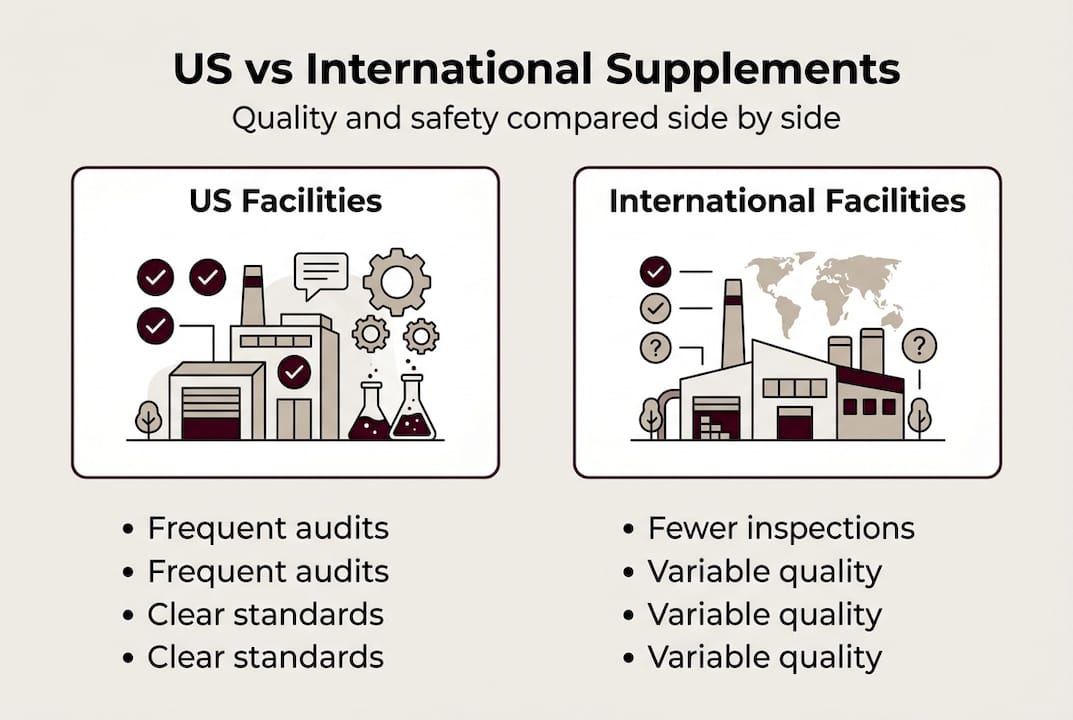
The audit data reinforces this picture. US-based supplement manufacturing facilities receive a significantly higher proportion of FDA inspections compared to their foreign counterparts. That’s not because US facilities are assumed to be problematic. It’s partly because geography makes oversight easier, and partly because imported facilities are harder to reach and regulate.
That said, here’s the nuance that most consumer guides skip: a US facility using imported ingredients is not necessarily safer than a well-run foreign facility. The facility matters, but the ingredients matter just as much.
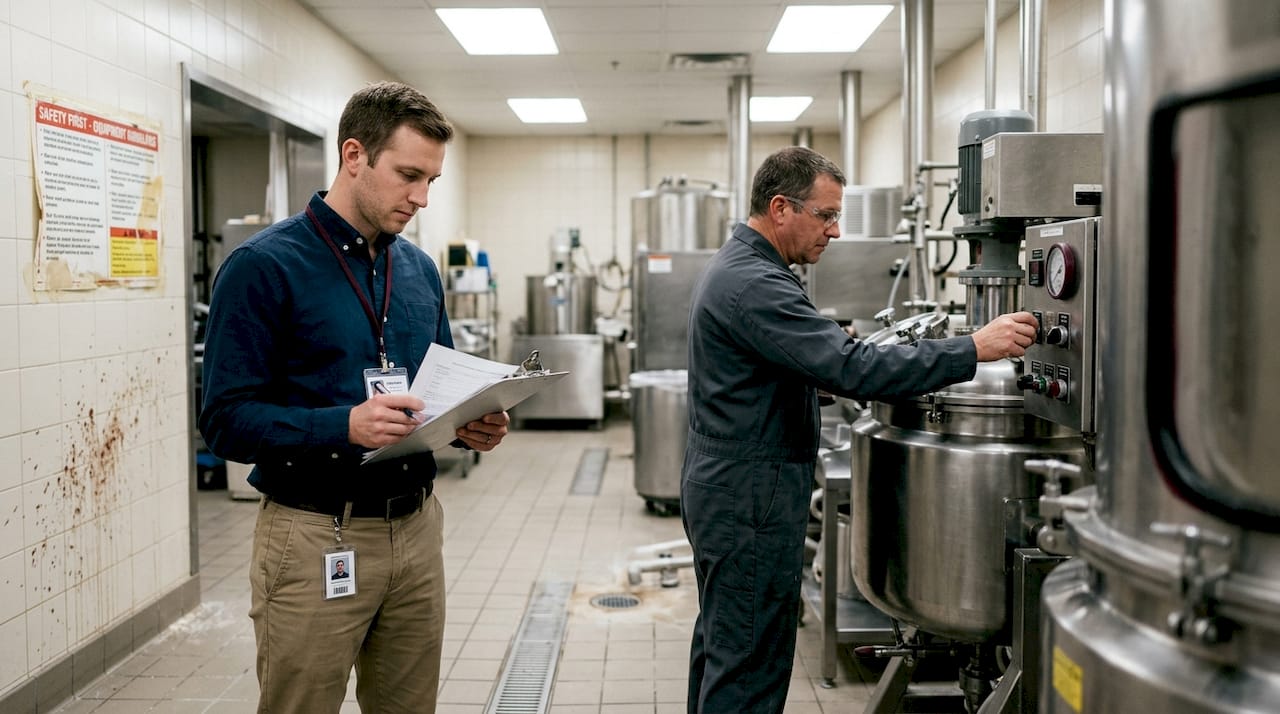
Pro Tip: When evaluating any supplement, search for the brand’s COA on their website or ask for it directly. If a brand goes quiet when you ask for testing documentation, that silence is your answer.
Smart supplement buyers use these safe supplement choices as their standard operating procedure:
- Request batch-specific COAs, not just general testing claims.
- Check for heavy metal screens, including lead, cadmium, arsenic, and mercury.
- Verify the testing lab is accredited and independent, not just the brand’s internal team.
- Cross-reference recall databases, including FDA’s MedWatch and the CDC’s foodborne illness outbreak tracking.
For biohackers specifically, the stakes are higher because you’re stacking compounds. If one supplement carries even low-level lead contamination and you’re taking it daily alongside other products, cumulative exposure becomes a real concern. The functional mushroom benefits you’re after from lion’s mane or reishi mean nothing if the extract is carrying contaminants from a poorly regulated source.
Beyond geography: Why certification and brand reputation matter more
After highlighting US-based facility benefits, shift to why experienced biohackers actually use certifications and brand transparency as their primary buying criteria.
Here’s the honest truth. Country of origin is a proxy, not a guarantee. A supplement that’s fully assembled and sourced in the US, with zero third-party verification, is not automatically safer than a foreign-made product that carries NSF International certification. Geography influences regulatory exposure, but it doesn’t replace independent verification.
Third-party certifications have emerged as the most reliable quality signal in the supplement industry for a simple reason: they require brands to let an outside organization test their product and verify their claims. That’s a fundamentally different standard than a self-reported label.
Key certifications and what they actually verify:
- NSF International: Tests for label accuracy, contaminants, and prohibited substances. Requires facility audits. Widely respected by sports organizations and healthcare providers.
- USP (United States Pharmacopeia): Verifies identity, potency, purity, and performance of the supplement as labeled.
- Informed Sport: Focuses specifically on banned substances, which matters for competitive athletes but also signals rigorous testing protocols.
- Non-GMO Project Verified: Confirms the product doesn’t contain genetically modified organisms, verified through third-party assessment.
- Certified vegan: While not a safety certification, it often correlates with brands that are more transparent about ingredient sourcing overall.
According to longevity and biohacking research, brands like Thorne that carry NSF certification deliver a stronger quality signal than geography alone. For NAD+ boosters, adaptogens, and custom cognitive stacks, certification is where real trust lives.
Brand transparency goes beyond certifications too. The brands worth trusting can tell you:
- Exactly which supplier provides each ingredient
- The country of origin for every raw material
- The specific testing protocols run on each batch
- The results of those tests, available as downloadable documents
This level of documentation doesn’t happen by accident. It’s a deliberate choice by brands that actually care what goes into the product. Most supplement companies aren’t operating at this standard. Frankly, it’s frustrating how rare it still is in 2026.
Pro Tip: Before buying any new supplement, search the brand name plus “COA” or “third-party testing” online. If the only results you find are from their own marketing pages, keep looking.
For biohackers building serious stacks around NMN, CoQ10, adaptogens, or mushroom extracts, brand reputation compounds over time. You’re not making a one-time purchase. You’re building a daily protocol. The brand running your protocol needs to be the most trustworthy partner in your optimization journey, not the cheapest vendor.
US-made agility: Custom stacks, innovation, and environmental impact
Having discussed certifications, look closely at why US manufacturing creates structural advantages for custom wellness solutions and sustainability.
One of the most underappreciated benefits of US-based supplement manufacturing is operational agility. Foreign manufacturers typically require large minimum order quantities, extended lead times, and limited flexibility for formula modifications. For a biohacking-focused brand trying to optimize an NMN and CoQ10 formula based on emerging research, waiting 6 to 9 months for a foreign manufacturing run is a real problem.
US facilities, particularly those specializing in nutraceuticals, allow for small-batch production and rapid iteration. That matters for biohackers because the science moves fast. New research on NAD+ precursors, mitochondrial support compounds, and adaptogen bioavailability publishes regularly. Brands that can respond to new evidence with formula updates are serving their users better than those locked into large foreign manufacturing contracts.
Here’s how US manufacturing agility directly benefits health-conscious consumers:
- Faster formula updates: When new research clarifies optimal dosing or identifies a superior ingredient form, US manufacturers can implement changes in weeks rather than months.
- Small-batch freshness: Smaller production runs mean products cycle through inventory faster, reducing the risk of degraded potency from extended shelf storage.
- Custom formulation development: US contract manufacturers often work closely with brands on novel stack development, including specialized extraction methods and novel delivery formats.
- Rapid quality response: If a contamination issue or quality deviation is flagged, US-based supply chains can be paused, investigated, and corrected far faster than international ones.
- Intellectual property protection: Proprietary blends and extraction methods developed in the US are protected under US intellectual property law, which gives innovative brands real legal recourse if formulas are copied.
The environmental dimension is worth noting too. International supplement supply chains generate substantial carbon emissions through ocean freight, air shipping of time-sensitive ingredients, and the energy consumed in extended cold chain logistics. Domestic sourcing and manufacturing reduces that footprint meaningfully.
Additional sustainability advantages of US-based production:
- Reduced transportation emissions: Domestic shipping is significantly lower in carbon impact than transoceanic freight.
- Shorter cold chains: Temperature-sensitive ingredients like certain probiotic strains and lipid-soluble compounds are more stable when they travel shorter distances.
- Local economic support: US manufacturing keeps jobs, research investment, and regulatory accountability within a system designed to protect consumers.
- Lower packaging waste: Shorter supply chains often mean fewer intermediate packaging steps and less overall material use.
For someone building a cognition-focused supplement stack around lion’s mane, NMN, and CoQ10, the ability to get a freshly manufactured, small-batch product from a transparent US facility is a genuine quality advantage. It’s not just about feeling good about the label. It’s about getting an actual superior product.
Editorial perspective: What most consumers miss about US-made
Here’s what I’ve seen over and over: consumers treat the “Made in USA” badge as either a complete solution or a complete illusion. Neither extreme is right.
The FTC’s 2026 Made in USA Sweep tells you the badge is real and enforced. That matters. But it doesn’t mean every domestic brand is honest or that every foreign brand is garbage.
What most buyers miss is that the value of US-made isn’t a single switch you flip. It’s a collection of structural advantages: more FDA oversight, faster regulatory response, small-batch innovation, and IP protection. Each of those is a real benefit. None of them guarantee a good product on their own.
The biohackers I respect most don’t rely on origin as a signal at all. They look for certifications, request COAs, and follow brands with transparent sourcing disclosures. US manufacturing is part of that picture, but it’s not the whole picture. The cognition innovation insights that move this category forward come from brands that combine domestic production with relentless testing standards. That combination is rare. When you find it, hold onto it.
Explore trusted US-made supplements for your biohacking journey
If this article changed how you think about your supplement stack, you’re ready to make smarter choices.
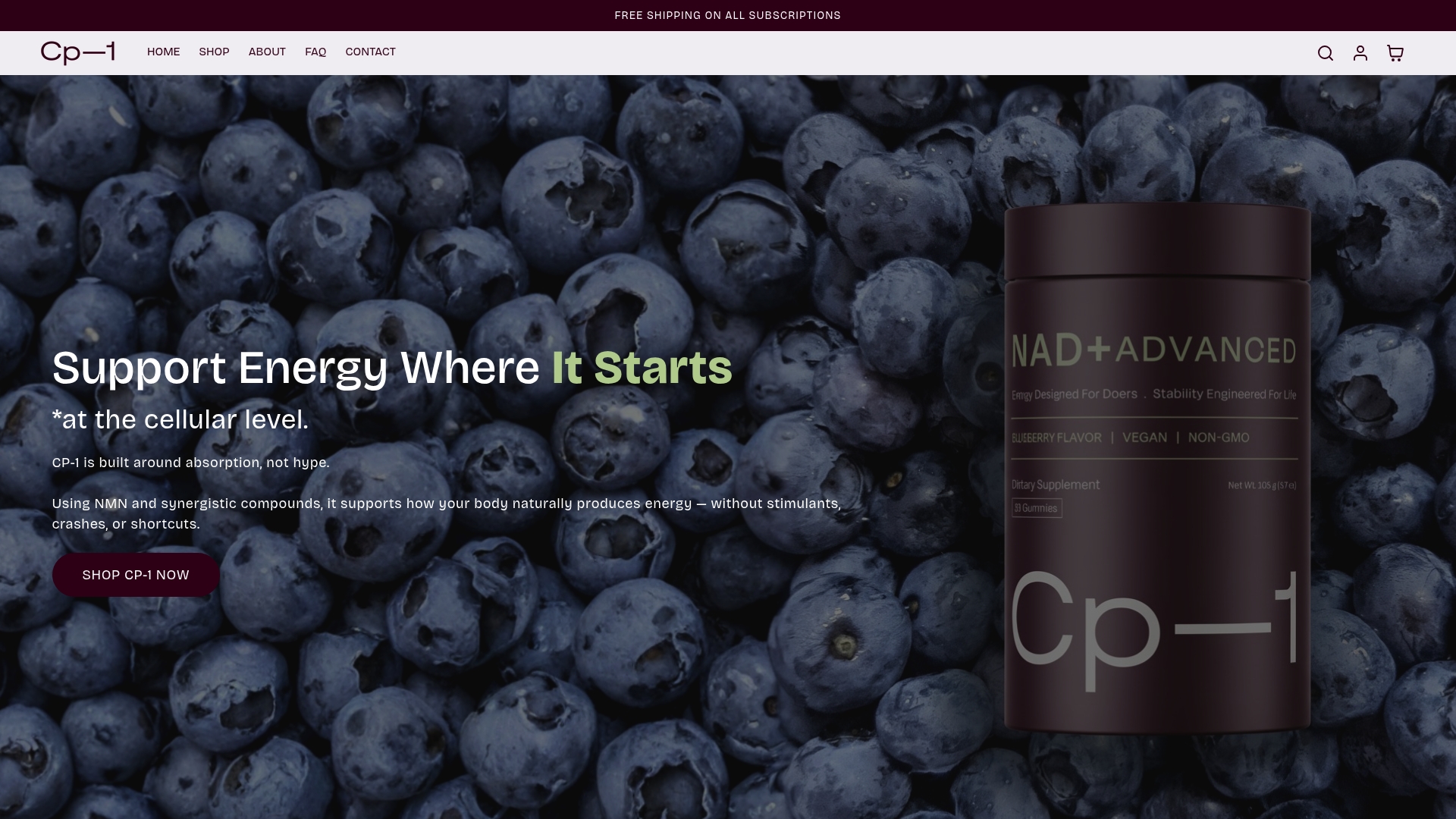
At CP-1, every product is manufactured in the US, third-party tested, vegan, and non-GMO certified. We’re not hiding behind vague labels or imported ingredient blends dressed up with domestic branding. Our NAD+ Advanced Supplement combines NMN, lion’s mane, reishi, turkey tail mushroom extract, and CoQ10, specifically formulated for cellular energy, cognitive clarity, and long-term health optimization. If you want a supplement that’s actually built for the person swallowing it, not for a marketing deck, this is where to start.
Frequently asked questions
What does ‘Made in USA’ mean for supplements?
It means all or virtually all ingredients and manufacturing steps occur in the US, but imported components are still common in practice; the FTC enforces this standard and has been increasing legal actions against misleading claims, as seen in its 2026 enforcement sweep.
Are US-made supplements safer than imported ones?
US facilities receive more FDA inspections, but imported ingredients still pose risks regardless of where final assembly happens; safety is ultimately determined more by third-party certification and batch testing than by geographic origin alone.
Why do experts recommend certification over origin?
Certifications from NSF or USP require independent testing and facility audits, making them a more reliable quality signal than a domestic origin claim that may still involve imported and unverified raw ingredients.
Does US manufacturing support custom supplement stacks?
Yes, US facilities enable small-batch agility and rapid formula iteration that foreign manufacturers rarely offer, which is a genuine advantage for biohackers building precision stacks around adaptogens, NAD+ precursors, and functional mushrooms.