
The short answer: NMN and resveratrol together are biologically plausible, backed by real tissue-level synergy in mice, but no randomized human trial has proven the combination slows aging or beats NMN alone in people. If you’re going to try it, treat it as a cautious personal experiment, not a settled science. Talk to your clinician first, and introduce one ingredient at a time.
TL;DR:
- Animal studies suggest resveratrol may enhance NMN absorption and tissue NAD+ levels by about 1.6 to 1.7 times, but human evidence remains limited and indirect.
- Human trials show NMN reliably increases blood NAD+ levels at doses between 250 and 900 mg daily, with no proven anti-aging benefits or longevity effects confirmed.
- Resveratrol has inconsistent results in humans, with some benefits in glucose metabolism and endothelial function, but it lacks strong, consistent clinical proof.
- Short-term safety profiles for NMN and resveratrol are generally good, but long-term safety and potential liver effects remain uncertain, especially with short trial durations.
- Those considering supplementation should start with NMN alone, monitor their health metrics, and consult a healthcare professional before combining it with resveratrol or medication.
Table of Contents
- What NMN and Resveratrol Actually Do to Your Cells
- What the Studies Actually Show: Animals vs. Humans
- Safety, Side Effects, and Drug Interactions to Watch
- How to Dose and Time NMN and Resveratrol Safely
- Checking Label Quality Before You Buy Either Supplement
- What Longer-Term Studies Suggest About Aging Outcomes
- How NMN and Resveratrol Compare to Other NAD+ and Sirtuin Options
- Are NMN and Resveratrol Regulated the Same Way?
- Reasonable Next Steps for Longevity-Minded Readers
- Where CP-1’s NAD+ Advanced Supplement Fits This Checklist
- Sources
- FAQ
What NMN and Resveratrol Actually Do to Your Cells
Every cell in your body runs on NAD+, a molecule your mitochondria need to convert food into usable energy. NAD+ levels drop as you age, and that decline tracks with the kind of cellular sluggishness a lot of people chalk up to “just getting older.” That’s the whole premise behind NMN supplementation: NMN (nicotinamide mononucleotide) is a direct precursor to NAD+, meaning your cells can convert it in essentially one step, unlike NAD+ itself, which gets broken down in your gut before it can do much of anything.
Resveratrol works differently. It’s a plant compound, found in grape skins and a few other sources, that’s proposed to activate sirtuins, a family of proteins tied to metabolic regulation and cellular repair, and to influence AMPK, an enzyme that helps regulate energy balance inside the cell. The theory behind stacking it with NMN goes like this: NMN raises the raw material (NAD+), and resveratrol may help activate the machinery (sirtuins) that uses it. On paper, that’s a clean, almost elegant mechanism.
Here’s where the theory runs into a wall: resveratrol has notoriously poor oral bioavailability. Most of what you swallow gets metabolized and cleared before it reaches meaningful concentrations in your bloodstream. A lot of the sirtuin-activation data that gets cited in marketing comes from lab studies using concentrations far higher than what a standard oral dose can realistically achieve in a human body.
That gap between “what works in a petri dish” and “what your gut actually absorbs” is the single most underappreciated fact in this entire supplement category.
Pro Tip: If a resveratrol label doesn’t mention a delivery format designed to improve absorption, assume you’re getting a fraction of the dose the number on the bottle suggests.
A 2023 review synthesizing NAD+ and stilbene research found that combining NMN with stilbenes like resveratrol can raise NAD+ in some tissues in preclinical models, and it flagged pterostilbene, a close chemical relative of resveratrol, as having notably better oral absorption. That’s a meaningful detail if you’re comparing formulations, not just ingredients.
What actually happens at the mechanism level breaks down into three pieces:
- NMN gets converted to NAD+ through the salvage pathway, a process that’s fast and well characterized in both animal and human tissue.
- Resveratrol’s sirtuin and AMPK activation is real in cell-culture and animal studies, but the effective concentration is a moving target depending on formulation.
- The two pathways are complementary in theory: more NAD+ supply plus more sirtuin activity could, in principle, amplify downstream effects like improved mitochondrial function.
None of that constitutes proof the combination does more for a human than NMN by itself. It’s a coherent hypothesis, not a verdict.
What the Studies Actually Show: Animals vs. Humans
The strongest direct evidence for synergy comes from mice, not people. In a pharmacokinetic study by Bai and colleagues, researchers combined NMN with resveratrol and tracked how NAD+ distributed across tissues. The result: NAD+ increased in heart tissue by roughly 1.6 times and in skeletal muscle by about 1.7 times, compared to NMN given alone. That’s a genuinely interesting finding. It suggests resveratrol may change how NMN gets absorbed, transported, or converted once it’s inside the body, not just what happens after NAD+ is already made.
But this was a tissue-distribution study in mice, not a clinical trial in humans, and it says nothing about whether that tissue-level bump translates into any measurable improvement in energy, muscle function, or lifespan. Mouse pharmacokinetics are a starting point for a hypothesis, not a stand-in for human data.
Human trials on NMN alone tell a more grounded but still incomplete story. A 12-week randomized trial in healthy adults using 250 mg per day found that oral NMN reliably raised whole-blood NAD+ levels, with no apparent short-term adverse effects. A separate 60-day multicenter, dose-dependent trial testing 300, 600, and 900 mg per day in middle-aged adults confirmed that NAD+ increases scale with dose, and some functional endpoints improved, though those secondary results call for cautious interpretation rather than confident claims.
Resveratrol’s human trial record is messier. Studies using 300 to 1,000 mg per day in older adults have reported reasonable tolerability and some improvements in glucose handling or endothelial function in specific populations, but the effects are inconsistent across studies and appear to depend heavily on dose and formulation.
| Evidence type | What was measured | Key finding | What it does not prove |
|---|---|---|---|
| Mouse tissue distribution | NAD+ in heart and muscle | ~1.6 to 1.7 times higher with NMN plus resveratrol vs. NMN alone | Human benefit, longevity, or dosing ratio |
| NMN human trial (12 weeks, 250 mg/day) | Whole-blood NAD+ | Increased, no apparent short-term adverse effects | Long-term safety or functional gains |
| NMN human trial (60 days, 300 to 900 mg/day) | Blood NAD+, dose response | Dose-dependent increase, some functional signals | Anti-aging or disease outcomes |
| Resveratrol human trials (300 to 1,000 mg/day) | Glucose, endothelial markers | Mixed, population-dependent results | Consistent cardiometabolic benefit |
No randomized human trial has tested NMN and resveratrol together and shown the combination slows aging or reliably improves a major clinical outcome. That single fact separates the honest version of this story from the marketing version.
Safety, Side Effects, and Drug Interactions to Watch
Short-term human trials of NMN, at doses ranging from 250 to 900 mg per day, have generally reported good tolerability with no major adverse events during the study period. Resveratrol trials at 300 to 1,000 mg per day report similar tolerability, though gastrointestinal discomfort shows up more often at the higher end of that range.
Liver safety is where the data gets thinner. A 2025 post hoc analysis looking at NMN and liver enzyme markers found no statistically significant link between short-term NAD+ changes and ALT or AST levels, the standard blood tests for liver stress. That’s a reassuring signal, but the studies behind it were short, and the researchers themselves called for longer observation before drawing firm conclusions. There’s no solid evidence that NMN is hard on the liver at studied doses, but “no evidence of harm” over a few weeks isn’t the same as “proven safe” over years.
Interactions deserve more attention than they usually get. Consider these categories carefully before combining either compound with:
- Anticoagulants like warfarin, since resveratrol has some evidence of mild blood-thinning activity that could compound bleeding risk.
- Diabetes medications, because both NMN and resveratrol may influence glucose metabolism, raising the risk of unexpected blood sugar swings.
- Blood pressure medications, given resveratrol’s studied effects on endothelial function and vascular tone.
- Cancer therapies, where NAD+ metabolism intersects with pathways relevant to some treatment protocols, making clinician input essential rather than optional.
Pro Tip: If you’re on any prescription medication in these categories, get a clinician’s sign-off before adding either supplement, not just before combining them.
Stop and seek medical advice if you notice unusual fatigue, yellowing of the skin or eyes, unexplained bruising, or gastrointestinal symptoms that don’t resolve within a few days of starting either supplement.
How to Dose and Time NMN and Resveratrol Safely
Human NMN trials have used daily doses ranging from 250 to 900 mg, while resveratrol trials commonly test 300 to 1,000 mg per day. Those ranges come from controlled research settings, not real-world guarantees, and formulation matters: a poorly absorbed resveratrol capsule at 1,000 mg may deliver less active compound than a well-formulated one at half that amount.
There is no validated human NMN to resveratrol ratio. The 1.6 to 1.7 times NAD+ increase seen in mice used doses scaled to animal body weight, and converting those milligram-per-kilogram figures directly into a human formula is a mistake. Animal pharmacokinetic data tells you a mechanism is worth studying further, not what dose ratio a person should take.
A conservative self-experiment looks like this:
-
Get baseline labs before starting anything, including liver enzymes and fasting glucose if you have any metabolic risk factors.
-
Start with NMN alone for two to four weeks, tracking specific, measurable outcomes like resting energy, sleep quality, or exercise recovery, not vague feelings.
-
Add resveratrol only if NMN is well tolerated, starting at the lower end of studied doses.
-
Recheck labs after several weeks on the combination and compare against baseline.
Some formulations recommend taking NMN in the morning, since NAD+ metabolism ties into circadian energy cycles, though the human evidence on timing is thin. Taking resveratrol with a meal containing some fat may help absorption modestly, given its poor solubility in water. Neither of these is a hard rule, more of a reasonable default while better data catches up. NMN also comes up frequently in longevity discussions alongside metformin, and anyone already on that medication should treat the interaction question with the same seriousness as any other prescription drug.
Checking Label Quality Before You Buy Either Supplement
Most of the disappointment people report with NMN and resveratrol supplements traces back to the product, not the molecule. Start by checking the actual NMN amount listed per serving, and confirm the label specifies NMN itself rather than NR (nicotinamide riboside) or NAD+ directly, three different compounds that get conflated constantly in marketing copy. Clinical evidence for NMN doesn’t automatically transfer to NR or to oral NAD+, which faces its own absorption problems.
Third-party testing matters more here than in most supplement categories, because NMN is chemically unstable if manufactured or stored poorly. Look for a certificate of analysis (COA) tied to the specific batch you’re buying, not a generic testing claim on the website. GMP certification and US-based manufacturing are reasonable baseline trust signals, though they confirm manufacturing quality rather than clinical efficacy.
For resveratrol, check whether the formulation addresses its bioavailability problem directly, through a stabilized delivery form, or whether the label has quietly swapped in pterostilbene, a related compound with better oral absorption but its own separate evidence base worth understanding on its own terms.
A practical checklist before purchase:
- NMN dose per serving is stated clearly, not buried in a proprietary blend.
- The label distinguishes NMN from NR and NAD+ by name.
- A batch-specific COA is available on request or published.
- Manufacturing claims GMP certification and a stated country of origin.
- Any resveratrol or pterostilbene component names its form and dose separately.
| What to check | Why it matters | Red flag |
|---|---|---|
| NMN dose per serving | Clinical trials use specific mg ranges; vague labels make dosing guesswork | “Proprietary blend” with no milligram breakdown |
| Compound identity | NMN, NR, and NAD+ are chemically distinct | Label uses these terms interchangeably |
| Third-party COA | Confirms actual content matches label claim | No testing mentioned or only generic claims |
| Manufacturing standard | GMP and US-based production reduce contamination risk | No certification or origin stated |
What Longer-Term Studies Suggest About Aging Outcomes
Extended animal studies on NMN, running months rather than weeks, have shown improvements in markers like mitochondrial function and metabolic flexibility in aged mice, but translating rodent lifespan data to human aging outcomes is where longevity science consistently overpromises. Mice age on a compressed timeline that doesn’t map cleanly onto decades-long human aging, and a mechanism that helps a 20-month-old mouse doesn’t guarantee the same effect in a 50-year-old adult.
On the human side, the longest published NMN trials run around 90 days, nowhere near long enough to observe actual aging-related outcomes like disease incidence or mortality. What those trials can show, and do show, is sustained NAD+ elevation without an apparent safety penalty over that window. That’s meaningfully different from “reverses aging,” even though the two claims often get blurred in marketing.
A 2026 evidence review makes this distinction bluntly: biological plausibility, meaning the mechanism makes sense on paper, is not the same as proven anti-aging benefit in humans. Until trials run long enough to track hard outcomes like cardiovascular events, cognitive decline, or mortality, the honest position is that NMN and resveratrol show promising biomarker shifts, not confirmed longevity gains.
How NMN and Resveratrol Compare to Other NAD+ and Sirtuin Options
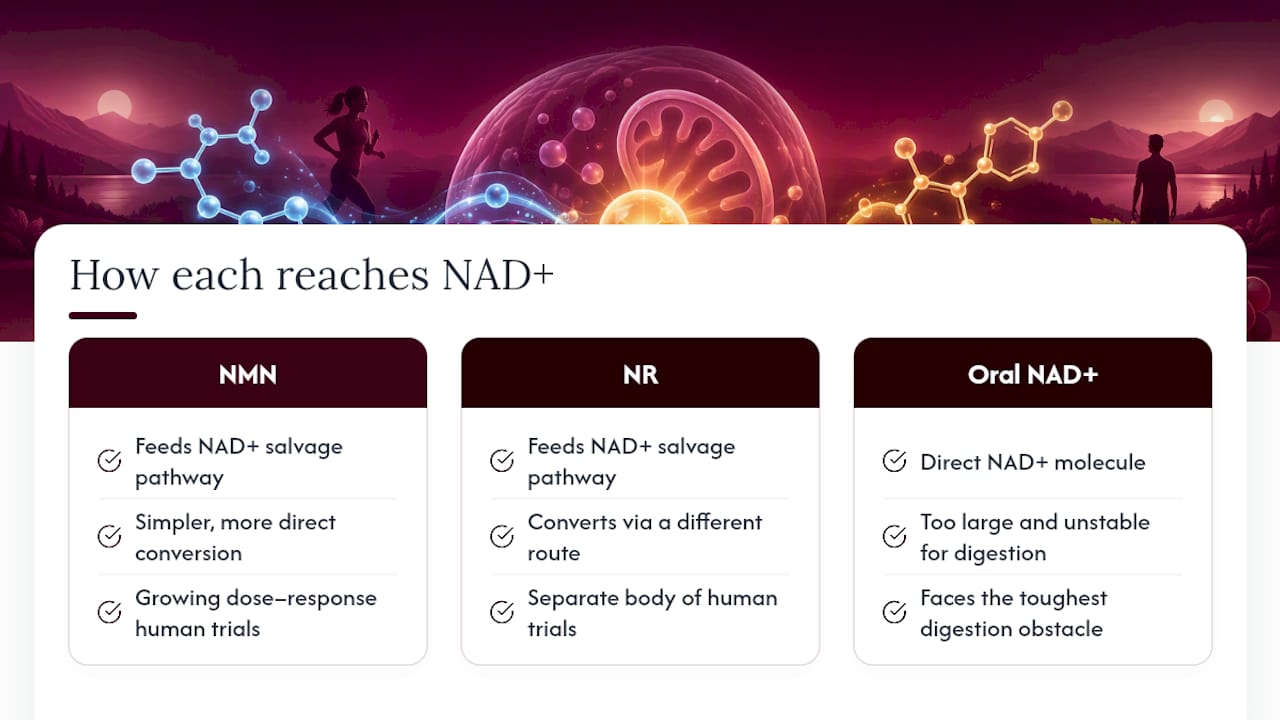
NMN isn’t the only path to raising NAD+. Nicotinamide riboside (NR) is a related precursor that also feeds the NAD+ salvage pathway, though it converts through a slightly different route and has its own separate body of human trial data rather than NMN’s. Direct oral NAD+ supplementation faces the toughest obstacle of the group: the molecule is too large and unstable to survive digestion intact, which is largely why NMN and NR exist as workaround precursors in the first place.
On the sirtuin-activation side, resveratrol has company. Pterostilbene, mentioned earlier for its superior oral bioavailability, is the most commonly cited alternative, though it’s a distinct compound requiring its own safety and efficacy evidence rather than borrowing resveratrol’s data by association. Other proposed sirtuin activators exist in early research stages, but few have the trial volume that resveratrol has accumulated over two decades of study.
None of these alternatives currently has stronger human outcome data than NMN or resveratrol individually. What differs is the bioavailability profile and the depth of the safety record. If you’re choosing between precursor forms, NMN’s advantage is a simpler, more direct conversion path to NAD+ with a growing set of dose-response human trials behind it, which is a meaningful practical edge over molecules with thinner evidence bases.
Are NMN and Resveratrol Regulated the Same Way?
In the United States, both NMN and resveratrol are sold as dietary supplements, which means they fall under the FDA’s supplement framework rather than the drug approval pathway. That distinction matters practically: supplements don’t require FDA pre-approval for efficacy the way medications do, and enforcement leans heavily on manufacturers self-certifying safety and accurate labeling.
NMN’s regulatory status has been genuinely unsettled in recent years, with shifting positions on whether it can be marketed as a dietary ingredient given its investigation as a drug. That back-and-forth is part of why label transparency and third-party testing matter more here than in more settled supplement categories. Resveratrol has a longer, more stable regulatory history as a dietary supplement ingredient, with fewer of the classification disputes NMN has faced.
Quality control standards that actually mean something include Good Manufacturing Practice (GMP) certification, which governs manufacturing consistency and contamination controls, and independent third-party testing that verifies a product contains what the label claims at the stated dose. Neither certification confirms a product works, but both reduce the odds you’re buying something mislabeled, underdosed, or contaminated. Given the regulatory uncertainty around NMN specifically, a manufacturer’s willingness to publish batch-level testing is one of the more honest signals available to a shopper right now.
Reasonable Next Steps for Longevity-Minded Readers
If you’re generally healthy, not pregnant, and not on medications that interact with either compound, cautiously trying NMN first, then resveratrol, is a reasonable personal experiment. If you have liver issues, take anticoagulants, or manage diabetes with medication, loop in your doctor before starting either one. Track real numbers, not vague feelings, and stay skeptical of any product claiming proven anti-aging results.
— Hugo
Where CP-1’s NAD+ Advanced Supplement Fits This Checklist
If you’ve made it through the label checklist above and want a place to start, the CP-1 NAD+ Advanced Supplement is built around exactly those criteria. It combines NMN with Lion’s Mane, Reishi, Turkey Tail, and CoQ10 in a chewable gummy, using an NMN base rather than direct NAD+, because NMN converts inside your cells in one step instead of getting broken down in your gut first.
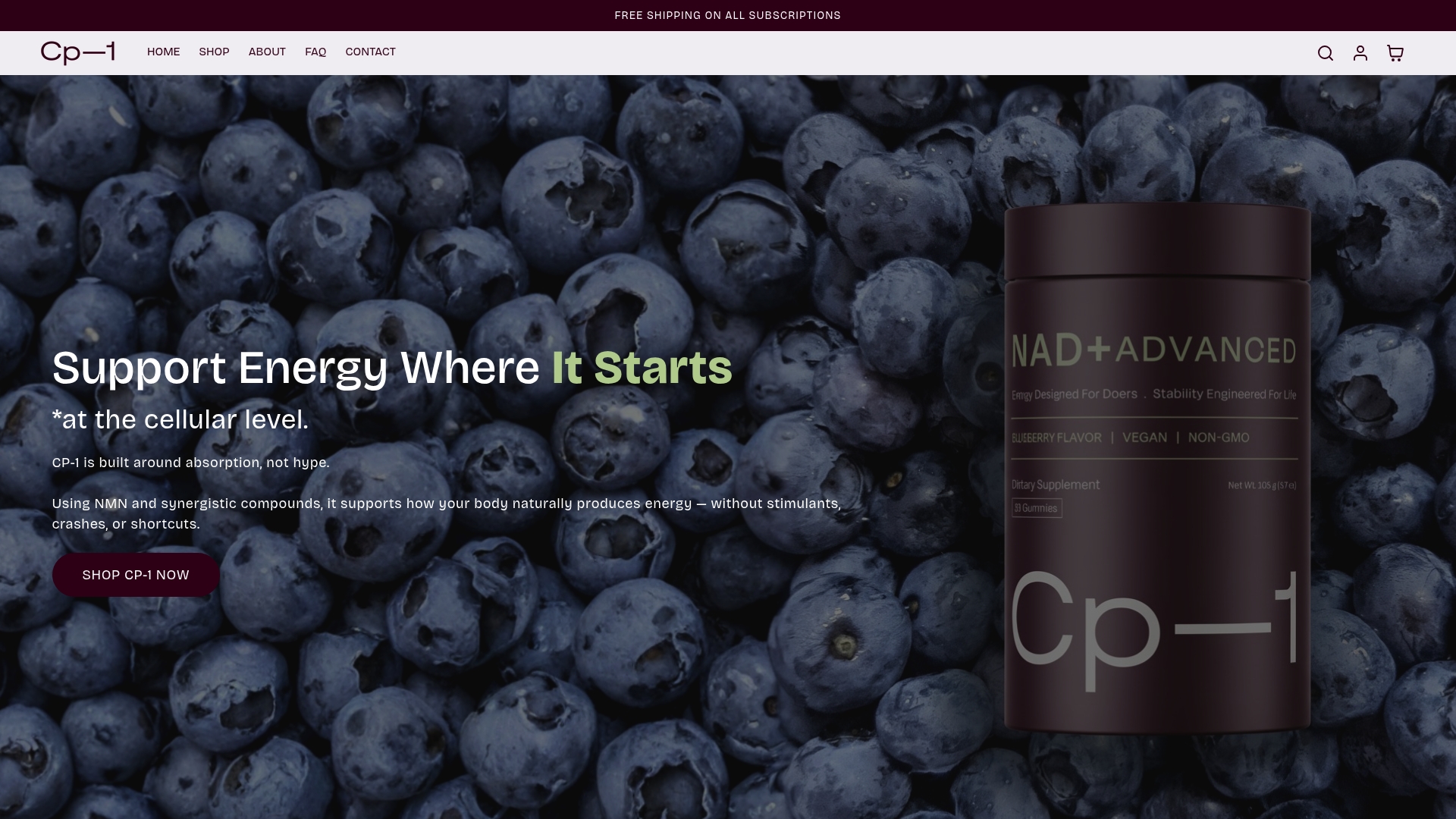
The formula skips fillers, sucralose, and unnecessary sugar, with every ingredient dosed at an effective level rather than hidden inside a proprietary blend. Manufacturing happens under GMP certification, with third-party testing behind the label claims, the same trust signals this article’s checklist tells you to look for before buying anything with NMN on the front of the bottle.
If you’re ready to apply that checklist to an actual purchase, look over the CP-1 NAD+ Advanced Supplement collection, and review the certificate of analysis and label specifics yourself before you order. That’s the same standard you’d hold any other NMN product to, and it’s the standard CP-1 invites you to check.
This article is general information, not a substitute for advice from a qualified doctor. Consult a qualified healthcare professional about your own circumstances before acting on anything here.
FAQ
Should I take NMN and resveratrol together?
You can, but understand that no human trial has tested the combination directly. The animal data showing a 1.6 to 1.7 times NAD+ increase in heart and muscle tissue is promising, but human proof of added benefit over NMN alone doesn’t exist yet.
What are the negative side effects of NMN?
Short-term human trials at doses from 250 to 900 mg per day report good tolerability with no major adverse events during the study periods. Mild gastrointestinal discomfort is the most commonly reported issue, though it’s not universal.
Is NMN hard on your liver?
Current evidence doesn’t support that concern. A 2025 post hoc analysis found no significant link between short-term NMN use and liver enzyme changes, though researchers noted the studies were too short to rule out longer-term effects.
What should you not mix NMN with?
Be cautious combining NMN or resveratrol with anticoagulants, diabetes medications, blood pressure drugs, or cancer therapies without clinician input, since all four categories intersect with pathways these supplements may influence. NMN’s interaction with metformin specifically deserves its own conversation with your doctor if you’re already taking it.