

NMN and Metformin: What Longevity-Minded People Need to Know
You can take NMN and metformin together, but the honest answer is conditional. No known pharmacokinetic interaction makes the combination outright dangerous, yet no randomized human trial has tested the two together for anti-aging outcomes. That gap matters. Before you add NMN supplementation to a metformin regimen, or vice versa, you need a clinician in the conversation.
Three things to hold onto before reading further:
- Metformin is a prescription drug with a boxed warning for lactic acidosis, specific renal function thresholds that determine whether you can even take it, and monitoring requirements that do not disappear just because you add a supplement.
- NMN is an over-the-counter supplement with short-term human trial data showing NAD+ increases and reasonable tolerability, but no long-term outcome data and no FDA approval for any indication.
- The combination has never been tested in a randomized human trial for anti-aging purposes. Monitor renal function and vitamin B12, watch for GI or metabolic symptoms, and treat any “synergy” claims as plausible biology, not proven clinical fact.
Key Takeaways
Combining NMN and metformin is conditionally reasonable for healthy adults with clinician oversight, but no randomized human trial has tested the combination for anti-aging outcomes, and metformin’s safety monitoring requirements remain non-negotiable.
| Point | Details |
|---|---|
| Conditional verdict | No known pharmacokinetic interaction, but no human combination trial exists; clinician oversight is required. |
| Metformin safety thresholds | Contraindicated at eGFR below 30 mL/min/1.73 m²; initiation not recommended below 45 mL/min/1.73 m². |
| NMN human evidence | A 60-day RCT in 80 adults showed dose-dependent NAD+ increases and improved walk distances; 600 mg showed the best efficacy balance. |
| Monitor these labs | Track eGFR, vitamin B12 every 2–3 years, and a functional marker (e.g., timed walk) at 30 and 60 days after starting NMN. |
| Cp-1 as a next step | Cp-1 NAD+ Advanced Supplement delivers NMN with CoQ10 and mushroom extracts in a GMP-certified, US-made formula for adults with clinician approval. |
Table of Contents
- How NMN and metformin act in the body and where their pathways overlap
- What does the human and animal evidence actually show?
- What are the real safety risks you need to know?
- How should you approach NMN if you are already on metformin?
- What the evidence gap actually means for your decision
- A candid note on how we think about this
- Cp-1 NAD+ Advanced Supplement: a clinician-discussable option
- What the science says: an editorial perspective on NMN and metformin
- Sources
How NMN and metformin act in the body and where their pathways overlap
Both NMN and metformin influence NAD±dependent pathways and cellular energy sensors, but they arrive there by completely different routes. That shared destination is what makes the combination biologically interesting. It is also what makes the gap in human combination data so frustrating.
NMN, or nicotinamide mononucleotide, is a direct precursor to NAD+ (nicotinamide adenine dinucleotide). Your cells convert NMN into NAD+ through a salvage pathway, and NAD+ is what powers sirtuins, a family of proteins that regulate DNA repair, inflammation, and mitochondrial function. SIRT1, the most studied sirtuin in aging research, depends on adequate NAD+ to do its job. As NAD+ levels decline with age, SIRT1 activity drops with them. NMN supplementation is designed to push NAD+ back up and, by extension, restore some of that sirtuin activity.
Metformin works upstream of all this. Its primary mechanism is AMPK activation, the cellular energy sensor that kicks in when ATP is low. At higher concentrations, metformin also inhibits mitochondrial complex I, which shifts the AMP-to-ATP ratio and reinforces AMPK signaling. The downstream effects include reduced hepatic gluconeogenesis (less glucose output from the liver) and altered mitochondrial metabolism. In preclinical models, metformin has also been shown to upregulate NAMPT, the rate-limiting enzyme in the NAD+ salvage pathway, which means it may indirectly support NAD+ production through a route that overlaps with NMN’s direct precursor role.
Here is the stepwise picture:
- NMN enters cells, converts to NAD+ via the salvage pathway
- Elevated NAD+ activates sirtuins (SIRT1) and supports mitochondrial function
- Metformin activates AMPK by altering the AMP/ATP ratio and inhibiting mitochondrial complex I
- AMPK activation can upregulate NAMPT, potentially boosting NAD+ synthesis independently
- Both pathways converge on metabolic regulation, cellular stress responses, and longevity-associated signaling
The molecular actors worth knowing: NMN, NAD+, NAMPT, SIRT1, AMPK, and mitochondrial complex I.
Pro Tip: When you read a claim that metformin or NMN “activates longevity pathways,” that is mechanism-level evidence. It tells you the biology is plausible. It does not tell you whether a human taking both compounds will live longer or feel better. Mechanism is a hypothesis, not a clinical outcome.
What does the human and animal evidence actually show?
The honest summary: metformin has large clinical datasets for diabetes management and observational signals suggesting longevity benefits in people with type 2 diabetes; NMN has solid preclinical data and small, short-term human trials showing NAD+ increases and tolerability, but no long-term outcome data. The combination has no dedicated randomized human trial.
A 2024 review on NMN’s role in aging synthesized the animal and human literature and reached a clear conclusion: the preclinical rationale is strong, human biomarker results are mixed, and the gap between animal lifespan findings and human outcome data remains wide. That gap is not a reason to dismiss NMN. It is a reason to calibrate your expectations honestly.
The most rigorous human NMN trial published to date was a randomized, multicenter, double-blind, placebo-controlled 60-day study in 80 healthy middle-aged adults. Participants received 300, 600, or 900 mg of oral NMN daily. Blood NAD+ concentrations increased in a dose-dependent manner across all active groups, and six-minute walk distances improved at both 30 and 60 days. The 600 mg dose showed the best balance of efficacy and tolerability; 900 mg did not produce meaningfully better outcomes. No major safety signals appeared within the 60-day window.
Statistic callout: In that 60-day trial, all three NMN doses produced statistically significant, dose-dependent increases in blood NAD+ concentrations compared to placebo, with the 600 mg group showing the strongest efficacy-to-tolerability balance.
On the metformin side, the evidence base is far larger but comes from a diabetes context, not a healthy-aging one. The TAME trial (Targeting Aging with Metformin) is the most prominent ongoing effort to test metformin’s longevity effects in non-diabetic adults, but results are not yet available. Observational data has consistently shown that people with type 2 diabetes on metformin tend to outlive comparably ill patients on other glucose-lowering agents, and in some analyses, they outlive matched non-diabetic controls. Whether that signal reflects metformin’s biology or confounders in the data is still debated.
For the combination specifically, a rodent cerebral hypoperfusion study compared metformin, rapamycin, and NMN head-to-head. All three reduced microglial activation, improved cognitive outcomes, and reduced white matter lesions. No significant difference separated the three compounds in that model. The finding supports mechanistic overlap. It does not prove that combining metformin and NMN in humans produces additive or synergistic benefit.
One important nuance on NMN bioavailability: preclinical nanodelivery research shows that advanced delivery formulations can dramatically increase tissue exposure in animal models compared to conventional oral dosing. This suggests that the dose ranges tested in current human trials may not represent the ceiling of what optimized NMN delivery could achieve, and that future trials may focus on delivery method as much as dose.
What are the real safety risks you need to know?
The dominant safety constraints come from metformin, not NMN. Metformin is a prescription drug with a FDA boxed warning for lactic acidosis, a rare but potentially fatal buildup of lactic acid in the blood. The risk is highest in people with renal impairment, hepatic dysfunction, congestive heart failure, or excessive alcohol use.
The renal thresholds are specific and non-negotiable. Metformin is contraindicated when eGFR falls below 30 mL/min/1.73 m². Initiation is not recommended when eGFR is below 45 mL/min/1.73 m². These are not suggestions. They are the thresholds the FDA prescribing information specifies, and they apply regardless of what supplements you are or are not taking.
Statistic callout: The FDA prescribing information for metformin specifies contraindication at significantly reduced renal function and advises caution when initiating the drug in patients with moderately reduced renal function.
Monitoring checklist for anyone on metformin (or considering it):
- Obtain baseline eGFR before starting metformin
- Recheck eGFR at least annually, or more frequently if renal function is borderline or declining
- Check vitamin B12 levels every 2–3 years; metformin reduces B12 absorption over time
- Hold metformin before procedures involving iodinated contrast media and restart only after renal function is confirmed stable
- Review alcohol intake; heavy use raises lactic acidosis risk
- Audit concurrent medications for anything that reduces metformin clearance (certain diuretics, NSAIDs, and drugs that affect renal tubular secretion)
According to clinician-facing dosage guidance, metformin is typically started at 500 mg once or twice daily with meals and titrated gradually to minimize GI side effects, with a maximum of 2,550 mg per day for immediate-release formulations. GI upset (nausea, diarrhea, abdominal discomfort) is the most common reason people stop the drug early, and slow titration reduces that risk substantially.
For NMN, the short-term human trial data is reassuring. The GeroScience trial found no major safety signals at doses up to 900 mg over 60 days. That said, long-term safety data simply does not exist yet. In the United States, NMN currently occupies a complicated regulatory position. The FDA has indicated it is investigating NMN as a potential drug ingredient, which has created uncertainty about its long-term status as a dietary supplement. For now, it remains commercially available as a supplement, but that status could change.
Dos and don’ts for combining NMN and metformin:
- Do get clinician clearance before adding NMN if you have reduced renal function or take multiple interacting medications
- Do disclose all supplements to your prescriber; NMN affects metabolic pathways that metformin also targets
- Do not assume “natural” means safe in the context of a prescription drug regimen
- Do not use NMN as a substitute for metformin if you have type 2 diabetes; they are not interchangeable
- Do not ignore GI symptoms or unusual fatigue after starting NMN; report them to your clinician
How should you approach NMN if you are already on metformin?
The conservative approach: discuss with your prescriber before adding NMN. If your clinician agrees, run a monitored trial with baseline labs and a defined follow-up schedule. That is not overcaution. That is what the evidence gap actually calls for.
Stepwise checklist for patients:
- Before starting NMN: Obtain baseline labs including eGFR, serum B12, and a basic metabolic panel. Bring your full supplement list to the appointment.
- Discuss dose: The GeroScience trial used 300–900 mg/day; 600 mg showed the best efficacy balance. Start at the lower end and assess tolerance over 4–6 weeks.
- Set a follow-up date: Recheck eGFR and B12 at 3 months if you have any renal concerns, or at your next scheduled metformin monitoring visit.
- Log symptoms: Keep a simple daily note of energy, GI comfort, sleep quality, and any unusual symptoms for the first 30 days.
- Know when to pause: Stop NMN and contact your clinician if you experience unexplained muscle pain, unusual fatigue, nausea beyond your metformin baseline, or any signs of metabolic distress.
Questions to bring to your prescriber:
- What is my current eGFR trend, and does it affect my metformin dose?
- Are any of my current medications known to reduce metformin clearance?
- When was my last B12 check, and is supplementation warranted?
- Are there any reasons my lactate risk is elevated that I should know about before adding a supplement that affects NAD+ metabolism?
Pro Tip: Track one objective functional marker alongside your labs, such as a timed stair climb or a standardized walking test. Subjective energy reports are useful but easy to confuse with placebo response. A repeatable functional measure gives you something concrete to evaluate at your 60-day check-in.
For readers who want a deeper look at NMN’s safety and tolerability data from published trials, that context is worth reviewing before your clinician conversation.
What the evidence gap actually means for your decision
Given current evidence, a conservative, clinician-supervised approach is the only defensible position. Do not assume additive longevity benefit from combining NMN and metformin. The biology is plausible. The human outcome data is not there yet.
The most common mistake longevity-minded people make is treating mechanistic overlap as clinical proof. The rodent data showing parallel neuroprotective effects from metformin and NMN is genuinely interesting; for clinical insights on cognitive symptoms possibly related to these pathways, see brain fog and cognitive decline treatment in Dallas. But rodent models of cerebral hypoperfusion are not the same as a randomized trial of healthy aging adults taking both compounds for five years. The translation gap in longevity research is wide, and it has swallowed many promising preclinical findings before.
What we do not know about the combination is substantial:
- Whether combining NMN and metformin produces additive, neutral, or antagonistic effects on NAD+ metabolism in humans
- Whether any functional or longevity outcome improves beyond what either compound achieves alone
- What the optimal dose ratio would be if combination use were validated
- Whether long-term NMN use at doses above those tested in short trials carries risks that have not yet surfaced
The E-E-A-T signal here is straightforward: anyone writing confidently about synergistic human longevity benefits from NMN and metformin combined is outrunning the evidence. The responsible position is to explain the plausible biology, present the actual trial data for each compound separately, and be explicit about what has not been studied. That is what this article does.
A candid note on how we think about this
Combining a prescription drug with a metabolically active supplement is not something to approach casually, and I say that as someone who thinks NMN is one of the more credible compounds in the longevity space. The biology is real. The preclinical data is compelling. But the supplement industry has a long history of taking “plausible mechanism” and selling it as “proven benefit,” and that gap is where people get hurt or, at minimum, waste money and trust.
Cp-1 exists because most NMN products on the market are formulated for a marketing deck, not for the person actually taking them. That frustration is genuine. But it also means we hold ourselves to a standard: we do not claim our product does things the science has not confirmed. If you are on metformin, the conversation starts with your prescriber, not with a supplement checkout page.
Cp-1 NAD+ Advanced Supplement: a clinician-discussable option
This is not medical advice. Consult your clinician before starting or changing any medication or supplement, especially if you are on a prescription drug like metformin.
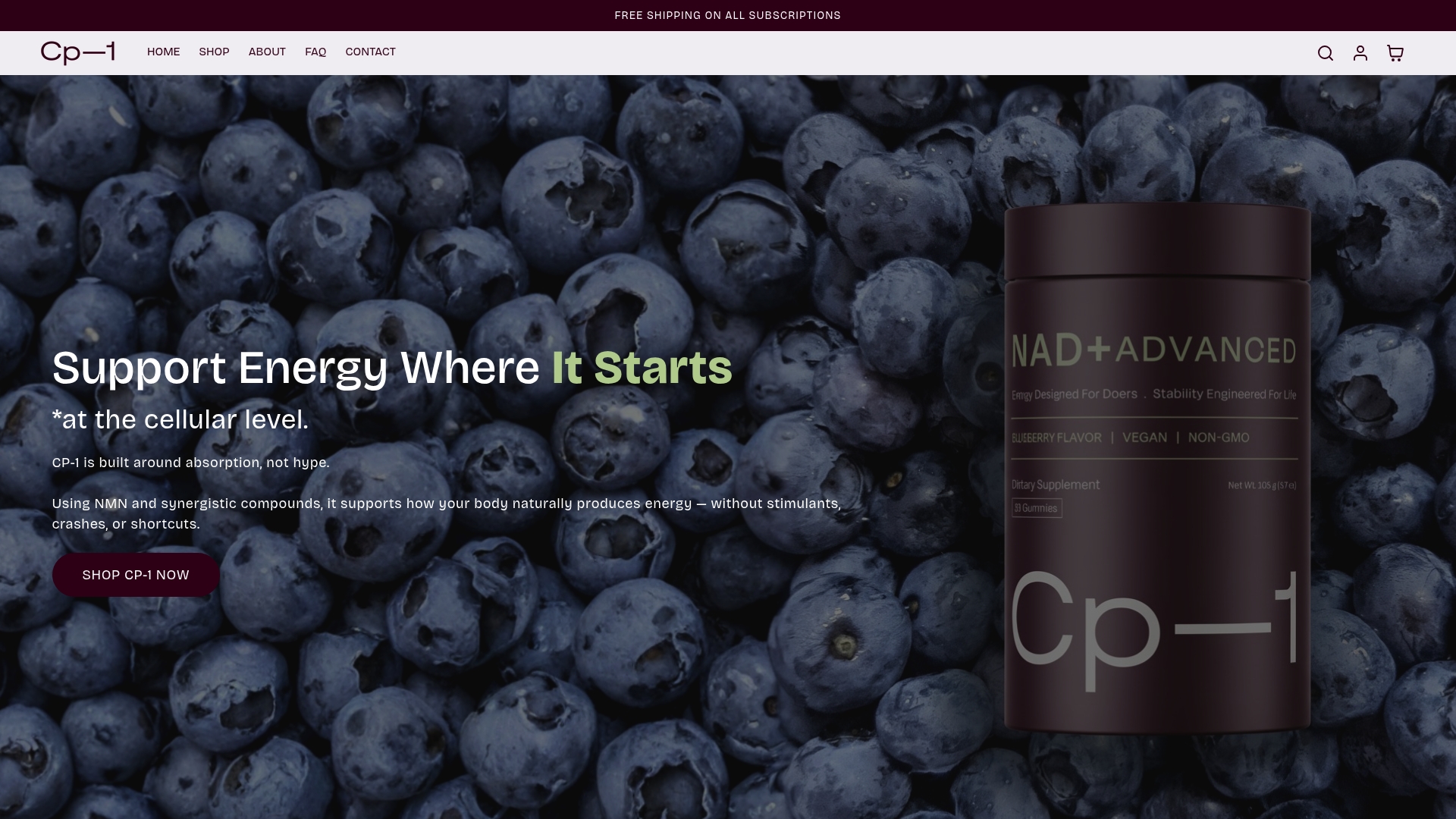
For healthy adults who have clinician clearance and want a quality NMN-containing supplement, Cp-1 NAD+ Advanced Supplement is worth a serious look. Each serving delivers NMN alongside Lion’s Mane, Reishi, and Turkey Tail mushroom extracts and CoQ10, in a chewable gummy format designed for absorption rather than convenience theater. The formula is vegan, non-GMO, GMP-certified, and manufactured in the United States. No proprietary blends hiding underdosed ingredients. No stimulants.
Who this fits: adults without renal impairment or other metformin contraindications who have discussed NMN supplementation with their prescriber and want a product that takes formulation seriously. Bring the ingredient list to your clinician appointment. Discuss the dose relative to what the GeroScience trial tested. Then decide together.

Explore Cp-1 NAD+ Advanced Supplement and review the full ingredient and manufacturing details before your next clinician visit.
What the science says: an editorial perspective on NMN and metformin
Most longevity content treats mechanism as outcome. That is the problem. The fact that NMN raises NAD+ and metformin activates AMPK, and that both pathways converge on sirtuin signaling, is genuinely interesting biology. But interesting biology has a poor track record of surviving contact with randomized human trials. Resveratrol had beautiful mechanism data. So did a dozen other compounds that quietly disappeared from longevity conversations once the human trials came in flat.
What makes NMN different, at least so far, is that the human biomarker data is real. NAD+ does go up in people taking it. Functional markers like the six-minute walk test improved in the GeroScience trial. That is more than most supplements can claim. But “NAD+ went up” and “you will age more slowly” are separated by a distance the current evidence has not crossed.
Metformin’s longevity case is stronger in one sense: it has decades of real-world human data. But that data comes from diabetic populations, and extrapolating it to healthy adults is exactly the kind of leap the TAME trial was designed to test. We are still waiting on those results.
The practical upshot: if you are already on metformin for diabetes, adding NMN is a conversation worth having with your prescriber, not a decision to make based on a podcast or a supplement brand’s blog. If you are a healthy adult considering both for longevity, the evidence for metformin in non-diabetic adults is thinner than most people realize. NMN’s short-term safety profile is cleaner. Neither is a substitute for the basics: sleep, resistance training, and not smoking.
For a deeper look at how NMN supports aging at the cellular level, the mechanistic picture is worth understanding before you commit to any supplementation plan.
Sources
The sources below were selected for authority, direct relevance to the NMN and metformin combination question, and U.S. applicability. They cover human trial data, FDA prescribing guidance, and major mechanistic reviews.
- The efficacy and safety of β-nicotinamide mononucleotide (NMN) supplementation in healthy middle-aged adults: a randomized, multicenter, double-blind, placebo-controlled, parallel-group, dose-dependent clinical trial | GeroScience
- Metformin, Rapamycin, or Nicotinamide Mononucleotide Pretreatment Attenuate Cognitive Impairment After Cerebral Hypoperfusion by Inhibiting Microglial Phagocytosis (Frontiers/PMC)
- These highlights do not include all the information needed to use METFORMIN HYDROCHLORIDE TABLETS and METFORMIN HYDROCHLORIDE EXTENDED-RELEASE TABLETS safely and effectively. See full prescribing information for METFORMIN HYDROCHLORIDE TABLETS and METFORMIN HYDROCHLORIDE EXTENDED-RELEASE TABLETS. METFORMIN HYDROCHLORIDE tablets, for oral use METFORMIN HYDROCHLORIDE extended-release tablets, for oral use Initial U.S. Approval: 1995
- Role and Potential Mechanisms of Nicotinamide Mononucleotide in Aging
- Drugs
This article is general information, not medical advice. Confirm current prescribing guidance and supplement safety with your clinician or pharmacist before making any changes to your regimen.
This article is general information, not a substitute for advice from a qualified doctor. Consult a qualified healthcare professional about your own circumstances before acting on anything here.