
If you’ve been researching what are the benefits of taking NMN, you’ve probably found a mix of breathless marketing claims and cautious scientific disclaimers. NMN, short for Nicotinamide Mononucleotide, is a direct precursor to NAD+, a molecule your cells rely on for energy production, DNA repair, and metabolic regulation. The problem is that most of what gets written about NMN either oversells it as a fountain of youth or dismisses it entirely. Neither is accurate. Here’s what the actual science says, and what you can realistically expect.
Table of Contents
- Key Takeaways
- How NMN works in your body
- Clinically studied benefits of NMN
- Safety profile and dosing guidelines
- Practical guidance for taking NMN daily
- My honest take on NMN and longevity
- Why Cp-1 takes NMN formulation seriously
- FAQ
Key Takeaways
| Point | Details |
|---|---|
| NMN raises NAD+ levels | Human trials confirm oral NMN can double whole-blood NAD+ within two weeks of daily use. |
| Safety approval in 2026 | EFSA issued a positive safety opinion for 300 mg daily NMN in healthy adults in 2026. |
| Benefits span multiple systems | Evidence covers energy metabolism, metabolic health, skin protection, and potential cognitive support. |
| Manage your expectations | NAD+ biomarker increases happen fast, but subjective energy and anti-aging effects take longer and vary. |
| Product quality matters | Third-party testing, transparent dosing, and manufacturing standards separate real products from noise. |
How NMN works in your body
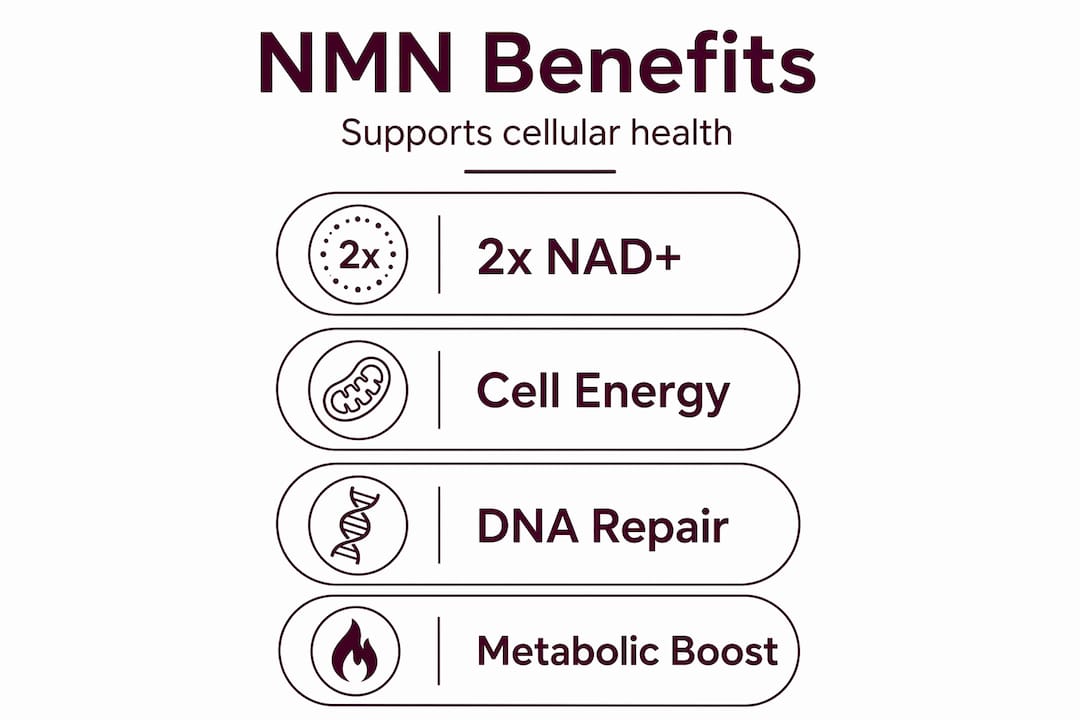
Understanding why NMN supplementation benefits are real starts with understanding NAD+. NAD+ (nicotinamide adenine dinucleotide) powers mitochondria, the structures inside your cells that produce energy. It also activates sirtuins, proteins linked to cellular repair and longevity signaling. The catch is that NAD+ levels decline significantly with age, dropping roughly 50% between your 20s and 50s.
NMN is one of the most direct ways to replenish NAD+. When you take it orally, your gut and gut microbiota convert it through a process called the Preiss–Handler pathway, ultimately raising systemic NAD+ concentrations. A rigorous 14-day human trial confirmed that oral NMN doubles NAD+ concentrations in whole blood. That’s not a small signal. That’s a meaningful, measurable shift in a critical cellular biomarker.
Here’s how the process works, step by step:
- You take NMN orally, typically as a capsule or powder.
- The gut absorbs NMN and gut microbiota metabolize it to nicotinic acid.
- Nicotinic acid enters the Preiss–Handler pathway and gets converted to NAD+.
- Circulating NAD+ rises across tissues, including blood cells, liver, and muscle.
- Higher NAD+ activates energy-producing and repair-related cellular pathways.
This microbiome involvement is a detail most articles skip. NMN’s ability to raise NAD+ depends on gut microbiota, which means gut health and NMN effectiveness are linked. Short-chain fatty acid production also increases in the process, which is a secondary benefit for gut health itself.
When comparing NMN to other NAD+ precursors, the same trial showed NMN and NR (nicotinamide riboside) are similarly effective at raising blood NAD+, while plain nicotinamide (Nam) showed no significant increase. If you’re evaluating your options, NMN versus NR is worth reading before you decide.
Pro Tip: Take NMN in the morning with a small meal. Some early data suggests morning dosing aligns better with circadian NAD+ cycling, and food may improve absorption consistency.
Clinically studied benefits of NMN
This is where things get genuinely interesting, and where you need to separate solid evidence from speculative claims.
- Energy metabolism and physical performance. NAD+ is required for mitochondrial function. When your NAD+ rises, cellular energy production improves. Early human trials report improvements in physical endurance and reduced fatigue, particularly in older adults. These aren’t dramatic gym transformation stories, but real shifts in how efficiently your cells generate ATP.
- Metabolic health and insulin sensitivity. Animal studies and early human data suggest NMN supports glucose metabolism. In a trial involving postmenopausal women with prediabetes, NMN improved muscle insulin sensitivity. This is one of the cleaner human data points for NMN’s metabolic effects.
- Skin health and photoaging protection. Preclinical data shows that oral NMN protected against UV-B photoaging in mice by improving hydration, increasing collagen density, lowering MMP-1 levels, and reducing inflammatory cytokines in UV-exposed skin. These mechanisms align with what drives visible skin aging in humans, which makes this data credible even if human trials are still pending.
- Cognitive and brain function. NAD+ supports neuronal energy metabolism and protects against oxidative stress in brain tissue. Animal studies are promising. Human cognitive outcome trials are still limited, but the biological rationale for NMN and longevity intersecting with brain health is solid.
- Gut microbiome support. As covered above, NMN modulates gut microbiota and increases short-chain fatty acid production. This is a secondary but real advantage most people aren’t even aware they’re getting.
The honest caveat here is worth stating clearly:
Current human evidence mainly confirms that NMN raises NAD+ levels. Large-scale clinical trials confirming long-term anti-aging outcomes in humans are still underway. The biological logic is sound, but human anti-aging data remains preliminary as of 2026.
That doesn’t make NMN a waste of money. It means you should buy it for the right reasons, not because someone told you it would reverse 10 years of aging in a month.
Safety profile and dosing guidelines
One of the most meaningful developments for NMN in 2026 is regulatory recognition. EFSA issued a positive safety opinion for NMN as a novel food ingredient, which covers daily intake up to 300 mg for healthy adults. This isn’t just a rubber stamp. EFSA’s review included toxicology studies, genotoxicity testing, and human clinical safety data.
| Safety Factor | Details |
|---|---|
| Approved daily dose | Up to 300 mg/day for general healthy adults |
| NOAEL from animal studies | 400 mg/kg body weight per day with no adverse effects |
| Genotoxicity | No genotoxicity found in any reviewed studies |
| Excluded populations | Pregnant and lactating women excluded from current approval |
| Observed side effects | Mild and transient at studied doses; no serious adverse events reported |
| Long-term unknowns | Long-term human outcome data still being collected |
The exclusion of pregnant and lactating women is precautionary, not a red flag. It simply reflects the absence of specific safety data for those groups rather than evidence of harm.
From a practical standpoint, 250 to 500 mg daily is the most commonly used range in human research. Some protocols use up to 1,000 mg in clinical settings, but for most people starting out, dosage protocols around 300 mg are both studied and now formally recognized as safe in the EU regulatory context.

Pro Tip: When evaluating any NMN product, look for third-party certificates of analysis, clear NMN content per serving (not “proprietary blend” obfuscation), and confirmation that it’s tested for heavy metals and contaminants.
Practical guidance for taking NMN daily
Knowing the science is one thing. Actually using NMN intelligently is another. Here’s what realistic expectations look like, and how to get the most out of it.
- NAD+ levels rise within weeks, not days. The 14-day human trial is your reference point. If you want to know whether your NMN is working biologically, a whole-blood NAD+ test before and after 30 days is the most honest signal you can get.
- Subjective effects vary widely. Some people feel a real difference in energy and mental clarity within a few weeks. Others notice nothing subjectively even as their NAD+ rises measurably. Don’t conclude it’s not working just because you don’t feel it immediately.
- Lifestyle factors amplify NMN’s effects. Exercise, especially resistance and aerobic training, naturally increases NAD+ demand and utilization. Sleep quality directly affects how well your cells use the NAD+ you’re producing. Combining antioxidants with mitochondrial support compounds the benefit.
- Avoid marketing noise. If a product’s main claim is “reverse aging,” put it down. If it tells you exactly how much NMN is in each dose, where it’s manufactured, and provides third-party test results, that’s a product worth considering.
- Stacking with other NAD+ supporting compounds matters. CoQ10 supports mitochondrial energy production at a different step than NMN. Products that combine these ingredients address energy metabolism from multiple angles rather than a single pathway.
The reality is that taking NMN daily advantages come from consistency, not from loading up on the highest dose you can find. Build the habit, give it 60 to 90 days, and track how you actually feel alongside objective markers when possible.
My honest take on NMN and longevity
I’ll be direct with you: I take NMN every day. Not because I believe it’s going to make me biologically 30 again. I take it because the evidence for raising NAD+ is real, NAD+ is genuinely important to how my cells function, and the safety data is solid enough that I’m comfortable with the risk-benefit math.
What I’ve learned from watching this space closely is that the supplement industry has done NMN no favors. The longevity and energy claims often outrun the science by years. That erodes trust and makes serious buyers cynical. When I see a product promising to “reverse aging,” I know they’re not reading the same research I am.
Here’s what I actually believe: boosting NAD+ is biologically meaningful. The mechanisms are well-established. The human biomarker evidence is strong. What we don’t yet have is 10-year randomized controlled trial data showing that people who took NMN lived measurably longer or experienced fewer age-related diseases. That data is coming, but it isn’t here yet.
What I also believe is that NMN works best as part of a wider approach. Exercise, sleep, stress management, and a diet that doesn’t constantly spike insulin, these things matter more than any single supplement. NMN is not a substitute for any of them. It’s a genuine addition to them.
If you go in with that framing, you’ll get real value from it. If you go in expecting a miracle, you’ll be disappointed and you’ll blame the wrong thing.
— Hugo
Why Cp-1 takes NMN formulation seriously
Most NMN supplements on the market are single-ingredient capsules with no attention to what else your cells need to actually use that NAD+. Cp-1 takes a different approach. The CP-1 formula combines NMN with CoQ10 for mitochondrial energy support, lion’s mane for cognitive function, and reishi and turkey tail mushroom extracts for immune resilience. Every batch is third-party tested, vegan, non-GMO, and manufactured in the US to current Good Manufacturing Practice standards. If you want a product designed for real-world effectiveness rather than a marketing deck, explore the CP-1 NAD+ supplement and see exactly what’s in every dose.
FAQ
What does NMN actually do in the body?
NMN is converted to NAD+, a molecule your cells use for energy production, DNA repair, and metabolic regulation. Oral NMN has been shown to double blood NAD+ within 14 days in human trials.
How long does it take to feel the effects of NMN?
NAD+ levels rise measurably within two weeks, but subjective effects like improved energy or mental clarity can take 30 to 90 days and vary significantly between individuals.
Is NMN safe to take daily?
EFSA’s 2026 safety review supports 300 mg daily as safe for healthy adults, with no genotoxicity found and only mild, transient side effects reported in human studies.
Does NMN help with anti-aging?
NMN raises NAD+ levels, which supports cellular repair pathways associated with aging. However, large-scale human trials confirming long-term anti-aging outcomes are still ongoing as of 2026.
Can NMN improve energy and cognitive function?
Early human and animal data suggests NMN supports mitochondrial energy production and may benefit cognitive function, though robust human cognitive outcome trials are still limited. Biomarker improvements in NAD+ are currently the strongest confirmed signal.