

How Antioxidants Boost Energy, Cognition, and Longevity
Most people think antioxidants are just “free radical fighters” you get from eating blueberries. That’s a fraction of the story. The real science shows antioxidants are deeply woven into how your mitochondria produce energy, how your neurons stay sharp under pressure, and how your cells age at the molecular level. Antioxidants neutralize ROS produced during cellular respiration, but they also activate genetic pathways, regulate cellular signaling, and work alongside NAD+ boosters and functional mushrooms to support performance that goes far beyond basic health maintenance. This guide breaks down the evidence, separates the hype from the real mechanisms, and gives you practical strategies that actually move the needle.
Table of Contents
- What are antioxidants and how do they work?
- Antioxidants for cellular energy and mitochondrial support
- Antioxidants, cognition, and brain health
- Do antioxidants slow aging or extend lifespan?
- Risks, cautions, and optimizing your antioxidant strategy
- What most people get wrong about antioxidants and optimal health
- Take your cellular health further with NAD+ support
- Frequently asked questions
Key Takeaways
| Point | Details |
|---|---|
| Antioxidants power energy | They boost cellular energy and mitochondrial function, not just fight free radicals. |
| Best from whole foods | Fruits, vegetables, and bioactive-rich foods outperform high-dose supplements for health. |
| Support cognition and aging | They protect your brain, support mental performance, and work best alongside exercise for longevity. |
| Personalized approach matters | Test your needs and combine dietary strategies with exercise for optimal results. |
| Supplements need caution | In healthy people, excess antioxidant supplements may do more harm than good. |
What are antioxidants and how do they work?
With the confusion set aside, let’s break down the science of antioxidants and how your body uses them.
Antioxidants are molecules that prevent or slow cellular damage caused by reactive oxygen species (ROS). ROS are unstable molecules your body generates naturally, mostly inside mitochondria during the process of converting food into energy. The problem isn’t that ROS exist. Small amounts are actually necessary for cell signaling. The problem is when they accumulate faster than your body can neutralize them, causing oxidative stress.
Your body has three main categories of antioxidants. First, endogenous antioxidants, which your body makes on its own, including glutathione, superoxide dismutase (SOD), and catalase. These are your first line of defense. Second, dietary antioxidants, which include vitamins C and E, polyphenols, carotenoids, and flavonoids found in whole foods. Third, specialized supplement compounds like Pyrroloquinoline quinone (PQQ), N-acetyl cysteine (NAC), alpha-lipoic acid, and CoQ10 that biohackers use to push mitochondrial protection further.
The mechanism goes beyond simple scavenging. Antioxidants support cellular energy by activating the Nrf2 pathway, a master regulator that switches on hundreds of protective genes in your cells. When Nrf2 is activated, your body upregulates its own antioxidant enzyme production. This means the right antioxidants don’t just neutralize damage directly; they trigger a whole cascade of cellular protection.
| Antioxidant type | Examples | Primary mechanism |
|---|---|---|
| Enzymes | SOD, catalase, glutathione peroxidase | Neutralize superoxide and hydrogen peroxide |
| Vitamins | Vitamin C, Vitamin E | Electron donation, membrane protection |
| Polyphenols | Resveratrol, quercetin, curcumin | Nrf2 activation, anti-inflammatory signaling |
| Specialty compounds | PQQ, NAC, alpha-lipoic acid, CoQ10 | Mitochondria-targeted ROS control |
Here are key sources worth knowing:
- Berries, citrus, and leafy greens for vitamins C and E
- Green tea and red wine for polyphenols like EGCG and resveratrol
- Turmeric and ginger for curcumin and gingerol
- Nuts, seeds, and legumes for vitamin E and selenium
- Functional mushrooms (lion’s mane, reishi, turkey tail) for beta-glucans and immunomodulating antioxidants
- Supplements: CoQ10, NAC, PQQ, and NMN for targeted mitochondrial support
Pro Tip: Before stacking antioxidant supplements, consider getting an oxidative stress panel or measuring your 8-hydroxy-2-deoxyguanosine (8-OHdG) levels. More antioxidants aren’t always better, and supplementing without knowing your baseline is guesswork. Check the mitochondrial health checklist to see where your actual gaps are.
Antioxidants for cellular energy and mitochondrial support
With mechanisms clear, let’s focus on mitochondria, your cellular batteries, and how antioxidants can supercharge them.
Mitochondria are where your cells produce ATP, the energy currency your body runs on. They’re also where most ROS are generated. This creates a feedback loop: dysfunctional mitochondria produce more ROS, which damage the mitochondria further, which lowers energy output even more. Antioxidants break this cycle.
Dietary antioxidants like polyphenols including resveratrol, quercetin, and curcumin enhance mitochondrial efficiency and support NAD+ levels, the critical cofactor your cells use to run energy-producing reactions. When NAD+ drops, mitochondria slow down. When you support NAD+ through precursors like NMN combined with antioxidant-rich foods, you get a compounding effect on energy output.
Here’s a step-by-step framework for targeting mitochondria through antioxidant strategy:
- Prioritize polyphenol-rich foods daily. Berries, dark chocolate, olive oil, and green tea provide resveratrol and quercetin that activate SIRT1, a key longevity protein that also improves mitochondrial biogenesis (growth of new mitochondria).
- Add mitochondria-specific supplements strategically. CoQ10 lives directly in the inner mitochondrial membrane and is essential for electron transport. PQQ has been shown to stimulate mitochondrial biogenesis. NAC supports glutathione production inside cells.
- Use intermittent fasting to amplify antioxidant signaling. Fasting triggers mild oxidative stress that activates Nrf2 and AMPK, both of which upregulate antioxidant defenses and mitochondrial repair.
- Exercise with intent. Resistance training and high-intensity intervals generate controlled ROS that serve as a hormetic signal, meaning they make your mitochondria stronger when paired with adequate antioxidant recovery.
| Approach | Mitochondrial benefit | Pros | Cons |
|---|---|---|---|
| Whole food polyphenols | Nrf2/SIRT1 activation | Synergistic nutrients, no overdose risk | Dose variability, bioavailability varies |
| CoQ10 supplement | Electron transport support | Direct mitochondrial action | Fat-soluble, needs food for absorption |
| NAC supplement | Glutathione precursor | Well-studied, affordable | GI discomfort at high doses |
| NMN supplement | NAD+ precursor | Supports energy metabolism, cellular repair | Requires consistent use for full effect |
The real edge for biohackers comes from targeting the Nrf2 and SIRT1 pathways together. Nrf2 handles antioxidant gene expression. SIRT1 handles mitochondrial biogenesis and metabolic regulation. Stack polyphenols with NAD+ support, and you’re addressing both pathways simultaneously. That’s not a marketing angle. It’s how the mitochondrial wellness strategies come together in practice.
Antioxidants, cognition, and brain health
Knowing how antioxidants affect your energy, the next logical link is their role in the brain, your ultimate performance organ.
Your brain consumes about 20% of your body’s total energy despite making up only 2% of your body weight. That high metabolic demand makes the brain one of the most oxidatively stressed organs in your body. Neurons are especially vulnerable to ROS damage because they have high lipid content, use enormous amounts of oxygen, and have limited regenerative capacity compared to other cell types.

Higher dietary antioxidant intake is linked to lower risk of cognitive impairment, with the Composite Dietary Antioxidant Index (CDAI) showing a measurable inverse relationship with cognitive decline risk. In plain terms: people who eat more antioxidant-rich foods consistently score better on cognitive tests as they age.
Key dietary antioxidants for brain performance:
- Vitamin C: Concentrated in the brain at levels 10 times higher than in blood plasma. Supports neurotransmitter synthesis and protects myelin sheaths around nerve fibers.
- Curcumin: Crosses the blood-brain barrier and reduces neuroinflammation by blocking NF-kB signaling. Has shown promise in memory and attention studies.
- Resveratrol: Activates SIRT1 in brain tissue, which supports memory consolidation and neuronal survival.
- Lion’s mane mushroom: Contains hericenones and erinacines that stimulate Nerve Growth Factor (NGF), a protein essential for neuron maintenance and plasticity. You can read more in this benefits of functional mushrooms breakdown.
- EGCG from green tea: Reduces amyloid plaque formation and promotes BDNF (Brain-Derived Neurotrophic Factor), which is critical for learning and memory.
People with higher dietary antioxidant index scores show significantly lower risk of cognitive impairment, underscoring how consistent food choices compound over time into meaningful neurological protection.
The caution here is real. Some people read this research and assume loading up on antioxidant supplements will sharpen their memory. That’s not what the evidence supports for healthy individuals. The benefits in cognitive research are primarily tied to dietary patterns and lifestyle factors. If you’re looking at supplement strategies for cognition beyond diet, focus on well-studied compounds with clear mechanistic support, not random megadoses of generic antioxidant blends.
Neuroinflammation is another key player. Chronic low-grade inflammation in the brain is increasingly recognized as a driver of cognitive aging. Antioxidants that also carry anti-inflammatory properties, like curcumin, resveratrol, and the polysaccharides in reishi and turkey tail mushrooms, address both problems at once.
Do antioxidants slow aging or extend lifespan?
Beyond brain health, let’s tackle what matters most to many biohackers: can antioxidants actually help you live longer or healthier?
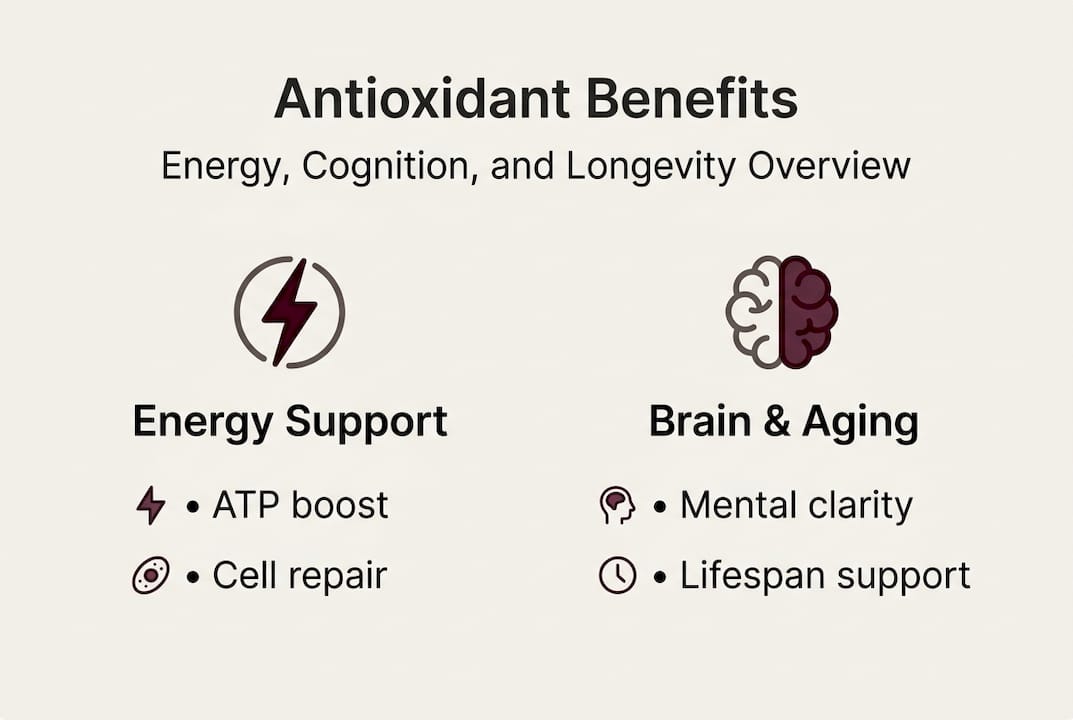
The honest answer is nuanced. On their own, antioxidant supplements haven’t consistently extended lifespan in human trials. But when you combine antioxidants with exercise, the evidence is considerably more compelling. Combined antioxidant and exercise interventions improve muscle strength measured by 1-rep max leg press, enhance physical function in elderly populations, and target core hallmarks of aging including mitochondrial dysfunction and cellular senescence.
This matters because biohacking for longevity isn’t about one magic compound. It’s about stacking strategies that address multiple aging mechanisms simultaneously.
The hallmarks of aging that antioxidants directly influence include:
- Mitochondrial dysfunction: Reduced energy output and increased ROS leak over time. Antioxidants like CoQ10, NAC, and polyphenols slow this decline.
- Cellular senescence: Damaged cells that stop dividing but keep releasing inflammatory signals. Antioxidants help reduce the oxidative triggers that push cells into senescence.
- Epigenetic alterations: Changes to how genes are expressed as you age. NAD+ precursors like NMN work synergistically with antioxidants to support sirtuin activity, which maintains epigenetic stability.
- Telomere attrition: Chronic oxidative stress accelerates telomere shortening. A diet high in dietary antioxidants has been associated with longer telomere length in population studies.
A practical longevity framework looks like this:
- Pair polyphenol-rich foods with regular resistance and endurance exercise
- Use NAD+ precursors (NMN) alongside CoQ10 to support mitochondrial energy and antioxidant recycling
- Practice time-restricted eating to activate hormetic antioxidant pathways
- Prioritize sleep, which is when your glymphatic system clears oxidative waste from your brain
The NMN guide for aging goes deeper on how NAD+ decline interacts with all of these mechanisms. It’s worth reading alongside this article because the two topics are tightly connected.
Risks, cautions, and optimizing your antioxidant strategy
But before you overhaul your routine, what pitfalls or unexpected issues should you know? Here’s how to get real benefits safely.
The supplement industry loves to sell antioxidants with a simple pitch: more protection means more health. The data says otherwise. High-dose antioxidant supplements may actually increase mortality risk (RR 1.04) in healthy individuals, with beta-carotene and vitamin E showing the clearest signals of harm in supplemental form. This doesn’t mean antioxidants are dangerous. It means context, dose, and source matter enormously.
Antioxidants work through signaling via Nrf2 activation and mitohormesis, not just direct scavenging. This means timing, dose, and your individual baseline status determine whether you get a benefit or a problem. Megadosing vitamins C or E, for example, can actually blunt the adaptive response to exercise by suppressing the mild ROS signals that drive mitochondrial adaptation.
Here’s a step-by-step approach to getting this right:
- Start with food, not bottles. Build a diet with diverse plant foods, including dark leafy greens, berries, cruciferous vegetables, and legumes. The matrix of compounds in whole foods works synergistically in ways isolated supplements can’t replicate.
- Get your baseline tested. Ask for oxidative stress markers, glutathione levels, and if available, CoQ10 status. You can’t personalize a strategy without real data.
- Identify your context. Aging individuals, people with chronic illness, or those under high physical or cognitive load may genuinely benefit from targeted supplementation. Healthy 30-year-olds with good diets probably don’t need antioxidant megadoses.
- Be selective with supplements. Choose compounds with clear mechanistic and clinical support: CoQ10, NAC, PQQ, and NAD+ precursors like NMN. Avoid underdosed, poorly absorbed blends that fill a label more than they fill a gap.
- Pair with lifestyle. Antioxidants alone are not a health strategy. Exercise, sleep, stress management, and dietary diversity are the amplifiers that make targeted supplementation worth taking.
Pro Tip: Eat across the full color spectrum of plants each week. Red, orange, yellow, green, blue, and purple all represent different antioxidant compounds. Diversity in your plate is diversity in your cellular protection. No supplement stack replicates that complexity.
What most people get wrong about antioxidants and optimal health
Stepping back, here’s the honest, experience-driven view that most content won’t give you.
The biggest mistake I see is treating antioxidants like a category of products rather than a category of mechanisms. People chase ORAC scores (a now-discontinued measure of antioxidant capacity) or buy the supplement with the biggest numbers on the label. That’s formulas designed for a marketing deck, not for the person swallowing them.
What actually works is targeting specific pathways with the right tools at the right doses. CoQ10 and PQQ for mitochondria. Lion’s mane for neuronal support. NMN for NAD+ and sirtuin activation. Quercetin and curcumin for Nrf2 and inflammation. These aren’t interchangeable. Use them with a purpose.
The other overlooked reality is that lifestyle is the amplifier. Antioxidants from supplements or food work better in people who also exercise, sleep well, and manage chronic stress. Without those foundations, you’re optimizing the top floor of a shaky building. Start with your mitochondrial health checklist to honestly assess where the real gaps are. Personalized, data-driven decisions will always outperform generic supplement regimens, every single time.
Take your cellular health further with NAD+ support
Ready to move from learning to action? Here’s how to integrate cellular health upgrades with science-backed NAD+ support.
If the research in this article resonates with you, the next step isn’t buying every antioxidant supplement you’ve read about. It’s building a targeted, synergistic protocol that addresses your actual needs. That’s exactly what we set out to do with CP-1.
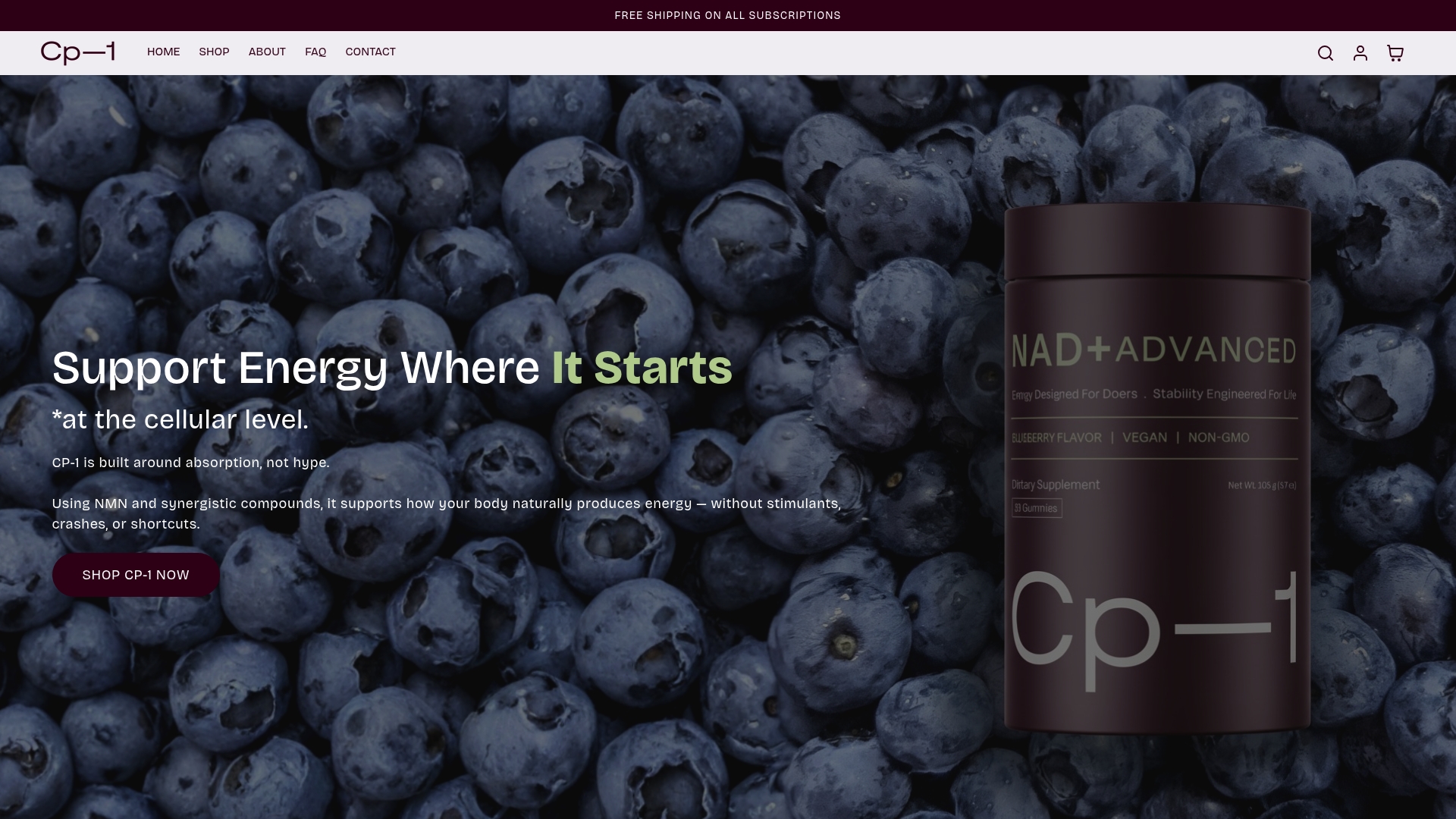
CP-1 combines NMN for NAD+ production, lion’s mane, reishi, and turkey tail mushroom extracts for cognitive and immune support, and CoQ10 for direct mitochondrial energy. Everything is third-party tested, vegan, non-GMO, and made in the US. If you’re serious about supporting your cellular energy and longevity from the inside out, explore our advanced NAD+ support and see how a well-designed formula can actually deliver what a pile of random antioxidant capsules never will.
Frequently asked questions
What are the best natural sources of antioxidants?
Fruits, vegetables, nuts, and whole grains deliver the richest and most bioavailable antioxidants, with synergistic compounds that isolated supplements can’t fully replicate.
Should healthy people take antioxidant supplements for anti-aging?
Most healthy people get the best results from diverse diets; high-dose supplements may increase mortality risk (RR 1.04) rather than extend life, particularly beta-carotene and vitamin E.
Do antioxidants really improve energy and cognitive performance?
Yes. Dietary antioxidants improve mitochondrial efficiency and higher intake is consistently linked to reduced cognitive impairment risk across large population studies.
Are there risks to taking too many antioxidants?
Absolutely. Excess antioxidant supplementation can increase mortality in healthy people, blunt exercise adaptation, and act as pro-oxidants at high doses, particularly vitamin E and beta-carotene in pill form.