
NMN, or Nicotinamide Mononucleotide, is defined as a direct biochemical precursor to NAD+ (Nicotinamide Adenine Dinucleotide), a molecule your cells require for energy production, DNA repair, and healthy aging. The role of NMN is not a marketing concept. It is a measurable biochemical function: without adequate NAD+, mitochondria stall, repair enzymes go quiet, and cellular aging accelerates. NAD+ levels decline naturally with age, and NMN’s foundational role in longevity supplement regimes reflects that biological reality. This article breaks down what the 2026 clinical research actually shows, what NMN does and does not do, and how to use it intelligently.
How does NMN work to boost cellular energy and support cognition?
NMN enters your cells and converts directly into NAD+, which then fuels two critical enzyme families: sirtuins and PARPs. Sirtuins regulate gene expression and cellular stress responses. PARPs repair damaged DNA. Both depend entirely on NAD+ availability, which is why NMN supplementation effects on energy and cognition are tied to this single upstream molecule.
The mitochondrial connection is where things get concrete. NAD+ acts as an electron carrier inside mitochondria, shuttling energy from nutrients into ATP, the currency your cells actually spend. When NAD+ is low, mitochondrial output drops. You feel it as fatigue, brain fog, and slower recovery. Raising NAD+ through NMN restores that electron-transfer capacity, which is why researchers track it as a functional biomarker.
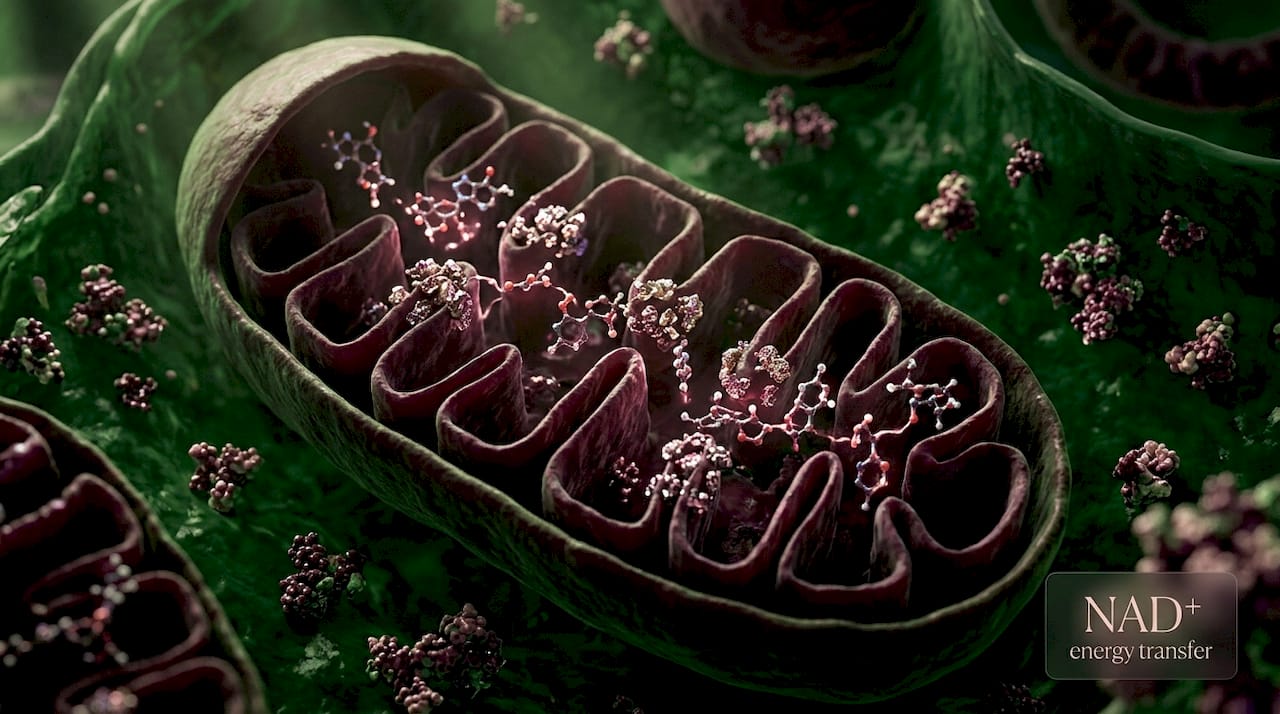
A 2026 Nature Metabolism study confirmed that NMN raises whole-blood NAD+ both acutely at four hours and chronically over fourteen days compared to placebo. That distinction matters. Acute rises tell you the molecule is absorbed and converted. Chronic rises tell you steady-state NAD+ metabolism has shifted. Both are necessary to confirm real biological activity rather than a transient spike.
For cognition specifically, NAD+ activates CD38 and SIRT1 pathways that regulate neuronal energy supply and synaptic plasticity. These are not theoretical links. They are the same pathways targeted in neurodegeneration research at institutions like Harvard Medical School and the National Institute on Aging.
Pro Tip: When reading NMN studies, check whether they measured whole-blood NAD+ or plasma NAD+. Whole-blood measurements capture intracellular changes and are a more reliable indicator of functional cellular impact than plasma alone.
- NMN converts to NAD+ inside cells, not in the bloodstream
- NAD+ fuels mitochondrial ATP production via the electron transport chain
- Sirtuins and PARPs, both NAD±dependent, govern repair and longevity signaling
- Both acute and chronic NAD+ rises are needed to confirm genuine supplementation effects
What are the proven health benefits and clinical effects of NMN supplementation?
The NMN health benefits documented in human trials cluster around three areas: cardiovascular metrics, inflammatory signaling, and NAD+ biomarker elevation. Each has real evidence behind it, and each has limits worth understanding before you spend money on a bottle.
On the cardiovascular side, a 2026 meta-analysis of 10 RCTs involving 349 participants found NMN modestly reduced resting diastolic blood pressure overall, with a weighted mean reduction of 2.15 mmHg. In adults aged 60 and older, systolic blood pressure dropped by 3.94 mmHg. Those numbers are not dramatic, but they are statistically meaningful for a population where every millimeter of mercury counts.
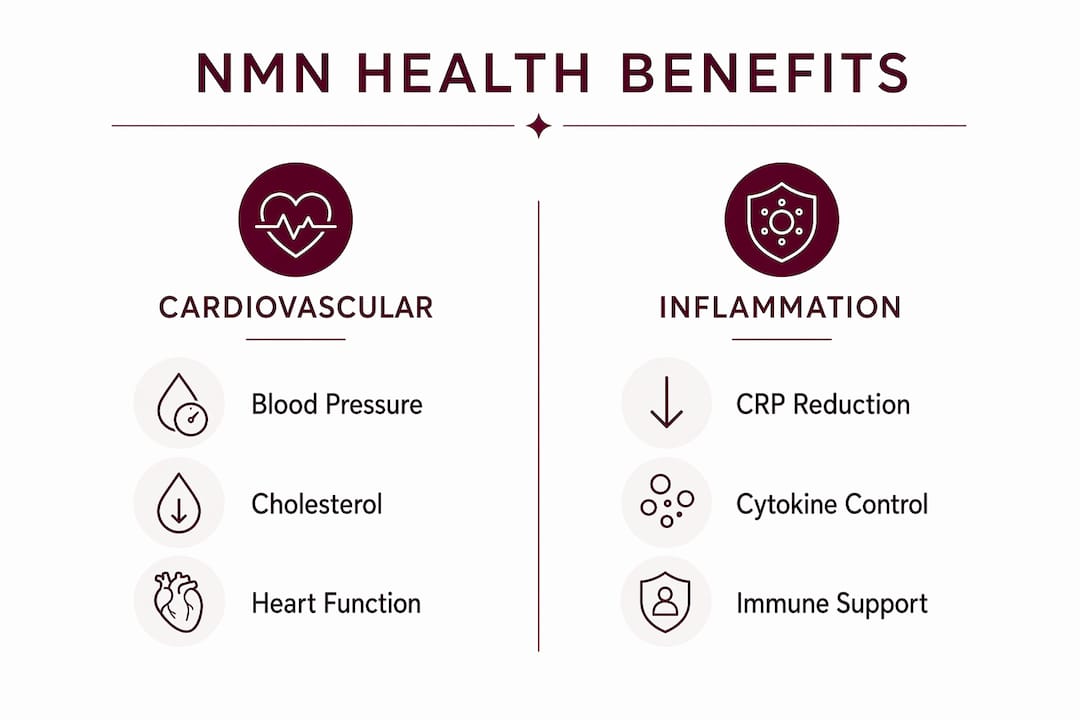
On inflammation, a 2026 placebo-controlled crossover trial gave 11 untrained men 1,200 mg per day of NMN for seven days before blood-flow-restriction exercise. NMN suppressed inflammatory mRNA responses including TNF-α and IL-10 post-exercise. That is the anti-inflammatory signal most people want. The catch: NMN also blocked mitochondrial replenishment adaptations in skeletal muscle 24 hours after exercise. This is a real trade-off, not a footnote.
| Clinical Outcome | Population | Finding | Study Design |
|---|---|---|---|
| Diastolic blood pressure | Mixed adults | 2.15 mmHg reduction | Meta-analysis, 10 RCTs |
| Systolic blood pressure | Adults 60+ | 3.94 mmHg reduction | Meta-analysis, 10 RCTs |
| Inflammatory mRNA (TNF-α, IL-10) | Young untrained men | Suppressed post-exercise | Crossover RCT, 7 days |
| Mitochondrial adaptation | Young untrained men | Blocked post-exercise | Crossover RCT, 7 days |
| Whole-blood NAD+ | Healthy adults | Significant increase at 4h and 14 days | Placebo-controlled RCT |
Pro Tip: If you train regularly, consider cycling NMN around your workout schedule rather than taking it daily without interruption. The 2026 BFR-exercise data suggests that constant NAD+ elevation during adaptation phases may blunt the mitochondrial gains you are training for.
The long-term clinical endpoint evidence for NMN’s role in disease-risk reduction or lifespan extension is not yet established. Current human data focus on mechanistic and surrogate biomarker outcomes. That is not a reason to dismiss NMN. It is a reason to use it as part of a broader strategy rather than treating it as a standalone fix.
How does NMN compare to other NAD+ boosters?
NMN is not the only NAD+ precursor on the market. Nicotinamide Riboside (NR) and plain Nicotinamide (Nam) both raise NAD+ through overlapping but distinct pathways. Understanding the differences helps you make a real decision rather than a marketing-driven one.
NMN and NR both effectively boost NAD+ biomarkers in human trials, but their pharmacokinetic profiles differ. NMN is larger than NR and was initially thought to require conversion to NR before entering cells. More recent research suggests NMN has its own transporter, Slc12a8, in certain tissues, particularly the gut and liver. This means NMN may have tissue-specific advantages that NR does not.
| Precursor | Pathway to NAD+ | Bioavailability | Key Advantage | Notable Limitation |
|---|---|---|---|---|
| NMN | Direct or via NR conversion | Good, tissue-dependent | Gut and liver transporter (Slc12a8) | Larger molecule, higher cost |
| NR | Via NMN or direct | Well-documented | Extensive human trial data | May not reach all tissues equally |
| Nam (Nicotinamide) | Salvage pathway | High | Cheapest option | High doses may inhibit sirtuins |
Plain Nicotinamide is the cheapest option and raises NAD+ effectively, but at high doses it accumulates as methylated metabolites and may actually inhibit sirtuin activity, the opposite of what you want for longevity. NMN avoids that problem at standard doses. Safety profiles for both NMN and NR are generally favorable in published trials, with no serious adverse events reported at doses up to 1,200 mg per day.
The honest answer is that NMN makes the most sense when you want tissue-specific NAD+ support, particularly in the gut, liver, and brain, and when you are pairing supplementation with a structured exercise and metabolic health protocol.
What are practical guidelines for incorporating NMN into your routine?
Getting the benefits of NMN requires more than swallowing a capsule. Context matters: your age, exercise habits, metabolic health status, and goals all shape how NMN works inside your body. Here is what the 2026 research actually supports.
-
Start with a baseline. Before adding NMN, assess your metabolic health. Only 6.8% of adults meet all criteria for optimal metabolic health. Knowing your starting point lets you measure real change rather than guessing.
-
Use evidence-informed doses. Human trials showing meaningful NAD+ elevation have used doses ranging from 250 mg to 1,200 mg per day. Most published RCTs cluster around 300 to 600 mg for general wellness. Higher doses are not automatically better and have not been tested in long-term safety studies beyond 12 weeks in most cases.
-
Time it strategically around exercise. The 2026 BFR-exercise data shows NMN suppresses inflammatory signaling post-workout, which sounds good but may blunt mitochondrial adaptation. If your primary goal is building aerobic capacity or muscle, consider taking NMN on rest days or in the morning on training days rather than immediately before or after exercise.
-
Pair it with CoQ10 and other mitochondrial cofactors. NAD+ does not work in isolation. Coenzyme Q10 operates in the same electron transport chain. Combining NMN with CoQ10, as formulated in products like CP-1, addresses multiple steps in mitochondrial energy production rather than just one.
-
Give it at least 14 days before evaluating. The acute and chronic NAD+ dynamics measured in the 2026 Nature Metabolism study show that steady-state changes take at least two weeks to establish. Judging NMN after three days tells you nothing meaningful.
-
Track functional outcomes, not just how you feel. Subjective energy is real but noisy. Track resting heart rate, sleep quality via a device like Oura Ring or WHOOP, and if possible, get a whole-blood NAD+ test through services like Jinfiniti Precision Medicine to confirm your levels are actually rising.
Understanding NMN’s role in longevity requires placing it inside a broader framework that includes sleep, exercise, nutrition, and stress management. NMN amplifies a system that is already working. It does not rescue a broken one.
Key takeaways
NMN works by raising NAD+ levels in cells, which supports mitochondrial energy production, DNA repair, and inflammatory regulation, with clinical evidence strongest for NAD+ biomarker elevation and modest cardiovascular benefits in older adults.
| Point | Details |
|---|---|
| NMN raises NAD+ reliably | Both acute and 14-day chronic NAD+ increases are confirmed in placebo-controlled human trials. |
| Cardiovascular benefits are real but modest | A 2026 meta-analysis found a 3.94 mmHg systolic reduction in adults 60+, best used as an adjunct. |
| Exercise timing changes the equation | NMN suppresses post-exercise inflammation but may block mitochondrial adaptation in trained muscle. |
| NMN vs. NR vs. Nam | NMN offers tissue-specific advantages via Slc12a8 transporter; Nam at high doses may inhibit sirtuins. |
| Context determines outcomes | Age, metabolic health, and exercise habits all shape how much benefit NMN delivers. |
What I actually think about NMN after years of watching the research
I have watched the supplement industry oversell NAD+ precursors for years. Every few months a new study drops and suddenly NMN is being marketed as the cure for aging, fatigue, and everything in between. That is garbage, and I think you deserve better than that.
Here is what I genuinely believe after reading the 2026 data carefully. NMN has real, measurable effects on NAD+ metabolism. The cardiovascular signal in older adults is meaningful. The anti-inflammatory effects are real. But the mitochondrial adaptation trade-off in the BFR-exercise study is the kind of nuance that most supplement brands will never tell you about, because it complicates the sales pitch.
The honest picture is this: NMN is a legitimate tool for people who are already doing the fundamentals well. Sleep, resistance training, metabolic health monitoring, and a diet that does not destroy your insulin sensitivity. If those are in place, NMN can genuinely amplify your cellular energy capacity and support healthy aging. If they are not, no amount of NMN will compensate.
I also think the comparison with NR gets oversimplified constantly. They are not interchangeable. The tissue-specific transporter data for NMN is genuinely interesting and underreported. For gut and liver NAD+ support specifically, NMN has a pharmacokinetic argument that NR does not. That matters if you are dealing with metabolic health issues rather than just chasing cognitive performance.
Use NMN as part of a broader longevity strategy. Expect real but modest benefits. Measure them. Adjust based on what you actually observe, not what a marketing email told you to feel.
— Hugo
How Cp-1 approaches NMN and NAD+ supplementation
If you are serious about NAD+ support, the formulation you choose matters as much as the molecule itself.
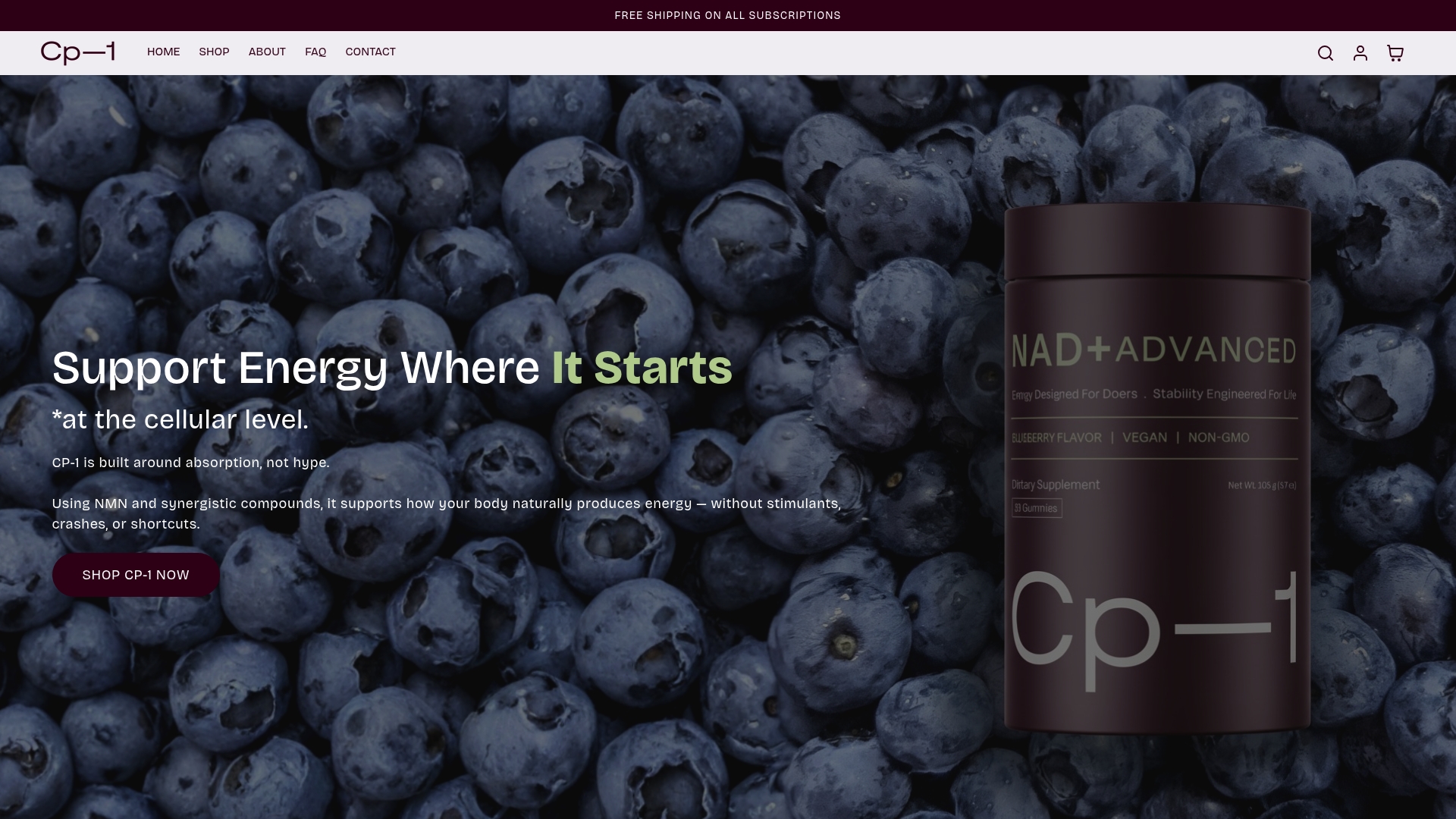
Cp-1 combines NMN with Coenzyme Q10, lion’s mane mushroom extract, reishi mushroom extract, and turkey tail mushroom extract in a single formula. That is not a random ingredient list. CoQ10 works downstream of NAD+ in the same mitochondrial pathway. The medicinal mushrooms address immune resilience and cognitive function through separate but complementary mechanisms. Every ingredient is third-party tested, vegan, non-GMO, and manufactured in the US. You can explore the full formulation and the science behind it at cp-1.com. If you want to go deeper on the NMN supplementation benefits before deciding, the Cp-1 blog covers the clinical evidence without the hype.
FAQ
What is the role of NMN in the body?
NMN serves as a direct precursor to NAD+, a molecule required for mitochondrial energy production, DNA repair, and sirtuin activation. Without adequate NAD+, cellular energy output and repair capacity both decline, particularly with age.
How long does NMN take to work?
Clinical data from a 2026 Nature Metabolism study shows measurable NAD+ increases within four hours of a single dose, with steady-state changes established after 14 days of consistent supplementation. Functional benefits like improved energy or cognitive clarity may take longer to notice subjectively.
Does NMN help with aging?
NMN supports healthy aging by restoring NAD+ levels that decline with age, which in turn supports mitochondrial function, DNA repair, and inflammatory regulation. Long-term disease-risk or lifespan data in humans is not yet established, so current evidence is strongest for biomarker and surrogate outcomes.
Is NMN better than NR for energy?
NMN and NR both raise NAD+ effectively, but NMN has a tissue-specific transporter called Slc12a8 that may give it advantages in the gut and liver. The best choice depends on your specific health goals and which tissues you are prioritizing.
What dose of NMN do human trials use?
Published human RCTs have used doses ranging from 250 mg to 1,200 mg per day, with most general wellness studies clustering around 300 to 600 mg. Higher doses have not been tested in long-term safety studies beyond approximately 12 weeks in most published trials.