

How Does NMN Support Aging? What the Science Says
Nicotinamide mononucleotide, or NMN, is a direct precursor to NAD+, the coenzyme your cells use for energy production, DNA repair, and metabolic regulation. Understanding how does NMN support aging starts at this molecular level: NAD+ levels fall significantly as you get older, and that decline correlates with reduced cellular function across nearly every tissue. NMN supplementation raises NAD+ reliably, which is why researchers and longevity-focused adults are paying close attention. The science is promising, but it is also more nuanced than most supplement marketing admits.
How does NMN support aging at the cellular level?
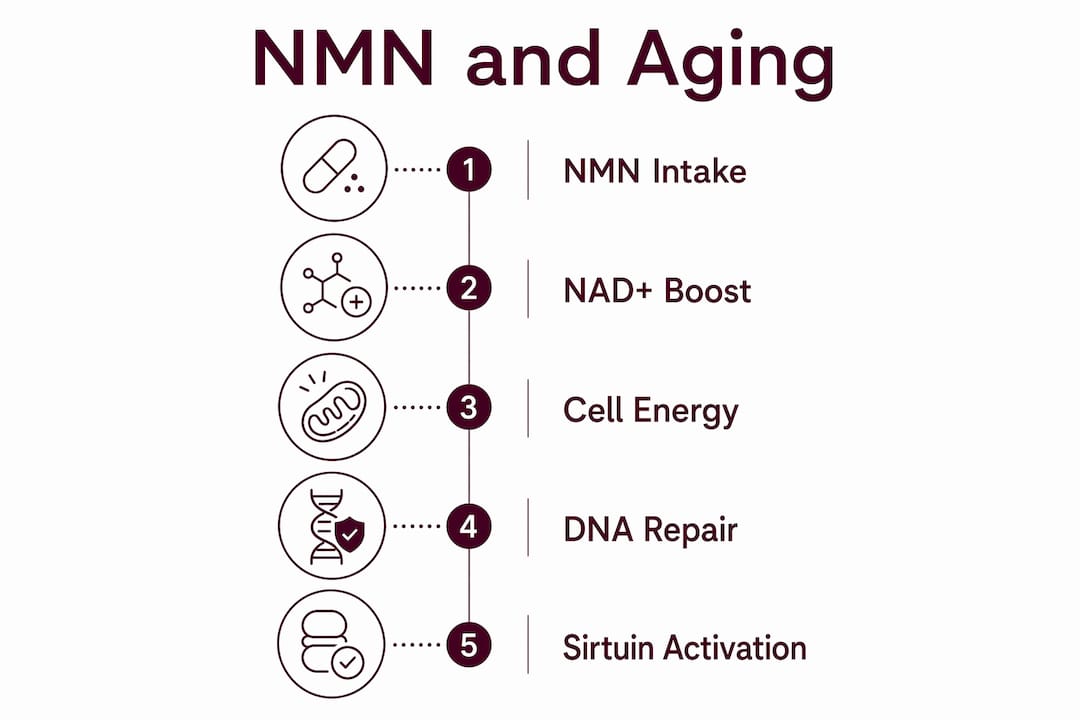
NMN supports aging by restoring NAD+, a molecule your body needs to run hundreds of metabolic reactions. Without adequate NAD+, cells cannot efficiently produce ATP, repair damaged DNA, or activate sirtuins, the proteins that regulate gene expression and cellular longevity. NAD+ is not optional for healthy aging. It is the fuel that keeps your cellular machinery running.
The role of NMN in aging becomes clearest when you look at what NAD+ actually does inside a cell:
- Energy metabolism: NAD+ is a required cofactor in the mitochondrial electron transport chain. Lower NAD+ means less efficient ATP production, which shows up as fatigue and reduced physical capacity.
- DNA repair: NAD+ activates PARP enzymes that detect and fix DNA strand breaks. This process slows with age as NAD+ drops.
- Sirtuin activation: Sirtuins regulate gene expression and DNA repair, and their activity depends directly on NAD+ availability. Declining NAD+ silences these longevity pathways.
- Mitochondrial biogenesis: NAD+ supports SIRT1 and SIRT3, which drive the creation of new mitochondria. Fewer mitochondria means less cellular resilience.
NMN enters cells and converts to NAD+ through a well-characterized biosynthetic pathway. This makes it one of the most direct ways to replenish what aging takes away.
What is NAD+ and why does its decline drive aging?
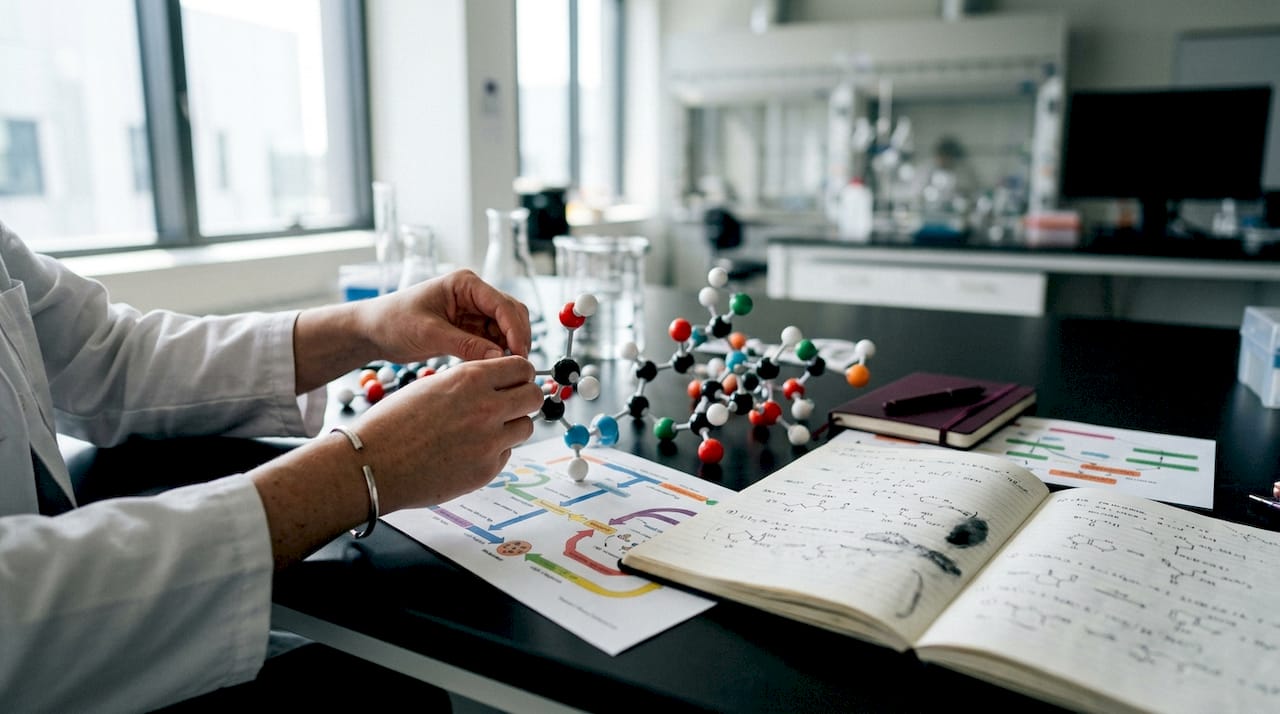
NAD+ is a coenzyme found in every living cell, and NAD+ metabolism links nutrition, metabolic resilience, and aging pathologies in a way no other single molecule does. When NAD+ levels are adequate, cells handle stress, repair damage, and maintain energy balance. When they fall, those processes degrade.
Age-driven NAD+ depletion happens through several mechanisms. CD38, an enzyme that consumes NAD+, increases with age and chronic inflammation. At the same time, the biosynthetic pathways that produce NAD+ from dietary precursors become less efficient. The result is a compounding deficit that accelerates with each decade.
What makes this particularly relevant is that NAD+ depletion may contribute to metabolic decline seen across conditions like type 2 diabetes, cardiovascular disease, and neurodegeneration. Researchers have not yet confirmed whether low NAD+ causes these conditions or results from them. That distinction matters for how you interpret NMN research.
The practical takeaway is straightforward. If NAD+ is the molecule your cells need to function well, and aging systematically depletes it, then restoring NAD+ through a precursor like NMN is a logical intervention. The question is how much clinical benefit that restoration actually delivers.
Does NMN raise NAD+ levels in humans?
Yes. NMN reliably raises NAD+ in humans at doses of 250–900 mg/day. That finding is consistent across multiple randomized controlled trials. The NAD+ elevation is real and measurable in blood.
The harder question is what that elevation actually does for your health. Meta-analyses pooling data from 8–12 RCTs show no consistent evidence of clinical improvements in metabolism or physical performance. The studies are mostly short-term, with small sample sizes under 100 participants each. That is not enough statistical power to detect modest but meaningful effects on aging markers.
Pro Tip: If you are evaluating NMN research, look at whether the study measured NAD+ in blood versus tissue. Blood NAD+ rises reliably. Tissue-level changes, which matter more for organ function, are harder to measure and less consistently reported.
One important nuance: people with higher metabolic risk factors show more notable improvements than metabolically healthy young adults. This suggests NMN’s benefits may be most relevant for people whose NAD+ is already significantly depleted, which tends to mean older adults or those with metabolic conditions. If you are 35 and in excellent health, the effect size may be smaller than the marketing suggests.
For a deeper look at how NMN compares to other NAD+ precursors, the NMN versus NAD comparison at Cp-1 breaks down the biochemical differences clearly.
What does the evidence say about NMN and vascular health?
Vascular aging is one of the most compelling areas of NMN research right now. A 2026 clinical trial found that NMN supplementation decreased brachial-ankle pulse wave velocity by 25.1 cm/s compared to an increase in the placebo group. Pulse wave velocity measures arterial stiffness. A reduction of that magnitude corresponds to roughly a two-year decrease in vascular age.
That is a concrete, clinically meaningful number. Arterial stiffness is a strong predictor of cardiovascular events, and reducing it by the equivalent of two years through supplementation is not trivial.
The subgroup data adds important context. Participants with elevated BMI and blood glucose showed greater vascular improvements than those with normal metabolic markers. This reinforces the pattern seen in metabolic studies: NMN delivers the most measurable benefit where NAD+ depletion is most severe.
| Outcome measure | NMN group | Placebo group |
|---|---|---|
| Pulse wave velocity change | Decreased 25.1 cm/s | Increased |
| Estimated vascular age change | ~2-year reduction | No improvement |
| Subgroup with greatest benefit | Elevated BMI and glucose | Not applicable |
The mechanistic explanation connects back to NAD+ and endothelial function. NAD+ supports nitric oxide production in blood vessel walls, which keeps arteries flexible. Restoring NAD+ through NMN appears to protect that function, at least in people whose vascular health is already under metabolic stress.
Is NMN enough on its own, or does aging require a broader approach?
NMN addresses one axis of cellular aging. It does not address all of them. NMN elevates NAD+ but does not address mitochondrial quality control or oxidative stress alone. That is a critical distinction for anyone serious about longevity.
Researchers have proposed a tri-axis model that positions NMN alongside two other compounds:
- PQQ (pyrroloquinoline quinone): Supports mitochondrial biogenesis and protects against oxidative damage.
- EGT (ergothioneine): A redox buffer that protects cells from oxidative stress and supports mitochondrial stability.
- NMN: Restores NAD+ homeostasis and activates sirtuin pathways.
Combination strategies targeting NAD+ homeostasis, mitochondrial quality, and redox balance may address age-related mitochondrial dysfunction more effectively than NMN alone. Each compound targets a different failure point in the aging cell.
“Aging is not a single-molecule problem. NAD+ restoration through NMN is a meaningful intervention, but mitochondrial quality control and redox stability are equally critical axes. A framework that addresses all three offers a more complete picture of systemic aging than any single compound can.”
This does not mean NMN is ineffective. It means NMN is most powerful when it is part of a thoughtful, multi-target approach rather than a standalone fix. The role of NMN in energy, aging, and longevity is real. It just does not operate in isolation.
Key Takeaways
NMN supports aging primarily by restoring NAD+ levels, which drives cellular energy, DNA repair, and sirtuin activation, but its full clinical benefit depends on metabolic context and a broader mitochondrial health strategy.
| Point | Details |
|---|---|
| NMN raises NAD+ reliably | Doses of 250–900 mg/day consistently elevate NAD+ in human trials. |
| Metabolic risk amplifies benefit | People with elevated BMI and glucose show the strongest vascular and metabolic improvements. |
| Vascular aging responds to NMN | A 2026 trial showed a ~2-year reduction in vascular age via pulse wave velocity. |
| NAD+ alone is not enough | Mitochondrial quality control and redox balance require additional compounds like PQQ and EGT. |
| Clinical evidence has limits | Most trials are short-term with small samples, so long-term aging benefits remain unconfirmed. |
My honest read on where NMN research actually stands
I have spent a lot of time going through NMN studies, and here is what I keep coming back to: the biochemical rationale is genuinely strong. NAD+ does decline with age. NMN does raise NAD+. The sirtuin and DNA repair pathways that depend on NAD+ are real and well-documented. That is not hype. That is biology.
What frustrates me is how the supplement industry takes that solid foundation and builds a tower of overclaiming on top of it. Experts stress that NMN is an investigational supplement that boosts NAD+ but lacks robust evidence for reversing aging in humans. That is the honest position. And yet you will find products marketed as if aging itself is optional if you just take the right pill.
The vascular data from 2026 is the most exciting clinical signal I have seen. A two-year reduction in vascular age is not nothing. But that result came from people with elevated metabolic risk, not from healthy 30-year-olds. Context matters enormously when you read these studies.
My practical advice: treat NMN as a serious tool with real biochemical support, not a cure. Pair it with sleep, resistance training, and a diet that does not destroy your metabolic health. And recognize that pharmaceutically developed NMN derivatives are in phase 2 trials for neurodegenerative and age-related diseases. The science is moving. Stay informed, stay skeptical of hype, and make decisions based on what the data actually shows.
— Hugo
What Cp-1 offers for adults serious about cellular aging
Cp-1 was built for people who want the science straight, without the marketing noise. The CP-1 formula includes NMN alongside coenzyme Q10, lion’s mane, reishi, and turkey tail mushroom extracts, addressing NAD+ production, mitochondrial energy, and immune resilience in one formula.
Every batch is third-party tested, vegan, non-GMO, and manufactured in the US. If you want to understand exactly what you are putting in your body and why, the CP-1 supplement page walks through the science behind each ingredient. For adults who take aging seriously, Cp-1 is built to match that standard.
FAQ
What does NMN do for aging?
NMN raises NAD+ levels in the body, supporting cellular energy production, DNA repair, and sirtuin activation. These are processes that decline with age and contribute to reduced cellular function.
How much NMN do you need to raise NAD+ levels?
Clinical trials show that doses of 250–900 mg/day consistently raise NAD+ in humans. The optimal dose for long-term aging benefits has not been established.
Does NMN slow aging in humans?
NMN improves measurable markers like vascular age and NAD+ levels, but current evidence does not confirm it slows aging broadly in humans. Most trials are short-term with small sample sizes, limiting definitive conclusions.
Who benefits most from NMN supplementation?
Research shows that people with elevated BMI and blood glucose see the greatest improvements, particularly in vascular health. Metabolically healthy younger adults show smaller effect sizes in current studies.
Is NMN better taken with other supplements?
The tri-axis model suggests NMN works best alongside compounds like PQQ and EGT, which target mitochondrial quality and redox balance. NMN addresses NAD+ homeostasis but does not cover all aspects of cellular aging on its own.