
Dietary supplements can genuinely support stress management, but they work best as targeted additions to a solid foundation, not as replacements for sleep, nutrition, or movement. The most effective approach combines evidence-backed vitamins like B complex, C, and D with minerals like magnesium and herbal adaptogens like ashwagandha and rhodiola. Some supplements act fast: L-theanine produces calm alertness within an hour. Others, like ashwagandha, require several weeks of consistent daily use before cortisol levels meaningfully shift. Here is what the research actually supports:
- Vitamins B complex, C, and D support nervous system function, adrenal health, and mood regulation
- Magnesium aids muscle relaxation, sleep quality, and nervous system balance
- Ashwagandha and rhodiola are adaptogens that modulate cortisol over weeks of use
- L-theanine provides acute calming without sedation, suitable for daytime stress
- Melatonin and glycine improve sleep quality, which directly lowers baseline cortisol
- Ginseng and phosphatidylserine offer additional support for mental and physical stress responses
- Supplements are not standalone treatments. Lifestyle factors remain the foundation.
Which vitamins and minerals actually reduce stress?
A meta-analysis of micronutrient supplementation found that supplementation reduced perceived stress, mild psychiatric symptoms, and anxiety in healthy adults, with high-dose B vitamin formulas showing the strongest mood benefits. That finding holds up across multiple study designs, which makes it one of the more reliable signals in this space.
Vitamin B complex is the most studied group for stress. B vitamins fuel the production of neurotransmitters like serotonin and dopamine, and they support the adrenal glands during prolonged stress. A systematic review on B vitamins and stress confirmed that vitamin B6 alone reduced anxiety in older women, while combined magnesium and B6 lowered premenstrual anxiety. Deficiency in any single B vitamin can blunt the whole chain.
Vitamin C acts as an antioxidant that supports adrenal function. High-dose sustained-release vitamin C has been shown to reduce anxiety and blood pressure during acute stress exposure. Dietary sources like bell peppers and citrus are the preferred delivery method, but supplementation fills gaps when diet falls short.
Vitamin D influences mood and neuroendocrine function. People with deficiency are most likely to see measurable improvement from supplementation, particularly those with major depressive disorder. The World Federation of Societies of Biological Psychiatry weakly recommends vitamin D for psychiatric support, which reflects real but modest evidence.
Magnesium is where the data gets particularly compelling. Chronic stress depletes magnesium, and low magnesium worsens the stress response. Magnesium glycinate at 200–400 mg daily, taken in the evening, supports nervous system regulation, muscle relaxation, and sleep quality. It is one of the most practical and well-tolerated supplements you can add to a stress protocol.
Herbal and specialty supplements with real evidence for anxiety relief
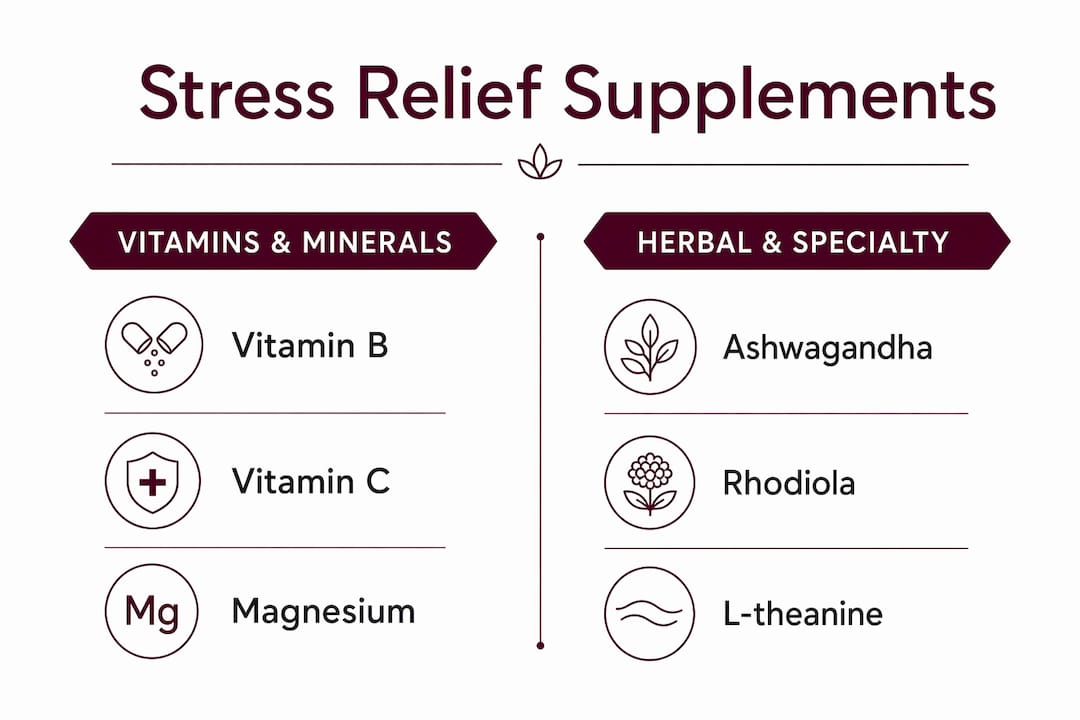
Adaptogens are the category most people reach for when stress feels chronic, and the evidence for a few of them is genuinely solid.
Ashwagandha is the most clinically validated adaptogen for stress. A systematic review and meta-analysis confirmed that doses over several weeks significantly reduced both cortisol and anxiety scores. The key word is “consistent.” Taking it once or twice does nothing. You need 6–8 weeks of daily use to see the cortisol shift.

Rhodiola rosea works differently. It has an activating, anti-fatigue effect rather than a sedating one, making it better suited for mental exhaustion than for winding down at night. Take it in the morning, not before bed.
L-theanine is the supplement that actually delivers fast. At 100–200 mg, it produces a calm, alert state within an hour without causing drowsiness. It pairs well with caffeine if you want focus without the edge, and it is one of the few supplements where you feel the effect the same day you take it.
Phosphatidylserine at 300–800 mg daily has shown in trials that it can blunt excessive cortisol responses during both physical and mental stress. The effect is modest but consistent across studies, particularly for post-exercise cortisol.
Omega-3 fatty acids at 2g daily may help regulate cortisol and reduce inflammatory markers over 6–8 weeks. The mechanism involves dampening the inflammatory cascade that chronic stress triggers.
Melatonin and glycine target the sleep side of stress resilience. Glycine before bed induces a core body temperature drop that facilitates deep sleep. Melatonin aids sleep onset without causing receptor desensitization at low doses. Both support cortisol regulation by improving the sleep quality that stress consistently degrades.
Ginseng rounds out the adaptogen category with evidence for reducing mental fatigue and supporting stress modulation, though the research is less consistent than ashwagandha’s.
How to integrate supplements with your lifestyle for lasting stress relief
Supplements do not work in a vacuum. The most effective stress management combines evidence-based supplementation with quality sleep, a nutrient-dense diet, regular movement, and real stress coping techniques. If those foundations are missing, no supplement will compensate.

Timing matters more than most people realize. Matching adaptogens to circadian rhythms improves outcomes: rhodiola in the morning aligns with the natural cortisol peak, holy basil during the day, and ashwagandha in the evening when cortisol should be declining. This is not arbitrary. It respects the biology your supplements are trying to support.
Pro Tip: Layer supplements by time of day and stress profile rather than taking everything at once. Morning: rhodiola for mental energy. Afternoon: L-theanine for acute stress. Evening: magnesium glycinate and ashwagandha to wind down. This approach targets specific stress windows instead of hoping a single pill covers everything. Cp-1’s daily wellness workflows break this down further.
A few practical principles worth following:
- Start with one or two supplements, not a full stack. Identify what is actually working before adding more.
- Address blood sugar stability through diet. Unstable blood sugar amplifies cortisol spikes and undermines every supplement you take.
- Nutrition should come first. Supplements fill gaps; they do not replace whole foods.
- Build slowly. Adaptogens need approximately 6–8 weeks of consistent use to build meaningful resilience.
- Talk to a healthcare provider before adding phosphatidylserine, high-dose B6, or any adaptogen if you take medications. Interactions are real, particularly with thyroid medications, sedatives, and blood thinners.
For a deeper look at how supplements interact with magnesium’s role in stress and nervous system health, that resource covers the deficiency patterns and practical dosing in detail.
What experts actually say about supplement safety and limitations
The honest summary: supplements support stress management, but their effects are generally modest and build over time. They are not cures. A PMC systematic review found the strongest evidence for vitamin B complexes and probiotics on anxiety, depressive symptoms, and sleep quality, while vitamin D showed benefit primarily in deficient populations.
Key safety and practical considerations:
- Dosage precision matters. Ashwagandha at 125 mg and at 600 mg produce different outcomes. Do not assume more is better.
- Interactions are underreported. Rhodiola can interact with stimulants and antidepressants. Melatonin interacts with blood thinners and immunosuppressants. Always disclose supplement use to your doctor.
- Supplements are not a substitute for therapy or medication when clinical anxiety or depression is present. They are adjuncts, not replacements.
- Quality varies widely. Third-party tested, non-GMO, and GMP-certified products are not marketing language. They are the baseline for knowing what you are actually taking.
- Consistency beats intensity. Taking ashwagandha daily for 8 weeks outperforms taking a double dose twice a week.
The goal is a protocol you can sustain, not a short-term experiment. For more on how supplements enhance cognitive performance alongside stress resilience, that resource covers the evidence on several key nutrients in detail.
Key Takeaways
Supplements support stress management most effectively when layered on quality sleep, nutrition, and movement, with consistent daily use over weeks producing the most meaningful results.
| Point | Details |
|---|---|
| Acute vs. long-term effects | L-theanine works within an hour; ashwagandha requires 6–8 weeks of daily use to shift cortisol. |
| Magnesium is foundational | Magnesium glycinate supports nervous system regulation, sleep, and muscle relaxation. |
| Timing improves outcomes | Rhodiola in the morning, ashwagandha in the evening aligns supplements with natural cortisol rhythms. |
| Lifestyle comes first | Supplements fill nutritional gaps but cannot replace sleep, whole foods, exercise, and stress coping techniques. |
| Safety requires attention | Dosage, interactions with medications, and product quality all affect whether a supplement helps or harms. |