
Yes, most gummy candy carries a heavy sugar load, and a lot of gummy vitamins do too, just in smaller amounts. A standard gummy candy serving can pack close to half its weight in sugar, while gummy vitamins typically run 1 to 5 grams per piece. Check the Supplement Facts or Nutrition Facts panel before you buy, favor products using allulose or fiber-based sweeteners, and talk to your doctor if you have diabetes.
TL;DR:
- Gummy candies typically contain nearly 24 grams of sugar per 43-gram serving, with a poor blood sugar index rating, while low-sugar gummies often have under 1 gram of sugar.
- Multiple gummy vitamins daily can significantly increase total sugar intake, sometimes reaching half of the recommended daily limit for adults, especially with several different supplements.
- Sugar substitutes like allulose and soluble fiber are safer, low-glycemic options that produce less blood sugar impact, but sugar alcohols may cause digestive discomfort if consumed in large amounts.
- Checking total carbohydrates, added sugars, and ingredient order on labels helps identify sugar-heavy gummies, which often list corn syrup or sugar among the first ingredients.
- People with diabetes should monitor their total carbohydrate and sugar alcohol intake from gummies carefully, testing blood response and consulting healthcare providers before regular use.
Table of Contents
- How Much Sugar Is Actually in Gummies?
- Gummy Vitamins Vs. Gummy Candy: Why the Sugar Difference Exists
- What Sweeteners Replace Sugar in Gummies, and Are They Safer?
- How Does Sugar in Gummies Affect Your Health?
- What Should You Check on a Gummy Label Before Buying?
- Can People With Diabetes Eat Sugar-Free or Low-Sugar Gummies?
- What Supplement Formulators Get Right When They Cut Sugar
- A Lower-Sugar Gummy Option Worth Checking Yourself
- Sources
- FAQ
How Much Sugar Is Actually in Gummies?
Numbers make this easier than guessing. A 43-gram serving of standard gummy candy contains about 24 grams of total sugars, which works out to nearly half the serving weight. That same nutrition data rates the product’s blood sugar index as poor, which tells you what your body does with it within the hour after eating it.
Gummy vitamins operate on a different scale entirely. Most brands land somewhere between 1 and 5 grams of sugar per gummy, and the dose matters here in a way it doesn’t with candy. If your multivitamin calls for two gummies a day, you’re looking at double the per-piece sugar count before breakfast is even over, which can add significantly to daily sugar intake. A daily probiotic gummy, a vitamin D gummy, and a melatonin gummy at bedtime can quietly stack into a real number by the time you total them up.
Here’s what three real Nutrition Facts panels look like side by side:
| Product type | Serving size | Total sugars | Notable detail |
|---|---|---|---|
| Standard gummy candy | 43 g | ~24 g | Blood Sugar Index rated Poor |
| Gummy candy (alternate formulation) | Varies by pack | Corn syrup listed as primary ingredient | Corn syrup and sugar top the ingredient list |
| Low-sugar branded gummy | 1 serving | Under 1 g | Uses soluble fiber and allulose instead of sugar |
A few takeaways jump out once you line these up:
- Standard gummy candy and low-sugar reformulated gummies can differ by more than 20 grams of sugar per serving despite looking nearly identical on the shelf.
- The ingredient order matters as much as the sugar line. When corn syrup or sugar appears first, the product is sugar-dominant by weight.
- Gummy vitamins rarely approach candy-level sugar per piece, but multiple daily doses change that math fast.
Gummy Vitamins Vs. Gummy Candy: Why the Sugar Difference Exists
Gummy vitamins and gummy candy chase the same texture goal, but they get there for different reasons. Candy manufacturers use sugar for taste, full stop. Supplement makers use it to mask the bitter or metallic taste that vitamins, minerals, and mushroom extracts naturally carry, plus to hold the gel structure together without a chalky mouthfeel. That’s a legitimate formulation problem, not laziness, but it still means sugar ends up in the mix more often than most people assume when they picture a “vitamin.”
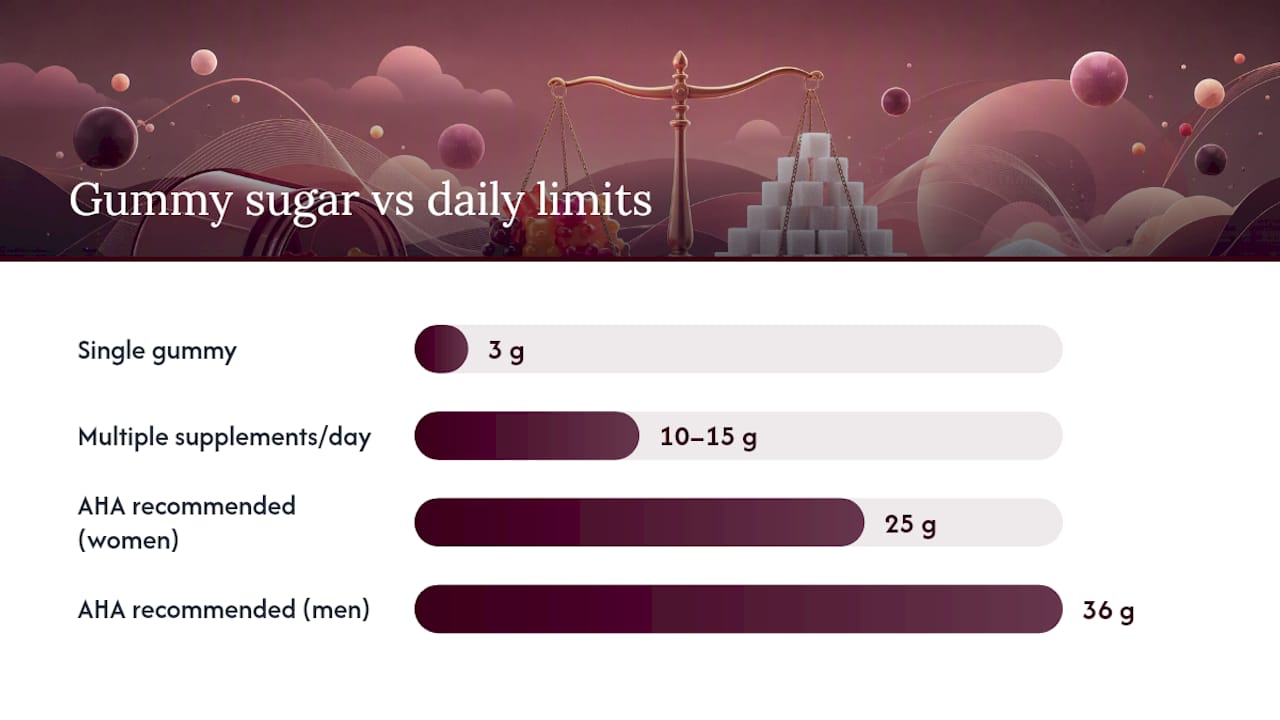
The dosing pattern is where this gets real. A single vitamin gummy at 3 grams of sugar sounds trivial. Take a multivitamin, a collagen gummy, and a sleep-support gummy in the same day, and you can hit 10 to 15 grams of added sugar before you’ve eaten a meal. Against the American Heart Association’s guidance of roughly 25 grams a day for most women and 36 grams for most men, that’s a third to more than half your daily allowance gone on supplements alone.
The FDA requires dietary supplements to carry a Supplement Facts panel and full ingredient list, but it doesn’t require a company to justify why sugar is there or rank products by sugar content. The FDA’s own guidance on dietary supplements puts the burden on you to read the label and check for third-party testing, since marketing claims aren’t independently verified before a product hits shelves.
Before you buy your next bottle, check these three things:
- The serving size on the label, since “per gummy” and “per serving” aren’t always the same number.
- Whether “added sugars” is listed separately from “total sugars,” which tells you how much is naturally occurring versus added for taste.
- Whether the brand publishes a certificate of analysis you can actually view, not just claims to have one.
What Sweeteners Replace Sugar in Gummies, and Are They Safer?
Manufacturers reach for four main categories when they want to cut sugar without losing the chew: allulose, sugar alcohols, nonnutritive sweeteners, and soluble fiber. Each behaves differently once it hits your bloodstream, and the differences matter more than most product labels let on.
Allulose is a low-glycemic sugar that your body absorbs but largely doesn’t metabolize for energy, so it barely moves blood glucose. Sugar alcohols like erythritol and sorbitol sit in a gray zone: erythritol passes through mostly unabsorbed with minimal glycemic effect, while sorbitol ferments in the gut and can cause bloating or a laxative effect in larger amounts. Nonnutritive sweeteners such as sucralose and stevia carry no calories and no meaningful blood sugar impact, but they don’t contribute to texture, so they’re usually paired with a bulking agent like soluble fiber to keep the gummy’s chew intact.
A prospective crossover clinical trial tested this directly. Researchers gave healthy adults sugar-substitute gummy candies and standard sugar versions on separate occasions, then measured glycemic response. The substitute version produced a notably improved response compared to the sugar version. That’s a genuinely useful finding, but it comes with real limits: the trial used healthy adults, not people with diabetes or insulin resistance, and it measured a single-sitting response rather than long-term outcomes. Don’t read it as a blanket “sugar substitutes are risk-free for everyone” result.
Pro Tip: “Sugar-free” is a marketing term, not a nutritional guarantee. A gummy can legally claim it while still containing 15 or more grams of digestible carbohydrates from sugar alcohols, which your body still processes into glucose, just more slowly.
A few practical notes worth keeping in mind:
- Sugar alcohols ending in “-ol” (sorbitol, maltitol, xylitol) are the most likely to cause digestive discomfort if you eat several servings at once.
- Allulose and soluble fiber tend to be the gentlest options for people with sensitive digestion.
- Always check “total carbohydrates,” not just the sugar line, since sugar alcohols show up there even when the sugar count reads zero.
How Does Sugar in Gummies Affect Your Health?
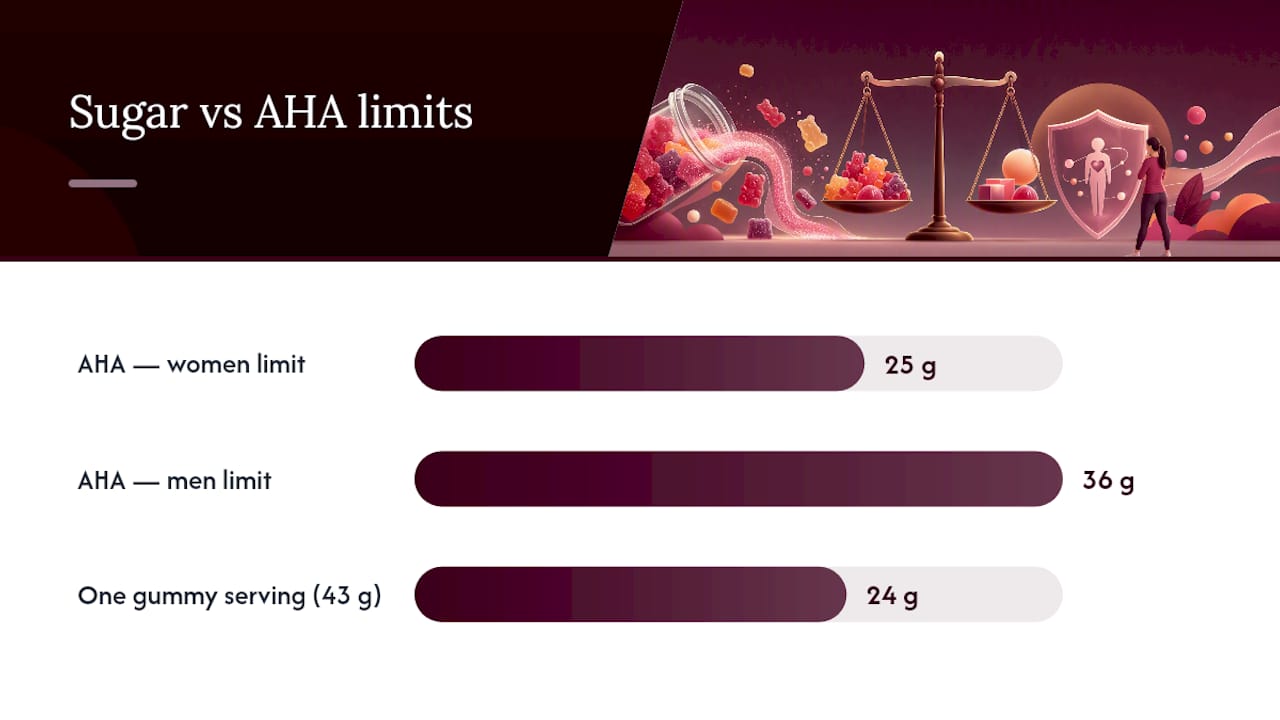
The American Heart Association’s added-sugar ceiling, about 25 grams a day for most women and 36 grams for most men, gives you a real yardstick to measure gummies against. A single 43-gram serving of standard gummy candy delivers roughly 24 grams of sugar, which by itself eats up nearly the entire daily budget for most women before you’ve had lunch.
That single-serving spike matters for more than your waistline. Sugar-dominant gummies produce a rapid glucose rise and fall, the kind of swing that leaves you hungrier an hour later. Reformulated versions using allulose or sugar alcohols tend to blunt that spike, based on the crossover trial data, but “reformulated” doesn’t automatically mean “carb-free,” so checking total carbohydrates still matters even for the lower-sugar version.
Dental health takes a hit that’s easy to overlook. Gummies are sticky by design, which means they cling to tooth surfaces and molars far longer than a drink or a hard candy that dissolves and clears. Sugar plus prolonged contact time is exactly the combination that feeds cavity-causing bacteria. A few simple habits cut that risk substantially:
- Rinse your mouth with water after eating gummies, especially before bed when saliva production slows.
- Avoid grazing on gummies throughout the day, since frequent small exposures do more damage than one larger serving.
- Brush within 30 to 60 minutes of eating sticky, sugary foods rather than immediately, since acid softens enamel temporarily.
Calories add up in a way that surprises people. A sugar-heavy gummy serving can run 130 to 160 calories, and because gummies don’t register as “a meal,” it’s easy to eat two or three servings without noticing you’ve added 400 calories of low-nutrition sugar to your day.
Kids and multi-gummy households deserve their own line of caution. A child taking a daily vitamin gummy, a fiber gummy, and an occasional treat gummy can hit an outsized share of their daily sugar allowance from supplements alone, since children’s recommended limits are lower than adult figures. If your household relies on more than one gummy supplement per person per day, add up the sugar across all of them, not just the one you think of as “the vitamin.”
What Should You Check on a Gummy Label Before Buying?
Reading a gummy label properly takes about 20 seconds once you know where to look. Work through it in this order:
- Check the serving size first. A “per gummy” claim only means something once you know how many gummies make up a full serving.
- Compare total sugars to added sugars. The gap between them tells you how much is naturally occurring (rare in gummies) versus added for taste.
- Scan total carbohydrates, not just sugar. Sugar alcohols and fiber show up here even when the sugar line reads zero or near-zero.
- Look for sugar alcohols by name (sorbitol, maltitol, erythritol, xylitol) in the ingredient list, since these affect digestion differently than sugar does.
- Read the ingredient order. Ingredients are listed by weight, so if corn syrup or sugar appears in the first three items, the product is sugar-heavy regardless of marketing language on the front of the package.
Watch for these red flags specifically:
- “Invert sugar” or “corn syrup solids” used as a substitute term for sugar to make the ingredient list look shorter or less obvious.
- A “sugars” figure on the panel that’s noticeably higher than the “added sugars” figure, which can indicate the manufacturer is downplaying the added portion.
- Flavor “syrups” or “glazes” listed separately from the main formula, which sometimes hide additional sugar outside the primary ingredient count.
What to prefer instead: gummies built around allulose or soluble fiber that clearly list net carbs, alongside a Supplement Facts panel that’s easy to read and a published certificate of analysis. Our supplement label reading checklist walks through this process step by step if you want a repeatable system for every bottle you pick up.
Can People With Diabetes Eat Sugar-Free or Low-Sugar Gummies?
Cautiously, yes, but with real qualifiers. The crossover clinical trial on sugar-substitute gummies showed improved glycemic response in healthy adults, but the study didn’t include participants with diabetes, so you can’t assume the same result applies to an insulin-resistant or diabetic system.
If you have diabetes, watch total carbohydrates and sugar alcohol content more closely than the “sugar-free” claim on the front of the package. Sugar alcohols still convert to glucose, just more slowly and incompletely than table sugar, which means a “sugar-free” gummy can still move your blood glucose depending on quantity and which sugar alcohol is used.
- Test your blood glucose before and after trying a new low-sugar gummy product for the first time.
- Check the total carbohydrate count, not just the sugar line, since that’s the more reliable predictor of glycemic impact.
- Talk to your doctor or diabetes educator before adding any new gummy supplement to a daily routine, especially if you’re taking multiple gummies per day.
What Supplement Formulators Get Right When They Cut Sugar
Formulators who take this seriously lean on low-glycemic sweeteners and fiber-based bulking agents to hold gummy texture together without leaning on sugar for the job, a formulation challenge documented in gel-science research. Production quality matters just as much as the sweetener choice: GMP-certified manufacturing and a published certificate of analysis are what separate a company’s sugar claims from something you can actually verify. That transparency, not the marketing copy, is what tells you a label is telling the truth.
— Hugo
A Lower-Sugar Gummy Option Worth Checking Yourself
Most vitamin gummies solve the bitter-taste problem with sugar. Some supplements are built around a different approach: skip fillers and unnecessary sugar in the first place and let effective dosing and absorption do the work instead.
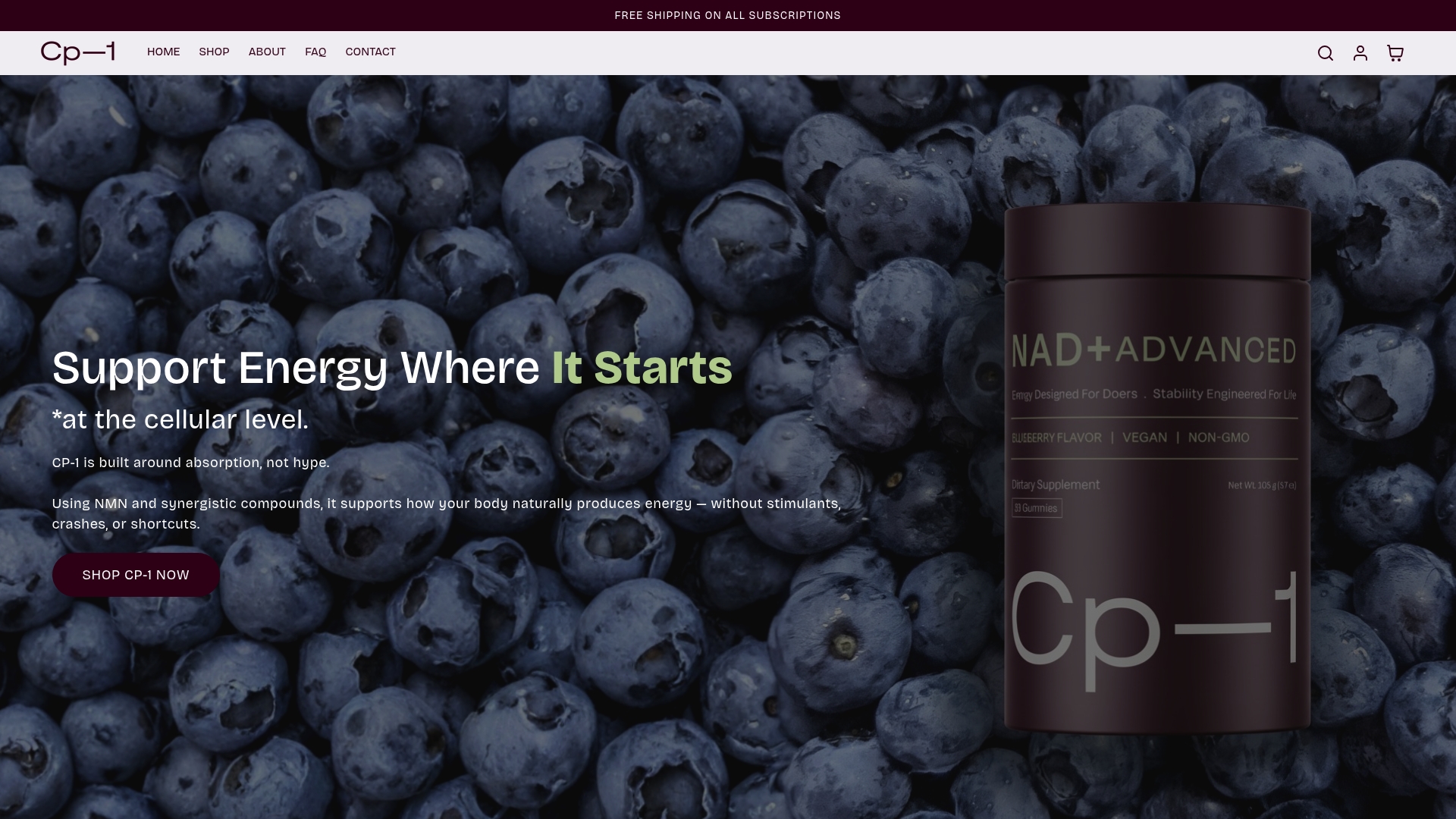
That matters because NMN needs to actually reach your cells to support NAD+ production, and a formula loaded with sugar or built around a marketing deck rather than the person swallowing it doesn’t change that biology. Some manufacturers follow good production standards, use vegan and non-GMO ingredients, and back their formulas with third-party testing, the same COA transparency this article recommends you look for on any gummy supplement bottle. Before you buy anything, gummy or otherwise, check the Supplement Facts panel and the certificate of analysis yourself. If you want to see how CP-1 approaches that balance of taste, absorption, and honest dosing, review the CP-1 product details and check the label the same way you’d check any other bottle on your counter.
Sources
For deeper reading beyond this guide: the PMC clinical trial on sugar-substitute gummies covers the clinical evidence, FDA supplement guidance explains labeling rules, the American Heart Association’s sugar guidance sets daily thresholds, and MyFoodData’s gummy candy entry shows a real Nutrition Facts example.
This article is general information, not a substitute for advice from a qualified doctor. Consult a qualified healthcare professional about your own circumstances before acting on anything here.
- Intake of Sugar Substitute Gummy Candies Benefits the Glycemic Response in Healthy Adults: A Prospective Crossover Clinical Trial
- How much sugar is too much? (American Heart Association)
- Questions and answers on dietary supplements (FDA)
FAQ
Are Gummies High in Sugar?
Standard gummy candy usually is, with a 43-gram serving containing about 24 grams of total sugars. Gummy vitamins run lower per piece, typically 1 to 5 grams, but multiple daily doses can add up fast.
What Is the Healthiest Gummy to Eat?
The healthiest options use allulose, soluble fiber, or sugar alcohols instead of added sugar, with some branded products reporting under 1 gram of sugar per serving. Look for a full Supplement Facts panel and a published certificate of analysis before buying.
Can a Diabetic Eat Gummies?
People with diabetes can often tolerate low-sugar or sugar-substitute gummies, but should check total carbohydrates and sugar alcohol content rather than relying on a “sugar-free” label alone. The clinical trial on sugar-substitute gummies studied healthy adults only, so testing your own blood glucose response and talking to your doctor first is the safer approach.
What Gummies Have the Least Amount of Sugar?
Gummies formulated with allulose, soluble fiber, or sugar alcohols consistently carry the least sugar, with some products landing under 1 gram per serving. Some gummies are built around avoiding unnecessary sugar entirely, so checking labels alongside any other brand’s Supplement Facts panel is a reasonable place to start comparing.