
A supplement label reading checklist is a step-by-step tool that lets you decode any dietary product label quickly and spot quality before you buy. Every US dietary supplement must carry a Supplement Facts panel regulated by FDA standards. The NIH Dietary Supplement Label Database catalogs over 113,000 products for label verification, which shows just how crowded and uneven this market really is. Most people scan the front of the bottle and move on. That’s exactly what supplement companies count on.
1. Check serving size before anything else
Serving size is the single most manipulated number on any supplement label. A product can legally advertise “500 mg of ingredient X per serving” while requiring four capsules to hit that dose. That means each capsule delivers only 125 mg, and your “60-capsule bottle” is actually a 15-day supply, not 30.
The math is simple but most people skip it:
- Find the serving size (number of capsules, scoops, or tablets per dose)
- Multiply serving size by servings per container to get total units
- Divide total units by serving size to confirm actual days of supply
- Divide the bottle price by servings per container to get true daily cost
Serving size manipulation is a common tactic to present large ingredient amounts per serving while effectively doubling or tripling your daily cost. Many marketed “30-day supplies” are actually 15–20 days at the recommended dose.
Pro Tip: Before comparing two products on price, calculate the cost per serving for each. A cheaper bottle with a four-capsule serving size often costs more per day than a pricier bottle with a one-capsule dose.

2. Verify that ingredient doses match clinical evidence
The dose listed on a label means nothing if it falls below the amount shown to work in research. A label can list lion’s mane mushroom extract and technically be accurate while delivering a fraction of the dose used in clinical studies.
Here is what to check:
- Look up the clinically studied dose for each key ingredient
- Compare that number to the label’s “Amount Per Serving”
- Flag any ingredient listed without a specific milligram amount
- Reject products where key actives are listed last in a long ingredient stack (ingredients are listed by weight, so position matters)
Products that match clinical doses and disclose individual ingredient amounts are statistically less likely to be underdosed or mislabeled. That single filter removes a large portion of the market from consideration.
Pro Tip: Search “[ingredient name] clinical dose” before you buy. If the label lists 50 mg and studies used 500 mg, you are paying for a placebo.
3. Treat proprietary blends as a red flag
A proprietary blend lists a group of ingredients under one total weight, like “Cognitive Support Blend: 750 mg.” The label never tells you how much of each ingredient is inside that 750 mg. The manufacturer could use 700 mg of the cheapest filler and 50 mg of the active ingredient you actually want.
Proprietary blends allow manufacturers to obscure individual ingredient doses, often resulting in biologically irrelevant amounts. This is not a gray area. It is a transparency failure.
What a fully disclosed label looks like:
- Each ingredient listed separately with its own milligram amount
- No umbrella “blend” grouping multiple actives under one weight
- Standardized extracts identified by their active percentage (e.g., “lion’s mane 30% beta-glucans”)
- No vague terms like “proprietary matrix” or “advanced formula”
The supplement transparency guide from CP-1 breaks down exactly why individual ingredient disclosure matters for your safety, not just your wallet.
4. Identify the ingredient form, not just the name
Magnesium is magnesium, right? Wrong. Magnesium glycinate absorbs at 24–30% while magnesium oxide absorbs at only 4–5%. That is up to a 20x difference in what your body actually uses. The same principle applies across vitamins and minerals.
| Ingredient | Inferior form | Superior form |
|---|---|---|
| Magnesium | Magnesium oxide | Magnesium glycinate |
| Vitamin B12 | Cyanocobalamin | Methylcobalamin |
| Folate | Folic acid | Methylfolate (5-MTHF) |
| Curcumin | Standard curcumin | Curcumin with piperine or phytosome |
Labels specifying the exact chemical form support transparency and allow you to assess bioavailability before buying. If a label says only “magnesium” with no form listed, that is a red flag. Quality manufacturers name the form because they are proud of it.
5. Understand what third-party testing actually certifies
“GMP Certified” appears on thousands of supplement bottles. It means the factory follows Good Manufacturing Practices for safety and cleanliness. It does not verify that the product inside the bottle contains what the label claims.
Third-party testing is the only method that confirms label accuracy, potency, and contaminant screening. Certifications from USP, NSF International, and Informed Sport each verify identity, potency, and freedom from banned substances or contaminants.
What to look for:
- A visible third-party seal (USP, NSF, or Informed Sport) on the label
- A publicly available Certificate of Analysis (COA) on the brand’s website
- Batch-specific testing, not just a one-time certification
- Clear distinction between factory GMP and product-level third-party verification
The CP-1 guide on third-party supplement testing explains the difference between these certification levels in plain terms. If a brand cannot show you a COA, treat that as a hard pass.
Pro Tip: Search “[brand name] certificate of analysis” before buying. Brands that invest in real third-party testing publish their COAs publicly. Brands that don’t, won’t.
6. Scrutinize the “Other Ingredients” section
Most people never read past the Supplement Facts panel. The “Other Ingredients” section sits below it and lists everything else in the capsule: fillers, binders, flow agents, coatings, and colorants. Some of these are harmless. Others are not.
The “Other Ingredients” section frequently contains additives like titanium dioxide and artificial colors that may cause allergies or serve no health purpose. Fewer additives generally signal a cleaner product. A list of 10+ “other ingredients” on a simple vitamin is a warning sign.
Watch for these specifically:
- Titanium dioxide (a whitening agent with questioned safety)
- Artificial colors (Red 40, Blue 1, Yellow 5)
- Carrageenan (a thickener linked to gut irritation)
- Hydrogenated oils used as fillers
- Undisclosed “natural flavors” that may contain allergens
For a broader look at additives to avoid, the toxic ingredient list at Dieting Well covers over 100 common problematic compounds found in supplements and packaged foods.
7. Ignore front-label marketing claims
“Maximum Strength.” “Advanced Formula.” “Doctor Recommended.” These phrases appear on the front of supplement bottles and carry zero regulatory weight. Front-of-package claims are unregulated for accuracy. The FDA does not require brands to prove these statements before printing them.
The Supplement Facts panel is the only legally mandated and standardized section on any label. That is where the real information lives. Treat the front of the bottle like a billboard and the Supplement Facts panel like the contract.
Specific claims to ignore:
- “Clinically proven” without a cited study
- “Pharmaceutical grade” (not a regulated term)
- “Maximum strength” (no standard definition exists)
- “Boosts immunity” or “supports brain health” (structure/function claims require no proof)
Experts advise ignoring front-label phrases entirely and relying strictly on the Supplement Facts panel for accurate ingredient information. This one habit alone will save you from most supplement marketing traps.
8. Cross-reference labels using the NIH DSLD
The NIH Dietary Supplement Label Database (DSLD) is a free, searchable database that catalogs over 113,000 supplement products with their full label information. You can look up any product by name, ingredient, or manufacturer and compare what the label claims against the database record.
This is especially useful when buying online, where the product image may not match the current formula. Manufacturers update formulas without always updating their website photos. The DSLD reflects submitted label data, giving you a second source to verify against.
How to use it:
- Go to dsld.od.nih.gov and search by product name
- Compare the database ingredient list to the physical label or product page
- Check the submission date to confirm you are viewing the current formula
- Use it to compare similar products side by side on ingredient dose and form
Key Takeaways
The most effective supplement label reading checklist starts with serving size and ingredient transparency, then moves through dosage accuracy, ingredient forms, third-party certification, and additive scrutiny to protect your health and money.
| Point | Details |
|---|---|
| Serving size first | Calculate true daily cost and supply duration before judging price or dose. |
| Dose must match evidence | Confirm each key ingredient meets its clinically studied amount per serving. |
| Reject proprietary blends | Fully disclosed labels list every ingredient with its own milligram amount. |
| Form determines absorption | Superior ingredient forms like magnesium glycinate absorb up to 20x better than inferior ones. |
| Third-party testing is non-negotiable | USP, NSF, or Informed Sport seals verify potency and purity beyond factory GMP certification. |
What I’ve learned after years of reading supplement labels
I have spent years reading supplement labels, and the frustration never fully goes away. The industry is full of products designed for a marketing deck, not for the person swallowing them. Proprietary blends, serving size tricks, and front-label hype are not accidents. They are deliberate choices made by brands that know most people will not do the math.
The good news is that label literacy is a skill you build fast. Once you know to check serving size first, verify ingredient forms, and demand a COA, you filter out most of the garbage in under two minutes. The checklist in this article is not theoretical. It is the exact process I use every time I evaluate a new product, including when we were building CP-1.
The supplement industry is slowly moving toward more transparency, partly because consumers are demanding it. Brands that publish COAs, disclose every ingredient dose, and name the exact chemical form of each ingredient are winning trust. That trend is real, and it rewards you for being informed.
My honest advice: be skeptical of any brand that cannot show you a COA. Be skeptical of any label that uses a proprietary blend. And never let a front-label claim override what the Supplement Facts panel actually says. The label is a legal document. Read it like one.
— Hugo
What CP-1 can show you about supplement quality
Reading labels is the first step. Understanding what separates a quality supplement from a well-marketed one is the next.
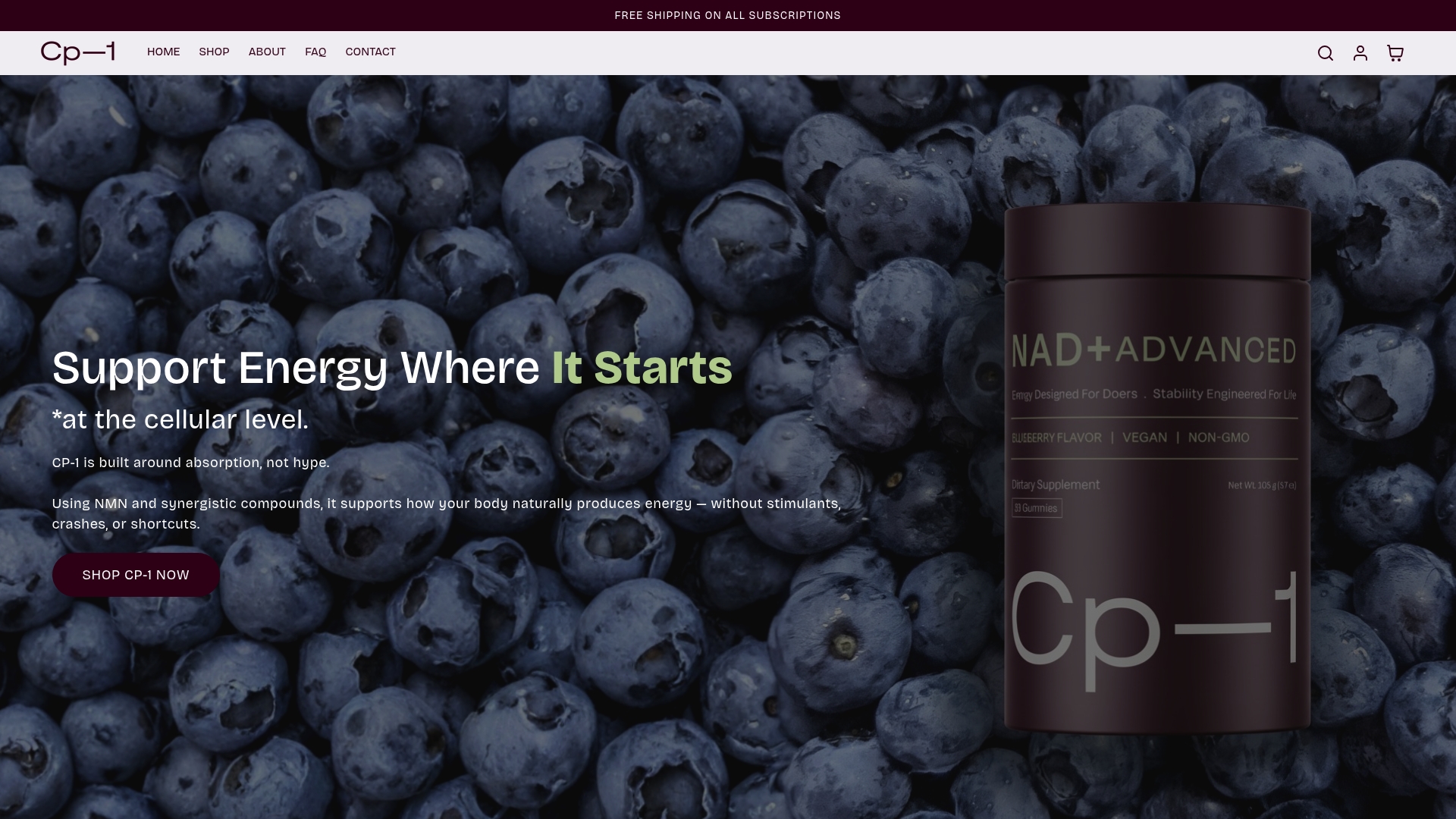
CP-1 publishes detailed guides on supplement transparency, third-party testing, and what US-made manufacturing standards actually mean for the product in your hand. If you want to go deeper on any topic covered here, including how to evaluate supplement quality for your health or why US-made supplements carry different accountability standards, the CP-1 resource library covers it without the marketing spin. Every article is written for people who want real answers, not sales copy.
FAQ
What is a supplement label reading checklist?
A supplement label reading checklist is a structured set of criteria for evaluating dietary supplement labels, covering serving size, ingredient doses, forms, third-party certifications, and additives. It helps you identify quality products and avoid underdosed or mislabeled ones.
What is the difference between GMP certification and third-party testing?
GMP certification verifies that a factory follows safe manufacturing practices. Third-party testing from organizations like USP or NSF verifies that the actual product matches its label for potency, purity, and contaminant levels.
Why are proprietary blends a problem on supplement labels?
Proprietary blends list only a total blend weight without disclosing individual ingredient amounts. This makes it impossible to verify whether any active ingredient reaches a clinically effective dose.
How do I know if an ingredient form is high quality?
Look for the specific chemical name on the label, such as methylcobalamin for B12 or magnesium glycinate for magnesium. Generic names without a form listed are a signal that the manufacturer is using a cheaper, lower-absorption version.
Are front-label claims like “maximum strength” regulated by the FDA?
No. Front-of-package marketing claims are not regulated for accuracy by the FDA. The Supplement Facts panel is the only legally standardized section of a supplement label and the only one you should rely on for ingredient information.