
Supplement quality is defined as a product’s verified identity, purity, potency, and manufacturing consistency — and it determines whether what you swallow actually does anything. The role of supplement quality goes far beyond a clean label or a slick bottle. The FDA regulates dietary supplements under cGMP standards at 21 CFR Part 111, but it does not pre-approve products before they hit shelves. That gap is where third-party programs like USP Verified, NSF, and ConsumerLab step in. If you care about what goes into your body, understanding how quality is built, tested, and verified is not optional. It is the foundation of every smart supplement decision you make.
What does the role of supplement quality actually cover?
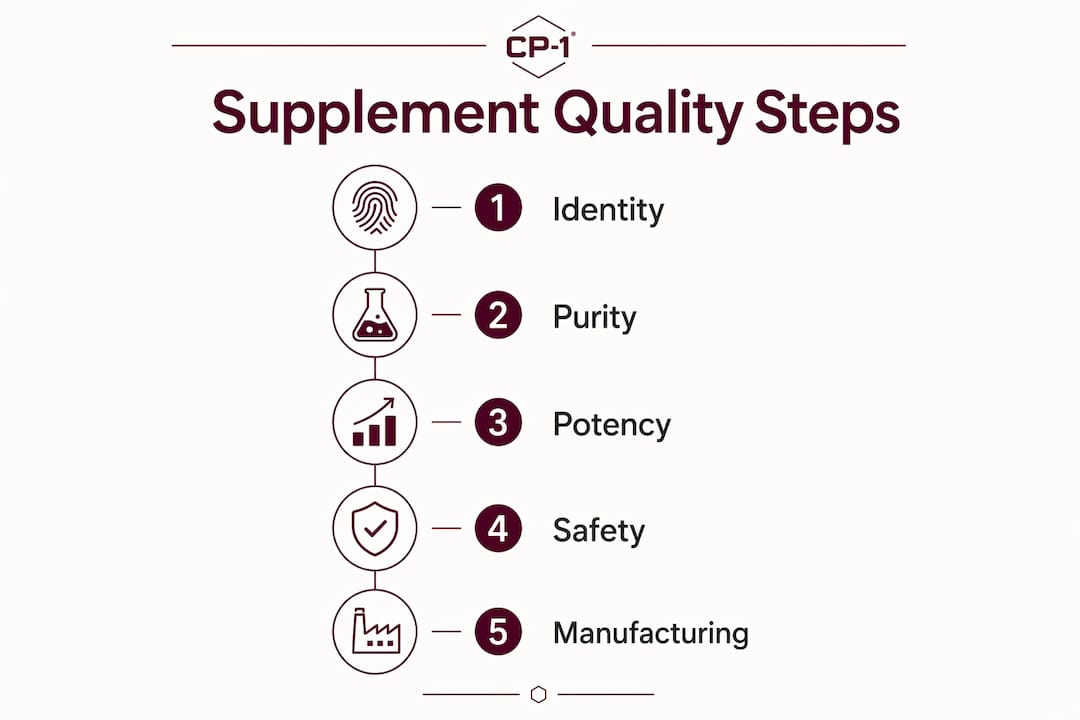
The industry term for what most people call “supplement quality” is product quality assurance, and it covers five measurable dimensions: identity, purity, potency, safety, and manufacturing consistency. Each one is distinct, and each one can fail independently.
Identity means the ingredient in the bottle is actually what the label says it is. This matters more than most people realize. Botanical supplements in particular are prone to misidentification or adulteration. Purity means no harmful contaminants, heavy metals, pesticides, or microbial load above safe thresholds. Potency means the active compound is present at the stated dose. Safety covers both the ingredient itself and the manufacturing environment. Manufacturing consistency means every batch performs the same way.
Analytical characterization is the scientific backbone of all five dimensions. It includes:
- Ingredient identification: Confirming the compound’s chemical identity using chromatography or spectroscopy
- Bioactive quantification: Measuring the exact concentration of active compounds per dose
- Contaminant detection: Screening for heavy metals, pesticides, and microbial contamination using elemental analysis
- Stability assessment: Testing how potency holds up over time and under real storage conditions
- Batch-to-batch consistency: Verifying that production runs match each other within defined tolerances
These methods are not marketing language. High-performance liquid chromatography (HPLC), mass spectrometry, and inductively coupled plasma (ICP) analysis are the actual tools labs use to confirm what is in a supplement. Without them, a manufacturer is essentially guessing.
Pro Tip: Ask any supplement brand for a Certificate of Analysis (CoA) from a third-party lab. A CoA shows the actual test results for a specific batch, not just a manufacturer’s internal claim. If a brand cannot or will not provide one, that tells you something important.

How do FDA cGMP regulations govern supplement manufacturing?
The FDA’s current Good Manufacturing Practice regulations, codified at 21 CFR Part 111, set the legal floor for how dietary supplements are made, packaged, labeled, and stored in the United States. Every facility that manufactures supplements for U.S. consumers must comply. The regulations cover personnel training, equipment calibration, raw material testing, production controls, and record keeping.
Here is what cGMP compliance actually requires at a manufacturing level:
- Raw material verification: Every incoming ingredient must be tested or verified against specifications before it enters production.
- Process controls: Manufacturing steps must follow written procedures, and deviations must be documented and reviewed.
- Finished product testing: Each batch must be tested against specifications before release.
- Quality unit oversight: A designated quality unit within the facility has authority to approve or reject any batch.
- Record retention: Complete production and testing records must be maintained and available for FDA inspection.
One thing consumers often misunderstand: the FDA does not issue GMP certificates. It inspects facilities and issues warning letters for violations, but it does not certify compliance. Private programs like NSF and USP fill that gap by offering documented, independent GMP registration that many retailers now require from their suppliers.
The other distinction worth knowing is the difference between supplement GMP (21 CFR Part 111) and pharmaceutical GMP (21 CFR Parts 210 and 211). Pharmaceutical-grade GMP is stricter than supplement GMP. A supplement brand that claims “pharmaceutical-grade manufacturing” without separate qualification for those standards is using a marketing term, not a regulatory one.
Pro Tip: Search the FDA’s warning letter database before buying from an unfamiliar brand. It is publicly accessible and shows which manufacturers have received citations for cGMP violations.
What is third-party testing and why does it matter?
Third-party testing is the practice of sending a supplement to an independent laboratory, one with no financial relationship to the manufacturer, to verify label accuracy, ingredient identity, potency, and the absence of contaminants. It is not required by law. That is exactly why it matters so much.
Independent programs like USP Verified, NSF, and ConsumerLab each run distinct testing protocols, but they share a common goal: confirming that what is on the label is actually in the bottle, at the stated dose, without harmful extras. The USP Verified program goes further by working directly with manufacturers to evaluate their processes and confirm batch-specific label accuracy over time.
One detail most consumers miss: testing only at the point of production is not enough. Testing supplements off-the-shelf accounts for real-world factors like temperature fluctuations and storage conditions that degrade potency between the factory and your medicine cabinet. A product that passes at production can still fail by the time you buy it.
| Certifier | What It Tests | What It Does Not Guarantee |
|---|---|---|
| USP Verified | Identity, potency, purity, manufacturing process | Clinical effectiveness for every individual |
| NSF Certified | Ingredient accuracy, contaminants, label claims | That the formula works for your specific goal |
| ConsumerLab | Potency, purity, off-the-shelf product testing | Regulatory compliance of the manufacturer |
Third-party certification does not guarantee a supplement will work for you personally. It guarantees the product contains what it claims, at the dose stated, without dangerous contaminants. That is a meaningful but limited promise. Understanding the difference protects you from both unsafe products and unrealistic expectations.
For a deeper look at how this process works, the supplement buyer’s guide at Cp-1 breaks down what independent testing actually involves and what to look for on a certificate of analysis.
How can you recognize and choose high-quality supplements?
The importance of supplement quality shows up most clearly when you are standing in a store aisle or scrolling a product page, trying to figure out whether a brand is worth trusting. Most of the signals are external. The internal quality system is complex and largely invisible to consumers, which is why quality is often used as a marketing term without a standardized definition behind it.
Here are the signals that actually carry weight:
- Third-party certification seals: Look for USP Verified, NSF Certified for Sport, or ConsumerLab Approved. These are earned, not purchased.
- U.S.-based manufacturing: Domestic production is subject to FDA inspection. US-made supplements face more consistent regulatory oversight than imports.
- Ingredient transparency: Full ingredient disclosure, including form and dose, is a baseline requirement. Proprietary blends that hide individual doses are a red flag.
- Certificates of Analysis: Brands that publish batch-specific CoAs from third-party labs are showing their work. That transparency is a quality signal in itself.
- Manufacturer reputation: Look for brands with a documented history of compliance, not just good copy on their website.
Terms like “natural,” “pure,” or “pharmaceutical grade” carry no regulatory weight unless backed by a specific certification or testing program. They are adjectives, not standards.
| Quality Signal | Reliability | What to Do |
|---|---|---|
| Third-party certification seal | High | Verify the seal on the certifier’s website |
| “Natural” or “pure” on label | Low | Ignore unless paired with a certification |
| U.S.-based manufacturing | Medium-High | Confirm with FDA facility registration lookup |
| Published CoA from third-party lab | High | Check that the lab is accredited and independent |
| “Pharmaceutical grade” claim | Low without proof | Ask for the specific regulatory standard cited |
Pro Tip: Cross-reference a supplement’s certification claim directly on the certifier’s website. USP, NSF, and ConsumerLab all maintain searchable databases of verified products. If a brand claims certification but does not appear in the database, the claim is false.
Consulting a healthcare professional before starting any new supplement is still the right call, especially if you take medications or have existing health conditions. No certification replaces personalized medical advice.
Key takeaways
Supplement quality is only meaningful when it is verified through independent testing, manufacturing compliance, and transparent ingredient disclosure — not marketing language.
| Point | Details |
|---|---|
| Quality has five dimensions | Identity, purity, potency, safety, and manufacturing consistency must all be verified independently. |
| FDA sets the floor, not the ceiling | cGMP compliance is required but does not guarantee a product works or is fully tested. |
| Third-party testing fills the gap | Programs like USP Verified, NSF, and ConsumerLab confirm label accuracy beyond regulatory minimums. |
| Off-the-shelf testing matters | Products should be tested at purchase, not just at production, to account for storage and shipping effects. |
| Marketing terms are not standards | Words like “natural” or “pharmaceutical grade” carry no regulatory weight without a specific certification. |
What i have learned after years of watching this industry
I have spent years frustrated with the supplement industry, and the quality problem is the core of that frustration. Most brands are not lying outright. They are just not doing the work. They source ingredients from the cheapest supplier, run minimal internal testing, and slap a “premium quality” badge on the label. The consumer has no way to know the difference from the outside.
What changed my thinking was realizing that quality is not a single thing. It is a stack of decisions made at every step of production. A brand can have great raw materials and terrible manufacturing controls. It can pass third-party testing once and then quietly switch suppliers. The layered complexity of real quality assurance is exactly what makes it easy to fake with marketing language.
The practical lesson I keep coming back to: certification seals are your best external proxy for internal quality. They are not perfect. But USP Verified and NSF Certified are earned through documented testing and facility audits, not purchased. When I built Cp-1, the non-negotiables were third-party testing, U.S.-based manufacturing, and full ingredient transparency. Not because those things are easy or cheap. Because without them, I would be selling the same garbage I was frustrated with as a consumer.
The longevity supplements checklist we put together at Cp-1 reflects that same thinking. Use it as a filter, not just a shopping list.
— Hugo
Why Cp-1 takes supplement quality seriously
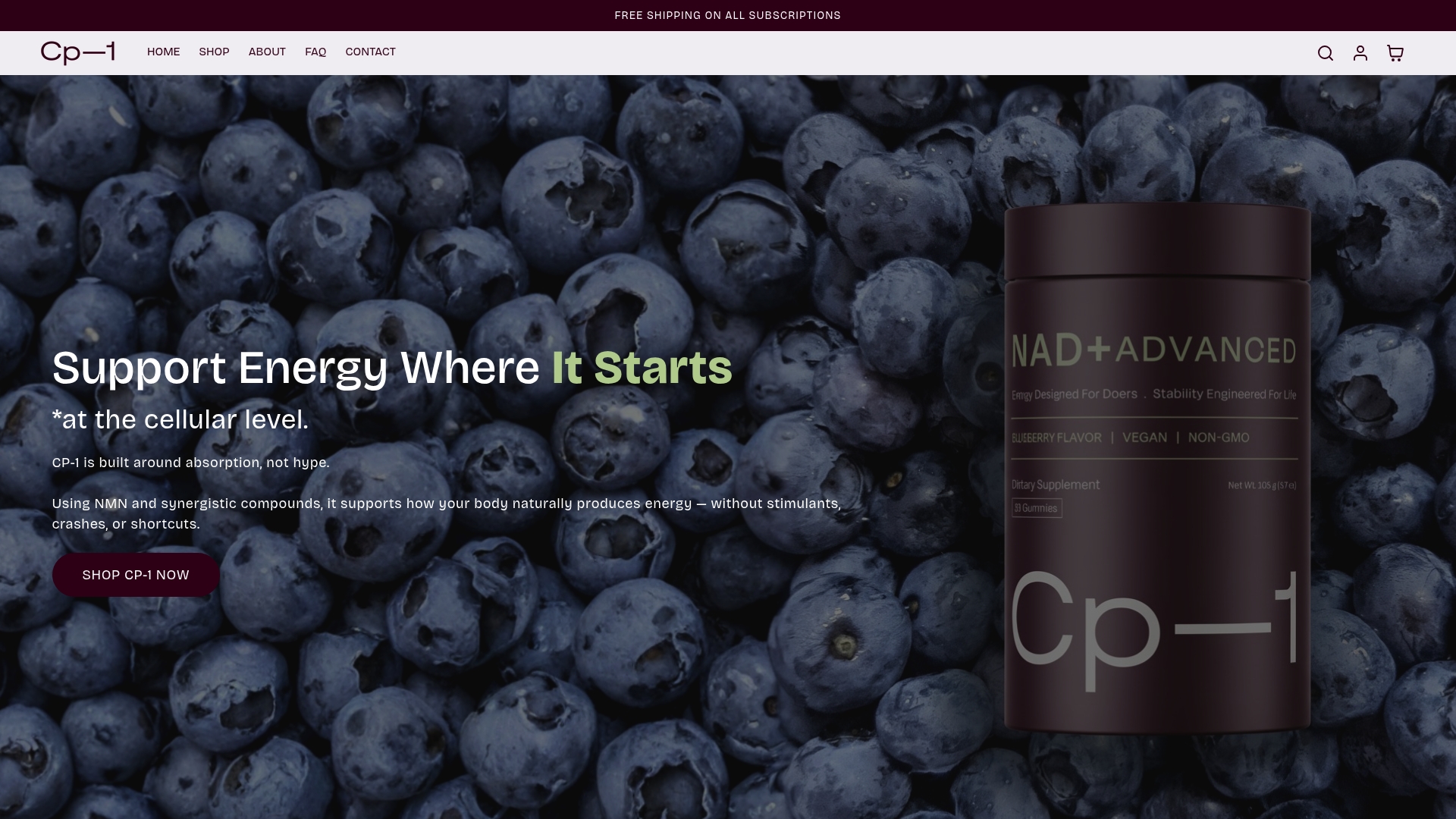
At Cp-1, quality is not a tagline. Every product is manufactured in the U.S. under cGMP standards, third-party tested for identity, potency, and purity, and formulated with full ingredient transparency. CP-1 contains NMN, lion’s mane mushroom extract, reishi mushroom extract, turkey tail mushroom extract, and coenzyme Q10 — each at a disclosed dose, each verified by independent testing. The goal is simple: a supplement that actually does what it says. If you are ready to stop guessing and start buying with confidence, explore CP-1 and see exactly what goes into every capsule.
FAQ
What is supplement quality defined as?
Supplement quality is defined as a product’s verified identity, purity, potency, safety, and manufacturing consistency. All five dimensions must be confirmed through testing, not just claimed on a label.
Does the FDA approve supplements before they are sold?
The FDA does not pre-approve dietary supplements before market entry. It enforces manufacturing standards through inspections and issues warning letters for violations, but pre-market approval is not required.
What does third-party certification actually verify?
Third-party certifiers like USP Verified and NSF confirm that a supplement contains what the label states, at the correct dose, without harmful contaminants. Certification does not guarantee clinical effectiveness for every individual.
How do i know if a supplement brand is trustworthy?
Look for third-party certification seals from USP, NSF, or ConsumerLab, and verify those claims directly on the certifier’s database. Published Certificates of Analysis from accredited independent labs are the strongest signal of genuine transparency.
Is “pharmaceutical grade” a regulated term for supplements?
No. Pharmaceutical-grade GMP (21 CFR Parts 210 and 211) is a stricter standard than supplement GMP (21 CFR Part 111). A supplement brand cannot legitimately claim pharmaceutical-grade manufacturing without separate qualification under those specific regulations.