
A longevity supplements checklist is a personalized, science-driven protocol that matches specific supplements to confirmed deficiencies, verified quality standards, and measurable biomarker outcomes. The standard industry term for this approach is evidence-based supplementation, and it stands in direct contrast to the guesswork stacking that fills most people’s medicine cabinets. As of 2026, no supplement reliably extends lifespan, but several improve the health biomarkers tied to healthspan. This guide walks you through every step: testing first, choosing supplements with real human trial data, verifying product quality, and tracking results over time.
1. Why testing comes before every supplement decision
The single biggest mistake people make with longevity supplements is skipping the baseline. You cannot know what you need until you know what you are missing. Evidence-based guides from 2026 are unanimous on this: start with blood panel testing to identify actual deficiencies, then supplement targeted nutrients, then retest around three months later.
A standard baseline blood panel for supplement planning should include:
- 25-OH Vitamin D (deficiency is common and correctable)
- Serum B12 and folate (critical for older adults and plant-based eaters)
- Magnesium RBC (serum magnesium misses intracellular deficiency)
- Omega-3 index (EPA and DHA status, not just dietary recall)
- Fasting glucose and HbA1c (metabolic context for supplement decisions)
- hs-CRP (baseline inflammation marker)
Retesting at three months gives you attribution. If you add three supplements at once and feel better, you have no idea which one worked. If you add one and retest a single biomarker, you have real data.
Pro Tip: Ask your doctor specifically for an RBC magnesium test, not a standard serum magnesium. Serum levels stay normal even when cellular stores are depleted, so standard panels routinely miss deficiency.

2. Tier 1 longevity supplements with strong human evidence
These are the supplements with the most credible human clinical data behind them. They belong at the top of any longevity vitamins list because their effects are measured in people, not just petri dishes.
Vitamin D3 is the clearest example of a supplement with measurable aging-related outcomes. The VITAL telomere sub-study showed that 2000 IU of vitamin D3 daily slowed telomere shortening by approximately 140 base pairs over four years compared to placebo. Telomere length is a proxy biomarker for biological aging, not a direct lifespan measure, but it is one of the most credible biological signals available in human trials.
Omega-3 fatty acids (EPA and DHA) have decades of cardiovascular and inflammation data behind them. An omega-3 index below 4% is associated with significantly higher cardiovascular risk, and supplementation with 1 to 2 grams of combined EPA and DHA daily consistently moves that marker in the right direction.
| Supplement | Primary evidence | Suggested starting dose |
|---|---|---|
| Vitamin D3 | Telomere length, immune function | 2000 IU daily with food |
| Omega-3 (EPA/DHA) | Cardiovascular markers, inflammation | 1-2g combined daily |
| Magnesium glycinate | Sleep quality, cognitive function | 200-400mg before bed |
| Vitamin K2 (MK-7) | Bone density, arterial calcification | 90-200mcg daily |
| Vitamin B12 | Neurological function, homocysteine | 500-1000mcg (sublingual for absorption issues) |
Magnesium deserves more attention than it gets. Glycinate and malate forms cross into cells more effectively than oxide, which is what most cheap supplements use. Magnesium supports over 300 enzymatic reactions, including those tied to sleep quality and cognitive function. Vitamin K2 in the MK-7 form activates proteins that direct calcium into bones rather than arterial walls, making it a logical pairing with D3.
Pro Tip: Vitamin D3 and K2 work better together. D3 increases calcium absorption; K2 directs that calcium to the right places. If you supplement D3 without K2, you may be increasing arterial calcification risk over time.
3. Tier 2 supplements with promising but emerging evidence
These are the top anti-aging supplements that show real potential in early-to-moderate human trials, but where the evidence is not yet as definitive as Tier 1. They are worth considering based on your specific goals and confirmed gaps.
- CoQ10 (Coenzyme Q10): Mitochondrial energy production declines with age, and CoQ10 levels drop alongside it. Statin users have an additional reason to supplement since statins block the same pathway that produces CoQ10. The ubiquinol form absorbs better than ubiquinone for people over 40.
- Creatine monohydrate: Most people associate creatine with gym performance, but the emerging evidence for muscle preservation and cognitive support in aging adults is genuinely interesting. Three to five grams daily is the studied dose.
- Spermidine: Found naturally in wheat germ and aged cheese, spermidine triggers autophagy, the cellular cleanup process that declines with age. Human data is still limited, but the mechanistic rationale is solid.
- Taurine: Animal studies show dramatic lifespan extension with taurine supplementation, and early human data on cardiovascular and metabolic markers is encouraging. The translation from mouse to human is never guaranteed, but taurine is inexpensive and well-tolerated.
- Collagen peptides: Skin elasticity and joint cartilage both decline with age. Hydrolyzed collagen peptides at 10 grams daily show consistent improvements in skin hydration and joint comfort in multiple randomized trials.
The honest framing here is that these supplements for healthy aging are worth adding after your Tier 1 deficiencies are addressed, not before. Goal-based selection matters. If muscle preservation is your priority, creatine makes sense. If mitochondrial energy is the concern, CoQ10 fits. Do not stack all five at once.
4. Supplement quality verification: what certifications actually mean
GMP (Good Manufacturing Practice) compliance is the legal floor in the United States, not a quality signal. Every supplement sold legally in the US must meet GMP standards. The certifications that actually differentiate products are the ones that involve independent third-party testing.
USP Verified and NSF Certified for Sport are the two most recognized standards for general consumers and athletes respectively. USP Verified tests identity, potency, and purity annually. NSF Certified for Sport adds banned-substance screening, which matters for competitive athletes but also signals a higher level of scrutiny for anyone who wants certainty about what is in the bottle.
| Certification | Tests for | Best for |
|---|---|---|
| USP Verified | Identity, potency, purity | General consumers |
| NSF Certified for Sport | Above + banned substances | Athletes, high-scrutiny users |
| Informed Sport | Banned substances, batch testing | Competitive athletes |
| ConsumerLab | Independent potency verification | Research-oriented consumers |
Matching the certification to your profile is the practical step most people skip. If you are not a competitive athlete, USP Verified or a ConsumerLab-reviewed product gives you solid confidence. If you are serious about training, NSF Certified for Sport or Informed Sport is the right standard.
Pro Tip: Every certification body maintains a public database. Before buying, search the brand and product name on the USP, NSF, or Informed Sport website to confirm the certification is current. Labels can be outdated or misleading.
You can go deeper on what these certifications actually test in this third-party testing guide from CP-1, which breaks down what each standard covers and what it does not.
5. How to build your longevity supplements checklist step by step
A practical longevity supplements checklist follows a stage-gated protocol. This staged approach maximizes your ability to attribute effects to specific supplements and prevents the confusion that comes from changing five things at once.
- Audit your current intake. CDC data from 2021 to 2023 shows high supplement use among U.S. adults, meaning most people are already taking something. List every supplement, dose, and frequency before adding anything new.
- Get your baseline blood panel. Use the markers listed in Section 1. This is your starting point for every decision that follows.
- Address confirmed deficiencies first. If your vitamin D is low, fix that before adding spermidine. Deficiency correction produces the clearest, most measurable outcomes.
- Add one or two Tier 1 supplements. Choose based on your blood results and health goals. Give each supplement eight to twelve weeks before evaluating.
- Retest the relevant biomarkers. Did your vitamin D level reach the 40 to 60 ng/mL optimal range? Did your omega-3 index improve? Numbers matter more than how you feel.
- Layer in Tier 2 supplements based on goals. Once your foundational deficiencies are corrected, add purpose-based supplements one at a time.
- Track functional outcomes alongside biomarkers. Sleep quality, cognitive sharpness, and exercise recovery are legitimate signals when tracked consistently over weeks, not days.
Pro Tip: Use a simple spreadsheet to log your supplement, dose, start date, and the specific biomarker you are targeting. When you retest, you have a clean record of what changed and when. This is the difference between real data and a placebo story you tell yourself.
The longevity support guide from CP-1 covers the lifestyle behaviors that amplify supplement outcomes, including sleep, resistance training, and dietary patterns that no supplement can replace.
6. Why subjective feelings are not enough to evaluate supplements
Experts consistently warn that placebo and expectancy effects are strong in longevity supplement use. You spend money on a new stack, you pay attention to your body, and you notice improvements. That is not evidence the supplement worked. It is evidence that your brain is doing what brains do.
This is not a cynical point. It is a practical one. If you rely on subjective feelings to evaluate supplements, you will keep buying products that do nothing measurable. Biomarker retesting is the only way to separate real effects from expectation. Longevity claims should be evaluated by evidence type: human clinical biomarker outcomes first, mechanistic and animal data as secondary context only.
The longevity diet principles checklist follows the same logic. Dietary changes that move measurable markers, like fasting glucose, hs-CRP, or lipid panels, are worth keeping. Changes that just feel good are worth questioning.
Key takeaways
A longevity supplements checklist works only when it is built on blood testing, tiered evidence, and third-party verified products rather than marketing claims or subjective feelings.
| Point | Details |
|---|---|
| Test before you supplement | Blood panels identify real deficiencies; guesswork stacking wastes money and can cause harm. |
| Tier your supplements by evidence | Vitamin D3, omega-3, magnesium, and B12 have the strongest human trial data for healthspan. |
| Verify product quality independently | USP Verified and NSF Certified for Sport confirm potency and purity beyond GMP compliance. |
| Use a stage-gated protocol | Add one supplement at a time and retest biomarkers at three months to confirm real effects. |
| Reject subjective evaluation | Placebo effects are strong; only measurable biomarker changes confirm a supplement is working. |
What I have actually learned about building a supplement protocol
I spent years frustrated by the supplement industry. Products with impressive labels, zero third-party testing, and ingredients dosed so low they could not possibly do anything. Formulas built for a marketing deck, not for the person swallowing them.
What changed my thinking was treating supplementation the way you would treat any other health intervention: with a baseline, a hypothesis, and a measurable outcome. The moment I started retesting biomarkers instead of asking myself “do I feel better?”, the whole picture shifted. Some supplements I had been taking for years showed no movement in the markers they were supposed to affect. Others produced clear, reproducible changes.
The uncomfortable truth is that most people’s supplement routines are expensive placebos. Not because supplements do not work, but because most people never confirm whether theirs do. The test-first, retest-after protocol is not complicated. It just requires treating your health like something worth measuring.
Lifestyle is still the foundation. Sleep, resistance training, whole food intake, and stress management move biomarkers more reliably than any supplement stack. Supplements fill confirmed gaps. They do not replace the basics. If your sleep is broken and your diet is poor, no amount of spermidine or NMN will compensate.
Work with a healthcare provider who will order the right panels and interpret results in context. The step-by-step longevity guide from CP-1 is a good starting framework, but a clinician who understands functional medicine will help you personalize it further.
— Hugo
Start your checklist with CP-1
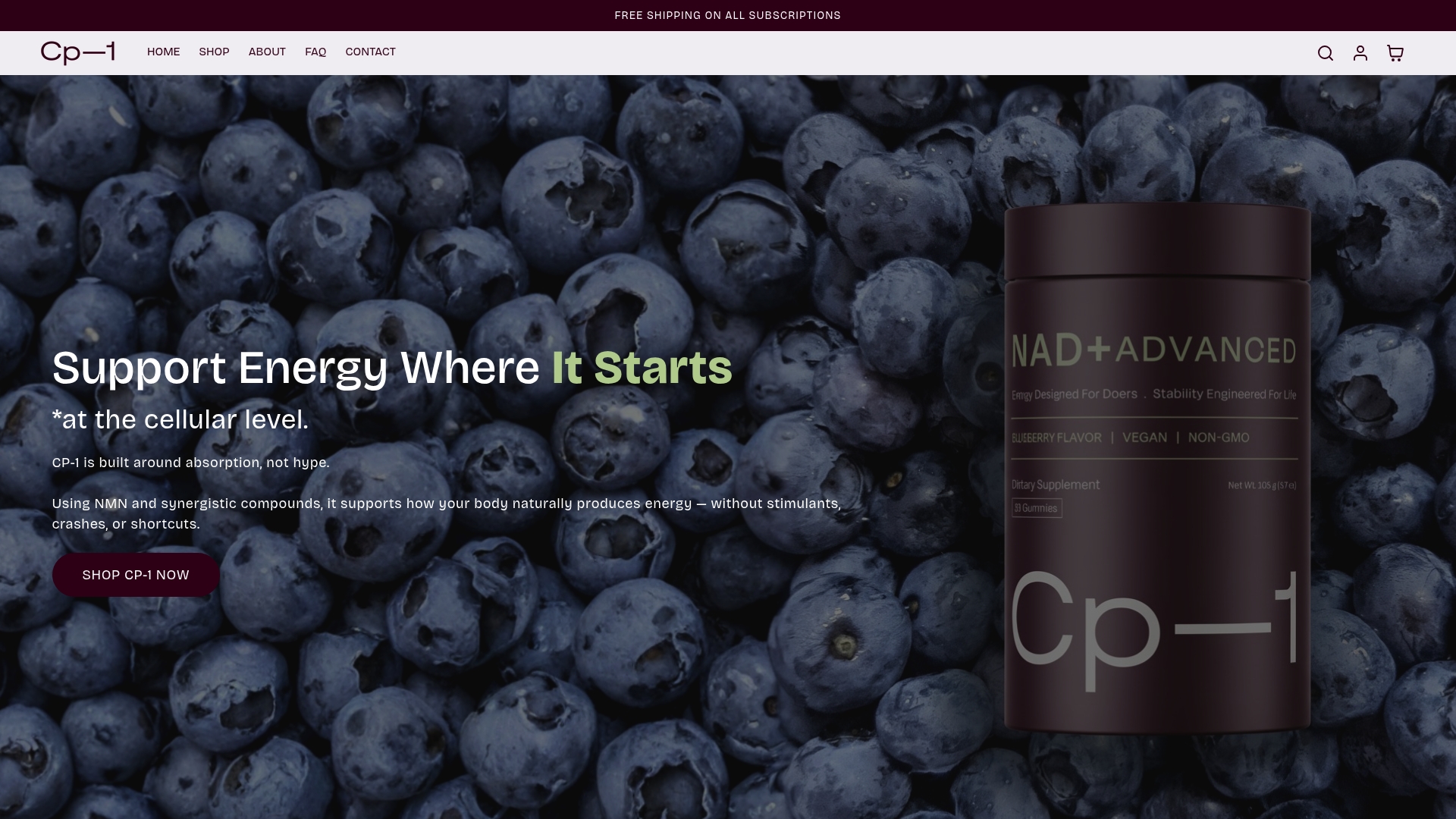
CP-1 was built specifically for people who are done guessing. The CP-1 formula includes NMN to support NAD+ production, CoQ10 for mitochondrial energy, and lion’s mane, reishi, and turkey tail mushroom extracts for cognitive function and immune resilience. Every batch is third-party tested, vegan, non-GMO, and manufactured in the US. If you are ready to move from a random supplement pile to a real longevity protocol, CP-1 gives you a verified, evidence-informed starting point. Pair it with your baseline blood work, track your biomarkers, and find out what actually moves the needle for you.
FAQ
What are longevity supplements?
Longevity supplements are dietary supplements selected to support the biological processes tied to healthspan, including cellular energy, inflammation control, and cognitive function. They are not proven to extend lifespan directly, but several improve measurable health biomarkers in human clinical trials.
Why should I test before taking longevity supplements?
Blood testing identifies actual deficiencies so you supplement what your body needs rather than guessing. Without a baseline, you cannot confirm whether a supplement is working or whether you are experiencing a placebo effect.
Which longevity supplements have the strongest human evidence?
Vitamin D3, omega-3 fatty acids (EPA and DHA), magnesium, vitamin K2, and vitamin B12 have the most consistent human clinical trial data for healthspan-related biomarkers. These belong at the foundation of any evidence-based supplement checklist.
What certifications should I look for on supplement labels?
USP Verified and NSF Certified for Sport are the most credible third-party certifications for supplement quality. USP Verified confirms identity, potency, and purity. NSF Certified for Sport adds banned-substance screening and is the standard for athletes and high-scrutiny users.
How long before I retest after starting a new supplement?
Retest the relevant biomarker at approximately three months after starting a new supplement. This window gives most nutrients enough time to produce measurable changes in blood markers while keeping the protocol tight enough to attribute effects accurately.