

How to Support Longevity in 2026: What Really Works
If you’re serious about figuring out how to support longevity in 2026, you’ve probably already noticed the noise. Every week there’s a new peptide, a new fasting protocol, a new supplement promising to “reverse aging.” Most of it is marketing dressed up as science. The real picture is a lot more grounded and, honestly, a lot more achievable. Research consistently points to a handful of modifiable behaviors that drive the majority of your healthspan outcomes. This guide cuts through the hype and gives you the strategies that actually hold up.
Table of Contents
- Key takeaways
- How to support longevity in 2026: genetics vs. lifestyle
- Physical activity: the non-negotiable foundation
- Nutrition strategies that actually extend healthspan
- Sleep, stress, and social connection
- Early detection and proactive health monitoring
- My honest take on longevity in 2026
- Ready to take your next step with Cp-1?
- FAQ
Key takeaways
| Point | Details |
|---|---|
| Lifestyle beats genetics | Modifiable factors drive 70-80% of longevity outcomes, so your daily habits matter far more than your DNA. |
| Move and lift consistently | 150 minutes of aerobic activity plus twice-weekly resistance training is the proven floor for meaningful lifespan gains. |
| Diet quality compounds over decades | Plant-forward, whole-food eating patterns reduce chronic disease risk and improve metabolic markers far more than any single supplement. |
| Sleep and social ties are underrated | Quality sleep and strong social connections each independently cut mortality risk in ways most people overlook. |
| Monitor proactively, not reactively | Early detection of metabolic dysfunction and cardiovascular risk lets you intervene before chronic disease takes hold. |
How to support longevity in 2026: genetics vs. lifestyle
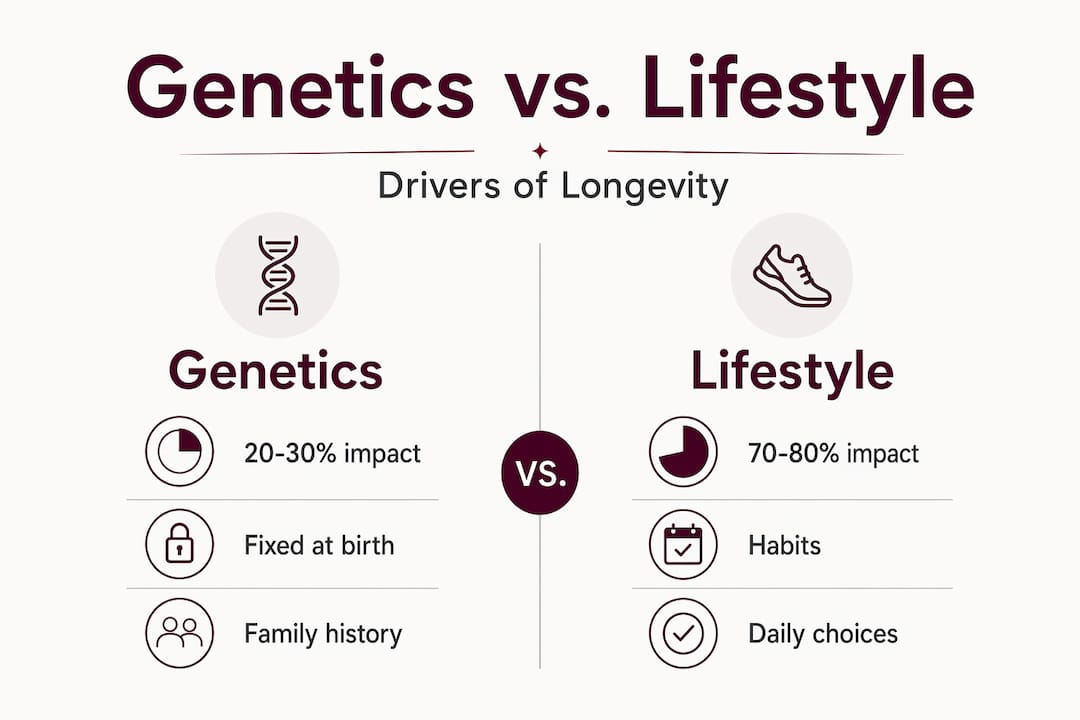
Here’s the thing most people get wrong when they start researching aging: they assume their genes call most of the shots. They don’t. Lifestyle factors account for 70-80% of longevity influence, with genetics contributing only 20-30%. That’s a fact worth sitting with.
The same study found that participants with both low modifiable risk and favorable genetics had a 45.6% lower mortality risk, and those with healthy habits gained roughly 7 years of life expectancy even at age 80. Age 80. If you’re reading this in your 40s or 50s and wondering whether it’s too late to make a difference, the answer is clearly no.
What this means practically is that you’re not locked in. You have real leverage over your outcome. The catch is that no single change does the heavy lifting. The research points to addressing multiple risk factors at the same time, not cycling through them one by one.
“Longevity medicine is saturated with hype. Evidence-based approaches focus on metabolic and cardiovascular health and early detection.” — Preventive medicine overview 2026
Four healthy behaviors, specifically never smoking, maintaining a healthy weight, exercising daily, and eating a nutritious diet, can reduce chronic disease risk up to 80% and extend life expectancy by 12 to 14 years. Switching to those habits at midlife correlates with a 40% lower mortality risk within just a few years. That’s not a slow payoff. That’s a fast one.
Physical activity: the non-negotiable foundation
No longevity strategy holds up without regular movement. Current federal guidelines recommend 150 minutes of moderate aerobic activity or 75 minutes of vigorous activity weekly, plus muscle-strengthening work at least twice a week. As of 2024, only 47.2% of U.S. adults actually met those aerobic benchmarks. That gap is where a huge amount of preventable disease lives.
The aerobic side gets the most attention, and for good reason. Aerobic exercise alone delivers a 24 to 34% reduction in mortality risk, and combining aerobic and strength training pushes that number to 41 to 47%. Even something as modest as 15 minutes of daily movement can add approximately 3 years to your lifespan.
Resistance training deserves its own conversation because it’s consistently underutilized, especially by people over 40. Updated ACSM guidelines confirm that training all major muscle groups twice weekly improves muscle strength, volume, and functional performance in ways that directly protect against falls, metabolic disease, and loss of independence. The biggest returns come from moving out of complete inactivity. You don’t need an advanced program to benefit.
Here’s what a sustainable starting framework looks like:
- Aerobic base: 30 minutes of brisk walking five days per week covers your moderate-intensity requirement
- Strength sessions: Two full-body sessions weekly covering legs, back, chest, and core
- Progressive overload: Gradually increase weight or reps every two to three weeks to keep adaptation happening
- Daily movement: Even 10-minute walks after meals improve blood sugar and cardiovascular markers
Pro Tip: If you’re new to resistance training, bodyweight exercises like squats, push-ups, and rows are enough to drive real adaptation. You don’t need a gym to start.
Nutrition strategies that actually extend healthspan
Food quality over decades is one of the most powerful yet underappreciated ways to enhance lifespan. The research isn’t ambiguous here. Mediterranean and DASH-style eating patterns, both built around vegetables, legumes, whole grains, lean proteins, and healthy fats, consistently reduce markers of inflammation, improve cardiovascular function, and lower the risk of type 2 diabetes, cancer, and cognitive decline.
What matters just as much is what you’re not eating. Processed meats and sugary beverages show up repeatedly in the literature as drivers of metabolic dysfunction and chronic disease. They’re not neutral. They actively work against the longevity factors you’re trying to build.
Fiber deserves special attention in any practical guide to aging well. A diet high in fiber feeds a diverse gut microbiome, which in turn regulates systemic inflammation. And chronic low-grade inflammation is one of the central biological mechanisms driving accelerated aging. This is why “eat more plants” is not a vague recommendation. It’s a specific anti-inflammatory intervention.
| Dietary pattern | Key benefits | What to limit |
|---|---|---|
| Mediterranean | Cardiovascular protection, lower inflammation | Red and processed meats |
| DASH | Blood pressure reduction, metabolic improvement | Sodium, added sugars |
| Plant-forward whole food | Gut microbiome diversity, cancer risk reduction | Ultra-processed foods, sugary drinks |
Pro Tip: You don’t need to overhaul your entire diet at once. Start by adding one serving of legumes and one additional vegetable serving per day. After 30 days, that becomes your new baseline.
The goal isn’t a perfect diet. It’s a consistently good one. Small, consistent daily changes in nutrition and movement outperform expensive anti-aging treatments every time.
Sleep, stress, and social connection
These three factors get lumped together in many health discussions, but each one is independently powerful enough to deserve serious attention in any strategies for healthy aging.

Sleep is where most people give ground they can’t afford to give. Sleep deprivation rivals obesity as a predictor of early death and surpasses physical inactivity in its mortality impact. Quality sleep patterns are linked to life expectancy gains of 3 to 5 years. The recommendation of 7 to 9 hours isn’t arbitrary. It’s the window in which your body clears metabolic waste from the brain, regulates cortisol, and consolidates immune function. Cut it short consistently and you’re paying with years, not just with grogginess.
Stress is more nuanced. You can’t eliminate it, and trying to do so is its own kind of trap. What the evidence actually supports is developing emotional resilience and regulation skills so that stress doesn’t accumulate into chronic inflammation. Practices like breathwork, meditation, journaling, and even structured downtime have measurable effects on cortisol and inflammatory markers.
Then there’s social connection, which most people treat as a lifestyle preference rather than a health variable. That framing is a mistake. Strong social connections are associated with at least a 50% lower death risk. Regular social engagement and mental stimulation also help preserve cognitive function and delay neurodegeneration. Healthy aging increasingly integrates social and environmental factors alongside lifestyle habits as core components of longevity.
Practical steps that move all three levers:
- Set a consistent sleep and wake time, even on weekends, to anchor your circadian rhythm
- Limit screens and bright light for 60 minutes before bed
- Schedule at least one meaningful social interaction per week, not just passive contact
- Practice five minutes of structured breathing or meditation daily, not to fix stress but to build a baseline of resilience
Pro Tip: Cold-turkey screen bans before bed rarely stick. Try switching to a low-blue-light app or wearing amber-tinted glasses two hours before sleep. The habit is easier to sustain when you’re not white-knuckling it.
Early detection and proactive health monitoring
One of the most significant shifts in how to live longer over the past decade is the move from reactive medicine to proactive monitoring. Waiting for symptoms is waiting too long. By the time a cardiovascular event or metabolic disorder becomes symptomatic, significant damage has already accumulated.
Addressing insulin resistance early is the foundation of any serious longevity protocol, before you start thinking about advanced interventions like NAD+ precursors, senolytics, or peptide therapies. Longevity clinics consistently identify metabolic health as the first domino. Get it wrong and everything downstream suffers.
Key biomarkers worth tracking annually:
- Fasting glucose and HbA1c to detect insulin resistance before it becomes type 2 diabetes
- Fasting insulin for a more sensitive early signal than glucose alone
- ApoB and LDL particle number for cardiovascular risk beyond standard cholesterol panels
- hs-CRP as a marker of systemic inflammation
- VO2 max as a functional measure of cardiovascular and respiratory fitness
The tools for personalized health monitoring have become significantly more accessible in 2026. Continuous glucose monitors are available without a diabetes diagnosis. At-home blood testing services cover a broad panel without a physician referral. Wearables now track heart rate variability with enough accuracy to be clinically informative.
Longevity is best defined as healthspan, not just lifespan. That distinction shapes how you think about monitoring. The goal isn’t to avoid death indefinitely. It’s to maintain functional capacity, cognitive sharpness, and physical independence for as many years as possible. Early detection is the mechanism that makes that goal real.
My honest take on longevity in 2026
I’ve spent years researching this space, and the pattern I keep seeing is the same one. People chase the newest protocol while the fundamentals are sitting untouched. They’ll spend hundreds of dollars on exotic supplements but sleep six hours a night. They’ll order advanced blood panels but skip resistance training because they “don’t have time.”
Here’s what I’ve actually found works: sleep, movement, food quality, and managing stress. In that order. Not because they’re easy or exciting, but because the evidence for them is overwhelming and consistent across decades of research. I’m skeptical of any supplement or treatment that isn’t layered on top of those four pillars. Without metabolic and cardiovascular health as your base, you’re building on unstable ground.
I take the cellular energy support in CP-1 seriously because the ingredients, NMN, CoQ10, and functional mushrooms like lion’s mane and reishi, are designed to support the biology underneath those pillars. Mitochondrial function, NAD+ production, and immune resilience matter. But they’re not a substitute for the habits. They’re support for a system that’s already doing the work.
What I’d tell anyone asking about improving health for longevity: stop waiting for the perfect program. Pick two things from this guide and do them consistently for 90 days. Then add two more. The people who actually age well aren’t doing anything exotic. They’re doing the boring stuff, reliably, for years.
— Hugo
Ready to take your next step with Cp-1?
If this guide gave you clarity on the questions on aging gracefully that actually matter, the natural next move is making sure your daily support stack matches the strategy. At Cp-1, every formula starts from the biology, not the marketing brief.
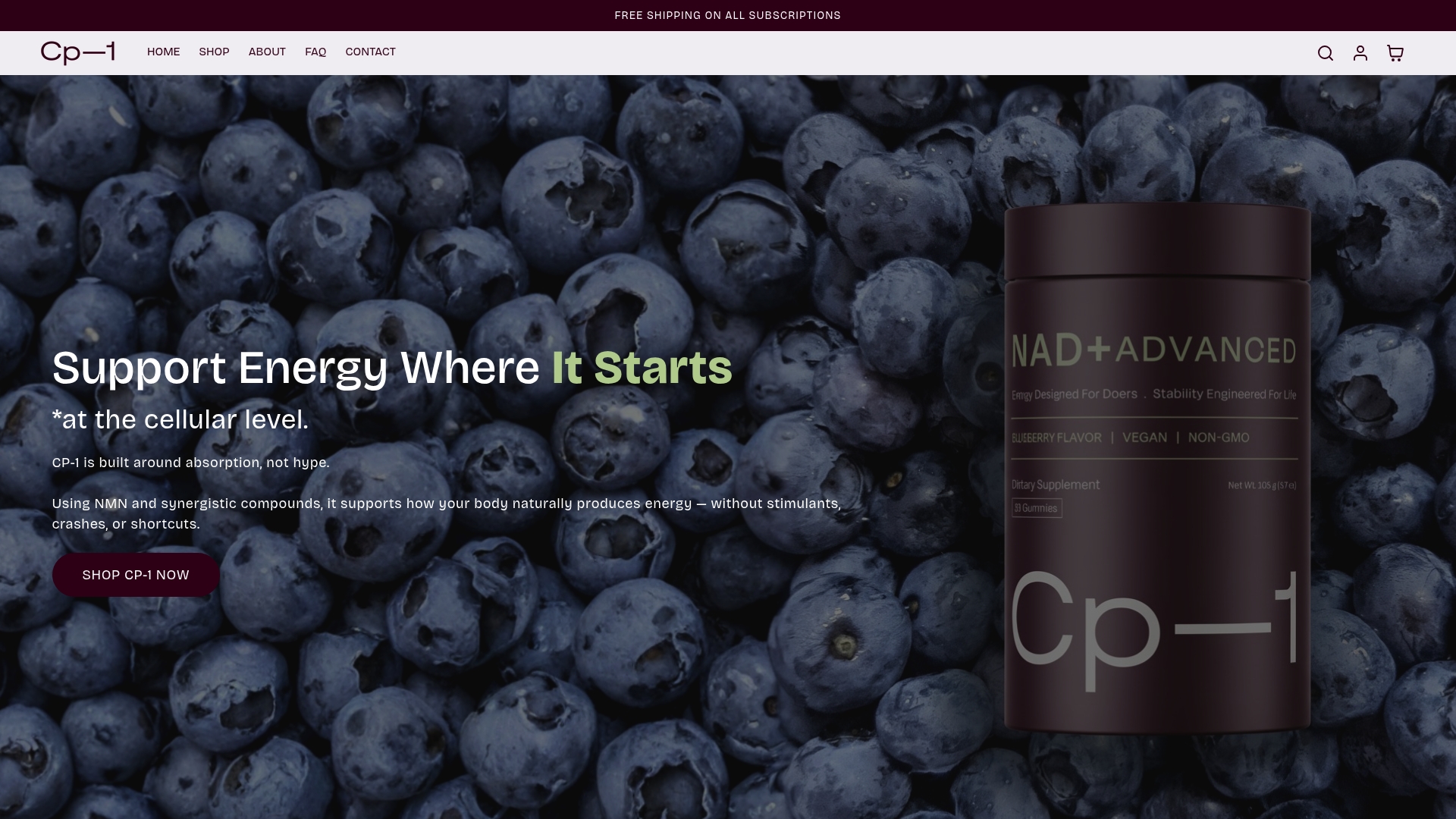
CP-1 combines NMN, CoQ10, lion’s mane, reishi, and turkey tail mushroom extracts in research-supported doses to address cellular energy, mitochondrial function, and immune resilience. It’s third-party tested, vegan, non-GMO, and made in the U.S. No proprietary blends hiding underdosed ingredients. If you’re building a real longevity practice, you can explore CP-1’s full formula and see whether it belongs in your stack. You can also dig deeper into the science with our guide on mitochondrial health strategies that support everything covered in this article.
FAQ
What percentage of longevity is actually in my control?
Research shows that modifiable lifestyle factors account for 70-80% of longevity influence, meaning genetics play a much smaller role than most people assume. Your daily habits carry the most weight.
How much exercise do I need for meaningful longevity benefits?
The current guidelines recommend 150 minutes of moderate aerobic activity weekly plus two strength training sessions. Even 15 minutes of daily movement adds approximately 3 years to your lifespan.
Is sleep really as important as diet and exercise for longevity?
Yes. Sleep deprivation rivals obesity as a mortality predictor and surpasses inactivity in its impact. Consistent quality sleep of 7-9 hours is linked to 3-5 additional years of life expectancy.
What biomarkers should I track for proactive longevity monitoring?
Fasting insulin, ApoB, HbA1c, hs-CRP, and VO2 max give you the most actionable picture of metabolic and cardiovascular health. Addressing metabolic dysfunction early is the foundation before pursuing advanced interventions.
Do supplements play a role in supporting longevity?
Supplements like NMN and CoQ10 can support cellular energy and NAD+ production, but they work best on top of solid lifestyle foundations. Evidence-based longevity consistently prioritizes metabolic health and cardiovascular fitness first.