
You wake up, you slept a full eight hours, and you still feel like you’re running on empty. That’s not laziness. That’s your cells not producing energy efficiently. Cellular energy, specifically ATP (adenosine triphosphate), is what powers everything from your heartbeat to your focus and your mood. When the system falters, no amount of coffee fixes it for long. This guide cuts through the noise and gives you science-backed strategies for genuine cellular energy support, from foundational habits to targeted supplements, without the marketing hype or the garbage promises.
Table of Contents
- Understanding cellular energy: The basics and key players
- Preparation: Essential habits and prerequisites for better cellular energy
- How to optimize cellular energy with evidence-based steps
- Supplements for cellular energy: What works, what doesn’t
- How to assess and verify improvements in your energy
- Perspective: Why lifestyle trumps supplements in cellular energy
- Take your cellular energy further with advanced support
- Frequently asked questions
Key Takeaways
| Point | Details |
|---|---|
| Lifestyle first | Exercise, nutrition, and sleep are proven to boost cellular energy more than any supplement. |
| Targeted supplementation | Supplements like NAD+ or CoQ10 may help if you have specific deficiencies or conditions. |
| Track progress | Use journals and wearable devices to measure real improvements in energy and focus. |
| Personalize for results | Start with the basics and tailor advanced strategies based on your individual needs. |
Understanding cellular energy: The basics and key players
Now that we’ve set the stage, let’s build a foundation for understanding how your cells make and use energy.
Your mitochondria are the organelles inside nearly every cell that convert oxygen and nutrients into ATP. Think of ATP as biological currency: your cells spend it on every single function. When mitochondrial efficiency drops, your entire system suffers. Mental sharpness fades. Physical output falls. Recovery slows.
Several factors govern how well your mitochondria work:
- Nutrient availability: B vitamins, magnesium, iron, and CoQ10 are all cofactors in the energy-production process.
- Oxygen delivery: Cardiovascular fitness determines how efficiently oxygen reaches your cells.
- Mitochondrial count and quality: More mitochondria and healthier ones mean more capacity for ATP production.
- Oxidative stress: Excess free radicals damage mitochondrial membranes and impair function.
- Sleep and recovery: Mitochondrial repair and autophagy (cellular cleanup) happen primarily during sleep.
| Factor | Impact on cellular energy | Evidence strength |
|---|---|---|
| Aerobic exercise | Very high | Strong |
| Sleep quality | High | Strong |
| Dietary nutrients | Moderate to high | Moderate to strong |
| Stress management | Moderate | Moderate |
| Supplementation | Low to moderate | Mixed |
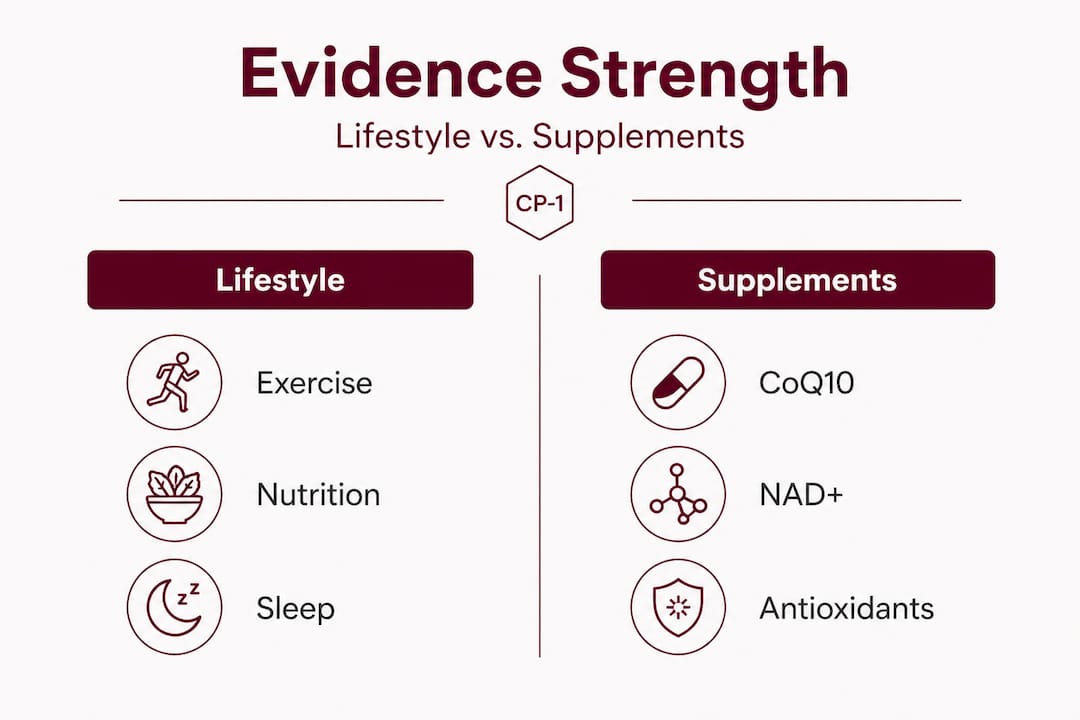
It’s worth being honest here: supplements may modulate biomarkers like oxidative stress, but they lack consistent evidence for broad clinical benefits in healthy individuals. Lifestyle changes like exercise carry far stronger evidence. That’s not me telling you supplements are useless. That’s the data. And you deserve to know it up front.
Reviewing our mitochondrial health checklist is a great place to ground your understanding before layering on any intervention.
Preparation: Essential habits and prerequisites for better cellular energy
With the fundamentals in mind, preparation ensures your body’s machinery is ready for optimization.

A lot of people skip straight to advanced protocols: fasting windows, stacked supplements, wearable biofeedback. But if your basic inputs are off, none of that will matter. You can’t optimize a broken machine.
Start with these core prerequisites:
- Protein quality and quantity: Your mitochondria are made of protein. Leucine enhances mitochondrial efficiency by stabilizing outer membrane proteins and inhibiting degradation pathways. Aim for complete protein sources at every meal: eggs, meat, fish, legumes combined with whole grains.
- Hydration: Even mild dehydration impairs energy metabolism. Target roughly 0.5 oz of water per pound of body weight daily as a baseline.
- Magnesium: One of the most common nutrient shortfalls in the modern diet, and magnesium is required for ATP synthesis. Without adequate magnesium, ATP can’t even be used properly.
- Iron (only if deficient): Iron is critical for oxygen transport and electron chain function. But excess iron generates oxidative stress, so do not supplement unless blood work confirms a deficit.
- Sleep: This is non-negotiable. Seven to nine hours allows for mitochondrial turnover and repair. No biohack compensates for chronic sleep restriction.
- Stress regulation: Cortisol (the stress hormone) suppresses mitochondrial gene expression over time. Practices like breathwork, cold exposure, or even deliberate downtime reduce this burden.
Pro Tip: Build your foundational habits first and hold them consistently for at least four weeks before introducing advanced interventions. Real improvements compound over time, not overnight. Check out a lasting energy daily workflow to structure your day around these fundamentals.
Avoid the common overcorrection trap. People read that antioxidants protect mitochondria and then mega-dose vitamin C and E. But high-dose antioxidants can actually blunt the adaptive signal from exercise, reducing your body’s natural mitochondrial growth response. More is not always better.
How to optimize cellular energy with evidence-based steps
Once you have the right habits and nutrition in place, it’s time to put proven strategies into action.
Here is a methodical action plan you can start applying this week:
-
Start Zone 2 aerobic exercise. Zone 2 exercise at 60 to 70% max heart rate, performed for 150 to 180 minutes per week, enhances mitochondrial biogenesis (the creation of new mitochondria), increases mitochondrial density, and improves fat oxidation efficiency. This is the single most well-validated intervention for cellular energy that exists. A brisk walk, cycling, light rowing, or slow jogging all qualify. You should be able to hold a conversation but feel genuinely challenged.
-
Add resistance training two to three days per week. Strength training activates separate cellular pathways (like mTOR) that support muscle mitochondrial density and metabolic flexibility. It complements aerobic work rather than replacing it.
-
Introduce time-restricted eating or intermittent fasting. Intermittent fasting activates AMPK and sirtuins, signaling pathways that promote mitophagy (removal of damaged mitochondria) and biogenesis (building new ones). A 14 to 16 hour fasting window is a solid starting point for most people. Don’t rush into aggressive protocols.
-
Prioritize dietary diversity. Polyphenol-rich foods (berries, green tea, dark chocolate, olive oil) feed gut bacteria that produce compounds supporting mitochondrial health. This isn’t exotic: it’s whole-food eating applied with intention.
-
Structure your light exposure. Morning sunlight within 30 minutes of waking supports circadian rhythm alignment, which directly influences mitochondrial timing and efficiency. Evening blue light exposure disrupts this cycle.
-
Cold or heat hormesis. Brief cold showers or sauna sessions activate stress-response pathways (PGC-1 alpha, heat shock proteins) that trigger mitochondrial adaptation. These are adjuncts, not replacements, for exercise.
Safety note: If you are on medications for blood pressure, diabetes, heart conditions, or any other chronic health condition, consult your physician before starting an aggressive fasting protocol or significantly increasing exercise intensity. These strategies are powerful and that means they interact with existing treatments.
| Strategy | Effort level | Evidence strength | Time to see effect |
|---|---|---|---|
| Zone 2 aerobic exercise | Moderate | Very strong | 2 to 6 weeks |
| Resistance training | Moderate | Strong | 4 to 8 weeks |
| Intermittent fasting | Moderate | Strong (mechanism) | 4 to 12 weeks |
| Dietary polyphenols | Low | Moderate | 4 to 8 weeks |
| Cold or heat exposure | Low to moderate | Moderate | 2 to 6 weeks |
| Sleep optimization | Low | Very strong | Immediate to 2 weeks |
Pro Tip: Start with just two Zone 2 sessions per week and a 14-hour fasting window before adding anything else. Piling on every strategy at once makes it impossible to know what’s working and much harder to sustain. Visit the energy upgrade workflow for a practical daily framework.
Supplements for cellular energy: What works, what doesn’t
With lifestyle steps underway, many turn to supplements. Let’s see what actually delivers.
The supplement industry has a PR problem. Not because every product is garbage, but because most are sold to people who haven’t done the foundational work first. A supplement filling a real deficiency or targeting a specific pathway can genuinely help. A supplement added on top of poor sleep and no exercise is basically expensive urine.
Here’s a breakdown of the major players:
- CoQ10 (Coenzyme Q10): Clinical trials show mixed results; CoQ10 raises plasma levels but often produces no improvement in mitochondrial function or clinical outcomes in healthy older adults. However, individuals on statin medications (which deplete CoQ10 as a side effect) often see real benefit. Dose: 100 to 300mg daily with a fat-containing meal.
- NMN (Nicotinamide Mononucleotide): A precursor to NAD+ (nicotinamide adenine dinucleotide), a coenzyme central to mitochondrial energy production. NAD+ levels decline naturally with age. NMN supplementation aims to replenish them. Learn the full science at our NMN science guide. Early human trials are promising, but long-term functional data in healthy adults is still emerging.
- Magnesium: If you’re not getting enough from food (and most people in the US aren’t), this is one of the most impactful and overlooked supplements for ATP function and sleep quality. Forms like magnesium glycinate or malate are best absorbed.
- Iron: Only if deficient and confirmed by bloodwork. Supplementing iron without a deficiency creates oxidative stress, the exact opposite of what you want.
- Adaptogens (lion’s mane, reishi, turkey tail): These aren’t direct mitochondrial boosters, but they reduce neuroinflammation, support immune function, and improve stress resilience, all of which indirectly protect cellular energy systems. Research into their advanced role in cognition is gaining traction.
Stat callout: Across multiple supplement trials, biomarkers like oxidative stress improve, but functional or clinical outcomes in healthy people frequently do not. This is not a reason to dismiss all supplements. It is a reason to be precise about why you’re taking them.
Pro Tip: Before spending anything on supplements, run a basic panel: complete blood count, ferritin, magnesium, vitamin D, and if you’re over 35, ask your doctor about NAD+ metabolite markers. This turns guessing into targeting.
How to assess and verify improvements in your energy
Having put these steps and supplements into practice, it’s important to know if they’re making a real difference.
The biggest mistake people make is relying on subjective feeling alone. Feeling great can be placebo. Feeling worse might be adjustment. You need multiple data points over time to draw accurate conclusions.
Here’s a structured approach:
- Keep an energy and focus journal. Rate your energy, mental clarity, and motivation at three fixed points daily (morning, midday, early evening) on a 1 to 10 scale. Do this for at least four weeks before and after any new intervention.
- Use a wearable for objective data. Devices like Garmin, Whoop, or Oura ring track heart rate variability (HRV), resting heart rate, and sleep stages. Improvements in HRV over weeks are a reliable signal that your autonomic nervous system and mitochondrial health are responding positively.
- Run functional assessments. Time a moderate physical effort (like a one-mile walk or 20-minute bike ride) every two weeks at the same intensity. Are you recovering faster? Is your heart rate lower at the same output? These are measurable improvements.
- Retest bloodwork at 8 to 12 weeks. If you started supplementing based on deficiency markers, confirm the numbers have moved and that clinical values support continuing.
What results should you actually expect?
- Weeks 1 to 2: Improved sleep depth and slightly better morning energy from sleep and dietary changes.
- Weeks 3 to 4: Noticeable increase in exercise tolerance and mental clarity during work hours.
- Weeks 6 to 12: Measurable HRV improvement, reduced afternoon energy crashes, and better stress resilience.
If you’re not seeing any signal after 12 weeks of consistent implementation, something foundational may be missing. That’s the time to consult a functional medicine physician or look at deeper testing.
Keep in mind: supplements modulate biomarkers without always producing functional change. Tracking helps you distinguish real adaptation from wishful thinking. For a detailed breakdown of non-stimulant pathways to better energy, see our non-stimulant energy guide.
Perspective: Why lifestyle trumps supplements in cellular energy
Let’s step back and consider the big picture, especially for those of us who identify as biohackers.
I’ll be straight with you, because that’s the only way I know how to do this. I’ve tested a lot of products. I’ve tracked my own HRV, sleep architecture, and energy output over years. And the most uncomfortable truth in the biohacking world is this: the biggest gains don’t come from stacked supplements or expensive gadgets. They come from doing boring things consistently.
Sleep. Real food. Zone 2 cardio. Stress management. That’s the actual leverage.
RCTs consistently show biochemical changes from supplementation without corresponding functional or clinical gains in healthy people. The mechanism sounds right. The placebo feels right. But the controlled data often doesn’t back it up for people who already have their basics covered.
That doesn’t mean supplements have no role. For someone with NAD+ decline due to aging, a high-quality NMN formulation matters. For someone depleted from statins, CoQ10 matters. For someone with confirmed magnesium deficiency, that fix can feel transformative. Edge cases are real.
But if you’re expecting a capsule to override three bad sleep nights a week and a high-stress lifestyle, you’re going to be disappointed and probably blame the supplement rather than the system. Biohacking results come primarily from optimizing the checklist of foundational habits, then using targeted supplements to address specific gaps.
The supplement industry profits from hope. I built CP-1 because I wanted something I actually believed in taking myself, not formulas designed for a marketing deck. Use supplements as precision tools. Let lifestyle be the strategy.
Take your cellular energy further with advanced support
If you’ve built the habits, dialed in your nutrition, and you’re ready to target the specific biochemical gaps that lifestyle alone can’t always fill, there is a strategic next step worth considering.
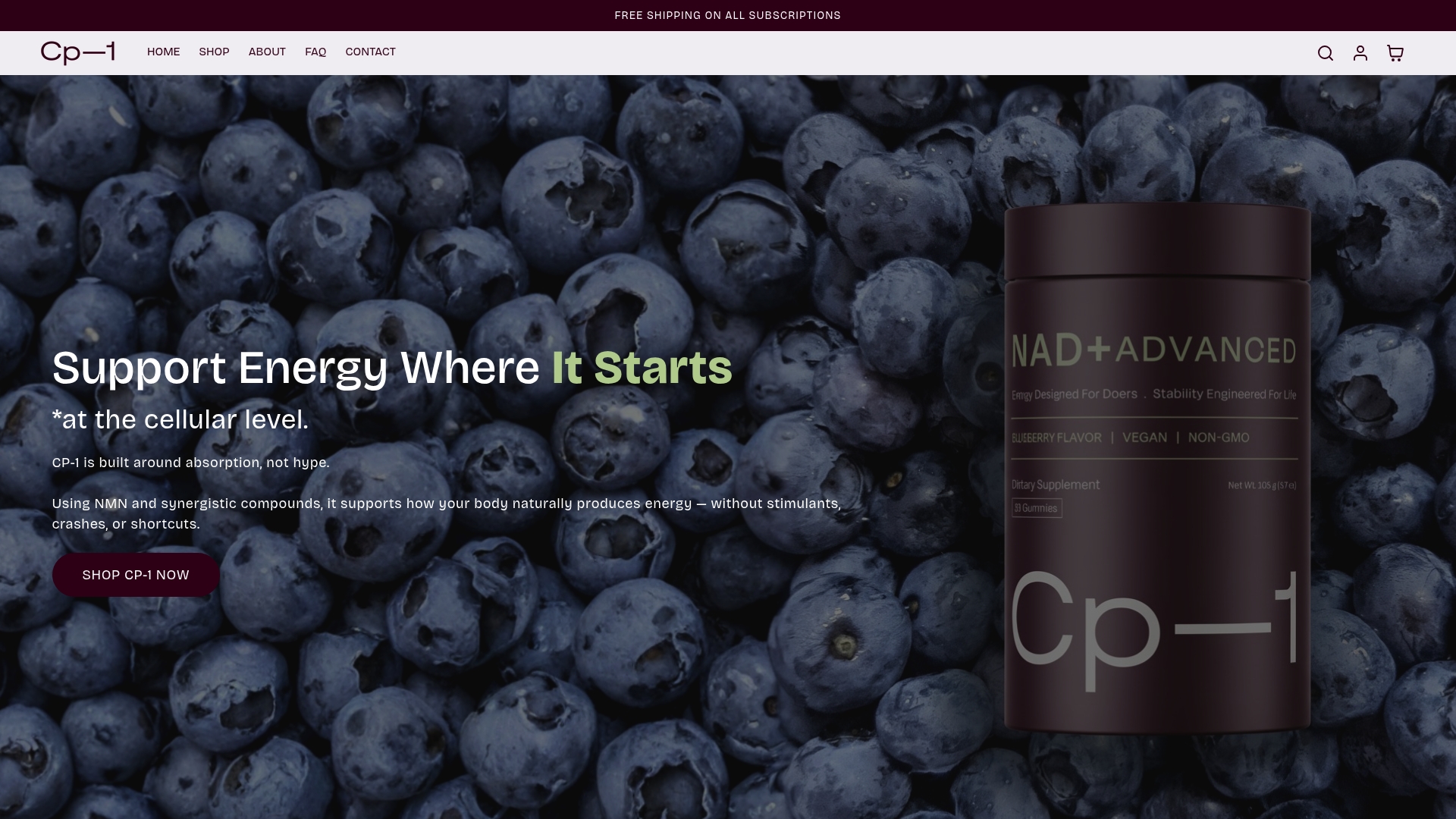
For individuals dealing with age-related NAD+ decline, high-output training loads, or cognitive demands that require sustained mental energy without stimulants, a formulation built around clinically studied ingredients matters. CP-1 combines NMN, CoQ10, lion’s mane, reishi, and turkey tail mushroom extracts into a single daily formula designed for absorption and effectiveness, not for a marketing deck. Every batch is third-party tested, vegan, non-GMO, and made in the US. If you’re serious about cellular energy support, explore the NAD+ Advanced Supplement and see whether it fits your specific stack.
Frequently asked questions
What is the fastest way to boost cellular energy naturally?
Consistent aerobic exercise, quality sleep, and protein-rich nutrition are the quickest science-backed ways to support cellular energy. Zone 2 exercise at 60 to 70% max heart rate, done regularly, produces measurable mitochondrial improvements within weeks.
Do NAD+ or CoQ10 supplements really work for energy?
Some users, particularly statin users or those with confirmed deficiencies, may see real benefit, but healthy people often see minimal functional improvements. Clinical trials show CoQ10 raises plasma levels without consistently improving mitochondrial function in otherwise healthy older adults.
How long does it take to feel more energetic with these strategies?
Most people notice gradual improvements in energy, mood, and focus within 2 to 6 weeks of consistent habits. Biomarker improvements can occur earlier, but functional changes take sustained effort over weeks to months.
Should you take iron or antioxidants for cellular energy?
Only supplement iron or antioxidants if a confirmed deficiency is present, as unnecessary supplementation of either can cause harm rather than help.