

Most people assume living longer requires a complete lifestyle overhaul. It doesn’t. The science of step by step longevity boosting, known formally as incremental health behavior change, shows that tiny, consistent upgrades to your daily habits produce compounding gains that add real years to your life. We’re talking about research-backed shifts in how you move, sleep, and eat. Not a dramatic reinvention. Just smart, sustainable adjustments that your future self will actually thank you for. This guide walks you through exactly what to do, in what order, and why it works.
Key Takeaways
| Point | Details |
|---|---|
| Small steps produce real results | Incremental lifestyle changes in sleep, movement, and diet can add roughly one year to your lifespan. |
| Sleep comes first | Prioritize sleep before adding exercise or diet changes, since better rest directly supports your ability to sustain every other habit. |
| Five minutes of movement matters | Adding just 5 minutes of moderate activity daily can reduce mortality risk by 6% to 10%, especially for sedentary individuals. |
| A plant-forward diet is non-negotiable | Hitting 25 to 31 grams of daily fiber from whole foods significantly reduces chronic disease risk and extends health span. |
| Stress and social bonds compound gains | Managing chronic stress and maintaining strong relationships work synergistically with diet, movement, and sleep to extend lifespan. |
Your longevity baseline: what you need to get started
Before you jump into any step-by-step health guide, you need an honest picture of where you currently stand. Most people skip this part and then wonder why their new habits don’t stick. The concept here is the minimum effective dose: the smallest input that produces a measurable output. You don’t need to go from couch to marathon runner. You need to find your floor and build from there.
The three core pillars are sleep, movement, and diet. Think of them as legs on a stool. Neglect one and the whole thing wobbles. Here’s a baseline target table to give you a concrete starting point:
| Pillar | Minimum effective target | Tracking tool |
|---|---|---|
| Sleep | 7 hours per night, quality sleep | Sleep tracker or phone app |
| Movement | 150 min moderate cardio + 2 strength sessions/week | Fitness wearable or journal |
| Diet | 25 to 31 grams of fiber daily from whole plant foods | Food logging app |
| Sedentary time | Reduce sitting by 30 minutes per day | Timer or movement reminder |
Start by auditing your current baseline for each pillar. Write it down. Most people discover they’re closer than they think.
- Check your average sleep duration for the past two weeks
- Estimate how many minutes per day you actually move at a moderate effort
- Log your fiber intake for three consecutive days using a free app
- Note how many hours per day you spend sitting
Pro Tip: Don’t try to fix all three pillars at once. Sequence them. Start with sleep, add movement, then layer in dietary changes. This order is not arbitrary. Research shows that sleep quality directly influences your ability to exercise and regulate food intake.
Step-by-step plan to add physical activity safely
Movement is the highest-leverage longevity tool you have access to right now, today, for free. But the all-or-nothing mindset kills more fitness plans than any physical limitation ever could. The goal here is gradual, consistent progress.
A meta-analysis of over 135,000 adults found that adding just 5 minutes of moderate-to-vigorous physical activity daily reduced mortality risk by 6% to 10%, with the greatest benefit going to the least active individuals. That’s extraordinary. Five minutes. This is where you start.
- Week 1 to 2: Add a 5-minute brisk walk after one meal per day. That’s it. Don’t do more yet.
- Week 3 to 4: Extend to 10 minutes. Add a second walk on alternating days.
- Week 5 to 6: Aim for 20 to 30 continuous minutes of brisk walking five days per week.
- Week 7 to 8: Introduce two short strength training sessions per week. Bodyweight exercises work perfectly. Think squats, push-ups, lunges, and planks.
- Week 9 onward: Build toward 150 minutes of moderate cardio plus two resistance sessions weekly. This is the evidence-based target for substantial longevity benefits.
Alongside adding movement, actively reduce how long you sit. Cutting sitting time by 30 minutes per day prevents an estimated 3% to 7% of deaths depending on your starting activity level. Stand up every 45 to 60 minutes. Take calls while walking. Swap one sitting meeting per week for a walking meeting.
The most common pitfall is ramping up too fast and getting injured. If you’re new to exercise or have joint concerns, non-surgical joint health strategies can help you stay consistent without setbacks.

Pro Tip: Schedule your walks and strength sessions in your calendar the same way you’d schedule a doctor’s appointment. Vague intentions don’t happen. Scheduled blocks do.
Optimizing sleep for a longer, healthier life
Sleep is where the body does its real work. Cellular repair, hormone regulation, memory consolidation, immune calibration. All of it happens while you sleep. And yet most adults treat sleep like a negotiable variable they can cut when life gets busy.
Quality sleep of at least 7 hours nightly is a non-negotiable foundation for healthy aging strategies. Stanford Medicine is direct about this: quantity and quality both matter. Getting six hours of fragmented sleep is not the same as seven hours of solid, deep sleep.
Here’s how to improve your sleep incrementally, without overhauling your entire schedule overnight:
- Set a consistent wake time. This one change alone stabilizes your circadian rhythm faster than almost anything else.
- Drop room temperature to 65 to 68°F. Core body temperature needs to fall to initiate deep sleep.
- Cut screens 30 minutes before bed. Blue light suppresses melatonin production. If you won’t quit screens entirely, use a blue light filter.
- Avoid caffeine after 1 p.m. Caffeine has a half-life of five to seven hours. Afternoon coffee is still active in your system at midnight.
- Add 5 minutes to your sleep window each week if you’re currently under 7 hours. Gradual extension works better than forcing a sudden hour-long shift.
Improving sleep also directly enhances every other step in this plan. Prioritizing sleep first makes it easier to exercise consistently and resist ultra-processed food cravings. The research is clear on this sequencing.
Pro Tip: If you wake up in the night and can’t fall back asleep, don’t lie there for more than 20 minutes. Get up, do something calm in dim light, and return to bed when you feel sleepy. Lying in bed awake trains your brain to associate the bed with wakefulness.
Building a longevity-enhancing diet with daily changes
You don’t need a radical diet transformation to meaningfully extend your health span. The single most impactful dietary shift, backed by solid data, is moving toward a plant-forward eating pattern and hitting your daily fiber targets.
The goal is 25 to 31 grams of fiber per day from whole plant sources. This range consistently shows up in longevity research as protective against cardiovascular disease, type 2 diabetes, and several cancers. Here’s what that actually looks like in practical terms:
- One cup of cooked vegetables (broccoli, lentils, or peas): 4 to 6 grams of fiber
- Half a cup of berries: 3 to 4 grams of fiber
- One tablespoon of chia seeds mixed into yogurt or oatmeal: 5 grams of fiber
- One slice of whole grain bread: 2 to 3 grams of fiber
- One medium apple with the skin: 4 to 5 grams of fiber
Stack three or four of those throughout a regular day and you’re there. No exotic superfoods required.
The next move is reducing ultra-processed foods and added sugars, not eliminating them, but crowding them out gradually. When your plate fills up with whole foods, there’s simply less room for the garbage. For a practical comparison, here’s how common diet approaches stack up for longevity purposes:
| Diet approach | Fiber intake | Whole food focus | Longevity evidence |
|---|---|---|---|
| Standard American diet | Low (10 to 15g/day) | Minimal | Weak |
| Mediterranean diet | High (25 to 35g/day) | Strong | Strong |
| Plant-forward whole foods | High (30+ g/day) | Very strong | Very strong |
| Low-carb/keto | Variable (often low) | Moderate | Mixed |
You don’t have to go full Mediterranean or vegan to see results. Just shift the ratio. More vegetables, legumes, whole grains, and fruit. Less packaged, processed food. That shift alone, sustained over time, adds measurable years to your life. Understanding the role of antioxidants in longevity can also help you prioritize which plants to add first.
Stress management and social connection
Diet, movement, and sleep get most of the attention in longevity conversations. But chronic stress and social isolation are quietly just as damaging. Strong social connections and effective stress management profoundly influence inflammation and immune health, two biological mechanisms directly tied to how fast you age.
The problem is most people manage stress reactively. They wait until they’re burned out and then try to recover. The better approach is building low-level stress reduction into your daily structure before it accumulates.
Here are practical moves that actually work:
- Move your body as a stress tool. Even a 10-minute walk after a stressful call reduces cortisol measurably. You’re already building this habit.
- Designate one no-phone hour per day. Not a digital detox weekend. Just one protected hour, daily. It lowers baseline anxiety faster than meditation apps for most people.
- Invest in two or three high-quality relationships rather than trying to maintain a wide but shallow social network. Depth of connection matters more than breadth for longevity outcomes.
- Schedule in-person interaction weekly. A phone call helps, but face-to-face social engagement produces distinct neurological and immune benefits that video calls don’t fully replicate.
- Get routine bloodwork done annually. Tracking biomarkers like fasting glucose, inflammatory markers like hsCRP, and lipid panels gives you an objective feedback loop on whether your lifestyle changes are working at the cellular level.
These aren’t soft wellness suggestions. They’re proven ways to increase longevity that compound over years. Building a daily wellness workflow that includes stress reduction is how the healthiest people stay healthy into their 70s and 80s.
My honest take after years of building longevity habits
I’ve spent years testing, breaking, and rebuilding longevity routines. Here’s what I’ve learned that most articles won’t tell you directly.
The biggest mistake I see is people starting with diet because it feels like the most obvious lever. It’s not. I’ve watched people meticulously track macros while sleeping five and a half hours a night and wondering why nothing changes. Sleep comes first. It always comes first. When I fixed my sleep, my exercise performance improved within two weeks and my food cravings dropped significantly. The research on sequencing lifestyle changes backs this up completely.
The second thing is this: perfect is the enemy of done. I used to believe that if I couldn’t do a full workout, it wasn’t worth doing anything. That belief cost me years. Now I know that five minutes of movement still counts. And it adds up in ways that genuinely compound over time. The incremental change framework isn’t just motivational fluff. It’s how durable behavioral change actually works at the neurological level.
Start with whatever pillar feels easiest. Build one small win. Then add the next. That’s the only plan that actually lasts.
— Hugo
Take your longevity plan further with Cp-1
You now have a clear, research-backed framework for building a life that lasts. But if you’re serious about digging deeper, Cp-1 has resources built specifically for people like you.
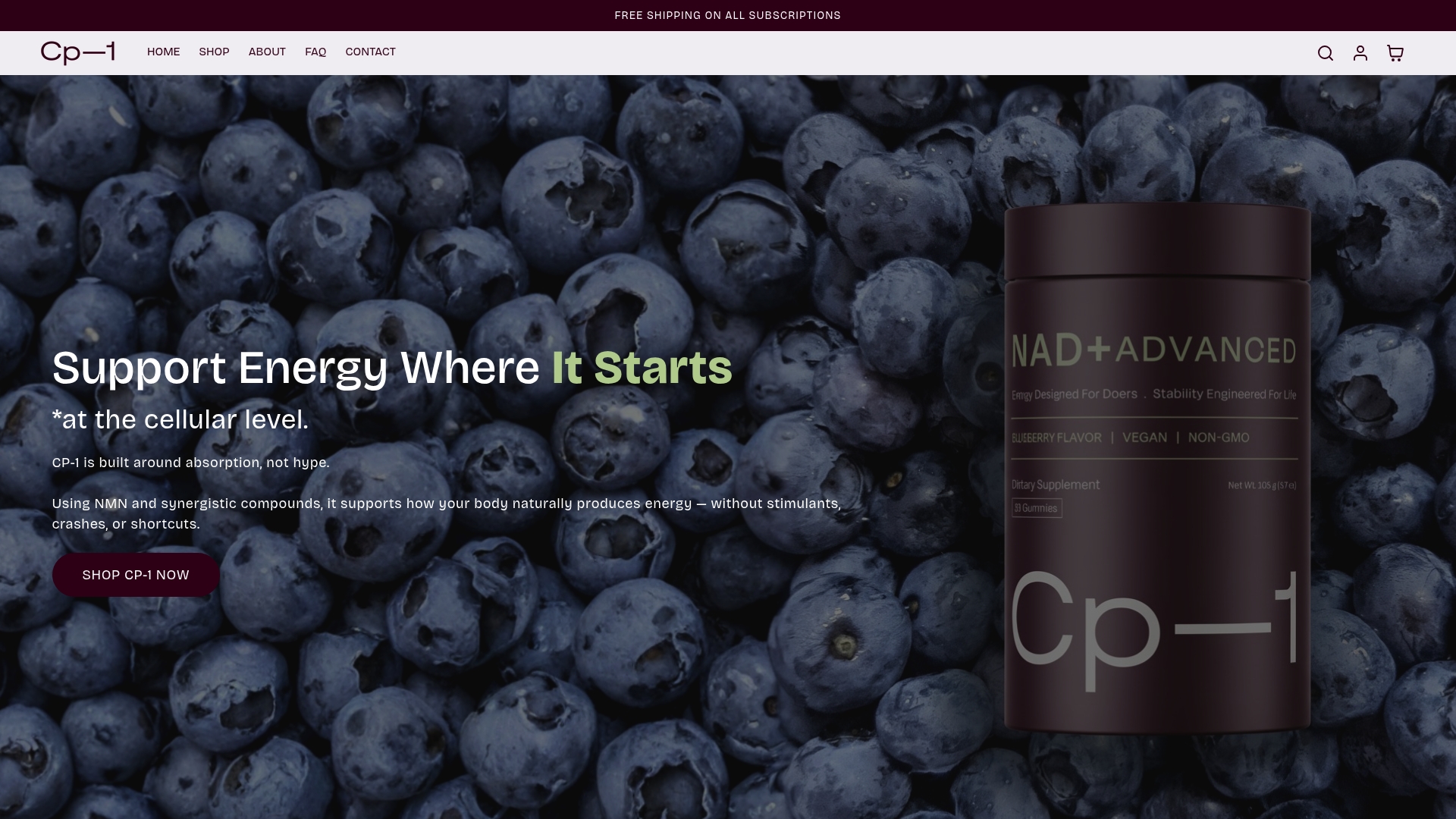
At Cp-1, we don’t just sell supplements. We dig into the science behind what actually works for cellular energy, NAD+ production, and healthy aging. The CP-1 formula, which includes NMN, lion’s mane, reishi, turkey tail, and CoQ10, is designed to support the biological processes your lifestyle habits are already improving. It’s not a shortcut. It’s a complement to the real work you’re doing. Start with our longevity support resource to see what else is possible, or explore the full CP-1 approach if you want to understand exactly what goes into every capsule.
FAQ
What is the easiest first step to boost longevity?
Adding just 5 minutes of brisk walking per day is the most accessible and research-validated starting point. Studies show this alone reduces mortality risk by 6% to 10% in previously sedentary adults.
How much sleep do you actually need for healthy aging?
At least 7 hours of quality sleep per night is the evidence-based minimum for longevity. Both duration and quality matter, since fragmented sleep does not deliver the same cellular repair benefits as uninterrupted rest.
What diet change has the biggest impact on lifespan?
Increasing daily fiber intake to 25 to 31 grams from whole plant foods consistently shows the strongest dietary link to reduced chronic disease risk and extended health span across major longevity studies.
How does stress affect longevity?
Chronic stress accelerates inflammation and immune dysfunction, both of which speed up cellular aging. Regular movement, protected low-stimulation time, and strong social relationships are the most practical ways to reduce this biological load.
Can small lifestyle changes really add years to your life?
Yes. Research published in eClinicalMedicine found that adding just 5 minutes of sleep, 2 minutes of movement, and half a serving of vegetables daily can add approximately one year to life expectancy in people with poor baseline habits.