

Wellness Workflow for Beginners: A Simple Starter Plan
Your starter wellness workflow for beginners fits in 10 minutes a day: pick one anchor habit (a 10-minute morning walk, a glass of water before coffee, or two minutes of deep breathing), attach it to something you already do, and review how it went on Sunday. That’s the whole system for week one.
- Pick one anchor habit tied to an existing routine (morning coffee, brushing teeth, lunch break).
- Do it for 10 minutes — movement, hydration, or breathing. A consistent 10-minute daily routine is a proven minimum baseline for building momentum.
- Schedule a 5-minute Sunday review to note what worked and what didn’t.
Time cost: 10–15 minutes per day. The reason tiny habits win is simple: they’re too small to skip and too easy to fail. You build the identity of someone who shows up, and that identity is what carries you forward in your wellness journey.
Table of Contents
- Which core wellness areas should you include first?
- How do you build a beginner-friendly wellness workflow step by step?
- What do copyable beginner daily and weekly routines look like?
- What practical activities map to common beginner wellness goals?
- Key Takeaways
- What I actually think about beginner wellness progress
- How Cp-1 can support your beginner wellness routine
- Authoritative sources and further reading
Which core wellness areas should you include first?
A balanced beginner routine doesn’t mean doing everything. It means not ignoring any single pillar for too long. Here’s what each one looks like at the entry level.
Movement
You don’t need a gym membership. A short walk after dinner, a few bodyweight squats before your morning shower, or a YouTube yoga video several times a week all count. The outcome signal to watch for is feeling less stiff and noticing an improvement in afternoon energy dips over time.

Sleep
Sleep is the pillar most beginners underestimate. Going to bed and waking up at the same time every day, even on weekends, does more for your energy than any supplement or morning routine. Start with one sleep cue: no screens 20 minutes before bed, or a consistent wake-up alarm. Easier mornings are the first sign it’s working.
Nutrition
You don’t need a meal plan. You need one anchor nutrition habit: drink a full glass of water before your first meal, add one vegetable to lunch, or stop eating late at night. Simple, consistent changes to digestion and energy levels develop gradually with consistent effort.
Stress management and mindfulness
Two minutes of box breathing (inhale 4 counts, hold 4, exhale 4, hold 4) before a stressful meeting is a real stress-management tool. So is a five-minute walk outside. The goal isn’t to eliminate stress. It’s to build a short, repeatable response so stress doesn’t derail your whole day. A steadier mood by week three is a realistic outcome signal.

For a deeper look at mental wellness practices that work at the beginner level, this practical guide to mental wellness options covers breathing techniques and simple mindfulness approaches worth bookmarking.
Social connection
One intentional conversation per day counts. A text to a friend, lunch with a coworker, or a phone call with a family member. Social connection is the most overlooked pillar in beginner wellness plans, and it’s also one of the fastest mood regulators available to you.

How do you build a beginner-friendly wellness workflow step by step?
The process has four steps. Follow them in order and you’ll avoid the most common beginner mistake: trying to build a perfect plan before you’ve built any habit at all.
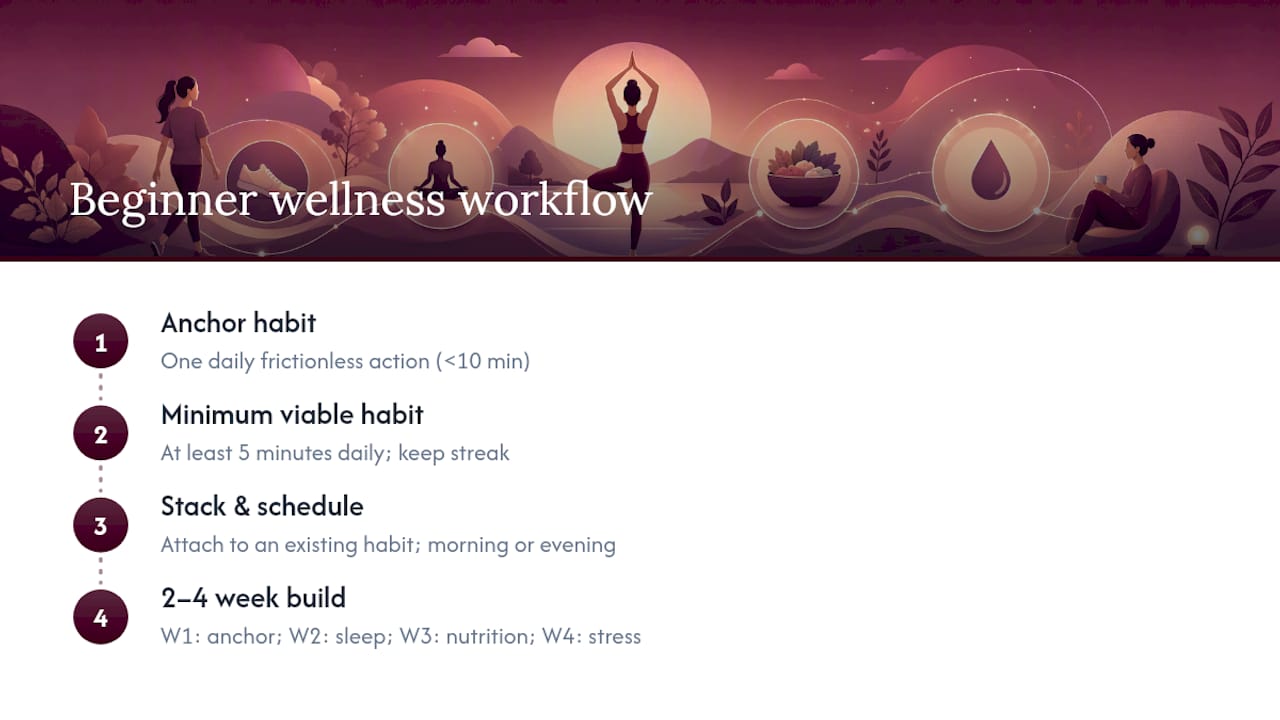
Step 1: Set your intention with one anchor habit. An anchor habit is the single action you commit to doing every day, no matter what. It should take under 10 minutes, require no equipment, and attach to something you already do. “After I pour my morning coffee, I drink a full glass of water” is a better anchor habit than “I will exercise every morning at 6 AM.” The first is frictionless. The second requires willpower you may not have on Tuesday.
Step 2: Use the minimum viable version. SMART goals (Specific, Measurable, Achievable, Relevant, Time-bound) work best when paired with a minimum baseline rule. Your goal isn’t “exercise 30 minutes daily.” It’s “do at least 5 minutes of movement every day, no exceptions.” On good days you’ll do more. On hard days, 5 minutes keeps the streak alive. Building systems rather than relying on motivation is what separates people who stick with a routine from those who restart it every January.
Step 3: Stack and schedule. Habit stacking means placing a new habit immediately before or after an existing one. “After I brush my teeth at night, I write one sentence in my journal” is a stacked habit. It borrows the automatic trigger of tooth-brushing to fire the new behavior. Place your anchor habit in the morning or evening bookend of your day. Those two windows are the most protected from schedule disruption.
Step 4: Follow a 2–4 week build. Week one: anchor habit only. Week two: add one sleep cue. Week three: add one nutrition habit. Week four: add a short stress-management practice. Don’t add a new habit until the previous one feels automatic. A 7-day beginner reset with a printable checklist can jump-start this process without any equipment or apps.
On cost: a beginner wellness routine can cost nothing. Walking, bodyweight exercise, breathwork, and journaling in a $3 notebook are free. If you want an app, free tiers of tools like Insight Timer (meditation) or Apple Health (movement tracking) cover the basics. A basic resistance band runs about $10–$15. Budget $0–$20 for month one and add paid tools only if you’ve proven the habit sticks.
What do copyable beginner daily and weekly routines look like?
Three starter routines follow. Pick the one that fits your schedule, not the one that sounds most impressive.
Morning-focused routine (12 minutes/day)
- Wake up, drink one glass of water immediately
- 5-minute walk outside or 5 minutes of bodyweight movement (squats, push-ups, stretches)
- 2 minutes of box breathing or quiet sitting
- One sentence in a journal: “What’s one thing I want to feel today?”
Weekly time commitment: about 84 minutes. Scope: hydration, movement, stress management, intention-setting.
Evening-focused routine (15 minutes/day)
- 10-minute walk after dinner
- No screens 20 minutes before bed (replace with reading or stretching)
- Write one thing that went well today
Weekly time commitment: about 105 minutes. Scope: movement, sleep cue, mood tracking.
Flexible midday routine (10 minutes/day)
- Drink a glass of water at noon
- 5-minute walk or desk stretch break
- One deep-breathing cycle (3 rounds of box breathing)
Weekly time commitment: about 70 minutes. Scope: hydration, movement, stress management. Best for people with unpredictable mornings and evenings.
What practical activities map to common beginner wellness goals?
Low energy
- 10-minute morning walk (sunlight exposure resets cortisol and improves alertness)
- Drink 16 oz of water within 30 minutes of waking
- Go to bed 30 minutes earlier for one week
- Swap one afternoon coffee for a 5-minute walk outside
For a structured approach to daily energy and focus workflows, Cp-1’s resource library covers practical routines worth reviewing.
Poor sleep
- Set a consistent wake time and hold it on weekends
- No caffeine after 2 PM
- 5-minute stretching or progressive muscle relaxation before bed
- Keep your bedroom cool and dark
Stress and anxiety
- Box breathing (2–3 rounds, any time)
- A 10-minute walk without headphones
- Write down three things you’re grateful for before bed
- Limit news and social media to one 15-minute window per day
Grounding practices for daily calm offer a structured checklist if you want a more formal stress-management protocol.
Mobility and stiffness
- 5-minute morning stretch (hip flexors, hamstrings, shoulders)
- Bodyweight squats and lunges, 2 sets of 10, three times a week
- Stand and move for 2 minutes every hour if you work at a desk
Digestion
- Drink water consistently throughout the day (aim for 6–8 glasses)
- Add one serving of fiber-rich food daily (beans, oats, vegetables)
- Eat slowly and without screens for at least one meal per day
When to seek professional help: if symptoms like persistent fatigue, chronic pain, or significant mood changes don’t respond to two to four weeks of consistent basic habits, talk to a primary care provider before adding more complexity to your routine.
Key Takeaways
A sustainable wellness workflow for beginners starts with one anchor habit, a minimum daily baseline, and a plan for setbacks built in from day one.
| Point | Details |
|---|---|
| Start with one anchor habit | Attach one 10-minute action to an existing routine and hold it for four weeks before adding more. |
| Use a minimum baseline rule | Define the smallest version of your habit (5 minutes, one glass of water) so hard days don’t break your streak. |
| Plan for setbacks upfront | Write Plan A, Plan B, and Plan C before you need them — clinical research shows this predicts long-term adherence. |
| Track six simple metrics | Energy, sleep hours, minutes moved, nutrition habit, mood, and streak — all checkable in under two minutes daily. |
| Cp-1 as a daily adjunct | Cp-1’s NAD+ Advanced Supplement supports cellular energy and stress resilience for beginners building consistent daily habits. |
What I actually think about beginner wellness progress
Most wellness advice sets beginners up to feel like failures. It presents the ideal version of a routine, the 5 AM wake-up, the 45-minute workout, the perfectly balanced meal, and then leaves you wondering what’s wrong with you when Tuesday arrives and none of it happened.
Here’s what I think is actually true: the first four weeks of any beginner routine are not about results. They’re about proving to yourself that you can show up. The habit streak is the result. The energy improvement, the better sleep, the steadier mood, those come later, and they come because the streak created the conditions for them.
What most people underestimate is how much the nervous system craves predictability. A consistent 10-minute routine done at the same time every day does something a sporadic 60-minute workout doesn’t: it tells your body and brain that this is just what we do now. That shift from “I’m trying a new routine” to “this is just what I do” is where real change lives.
The other thing worth saying plainly: setbacks are not failures. They’re data. A week where you skipped three days tells you something specific about your Plan B. Fix the plan, not your self-image. The long-term benefits of consistent wellness habits compound in ways that are genuinely hard to see in week two but impossible to miss in month six.
How Cp-1 can support your beginner wellness routine
Once your anchor habits are in place, some beginners find that cellular energy and mental clarity are still lagging, even with consistent sleep, movement, and hydration. That’s where a targeted supplement can fill a real gap rather than replace the work you’re already doing.
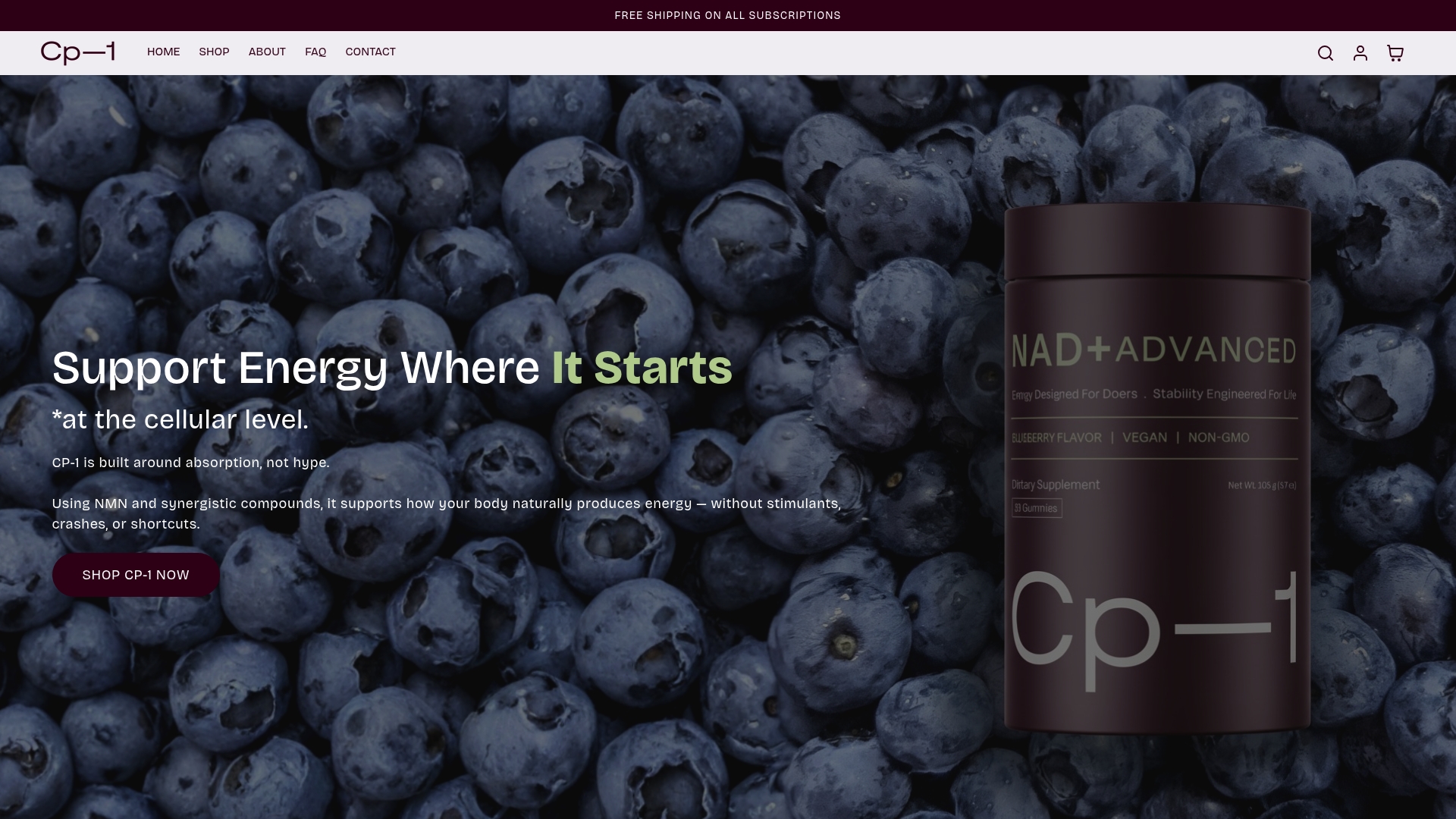
Cp-1’s NAD+ Advanced Supplement is a chewable gummy containing NMN (Nicotinamide Mononucleotide), Lion’s Mane, Reishi, Turkey Tail, and CoQ10. These ingredients support NAD+ production, mitochondrial energy, cognitive function, immune health, and stress resilience. Every batch is vegan, non-GMO, manufactured in the US under GMP-certified conditions, and third-party tested. No proprietary blends, no underdosed ingredients, no formulas built for a marketing deck instead of the person taking them.
If you’re three to four weeks into your beginner routine and your energy still feels flat, or focus is inconsistent, Cp-1 is worth adding as a daily adjunct. Visit cp-1.com to review the full ingredient breakdown and order. If you’re pregnant, nursing, or taking medication, consult your healthcare provider before starting any new supplement.
Authoritative sources and further reading
The sources below support the claims in this guide and are worth bookmarking for deeper reading.
- Daily wellbeing routine | Boston University Student Wellbeing
- Personal action plan | Kaiser Permanente
- Global Wellness Institute
- Beginner Wellness Routine: A Simple 10-Minute Daily Plan for Beginners | WellnessFitnessUnitt
- 7-Day Beginner Wellness Reset | Free Checklist + Workout Plan | WellnessFitnessUnitt
- Healthy Routine for Beginners: Simple Steps to Build Lasting Habits | Fit In Progress
- How to Start a Wellness Journey: A Beginner’s Guide for Real Life | Peacefully Proven