

Do Adaptogens Actually Work for Stress? What the Data Shows
Yes, adaptogens can help with stress, but the effect is modest and depends heavily on which herb you pick and how consistently you take it. The clearest signal comes from ashwagandha, where trials running 4 to 8 weeks show measurable drops in cortisol and, in some cases, lower perceived stress. That’s the honest verdict, real biology, not a miracle fix.
- Ashwagandha has the deepest human trial base for stress, with doses of 300–600 mg/day showing consistent cortisol reductions.
- Give any adaptogen 4 to 8 weeks before deciding it isn’t working. That’s how long most trials ran.
- Check with a clinician about interactions before starting, especially if you take thyroid, blood sugar, or immune medication.
If you want the deeper mechanics, herb-by-herb evidence, and dosing specifics, keep reading.
Key Takeaways
Adaptogens like ashwagandha can modestly reduce stress biomarkers over a 4 to 8 week trial, but results vary by herb, dose, and person.
| Point | Details |
|---|---|
| Ashwagandha has the strongest evidence | Trials show consistent cortisol reductions at 300 to 600 mg/day over 4 to 8 weeks. |
| Give any herb time to work | Judge results after a full 4 to 8 week trial, matching typical clinical study lengths. |
| Standardization varies widely | Choose extracts with a listed active-compound percentage and third-party testing. |
| Check interactions before starting | Flag thyroid, blood thinner, immunosuppressant, or diabetes medications to your clinician. |
| Cp-1 aligns with these quality markers | Its NAD+ Advanced Supplement pairs reishi and lion’s mane with third-party testing and US manufacturing. |
This article is general information, not a substitute for advice from a qualified doctor. Consult a qualified healthcare professional about your own circumstances before acting on anything here.
Table of Contents
- Adaptogens for Stress: How They’re Supposed to Work
- Ashwagandha, Rhodiola, and the Other Common Adaptogens for Anxiety and Stress
- How to Take Adaptogens: Forms, Timing, and Dosing
- Adaptogen Safety: Side Effects, Interactions, and Who Should Avoid Them
- Building an 8-Week Stress-Resilience Plan Around Adaptogens
- Where the Evidence Actually Lands
- Why Cp-1 Fits an Evidence-Based Adaptogen Routine
- Sources
Adaptogens for Stress: How They’re Supposed to Work
An adaptogen is a plant or fungus traditionally used to help the body resist physical, chemical, or biological stress without pushing it toward a specific, exaggerated effect. That’s the working definition used by clinical resources like the VA Whole Health Library, and it’s a useful one because it separates adaptogens from stimulants. A stimulant forces a reaction. An adaptogen, at least in theory, nudges your body’s stress response back toward balance.
The proposed mechanism centers on the HPA axis, the hypothalamic pituitary adrenal system that governs your cortisol release. Researchers believe several adaptogenic herbs modulate this feedback loop, which is why cortisol shows up so often as the measured outcome in trials. Some compounds also appear to affect neurotransmitter activity and carry antioxidant and anti inflammatory properties, though that research is thinner than the cortisol data.
Herbalists have historically judged an adaptogen against three criteria:
- It should be nontoxic at normal doses.
- It should help the body resist stress nonspecifically, meaning across multiple stress types.
- It should have a normalizing effect, correcting imbalance in either direction rather than just pushing one direction.
That third point matters. It’s the theoretical difference between a stimulant that jacks up cortisol and an adaptogen that’s supposed to bring an overactive stress response down while leaving a healthy one alone.
Ashwagandha, Rhodiola, and the Other Common Adaptogens for Anxiety and Stress
Not every herb marketed as an adaptogen has equal backing. Here’s how the most common ones stack up against actual trial data.
- Ashwagandha. This has the strongest evidence of any adaptogenic herb for stress. Pooled analyses show consistent reductions in cortisol at doses between 300 and 600 mg daily, typically taken over 4 to 8 weeks. Perceived stress scores improve in some trials but not all, which is an important nuance: a biomarker moving doesn’t always mean you’ll feel calmer.
- Rhodiola. The NCCIH points to limited but suggestive evidence, mostly for mental fatigue and work capacity rather than generalized anxiety. Clinical dosing often involves moderate doses split through the day, and people tend to report the fatigue benefit faster than any mood shift.
- Reishi. Traditional use for calm and immune support is well documented, but stress-specific randomized trials in humans are sparse. Most of what we know about reishi’s safety profile in modern use comes from mushroom-focused safety reviews rather than dedicated stress trials.
- Ginseng. Both Panax and Siberian varieties show up in traditional stress-resilience formulas, and the VA’s overview lists ginseng among common adaptogens used in practice. Human data on stress specifically is thinner than the cognitive-performance research on ginseng.
- Holy basil (tulsi). Small studies suggest anxiolytic effects, but the trial pool is limited in size and duration, so treat this as a promising lead rather than settled science.
- Schisandra. Used traditionally for fatigue and resilience; controlled human trials targeting stress outcomes specifically remain scarce.
- Eleuthero. Sometimes called Siberian ginseng, it shares the “energy and resilience” reputation of Panax ginseng but with an even thinner human evidence base for stress.
The pattern across nearly every herb on this list is the same: trials are short, sample sizes are small, and extract standardization varies widely from one study to the next. A withanolide percentage in one ashwagandha study might not match the concentration in a bottle on a shelf. That gap between lab conditions and consumer products is the single biggest reason results feel inconsistent from person to person.
How to Take Adaptogens: Forms, Timing, and Dosing
You’ll find adaptogens as capsules, tinctures, powders for tea, and standardized extracts. Capsules give you the most predictable dose and are what most clinical trials use. Tinctures absorb fast but vary more in potency bottle to bottle. Powders and teas are the most traditional format but the hardest to dose precisely. Mushroom extracts, like reishi or lion’s mane preparations, are usually standardized to a percentage of beta glucans or specific compounds, which gives you more confidence in what you’re actually getting.
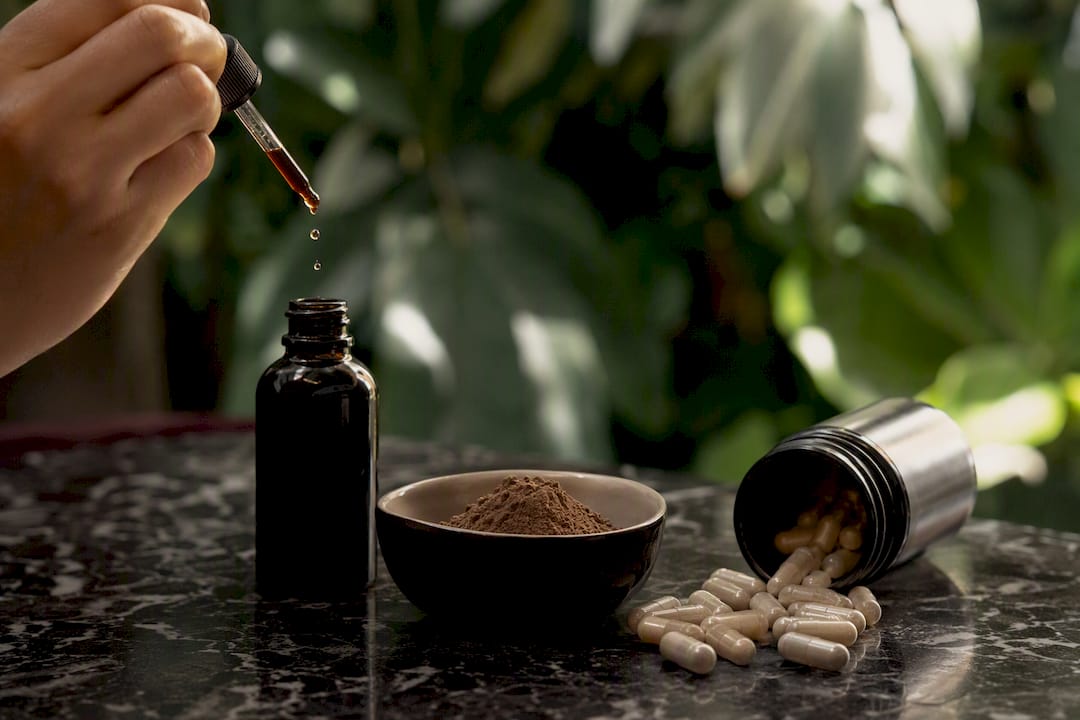
Start at the low end of the studied range. For ashwagandha, that means beginning around 300 mg/day rather than jumping straight to 600 mg. For rhodiola, 200 mg once daily before scaling to twice daily is a reasonable, conservative approach.
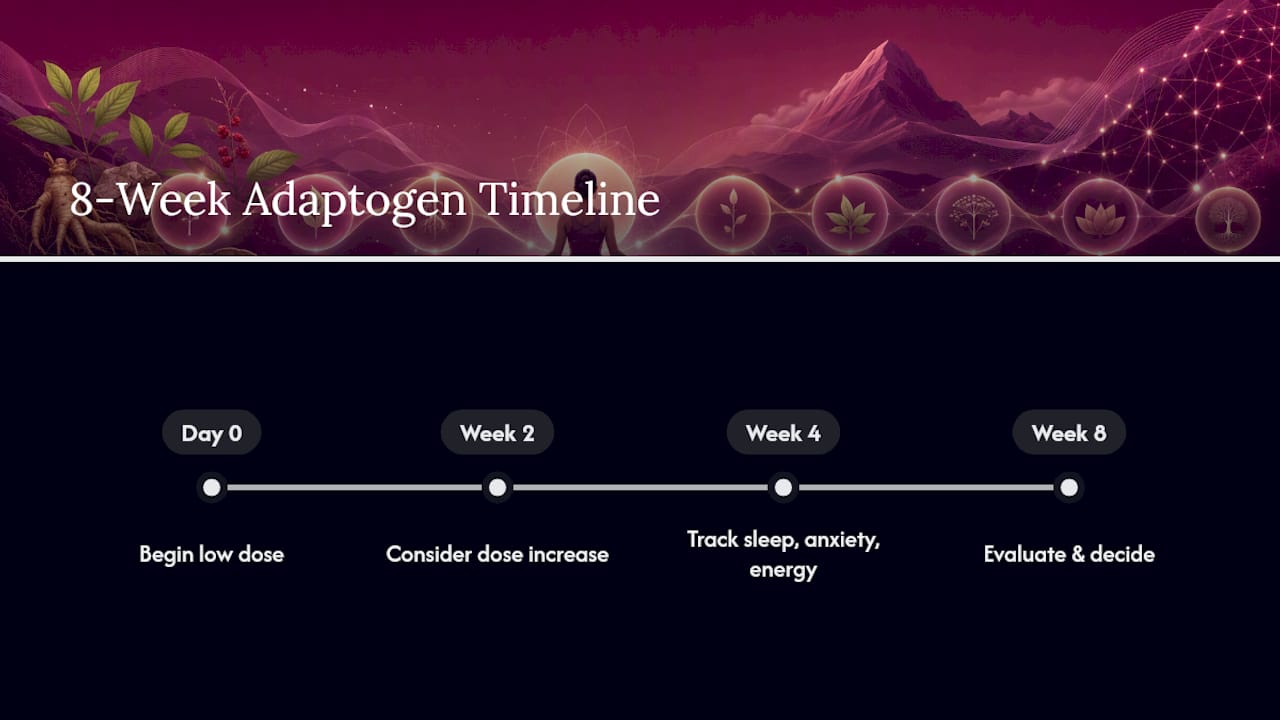
Give any adaptogen 4 to 8 weeks before judging it, matching the timeframe used in most clinical trials. Track a few concrete markers along the way: sleep quality, daytime anxiety levels, and energy consistency. A simple weekly journal entry beats trying to remember how you felt a month ago.
Pro Tip: Buy from brands that list the specific active-compound percentage on the label, like “withanolide content,” not just “ashwagandha root extract.” A vague label is often a sign the product hasn’t been standardized or third-party tested.
Adaptogen Safety: Side Effects, Interactions, and Who Should Avoid Them
Most people tolerate adaptogens reasonably well in short-term use, but “generally well tolerated” isn’t the same as “risk-free.” Mild gastrointestinal upset and changes in sleep patterns are among the commonly reported issues. More concerning: rare case reports of liver injury linked to certain ashwagandha products, which is why label transparency and third-party testing aren’t just marketing points, they’re safety issues.
Adaptogens interact with the body’s actual stress physiology, which is exactly why they aren’t inert. Clinical guidance consistently recommends checking in with a healthcare provider before adding one, particularly if you take other medications that affect hormone or immune pathways.
Tell your clinician if you’re on:
- Thyroid medication (some adaptogens may affect thyroid hormone levels)
- Blood thinners or anticoagulants (interaction risk with several herbs)
- Immunosuppressants (mushroom-based adaptogens can affect immune signaling)
- Diabetes medications (some adaptogens affect blood sugar)
Pregnant or breastfeeding people, anyone with liver disease, and people with autoimmune conditions should use particular caution, and in several cases avoid these herbs entirely until a clinician weighs in. MedlinePlus notes that supplements aren’t FDA-regulated the way medications are, so the burden of verifying quality and safety often falls on you. Stop use and seek care if you notice yellowing skin or eyes, unusual fatigue, or dark urine, all potential signs of liver stress.
Building an 8-Week Stress-Resilience Plan Around Adaptogens
Adaptogens work best as one piece of a bigger picture, not a replacement for the fundamentals. Sleep, nutrition, movement, and therapy or counseling still do the heavy lifting; the herb is the adjunct, not the anchor. That’s consistent with how clinicians frame these tools: supportive, not curative.
A conservative 8-week trial looks like this:
- Weeks 1 to 2: Pick one adaptogen, start at the low end of the studied dose, and stabilize your sleep and meal timing.
- Weeks 3 to 5: Hold the dose steady, add a daily movement habit, and start a short weekly check-in journal.
- Weeks 6 to 8: Review your notes on sleep, anxiety, and energy, then decide whether to continue, adjust the dose, or stop.
Cp-1 covers this integration approach in more depth in its guide to pairing supplements with stress management and its step-by-step stress resilience plan. Complementary practices like breathwork and integrative movement, covered in resources such as this overview of integrative stress practices, can stack well alongside an adaptogen trial.
Pro Tip: Bring your 8 week journal to your next checkup. Clinicians can spot interaction risks faster when they see your actual dose and timeline, not just “I’ve been taking ashwagandha.”
Where the Evidence Actually Lands
The honest position on adaptogens is cautious optimism. Ashwagandha has real trial data behind it. Most other herbs on this list are riding on tradition and thinner, shorter studies. That doesn’t make them useless, but it means you should treat any single adaptogen as one tool among several, not a fix for a broken sleep schedule or an unmanaged workload. Evidence-based use means matching your expectations to what the trials actually measured, then checking in with a clinician before you layer anything on top of existing medication.
— Hugo
Why Cp-1 Fits an Evidence-Based Adaptogen Routine
If you’ve read this far, you already know the two things that separate a real adaptogen product from marketing noise: standardized dosing and third-party verification. Cp-1’s NAD+ Advanced Supplement builds on that same standard, combining reishi and lion’s mane mushroom extract with NMN, turkey tail, and CoQ10 in a formula manufactured in the US under GMP-certified conditions.
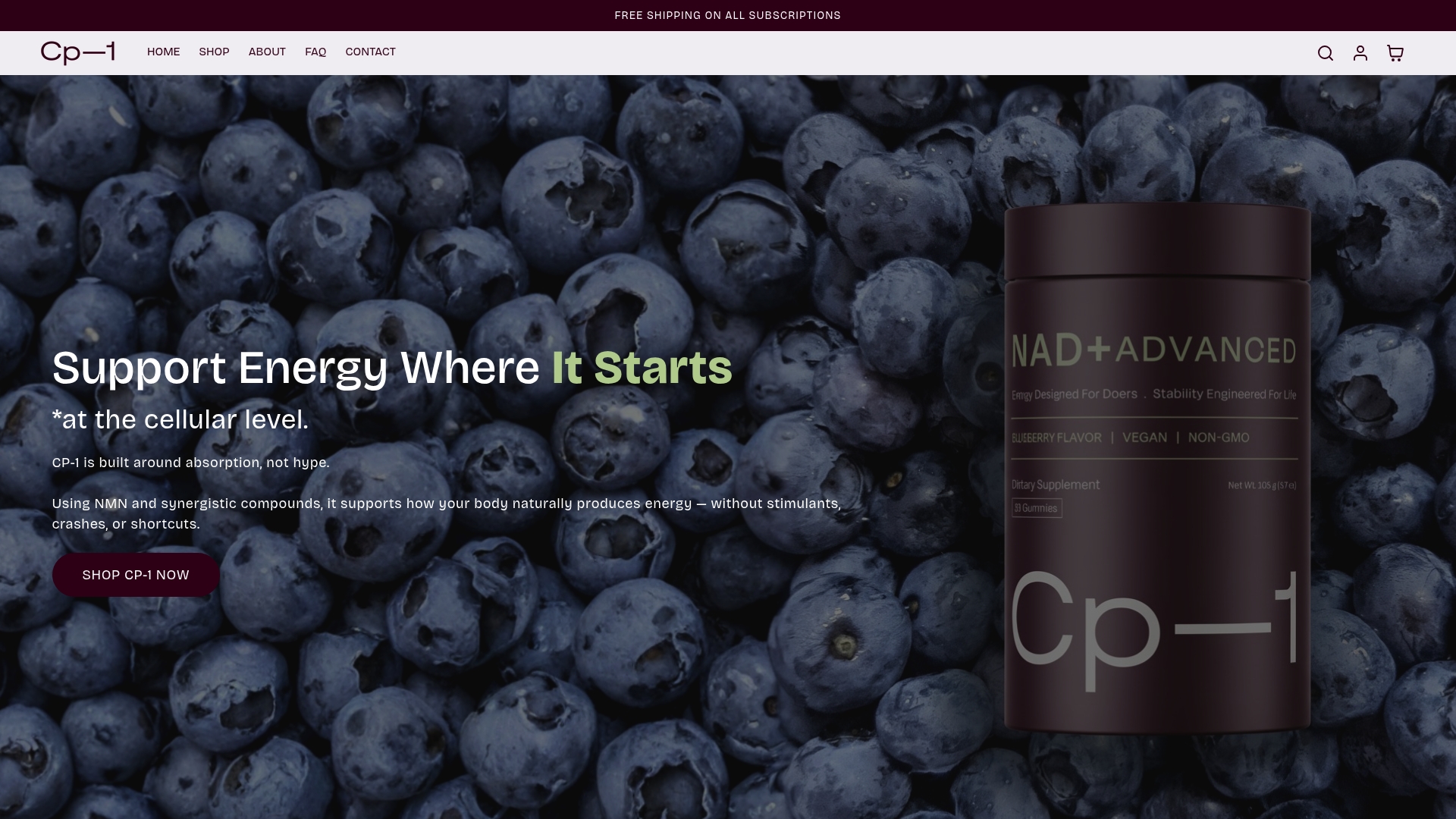
Every batch is vegan, non-GMO, and third-party tested, the same quality markers this article recommends you look for on any adaptogen label. The reishi and turkey tail components overlap directly with the mushroom adaptogens covered above, offering the stress-resilience and immune support angle without vague “proprietary blend” labeling. If you’re already tracking sleep, energy, and stress markers during an adaptogen trial, check the CP-1 formula to see how it fits into that same 8-week evaluation window, and talk to your clinician before adding it if you’re on thyroid, immune, or blood sugar medication.
Sources
- Ashwagandha: Benefits, side effects, and safety concerns - Harvard Health
- Rhodiola - NCCIH
- Va
- PubMed: systematic reviews / trials relevant to adaptogen efficacy
- What are adaptogens? - Dartmouth Health