
Nootropics for energy are supplements that sharpen mental clarity and reduce fatigue through compounds with real clinical backing, not just marketing copy. The top nootropics for energy in 2026 are caffeine combined with L-theanine, a stack that improves attention, accuracy, and alertness significantly over placebo in double-blind trials. Beyond that pairing, natural cognitive enhancers like Rhodiola Rosea, Lion’s Mane Mushroom, and NMN address energy at the cellular level, giving you sustained mental stamina rather than a spike and crash. If you are tired of supplements that do nothing, this breakdown cuts straight to what the evidence actually supports.
1. What makes caffeine + L-theanine the best nootropic stack for energy?
Caffeine and L-theanine together form the most evidence-backed combination in the nootropic world. Caffeine blocks adenosine receptors to produce rapid alertness, while L-theanine elevates serotonin, dopamine, and GABA to support calm, focused attention without sedation. The result is sharper cognition without the jittery edge that caffeine alone often causes.

A 2026 double-blind crossover trial confirmed that caffeine at 3 mg/kg combined with L-theanine at 200 mg outperformed either compound alone on sustained attention and accuracy. That means the combination is not just additive. It produces a qualitatively different cognitive state than either ingredient by itself.
Here is what each ingredient contributes:
- Caffeine blocks adenosine, the brain chemical that builds up sleepiness, producing fast-acting alertness within 30–60 minutes
- L-theanine increases alpha brain wave activity, creating a state of relaxed focus that counters caffeine’s tendency to raise anxiety
- Together, they improve reaction speed, working memory, and sustained attention better than caffeine alone
Pro Tip: Start with a 1:2 ratio of caffeine to L-theanine. If you use 100 mg of caffeine, pair it with 200 mg of L-theanine. This ratio is what most clinical trials use and what consistently reduces jitter while preserving alertness.
Dosing form matters too. Capsule delivery produces more consistent cognitive improvements than caffeine mouth rinse, with better reaction speed and executive function outcomes across multiple sessions.
2. Rhodiola Rosea: the adaptogen for mental stamina
Rhodiola Rosea is one of the most studied adaptogens for reducing mental fatigue and improving performance under stress. It works differently from caffeine. Rather than blocking sleepiness signals, Rhodiola modulates the stress response system, helping your brain maintain output when cortisol and fatigue would otherwise drag you down.
Research on natural botanicals like Rhodiola shows improved memory and reduced fatigue with consistent use. The effect builds over days and weeks rather than hitting in an hour. That makes Rhodiola a better fit for chronic mental fatigue than for acute, pre-task energy needs.
The practical advantage is that Rhodiola carries a low side effect profile. It does not disrupt sleep when taken in the morning, and it does not cause the tolerance buildup that caffeine does with daily use.
3. Lion’s Mane Mushroom: cognitive energy from the ground up
Lion’s Mane Mushroom is a functional mushroom with a specific mechanism that sets it apart from stimulants. It stimulates nerve growth factor (NGF) production, which supports the health and regeneration of neurons. Better neuron function means clearer thinking and less cognitive drag over time.
Lion’s Mane does not produce immediate energy like caffeine. Its benefits accumulate with consistent daily use, making it a long-term cognitive investment rather than a quick fix. CP-1 includes Lion’s Mane extract in its formula for exactly this reason. The goal is cellular brain health, not a temporary jolt.
For people dealing with brain fog or mental fatigue that sleep alone does not fix, Lion’s Mane addresses a root cause rather than masking symptoms.
4. NMN and CoQ10: energy where it actually starts
Chronic fatigue often reflects a problem at the cellular level. Research shows that cortical ATP production correlates with fatigue severity, meaning your brain’s ability to generate energy directly affects how tired you feel. This is why mitochondrial support is not optional for serious energy optimization.
NMN (Nicotinamide Mononucleotide) is a precursor to NAD+, a molecule your cells need to produce ATP. NAD+ levels decline with age, and lower NAD+ means less cellular energy output. Supplementing with NMN helps restore that production pathway. Coenzyme Q10 (CoQ10) works alongside NMN by supporting the mitochondrial electron transport chain, the actual machinery that converts nutrients into usable energy.
You can read more about mitochondrial energy production and why it matters for daily stamina. CP-1 combines NMN and CoQ10 specifically to target this cellular energy deficit rather than just stimulating the nervous system.
5. Bacopa Monnieri: memory and focus without stimulation
Bacopa Monnieri is a nootropic herb with strong evidence for improving memory consolidation and reducing anxiety-related cognitive interference. It does not give you an energy spike. What it does is reduce the mental friction that makes thinking feel slow and effortful.
Studies on Bacopa report neuroprotection and mitochondrial support alongside memory improvements. The active compounds, called bacosides, protect neurons from oxidative stress and support synaptic communication. The result is cleaner, more reliable mental performance over time.
Bacopa takes 4–6 weeks of consistent use to show its full effect. People who expect immediate results often quit too early. Pair it with a faster-acting compound like caffeine and L-theanine if you need both short-term and long-term cognitive support.
6. Ashwagandha: stress reduction as an energy strategy
Ashwagandha works as a natural energy booster by addressing one of the most overlooked causes of mental fatigue: chronic stress. High cortisol levels drain cognitive resources, reduce working memory capacity, and make sustained focus nearly impossible. Ashwagandha lowers cortisol and supports the hypothalamic-pituitary-adrenal (HPA) axis, the system that regulates your stress response.
The energy benefit from Ashwagandha is indirect but real. When your stress system is no longer running at full throttle, your brain has more resources available for actual thinking. People who feel mentally exhausted despite adequate sleep often find Ashwagandha more useful than any stimulant.
It pairs well with Rhodiola Rosea for a non-stimulant stack focused on resilience and sustained output rather than acute alertness.
7. How timing and lifestyle affect nootropic effectiveness
Timing your nootropic intake correctly can double its effectiveness. Caffeine produces its strongest cognitive benefits in the morning and midday, when baseline alertness is lower and adenosine has had time to accumulate. Taking caffeine in the evening produces no meaningful cognitive benefit and disrupts sleep quality.
Here is a practical timing framework:
- Morning (7–9 a.m.): Take caffeine + L-theanine with breakfast for peak morning focus
- Midday (12–1 p.m.): A second smaller dose or a 20-minute nap before caffeine can extend afternoon performance
- Afternoon (2–4 p.m.): Use non-stimulant nootropics like Bacopa, Rhodiola, or Lion’s Mane, which do not interfere with sleep
- Evening: Avoid all stimulants; this is when adaptogens and mitochondrial support supplements like NMN work without disrupting your sleep cycle
A 2026 randomized study found that combining a 90-minute nap with caffeine improved physical explosivity more than either strategy alone. The nap clears adenosine buildup, and the caffeine then hits receptors that are freshly cleared. This is a real performance edge for afternoon or evening demands.
Pro Tip: Delay your first caffeine dose by 90 minutes after waking. Your cortisol is naturally highest right after waking, so caffeine adds little benefit then. Waiting until mid-morning means the caffeine hits when you actually need it.
Harvard Health recommends 7–9 hours of sleep and at least 150 minutes of aerobic exercise weekly as the foundation for any energy strategy. Without those two habits in place, no nootropic stack will perform at its ceiling.
8. Comparison of top cognitive enhancers for energy
| Nootropic | Onset speed | Duration | Best use case | Evidence level |
|---|---|---|---|---|
| Caffeine + L-theanine | 30–60 min | 4–6 hours | Acute focus and alertness | High (multiple RCTs) |
| Rhodiola Rosea | Days to weeks | Sustained | Stress-related mental fatigue | Moderate |
| Lion’s Mane Mushroom | Weeks | Long-term | Chronic brain fog, neuroregeneration | Moderate |
| Bacopa Monnieri | 4–6 weeks | Long-term | Memory, learning, cognitive clarity | Moderate to high |
| Ashwagandha | Days to weeks | Sustained | Cortisol-driven fatigue and anxiety | Moderate to high |
| NMN + CoQ10 | Weeks | Long-term | Cellular energy, mitochondrial health | Emerging |
Caffeine + L-theanine wins on speed and trial volume. NMN and CoQ10 address a deeper problem that stimulants cannot touch. The best approach for most people is a layered stack: fast-acting stimulant support in the morning, adaptogen and mitochondrial support throughout the day. If you want to go deeper on non-stimulant energy options, the case for cellular-level support is strong.
Key takeaways
The most effective approach to nootropics for energy combines fast-acting caffeine and L-theanine for acute focus with long-term mitochondrial and adaptogen support for sustained mental stamina.
| Point | Details |
|---|---|
| Best acute stack | Caffeine + L-theanine at a 1:2 ratio outperforms either compound alone in clinical trials. |
| Timing is critical | Take caffeine mid-morning or midday for peak cognitive benefit; avoid evening doses. |
| Cellular energy matters | NMN and CoQ10 address ATP production deficits that stimulants cannot fix. |
| Adaptogens build resilience | Rhodiola and Ashwagandha reduce stress-driven fatigue over days to weeks of consistent use. |
| Lifestyle is the foundation | Sleep of 7–9 hours and 150 minutes of weekly aerobic exercise maximize every supplement’s effect. |
My honest take on nootropics and daily energy
I have tried a lot of supplements. Most of them are garbage. The formula is always the same: underdose every ingredient, put it in a shiny bottle, and charge $60 for what is essentially a placebo with a good label. That frustration is exactly why I built CP-1 the way I did.
Here is what I have learned from years of personal use and research: the caffeine and L-theanine stack is real. It works, the evidence is solid, and you will feel the difference within an hour. But it is a tool, not a solution. If you are running on five hours of sleep and skipping exercise, no stack on earth will give you the mental energy you are looking for. The supplements work on top of a functioning lifestyle, not instead of one.
I also want to be honest about mitochondrial support. NMN and CoQ10 are not going to make you feel wired. They work quietly, over weeks, at the cellular level. You will not notice them the way you notice caffeine. What you will notice is that your baseline energy stops declining, your afternoons feel less brutal, and your thinking stays sharper later in the day. That is the kind of energy worth building.
Start low with any new supplement. Give adaptogens like Rhodiola and Bacopa at least four weeks before you judge them. And if you are dealing with persistent fatigue that does not respond to sleep, exercise, or supplementation, talk to a doctor. Stacking herbal supplements effectively requires knowing your baseline, and some fatigue has clinical causes that no nootropic will address.
— Hugo
What CP-1 offers for natural cognitive energy
CP-1 was built for people who want real results from natural supplements, not a caffeine pill dressed up in a premium package.
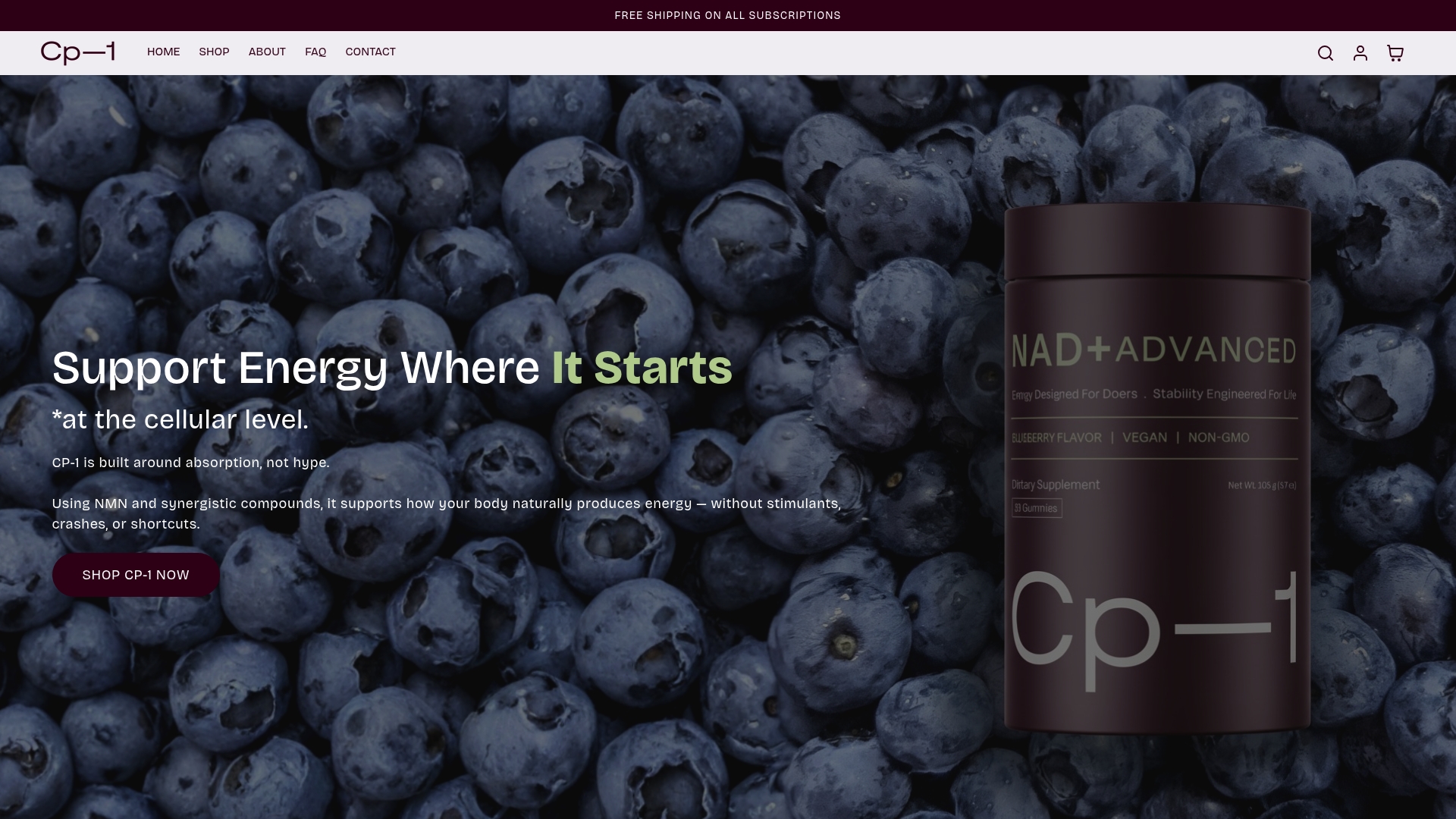
The CP-1 formula combines NMN, Lion’s Mane mushroom extract, Reishi mushroom extract, Turkey Tail mushroom extract, and CoQ10 to support cellular energy, mental clarity, and immune resilience from the ground up. Every ingredient is third-party tested, vegan, non-GMO, and manufactured in the US. If you are ready to add a cellular energy supplement to your daily stack, CP-1 is built to work alongside the lifestyle habits and fast-acting nootropics covered here, not to replace them. Check out the natural energy booster checklist to see how CP-1 fits into a complete daily energy strategy.
FAQ
What are the top nootropics for energy in 2026?
Caffeine combined with L-theanine is the highest-confidence stack for acute energy and focus, supported by multiple randomized controlled trials. NMN, CoQ10, Rhodiola Rosea, and Lion’s Mane Mushroom address longer-term energy through mitochondrial support and stress adaptation.
How does L-theanine improve the effects of caffeine?
L-theanine elevates alpha brain wave activity and modulates neurotransmitters including serotonin, dopamine, and GABA, which reduces the anxiety and jitter that caffeine alone can cause. The combination produces calmer, more sustained focus than caffeine by itself.
When is the best time to take caffeine for cognitive performance?
Morning and midday caffeine intake produces the strongest improvements in reaction speed and executive function. Evening caffeine shows no meaningful cognitive benefit and disrupts sleep quality.
Can nootropics replace sleep for energy?
No. Harvard Health identifies 7–9 hours of sleep as foundational to energy, and nootropics underperform significantly without adequate rest. Supplements amplify a functioning baseline; they do not substitute for one.
Are there nootropics for energy that do not use stimulants?
Yes. Rhodiola Rosea, Bacopa Monnieri, Ashwagandha, Lion’s Mane Mushroom, NMN, and CoQ10 all support mental energy and stamina without stimulating the central nervous system. These are better choices for people sensitive to caffeine or looking for non-stimulant energy support throughout the day.