
A natural energy booster checklist is the most practical tool you can build if you want sustained vitality without relying on stimulants, synthetic compounds, or the kind of garbage supplements that promise everything and deliver nothing. Up to 45% of U.S. adults experience persistent fatigue, and 30% of supplement users take them specifically for energy. That number tells you two things: fatigue is not a personal failure, and most people are still searching for something that actually works. This checklist covers nutrition, daily habits, and targeted supplementation so you can build real, lasting energy from the ground up.
1. Your natural energy booster checklist starts with food
The foundation of any natural energy boosters list is what you eat. Food is not just fuel; it is the raw material your mitochondria use to generate ATP, the currency your cells run on. Get the inputs wrong and no supplement will fix the output.
The most effective energy-boosting foods share three traits: they stabilize blood sugar, supply B vitamins and iron, and support gut health. Combining complex carbs, protein, and healthy fats at every meal prevents the spike-and-crash glucose cycles that leave you reaching for a third coffee by 2 p.m. That means building plates around foods like:
- Avocados for healthy monounsaturated fats and B vitamins
- Leafy greens (spinach, kale) for iron and magnesium
- Oily fish (salmon, sardines) for omega-3s and vitamin D
- Nuts and seeds (almonds, pumpkin seeds) for sustained fat-based energy
- Legumes for slow-digesting complex carbohydrates
- Eggs for complete protein and choline, which supports brain energy
Gut health is foundational here. Your microbiome directly influences energy hormone production and systemic inflammation levels, both of which affect how energized you feel throughout the day. Fermented foods like kefir, kimchi, and plain yogurt feed the beneficial bacteria that keep that system running clean.
Pro Tip: Stop eating at least three hours before bed. Late meals disrupt circadian rhythm and reduce sleep quality, which tanks your energy the next morning regardless of what you ate.

2. Hydration and electrolytes
Dehydration is one of the most underestimated causes of afternoon fatigue. Mild dehydration of just 1 to 2% of body weight can cause fatigue, reduced concentration, and brain fog that mimics the feeling of not sleeping enough. Most people reach for caffeine when they should be reaching for water.
Plain water handles basic hydration, but electrolytes matter when you are active, sweating, or under stress. Sodium, potassium, and magnesium work together to maintain nerve function and muscle contraction. A simple fix is adding a pinch of sea salt and a squeeze of lemon to your morning water before coffee. It costs almost nothing and addresses a deficiency most people do not know they have.
3. Sleep quantity and quality
Seven to nine hours of sleep is not a suggestion. It is the biological minimum your body needs to clear metabolic waste, consolidate memory, and restore cellular energy reserves. Cutting that short by even 90 minutes measurably impairs reaction time, mood, and metabolic function the next day.
Sleep quality matters as much as duration. Keeping your bedroom cool (around 65 to 68°F), blocking light completely, and going to bed at the same time every night are the three changes with the highest return. Consistency trains your circadian clock, which governs cortisol, melatonin, and dozens of other hormones that determine how energized you feel when you wake up.
4. Morning sunlight exposure
Getting outside within 30 minutes of waking and exposing your eyes to natural light is one of the most powerful free tools on any natural energy tips list. Morning sunlight anchors your circadian rhythm, suppresses residual melatonin, and triggers a cortisol pulse that sharpens alertness without any stimulant. Circadian alignment improves mood, reaction time, and cognitive performance beyond just energy levels.
Even on overcast days, outdoor light is 10 to 50 times brighter than indoor lighting. Ten minutes outside beats an hour under office fluorescents for circadian signaling. If you live somewhere with limited winter sun, a 10,000-lux light therapy lamp used within the first hour of waking produces a comparable effect.
5. Scheduled movement breaks
Sitting for hours at a stretch is not just bad for your posture. It actively suppresses the metabolic processes that keep energy stable. Movement snacks every 60 to 90 minutes prevent blood sugar crashes more reliably than caffeine spikes do. A 15-minute walk or a few minutes of desk stretches is enough to restart circulation, clear mental fog, and reset focus.
This is one of those short movement breaks that sounds too simple to matter until you actually try it for a week. The mechanism is straightforward: light movement stimulates glucose uptake in muscles, which stabilizes blood sugar and prevents the insulin-driven crash that hits around 3 p.m.
Pro Tip: Set a recurring timer for every 75 minutes during your workday. Stand up, walk to another room, do 10 bodyweight squats. You do not need a gym. You need to interrupt the sedentary pattern.
6. Breathwork and stress management
Mental fatigue drains energy just as fast as physical exertion. Chronic stress keeps cortisol elevated, which disrupts sleep, increases inflammation, and depletes the nutrients your body uses for energy production. Managing that stress is not optional if you want sustained vitality.
Box breathing is a zero-cost, proven technique for recalibrating focus without stimulants. The protocol is simple: inhale for four counts, hold for four, exhale for four, hold for four. Repeat for two to four minutes. It activates the parasympathetic nervous system, lowers heart rate, and clears the mental static that masquerades as tiredness. Pair this with daily restorative activities like journaling or a focused hobby to reduce anxiety and restore a sense of control over your day.
7. Caffeine timing and management
Caffeine is not the enemy. Poorly timed caffeine is. Most people drink coffee immediately after waking, which blunts its effect because cortisol is already naturally elevated in the first 60 to 90 minutes after waking. Waiting until that cortisol peak passes, typically 90 minutes after waking, makes caffeine significantly more effective and reduces the afternoon crash.
Cutting off caffeine by early afternoon (around 1 to 2 p.m.) protects sleep architecture. Caffeine has a half-life of five to seven hours, so a 3 p.m. coffee still has half its stimulant load in your system at 8 or 9 p.m. That disrupts the deep sleep stages where cellular repair and energy restoration actually happen.
8. CoQ10 for mitochondrial energy
CoQ10 is the most evidence-backed supplement on any natural energy supplements ranked list for people over 35. It is a compound your cells produce naturally to support the electron transport chain, the process that generates ATP. Production declines with age and drops sharply if you take statins.
Ubiquinol, the active form of CoQ10, absorbs significantly better than the cheaper ubiquinone form. The standard dose is 100 to 200 mg per day. Absorption improves when you take CoQ10 with fat, so pair it with a meal that contains healthy fats. CP-1 includes CoQ10 alongside NMN and medicinal mushroom extracts specifically because mitochondrial support requires more than one compound working in isolation. You can read more about the science behind this approach in Cp-1’s guide to cellular energy strategies.
9. Ashwagandha for stress-related fatigue
Ashwagandha (Withania somnifera) is an adaptogen with strong clinical support for reducing cortisol, improving stress resilience, and relieving fatigue that stems from chronic psychological pressure. The effective dose is 300 to 500 mg per day of a root extract standardized to withanolides. It is not a stimulant. It works by lowering the hormonal load that drains your energy reserves, which makes it one of the most useful types of natural energy supplements for people whose fatigue is stress-driven rather than sleep-driven.
10. Vitamin B12 and iron for deficiency-related fatigue
B12 and iron deficiencies are two of the most common and most overlooked causes of persistent low energy. B12 is required for red blood cell production and neurological function. Iron is required for hemoglobin, which carries oxygen to your tissues. Low levels of either one produce fatigue that no amount of sleep or coffee will fix. B12 supplementation costs around $0.50 per day and is one of the highest-value additions to a natural energy supplements list for anyone eating a plant-heavy diet or over 50, since absorption declines with age.
Get blood work done before supplementing iron. Too much iron is harmful. B12 is water-soluble and safe to supplement without testing, but knowing your baseline helps you track whether it is actually the issue.
11. Magnesium for nerve and muscle function
Magnesium is involved in over 300 enzymatic reactions, including ATP synthesis. Most adults do not get enough from food alone. Low magnesium shows up as muscle cramps, poor sleep, anxiety, and low energy. Magnesium glycinate or malate are the best-absorbed forms for energy and sleep support. Oxide is cheap and poorly absorbed. Avoid it.
A dose of 200 to 400 mg taken in the evening supports sleep quality and reduces the muscle tension that accumulates from a day of stress and screen time. Better sleep means better energy the next day. It is one of the most straightforward additions to a daily energy habits routine.
12. Building your 30-day practical checklist
The natural energy foundation that produces real results is built on sleep, sunlight, movement, nutrition, and supplementation working together. Here is how to structure the first 30 days:
- Week 1: Lock in sleep timing. Same bedtime, same wake time, seven to nine hours. No exceptions.
- Week 2: Add morning sunlight (10 minutes outside) and stop eating three hours before bed.
- Week 3: Introduce movement breaks every 75 minutes and shift caffeine to 90 minutes after waking.
- Week 4: Add your core supplements: CoQ10, magnesium, and B12 if indicated. Assess energy levels against week one.
Track your energy, mood, and sleep quality in a simple notes app or journal. Personalized tracking provides faster feedback than generic advice because you can see exactly which change moved the needle. Adjust based on what your data shows, not what worked for someone else.
Pro Tip: Do not add everything at once. Stacking five new habits in week one guarantees you will drop all of them by week two. One change per week compounds into a system that actually sticks.
Key takeaways
Sustained natural energy comes from fixing the foundations first: sleep, nutrition, and circadian alignment, then layering targeted supplements on top of a working system.
| Point | Details |
|---|---|
| Food is the foundation | Balanced meals with complex carbs, protein, and healthy fats prevent blood sugar crashes. |
| Habits beat stimulants | Morning sunlight, movement breaks, and consistent sleep timing outperform caffeine long-term. |
| Supplements fill gaps | CoQ10, magnesium, and B12 address specific deficiencies that lifestyle changes alone cannot fix. |
| Sequence matters | Build habits in weekly layers to create a system that sticks beyond 30 days. |
| Track to personalize | Logging energy and mood reveals which changes actually work for your specific biology. |
What I have learned from building this checklist myself
I spent years frustrated with the supplement industry because most products are formulated for a marketing deck, not for the person swallowing them. When I started building what became CP-1, I went back to first principles: what does the body actually need to produce energy at the cellular level, and what is getting in the way?
The honest answer I kept landing on was that most people’s fatigue is not a supplement deficiency. It is a systems problem. Circadian misalignment, nutritional gaps, blood sugar instability, and chronic stress are all working against you simultaneously. No single pill fixes that. What works is addressing each layer in the right order.
I still take CoQ10, NMN, and lion’s mane every day because I have seen what they do when the lifestyle foundation is already solid. But I have also watched people spend serious money on quality supplements and feel nothing because they are sleeping six hours a night and eating processed food at their desks. The checklist approach forces you to be honest about which layer is actually broken.
The other thing I would tell you is to resist the urge to optimize everything at once. Pick the one habit that is most obviously broken and fix that first. For most people, it is sleep. Fix sleep and everything else gets easier. The supplements work better. The food choices get easier. The movement happens more naturally. Start there.
— Hugo
Take the next step with Cp-1
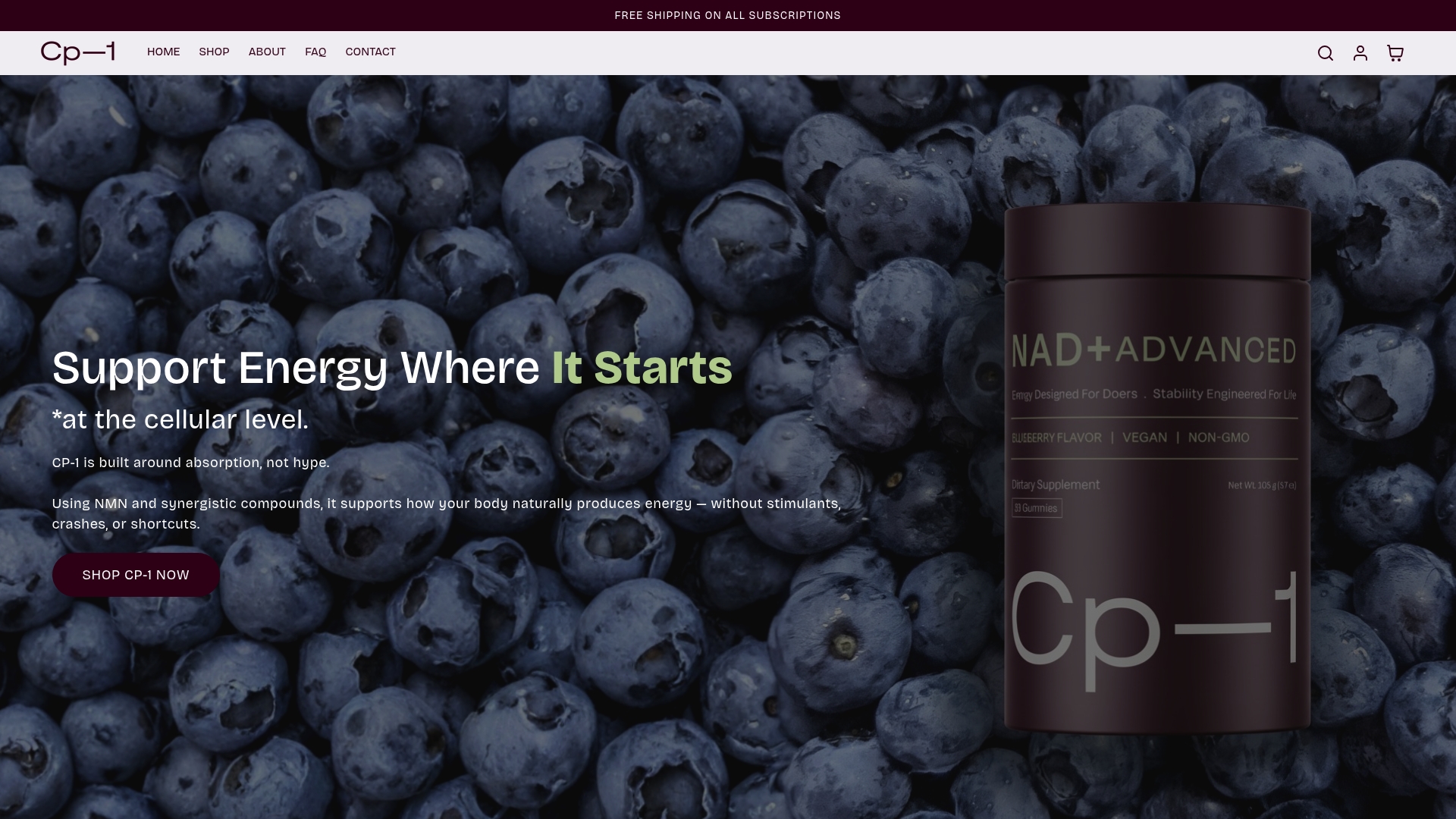
If you have worked through this checklist and want to add a supplement that is actually built around cellular energy support, Cp-1 is worth a serious look. CP-1 combines NMN, CoQ10, lion’s mane, reishi, and turkey tail mushroom extracts in a formula designed around mitochondrial function and NAD+ production, not marketing copy. Every batch is third-party tested, vegan, non-GMO, and made in the US. Visit cp-1.com to see the full formula and the science behind it. If you want to go deeper on why non-stimulant approaches outperform caffeine for lasting vitality, Cp-1’s breakdown of non-stimulant energy is the clearest explanation you will find.
FAQ
What is a natural energy booster checklist?
A natural energy booster checklist is a structured list of nutrition, lifestyle, and supplementation habits that work together to increase energy without stimulants. It covers sleep, sunlight, movement, food quality, hydration, and targeted supplements like CoQ10 and magnesium.
Which natural supplements are most effective for energy?
CoQ10 (ubiquinol form at 100 to 200 mg per day), ashwagandha (300 to 500 mg per day), magnesium glycinate, and vitamin B12 are the most evidence-backed options. Effectiveness depends on which deficiency or imbalance is driving your fatigue.
How long does it take to see results from natural energy strategies?
Most people notice meaningful improvement in energy and sleep quality within two to four weeks of consistently applying the foundational habits: fixed sleep timing, morning sunlight, movement breaks, and balanced meals. Supplements typically show effects after four to six weeks of consistent use.
Can food alone fix low energy levels?
Food addresses a significant portion of energy problems, particularly those driven by blood sugar instability, iron deficiency, and B vitamin gaps. However, circadian misalignment and chronic stress require habit changes that food alone cannot resolve.
Is caffeine part of a natural energy strategy?
Caffeine can be part of a natural approach when timed correctly. Waiting 90 minutes after waking and cutting off intake by early afternoon preserves its effectiveness and protects sleep quality. Used poorly, it creates a dependency cycle that worsens the fatigue it temporarily masks.