
You eat clean, you work out, and you still hit that mid-morning wall where your brain feels like it’s running on dial-up. It’s one of the most frustrating things in the biohacking world: doing everything “right” and still falling short on mental clarity and sustained output. The good news is that the science on natural, evidence-backed supplements has matured significantly, and there are real, well-researched options that go beyond caffeine and hope. This guide cuts through the noise and gives you a practical, research-grounded framework for building an energy and focus stack that actually works.
Table of Contents
- What you need: Science-backed supplements and smart preparation
- Step-by-step: How to build your energy and focus stack
- Troubleshooting and mistakes: What to watch out for
- How to know it’s working: Signs, benchmarks, and next steps
- Our take: Why dietary tweaks and realistic expectations matter more than magic bullets
- Take your energy to the next level with advanced support
- Frequently asked questions
Key Takeaways
| Point | Details |
|---|---|
| Choose quality supplements | Standardization and sourcing dramatically affect results and safety. |
| Stack ingredients for synergy | Pairing adaptogens like ginseng and ashwagandha can optimize both energy and calm. |
| Track results diligently | Journaling daily focus and energy helps you fine-tune your stack for real-world impact. |
| Lifestyle still reigns supreme | Supplements amplify benefits, but diet, sleep, and movement drive long-term performance. |
What you need: Science-backed supplements and smart preparation
Now that you understand the promise, let’s break down exactly what you’ll need and why these ingredients work.
The supplement industry is flooded with products that look impressive on the label but deliver nothing in practice. So let’s start with ingredients that have real clinical backing, and talk about what form and quality actually mean for your results.
The core ingredient lineup
These are the five workhorses of a solid natural energy and cognition stack:
-
Panax ginseng: Ginseng’s active compounds, ginsenosides, work through multiple mechanisms to support memory, attention, and mental clarity. Research confirms that Panax ginseng improves cognitive functions through several pathways, including anti-inflammatory action and neurotransmitter regulation. Not all ginseng is equal though. You need standardized extracts listing ginsenoside content, typically 4 to 8 percent, or you’re guessing at your dose.
-
Ashwagandha (Withania somnifera): This adaptogen has become a staple in serious wellness routines for good reason. Ashwagandha boosts sustained energy through its adaptogenic effects, meaning it helps your body regulate cortisol and stress hormones rather than just masking fatigue. Look for KSM-66 or Sensoril standardized extracts for reliable dosing.
-
Bacopa monnieri: Bacopa is a slower-burn nootropic that shines in sustained cognitive environments. It’s particularly effective for stress-induced mental fatigue. Give it at least four weeks before judging its impact.
-
Creatine monohydrate: Most people think of creatine as a gym supplement, but it’s one of the best-researched brain energy compounds available. It supports ATP regeneration in neurons, not just muscles.
-
Lion’s Mane mushroom (Hericium erinaceus): Lion’s Mane stands apart because of its ability to stimulate Nerve Growth Factor (NGF), directly supporting neuroplasticity. The functional mushroom evidence behind lion’s mane continues to grow, with studies showing both acute and longer-term cognitive benefits.
Form and standardization matter more than most people realize
Buying a supplement without knowing its standardization is like buying gasoline without knowing the octane. The active compound concentration is everything. This is why supplement quality and standardization is something we feel strongly about. A cheap ginseng capsule with no listed ginsenoside percentage is essentially a placebo wrapped in a pretty label.

Pro Tip: Always look for a Certificate of Analysis (COA) from a third-party lab before purchasing any supplement. It confirms purity, potency, and the absence of contaminants like heavy metals.
Morning vs. evening considerations
| Supplement | Best timing | Notes |
|---|---|---|
| Panax ginseng | Morning | Stimulating; can interfere with sleep if taken late |
| Ashwagandha | Evening or morning | Stress-lowering; some prefer at night |
| Bacopa monnieri | With food, any time | Fat-soluble; take with a meal |
| Creatine | Anytime (consistency matters) | Timing is less critical than daily use |
| Lion’s Mane | Morning | Acute NGF effects support daytime cognition |
Also, before starting any new stack, do a quick baseline assessment: rate your energy, focus, and mood on a 1 to 10 scale for a week. This gives you real data when you evaluate results later.
Step-by-step: How to build your energy and focus stack
With your ingredients organized, let’s move on to the practical side: how to combine and use them for best results.
Building a stack isn’t about throwing everything at the wall. It’s about sequencing thoughtfully, tracking honestly, and adjusting when needed. Here’s how to do it right.
-
Run a baseline week. Before adding anything new, track your current energy levels, focus windows, mood, and sleep quality. Use a simple daily log. Apps like Oura or even a basic notes app work fine. You need a benchmark.
-
Start with one or two ingredients. Resist the urge to start with five things on day one. Begin with ginseng or ashwagandha, whichever aligns most with your primary goal: ginseng for daytime focus and cognition, ashwagandha if stress and fatigue are the bigger issue.
-
Add Bacopa in week two or three. Bacopa monnieri reduces perceived fatigue and stress after cognitive work in controlled trials, but it takes time to accumulate in your system. Don’t rush it into your stack and expect immediate results.
-
Layer in creatine for brain energy. Creatine supports brain energy, short-term memory, and fatigue resistance, making it one of the most underrated nootropics. Three to five grams per day is the standard effective range. No loading phase needed if you’re in it for the long haul.
-
Add Lion’s Mane for neuroplasticity support. Research shows that Lion’s Mane improves psychomotor skills acutely via NGF stimulation, meaning even single-dose benefits are measurable. Adding it in the morning, ideally alongside a quality multi-mushroom formula, compounds its value over time.
-
Evaluate at four weeks and eight weeks. Use the same self-rating system from your baseline. Compare. Adjust doses or timing based on your response, not based on what worked for someone else online.
Sample weekly schedule
| Time of day | Supplement | Dose (general range) |
|---|---|---|
| Morning with breakfast | Panax ginseng (standardized) | 200 to 400 mg |
| Morning with breakfast | Lion’s Mane extract | 500 to 1000 mg |
| Anytime with water | Creatine monohydrate | 3 to 5 g |
| Evening with dinner | Ashwagandha (KSM-66) | 300 to 600 mg |
| With any meal | Bacopa monnieri | 300 to 450 mg |
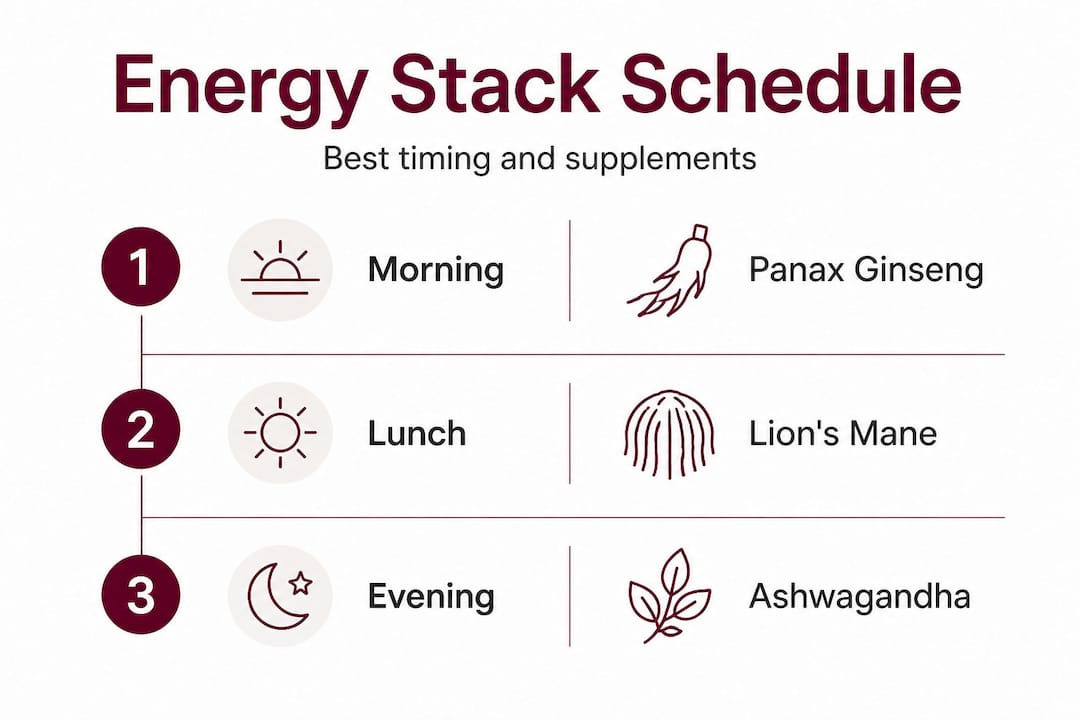
For non-stimulant cognition enhancements specifically, this kind of stacking protocol gives you broad coverage without the jitter-crash cycle of caffeine-heavy products.
Pro Tip: Build your stack habits into an existing daily wellness routine so that compliance is automatic. Attaching supplements to meals or morning rituals cuts down on missed doses significantly.
Troubleshooting and mistakes: What to watch out for
As you execute your regimen, pitfalls can arise. Here’s what experienced biohackers and clinicians watch for.
The biggest mistake people make isn’t taking the wrong supplements. It’s taking poorly sourced ones, stacking too aggressively, or ignoring early warning signs. Let’s break down the most common issues.
Red flags to watch for
-
Non-standardized extracts: If the label doesn’t specify ginsenoside content for ginseng, withanolide content for ashwagandha, or beta-glucan percentage for mushrooms, you don’t actually know what you’re getting. Standardization is crucial for effectiveness, and the market is full of products that skip this entirely.
-
GI distress from Bacopa: This is the most commonly reported side effect and it’s well-documented in clinical settings. Bacopa can cause gastrointestinal side effects, so always take it with food and start at the lower end of the dose range. If you experience nausea or bloating, reduce the dose before cutting it out entirely.
-
Stacking too many adaptogens at once: More is not better here. Each adaptogen interacts with your HPA axis (the stress and cortisol regulation system). Layering too many simultaneously can actually blunt their individual effects and make it harder to identify what’s working or what’s causing problems.
-
Skipping third-party testing verification: This one is non-negotiable for us. Supplement safety factors like manufacturing standards, third-party testing, and transparent labeling aren’t optional features. They’re baseline requirements.
“Taking a poorly sourced supplement is worse than taking nothing. At least nothing won’t introduce contaminants or unpredictable doses into your system.” This is the mindset shift that separates informed supplement users from people just buying marketing.
Pro Tip: Run a mitochondrial wellness check alongside your supplement protocol to ensure your foundational energy systems are supported. Supplements work best on a solid cellular health foundation, not as a patch for deeper issues.
Quick troubleshooting checklist
- Energy still flat after four weeks? Reassess sleep quality and dietary protein intake first.
- Feeling anxious on ginseng? Lower the dose or shift it to mid-morning rather than first thing.
- No cognitive improvement with Bacopa? Confirm you’re getting a standardized extract and give it at least six to eight weeks.
- GI issues across multiple supplements? Simplify your stack, add one thing at a time, and always take fat-soluble compounds with meals.
How to know it’s working: Signs, benchmarks, and next steps
After implementing your protocol, here’s how to determine if your new routine is truly enhancing your focus and daily energy.
Feeling “kind of better” isn’t a measurement. If you’re serious about optimization, you need a real verification process.
Subjective benchmarks to track daily
- Energy level rating (1 to 10) at 9 AM, 1 PM, and 4 PM
- Focus window length: how long can you work before needing a break?
- Mood and stress resilience: are small problems feeling less overwhelming?
- Sleep quality: are you waking up feeling rested?
Objective tools worth using
- Cambridge Brain Sciences or BrainHQ: Free and paid cognitive testing platforms that track memory, attention, and processing speed over time.
- Reaction time apps: Simple but surprisingly sensitive to changes in cognitive readiness.
- Heart Rate Variability (HRV) tracking: A useful proxy for stress adaptation and nervous system recovery, especially when using adaptogens like ashwagandha.
Expected timelines
Research shows that acute and chronic supplementation can improve memory and attention with ginseng showing some benefits within a single dose and chronic ashwagandha use enhancing recall speed and cognitive flexibility over eight to twelve weeks. Here’s a general roadmap:
| Timeframe | What to expect |
|---|---|
| Days 1 to 7 | Possible acute effects from ginseng and Lion’s Mane; mostly baseline tracking |
| Weeks 2 to 4 | Bacopa starting to build; creatine saturating for brain energy support |
| Weeks 4 to 8 | Noticeable changes in sustained focus and fatigue resistance |
| Weeks 8 to 12 | Full adaptogenic benefits from ashwagandha; measurable cognitive shifts |
For building a structured workflow for energy and clarity around your supplement protocol, consistency is the single most important variable. And if you want to deepen your understanding of how antioxidant compounds tie into this picture, the antioxidant and creatine effects on cognition and longevity are worth exploring in your own research.
Our take: Why dietary tweaks and realistic expectations matter more than magic bullets
With your tracking in place, it’s time for a candid look at what truly drives real-world results and how to stay grounded in evidence and context.
Here’s the honest truth that most supplement brands won’t tell you: adaptogens and nootropics are tools, not solutions. I’ve watched people spend hundreds of dollars a month on sophisticated stacks while sleeping five hours a night and eating processed food. The supplements do almost nothing under those conditions.
The research is clear on this. Harvard’s caution on brain supplements notes that adaptogens can meaningfully reduce fatigue and stress markers, but broad cognitive gains in otherwise healthy, well-rested adults are considerably less robust than the marketing suggests. That’s not a knock on the ingredients. It’s context. These compounds were largely studied in stressed, sleep-deprived, or cognitively impaired populations, and that’s where they shine brightest.
For the biohacker who’s already optimizing sleep, eating whole foods, and managing stress reasonably well, the gains from a solid supplement stack are real but incremental. That’s still worth pursuing. Incremental gains compound over months and years. But going in with inflated expectations is how people end up cycling through dozens of products looking for something that doesn’t exist.
Smart stacking is about synergy, not maximalism. Two or three well-chosen, standardized, third-party tested supplements taken consistently will outperform a chaotic fifteen-supplement protocol every single time. Simplicity with quality beats complexity with garbage inputs.
The other thing I’d push back on is the idea that any single supplement dramatically changes cognitive output. What changes output is your lifestyle creating the conditions where your brain can perform, and supplements supporting that environment. Lasting vitality without stimulants is built on this principle. The goal isn’t to force performance. It’s to remove friction and give your biology what it needs.
Take your energy to the next level with advanced support
If you’re ready to translate knowledge into action, here’s a trusted way to upgrade your daily energy and focus routine.
We built CP-1 because we were frustrated with formulas designed for a marketing deck, not for the person swallowing them. Every ingredient in CP-1, including NMN, lion’s mane, reishi, turkey tail, and coenzyme Q10, is included at meaningful, researched concentrations and verified through third-party testing. It’s vegan, non-GMO, and manufactured in the US to GMP standards.
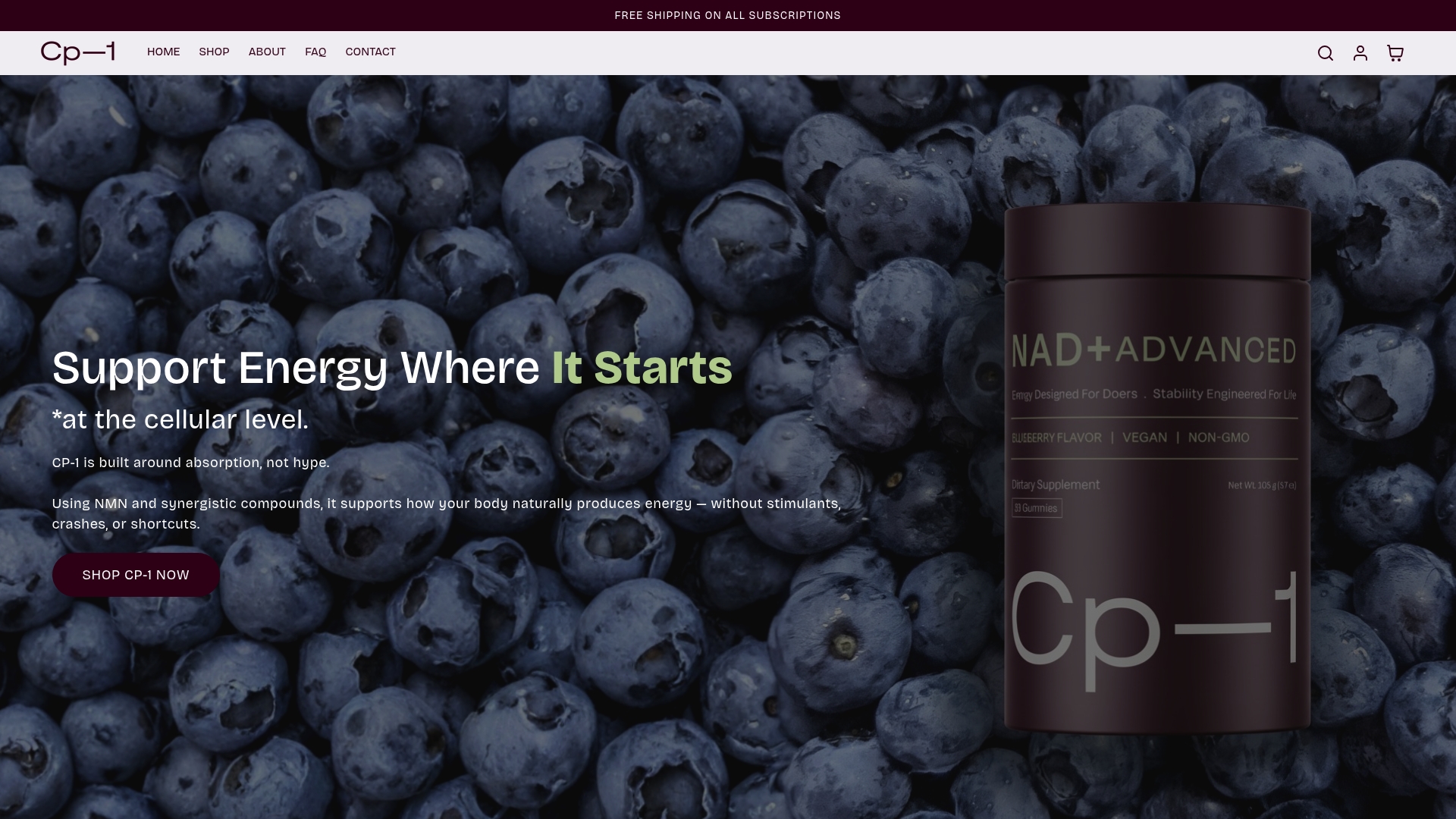
If you’re already running a solid lifestyle foundation and want a single, well-formulated supplement that covers cellular energy, cognitive support, and immune health without the noise, our NAD+ Advanced Supplement was built for exactly that. No filler, no fluff. Just what works.
Frequently asked questions
Which supplement works best for sustained energy and focus?
Panax ginseng and ashwagandha have the strongest clinical support for improving energy and focus when used consistently, with ginseng supporting memory and attention and ashwagandha enhancing energy and cognitive flexibility over time.
How soon will I notice results from adaptogenic energy supplements?
Some benefits, particularly from ginseng and Lion’s Mane, can appear within hours, but most meaningful cognitive and energy gains require at least two to eight weeks of consistent use. Research confirms that ginseng and ashwagandha show both acute and chronic effects depending on the duration of supplementation.
Are there side effects or safety concerns with these supplements?
Yes, most notably Bacopa’s GI side effects observed in controlled trials, including nausea and bloating, which are manageable by taking it with food and starting at lower doses. All supplements should be sourced from quality, third-party tested manufacturers.
Can I stack several adaptogenic supplements for more energy?
Smart stacking can amplify benefits, but dosing, timing, and safety must be carefully managed. Strategic stacking for synergy, not maximalism, is the guiding principle here since overloading your stack makes it harder to track what’s working and increases the risk of side effects.
Do these supplements replace the need for good sleep and nutrition?
No. Adaptogens and nootropics work best as additions to solid sleep, diet, and exercise habits, never substitutes. As Harvard’s guidance on supplements makes clear, lifestyle and dietary patterns form the true foundation, and supplements optimize that foundation rather than replace it.