
Mitochondria are defined as membrane-bound organelles responsible for producing the majority of a cell’s usable energy in the form of adenosine triphosphate, or ATP. Found in nearly every eukaryotic cell, they are the primary reason your body can sustain anything from a heartbeat to a sprint. But the role of mitochondria extends far beyond that single job. Research from Yale School of Medicine and peer-reviewed journals published through 2026 confirms that mitochondria also regulate calcium signaling, immune responses, and even memory formation. Understanding what they do, and what happens when they fail, is one of the most practical things you can do for your long-term health.
What is the role of mitochondria in cellular energy production?
Mitochondria convert glucose and oxygen into ATP through a process called aerobic respiration, specifically through a mechanism known as oxidative phosphorylation. This happens across the inner mitochondrial membrane, which is folded into structures called cristae. Those folds dramatically increase the surface area available for ATP synthesis, and that surface area is the reason mitochondria can produce energy at the scale your body demands.
The efficiency difference between aerobic and anaerobic energy production is not subtle. Aerobic respiration produces ATP at roughly 13 times the rate of anaerobic fermentation from the same amount of glucose. That gap explains why your muscles fatigue quickly during intense exercise when oxygen delivery can’t keep pace with demand, forcing cells to fall back on the far less efficient anaerobic pathway.
Here is how the core process works, step by step:
- Glycolysis breaks glucose into pyruvate in the cell’s cytoplasm, producing a small amount of ATP.
- The citric acid cycle (also called the Krebs cycle) processes pyruvate inside the mitochondrial matrix, releasing carbon dioxide and generating electron carriers.
- The electron transport chain uses those carriers to pump hydrogen ions across the inner membrane, creating a concentration gradient.
- ATP synthase harnesses the flow of hydrogen ions back across the membrane to physically rotate and synthesize ATP from ADP.
This four-stage sequence is why oxygen matters so much. Without it, the electron transport chain stalls, and ATP output collapses to a fraction of what the cell needs.
Pro Tip: If you want to understand why NAD+ supports cellular energy, it’s because NAD+ is one of the primary electron carriers that feeds into step three above. Without adequate NAD+, the electron transport chain slows down regardless of how much glucose is available.
The structural design of mitochondria is inseparable from their function. The double membrane creates two distinct compartments, and the electrochemical gradient built between them is the actual engine driving ATP production. Damage that membrane, and energy output drops fast.

How do mitochondria regulate metabolism and signaling beyond energy?
Most people learn that mitochondria are the cell’s powerhouse and stop there. That framing misses roughly half of what these organelles actually do. Mitochondria operate in two distinct modes: a furnace state focused on ATP generation and a factory state dedicated to building cell components and signaling molecules. The switch between these modes is triggered by cellular energy demand, not a fixed schedule.
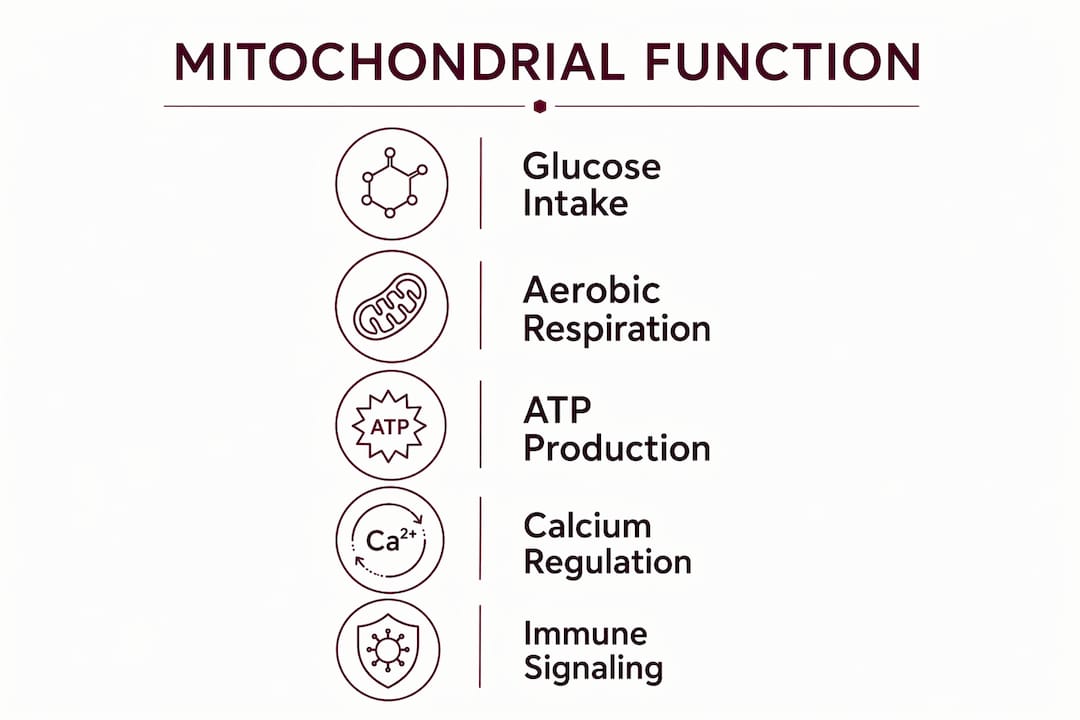
This factory mode is where things get genuinely surprising. When the cell is not under immediate energy stress, mitochondria shift toward biosynthesis, producing lipids, amino acid precursors, and heme. They also generate reactive oxygen species, or ROS, which at controlled levels function as legitimate signaling molecules rather than simple waste products.
Key functions mitochondria perform beyond ATP production:
- Calcium buffering: Mitochondria use a protein called the mitochondrial calcium uniporter to absorb excess calcium from the cytoplasm, preventing toxic spikes and regulating downstream signaling cascades that control neurotransmitter and hormone release.
- Redox signaling: Controlled ROS production modulates gene expression and stress response pathways, acting as a communication signal between mitochondria and the nucleus.
- Biosynthesis support: In factory mode, mitochondria supply the raw materials for steroid hormones, porphyrins, and nucleotide precursors.
- Apoptosis regulation: Mitochondria release cytochrome c when a cell is too damaged to repair, triggering programmed cell death and preventing the spread of dysfunction.
“Mitochondria serve as reaction chambers housing diverse metabolic pathways essential not only for energy but for signaling and memory formation.” — Yale School of Medicine
The interaction between mitochondria and the nucleus is particularly significant. Mitochondria send chemical signals that influence which genes the nucleus expresses, creating a feedback loop that adjusts the cell’s entire metabolic profile based on current conditions. This is not a passive relationship. Mitochondria actively participate in deciding how the cell behaves.
What is the importance of mitochondrial health in disease and aging?
When mitochondria malfunction, the consequences reach every system in the body. Mitochondrial dysfunction is a core pathophysiological factor in neuromuscular disorders, degenerative conditions, cancer, and accelerated aging, based on a meta-analysis of 30 peer-reviewed studies published between 2015 and 2025. That breadth reflects how central mitochondrial function is to cellular survival.
| Disease Category | Mitochondrial Connection |
|---|---|
| Neurodegenerative diseases | ATP deficits in neurons accelerate cell death in conditions like Parkinson’s and Alzheimer’s |
| Neuromuscular disorders | Impaired oxidative phosphorylation causes progressive muscle weakness |
| Cancer | Metabolic reprogramming shifts cells toward anaerobic glycolysis, bypassing mitochondrial control |
| Cardiovascular disease | Reduced ATP output in cardiac cells impairs contraction and repair |
| Accelerated aging | Accumulated mtDNA mutations reduce mitochondrial efficiency over decades |
Mitochondrial DNA mutations accumulate with age and correlate with higher risks of cancer and neurodegenerative conditions. Unlike nuclear DNA, mitochondrial DNA lacks robust repair mechanisms and sits close to the electron transport chain where ROS are generated. That proximity makes it especially vulnerable to oxidative damage over time. The result is a gradual decline in energy output that compounds across decades.
Mitochondria also regulate apoptosis, the process by which damaged cells are cleared before they cause broader harm. When this process misfires, either failing to trigger or triggering too easily, the consequences range from tumor formation to excessive tissue loss. Supporting antioxidant defenses is one of the most direct ways to slow the accumulation of mitochondrial damage.
Pro Tip: Coenzyme Q10, also called CoQ10, is a molecule that sits directly in the electron transport chain. Levels decline with age and with statin use, which is one reason mitochondrial support supplements that include CoQ10 are worth understanding before dismissing.
Emerging therapeutic research is targeting mitochondria directly. Approaches include mitochondria-targeted antioxidants, NAD+ precursors like NMN (Nicotinamide Mononucleotide), and compounds that support mitochondrial biogenesis. The logic is straightforward: if dysfunction drives disease, restoring function should slow or reverse some of that damage.
How do mitochondria influence memory and immune response?
The connection between mitochondria and brain function is one of the more counterintuitive findings in recent cellular biology. Hydrogen ion leaks in mitochondria are a tightly regulated mechanism that modulates proteins involved in neuronal communication and synaptic plasticity, directly influencing memory formation. These leaks were once dismissed as inefficiency. They are now understood as a deliberate control system.
Mitochondria’s role in immune regulation is equally significant:
- Danger signaling: When cells are damaged or under stress, mitochondrial components including mtDNA, cardiolipin, and peptides are released into the cytoplasm or bloodstream, activating innate immune sensors and triggering inflammation.
- Immune cell metabolism: T cells and macrophages depend on mitochondrial ATP and metabolic intermediates to fuel their activation and proliferation.
- Inflammatory calibration: Mitochondria modulate the intensity of immune responses by controlling ROS output, preventing both under-reaction and runaway inflammation.
The fact that mitochondria sit at the intersection of energy, memory, and immunity is not a coincidence. All three processes are metabolically expensive. Neurons require constant ATP to maintain membrane potentials and fire signals. Immune cells need rapid energy bursts during activation. Memory consolidation during sleep demands sustained mitochondrial output in hippocampal neurons. Mitochondria are the common thread connecting all of it.
Understanding the factory functions of mitochondria is crucial for recognizing their role in health maintenance and disease prevention beyond textbook ATP production. The more you understand about what these organelles actually do, the clearer it becomes why keeping them healthy is not optional.
Key takeaways
Mitochondria produce ATP through oxidative phosphorylation, regulate calcium and immune signaling, and accumulate DNA mutations with age, making their health central to energy, cognition, and disease prevention.
| Point | Details |
|---|---|
| ATP production efficiency | Aerobic respiration is 13 times more efficient than anaerobic fermentation at generating ATP from glucose. |
| Dual operating modes | Mitochondria switch between energy production and biosynthesis depending on what the cell needs at any given moment. |
| Aging and DNA damage | Mitochondrial DNA mutations accumulate over a lifetime and are linked to neurodegenerative disease and cancer risk. |
| Memory and signaling | Regulated hydrogen leaks in mitochondria directly influence synaptic plasticity and memory formation in neurons. |
| Immune regulation | Released mitochondrial components act as danger signals that activate the innate immune system during cellular stress. |
Why the “powerhouse” label undersells what mitochondria actually do
I’ll be honest: when I first started digging into the science behind CP-1’s formulation, I assumed mitochondria were a well-understood topic. Energy production, ATP, done. What I found instead was a body of research that kept expanding the picture in ways I didn’t expect.
The furnace-versus-factory framing from Yale Medicine genuinely changed how I think about cellular health. These organelles are not running one program. They are making real-time decisions about whether to generate energy or build the raw materials the cell needs for repair and signaling. That distinction matters enormously when you are thinking about what supports them and what depletes them.
What frustrates me about most supplement marketing is that it treats mitochondria as a simple target. “Boost your mitochondria.” That phrase means nothing without understanding which function you are trying to support. Are you trying to increase ATP output? Reduce oxidative damage to mitochondrial DNA? Support the calcium buffering that protects neurons? Each of those requires a different approach.
The research on NMN and NAD+ is where I spent the most time, because the connection between NAD+ availability and electron transport chain function is direct and well-documented. When NAD+ declines with age, mitochondrial efficiency drops. That is not a marketing claim. It is biochemistry. The same goes for CoQ10 and its position inside the electron transport chain itself.
My honest view is that most people are not getting enough of the right inputs to keep their mitochondria running well past their 30s. That is not a scare tactic. It is just what the research shows about how these systems degrade over time, and why targeted support makes more sense than ignoring the decline until symptoms appear.
— Hugo
Support your mitochondrial health with evidence-based tools
If this article made you realize that mitochondrial health is more complex than you thought, that is exactly the right takeaway. The next step is understanding what you can actually do about it.

Cp-1 was built around the specific inputs mitochondria need to function well: NMN to support NAD+ production, CoQ10 to feed the electron transport chain directly, and adaptogenic mushrooms like lion’s mane and reishi that support cellular resilience and immune regulation. Every ingredient has a documented mechanism, not a marketing story. If you want to go deeper, start with the mitochondrial health checklist to assess where your cellular energy support currently stands. Then explore evidence-based strategies for optimizing mitochondrial function through nutrition, lifestyle, and targeted supplementation.
FAQ
What is the primary role of mitochondria in the cell?
The primary role of mitochondria is to produce ATP through oxidative phosphorylation, supplying the energy that powers virtually every cellular process. They also regulate calcium signaling, apoptosis, and immune responses.
How do mitochondria affect aging?
Mitochondrial DNA mutations accumulate over a lifetime, reducing energy production efficiency and increasing the risk of neurodegenerative diseases and cancer. This gradual decline in mitochondrial function is one of the core biological mechanisms behind aging.
What happens when mitochondria stop working properly?
Mitochondrial dysfunction disrupts ATP production, calcium regulation, and immune signaling, contributing to conditions including Parkinson’s disease, Alzheimer’s disease, muscle disorders, and cancer. A meta-analysis of 30 studies confirmed mitochondrial dysfunction as a core factor across all these disease categories.
Can supplements support mitochondrial function?
Yes. Compounds like NMN, CoQ10, and NAD+ precursors have documented roles in supporting the electron transport chain and reducing oxidative damage to mitochondrial DNA. These are not replacements for lifestyle factors but can meaningfully support mitochondrial efficiency, particularly as NAD+ levels decline with age.
Do mitochondria affect brain function and memory?
Mitochondria directly influence memory formation through regulated hydrogen ion leaks that modify synaptic proteins involved in neuronal communication. Neurons are among the most energy-dependent cells in the body, making mitochondrial health central to cognitive performance.