
Picking the right mitochondrial support supplements feels straightforward until you realize most products on the market are built around biomarker claims rather than real functional outcomes. Plasma CoQ10 goes up. Blood NAD+ rises. But does your energy actually improve? Does your brain work better? That gap between what a supplement does to a lab value and what it does to your body is exactly what most buyers never think to ask about. This article breaks down the seven most studied options, what the 2026 clinical data actually shows, and how to decide which ones are genuinely worth your time.
Table of Contents
- Key takeaways
- 1. How to evaluate mitochondrial support supplements the right way
- 2. CoQ10: the most popular option, with a complicated track record
- 3. NMN and NR: the NAD+ precursors everyone is talking about
- 4. PQQ: the underrated compound with acute cognitive benefits
- 5. L-carnitine: the fat metabolism facilitator
- 6. Alpha-lipoic acid: the antioxidant with metabolic reach
- 7. Urolithin A: the emerging mitochondrial quality controller
- 8. Supplement comparison: what to expect from each option
- My honest take on this supplement category
- Why CP-1 takes a different approach to mitochondrial health
- FAQ
Key takeaways
| Point | Details |
|---|---|
| Biomarker changes aren’t functional proof | A supplement raising plasma CoQ10 or blood NAD+ doesn’t automatically mean better energy or mitochondrial output. |
| Gut microbiome shapes NAD+ response | NR and NMN both rely on gut microbial conversion, so individual responses vary significantly based on GI health. |
| PQQ and NMN work better together | Combined supplementation activates complementary pathways for both cognitive and mitochondrial benefits. |
| CoQ10 has real safety considerations | It may lower blood pressure and interact with certain medications, so dosing context matters more than the number on the label. |
| Outcome evidence beats ingredient lists | Prioritize supplements with trial data showing VO2max, cognitive function, or muscle endurance improvements, not just blood level changes. |
1. How to evaluate mitochondrial support supplements the right way
Before you spend a dollar on health supplements for mitochondria, you need a sharper filter than “does it raise NAD+?” The supplement industry has gotten very good at showing you an impressive-looking biomarker shift and calling it proof. It isn’t.
Here’s what actually matters when you’re evaluating nutrients for mitochondrial function:
- Functional outcome data. Look for trials measuring VO2max, cognitive test scores, mitochondrial respiratory capacity, or muscle endurance. These are harder to fake than a blood panel.
- Bioavailability and metabolism. Some compounds never reach the mitochondria in meaningful concentrations. Understanding how a compound is absorbed and transformed matters as much as the compound itself.
- Safety and drug interactions. Several popular mitochondrial health products affect blood pressure, interact with anticoagulants, or behave unpredictably alongside antibiotics.
- Biomarker versus functional evidence. Raising a surrogate marker like plasma CoQ10 tells you absorption happened. It doesn’t tell you anything changed inside the cell.
- Population specificity. A trial in sedentary older adults doesn’t predict results for a 35-year-old high performer. Match the evidence to your situation.
Pro Tip: Before buying any new supplement, search for the actual clinical trial on PubMed rather than reading the brand’s summary of it. The trial population, duration, and outcome measures are almost always more nuanced than the marketing suggests.
2. CoQ10: the most popular option, with a complicated track record
CoQ10 is the supplement most people point to when you ask about energy boosting supplements and mitochondrial health. It lives inside the mitochondrial inner membrane and plays a direct role in the electron transport chain, the machinery your cells use to generate ATP. It also functions as an antioxidant. Those two roles have made it one of the most sold health supplements for mitochondria globally.

The problem is what 2026 clinical data actually shows. A double-blind RCT published in GeroScience found that 400 mg/day CoQ10 for 12 weeks raised plasma CoQ10 levels significantly in robust older adults, but produced zero measurable improvement in mitochondrial respiratory capacity or VO2max compared to placebo. The supplement changed a biomarker without changing function.
That doesn’t mean CoQ10 is useless. People with documented CoQ10 deficiency, statin users (statins reduce endogenous CoQ10 production), and individuals with certain cardiovascular conditions may see real benefit. The evidence just doesn’t support the broad “energy booster for everyone” claim.
A few practical notes on CoQ10 safety from Cleveland Clinic guidance:
- Typical doses run around 100 mg/day, though the 2026 RCT used 400 mg with no functional gain
- CoQ10 may lower blood pressure, so caution is warranted if you’re already on antihypertensives
- Side effects are generally mild (nausea, GI upset) but drug interactions are real
- No firmly established ideal dose exists for healthy adults
3. NMN and NR: the NAD+ precursors everyone is talking about
NAD+ (Nicotinamide Adenine Dinucleotide) is a molecule your mitochondria depend on to run their energy-producing reactions. It declines with age. NMN (Nicotinamide Mononucleotide) and NR (Nicotinamide Riboside) are the two most popular precursors people take to raise it. Understanding NAD+ and cellular energy explains why this matters so much for mitochondrial function.
Here’s what a landmark 2026 Nature Metabolism study revealed about how they actually work. In 65 healthy participants, both NR and NMN raised NAD+ levels comparably, but not through the direct pathway most supplement companies describe. Both compounds were first converted to nicotinic acid by gut microbiota before being used to produce NAD+. This is a gut-dependent process.
The gut microbiome finding has major implications:
- If your GI health is compromised or you’ve recently used antibiotics, your response to NR or NMN may be significantly blunted
- Individual variability in NAD+ response isn’t random. It reflects your microbiome composition
- Both compounds appear equally effective at raising circulating NAD+, so paying a premium for one over the other based on “superior absorption” claims isn’t supported by this evidence
- Side effects for both were minimal in this trial, which is consistent with earlier safety data
The real question is whether raising NAD+ levels translates into functional mitochondrial improvements. For NMN’s role in energy and cognition, the emerging data is genuinely promising, particularly when combined with other compounds.
Pro Tip: If you’re taking NMN or NR, gut health isn’t optional. Supporting your microbiome with fiber and fermented foods may directly influence how much NAD+ you actually produce from these supplements.
4. PQQ: the underrated compound with acute cognitive benefits
Pyrroloquinoline quinone, PQQ for short, is one of the most mechanistically interesting mitochondrial support ingredients available. It doesn’t just raise a substrate level. It activates signaling pathways that drive mitochondrial biogenesis, the actual creation of new mitochondria.
Specifically, PQQ engages AMPK/PGC-1α/SIRT1 signaling and Nrf2/ARE pathways, both of which are involved in protecting neurons from oxidative damage and promoting new mitochondrial growth. This is a fundamentally different mechanism than CoQ10 or NAD+ precursors, which work within existing mitochondria rather than generating new ones.
A 2026 randomized trial in Scientific Reports added another layer. 20 mg PQQ or 300 mg NMN taken pre-exercise improved interoception and self-regulation scores acutely. These are real cognitive measures, not just biomarker shifts. The synergistic combination of PQQ and NMN showed the most pronounced effects, suggesting that stacking these two compounds may be smarter than using either one alone.
Key points on PQQ to understand:
- Its neuroprotective effects appear to work through antioxidant and biogenesis pathways, not NAD+ substrate
- Acute benefits on cognition and interoception are supported by trial data
- Long-term data is still limited, so realistic expectations matter
- Combined PQQ + NMN supplementation targets complementary pathways, which is a legitimate rationale for pairing them
5. L-carnitine: the fat metabolism facilitator
L-carnitine doesn’t get the same attention as CoQ10 or NMN, but its role in mitochondrial function is direct and specific. It shuttles long-chain fatty acids across the mitochondrial membrane so they can be burned for fuel. Without adequate carnitine, fat oxidation inside the mitochondria stalls.
For most healthy people eating a varied diet, carnitine deficiency is uncommon. But certain populations, including older adults, vegetarians, and people with specific metabolic conditions, may have lower levels and could benefit from supplementation. Typical doses run 500 to 2000 mg/day. Side effects at high doses can include a fishy body odor and occasional GI discomfort.
6. Alpha-lipoic acid: the antioxidant with metabolic reach
Alpha-lipoic acid (ALA) is both water- and fat-soluble, which is unusual for an antioxidant and gives it access to a broader range of tissues including the mitochondrial membrane itself. It also recycles other antioxidants, including vitamins C and E and glutathione, which extends its protective effect.
ALA plays a role in mitochondrial enzyme complexes involved in energy production. Some research suggests it can improve insulin sensitivity and reduce oxidative stress markers, particularly in metabolic disease contexts. Standard supplemental doses range from 200 to 600 mg/day.
7. Urolithin A: the emerging mitochondrial quality controller
Urolithin A is produced when gut bacteria metabolize ellagitannins from foods like pomegranates and walnuts. Not everyone’s microbiome can make it efficiently, which is why supplemental forms have attracted attention.
Its mechanism centers on mitophagy, the cellular process of clearing out damaged mitochondria and replacing them with healthy ones. Urolithin A shows promise for improving mitochondrial quality and muscle endurance, particularly in aging populations. This makes it one of the more genuinely interesting emerging options in the mitochondrial health products space. It’s still relatively early in terms of human trial volume, but the mechanistic rationale is sound.
8. Supplement comparison: what to expect from each option
The table below gives you a fast, honest look at how these supplements stack up across the criteria that actually matter.
| Supplement | Primary mechanism | Functional evidence | Safety flags | Best use case |
|---|---|---|---|---|
| CoQ10 | Electron transport chain, antioxidant | Biomarker rise confirmed; no VO2max or functional gain in 2026 RCT | Blood pressure effects; drug interactions | Statin users, documented deficiency |
| NMN | NAD+ precursor via gut conversion | Raises NAD+ reliably; functional outcomes still emerging | Minimal; antibiotic interaction risk | Cognitive support, cellular energy |
| NR | NAD+ precursor via gut conversion | Equivalent to NMN for NAD+ rise | Minimal; same gut dependency | Aging support, energy metabolism |
| PQQ | Mitochondrial biogenesis, antioxidant | Improved interoception and cognition pre-exercise | Generally well tolerated | Cognitive function, combined with NMN |
| L-carnitine | Fat oxidation transport | Useful in deficiency states; limited effect in healthy adults | GI upset at high doses | Older adults, vegetarians |
| ALA | Antioxidant, mitochondrial enzyme support | Oxidative stress reduction in metabolic disease | GI sensitivity possible | Metabolic health, antioxidant support |
| Urolithin A | Mitophagy activation | Promising for muscle and mitochondrial quality | Limited long-term data | Aging, muscle endurance |
For cognitive function, PQQ combined with NMN is the strongest evidence-backed pairing right now. For general cellular energy support, NMN or NR with attention to gut health makes the most sense. CoQ10 remains worth considering if you’re on statins or have a known deficiency, but buying it as a general energy supplement without that context isn’t well supported by the current data. Always consult a healthcare provider before combining multiple compounds, particularly if you’re on medications.
Learn more about evidence-based cellular energy strategies before committing to a stack.
My honest take on this supplement category
I’ve spent years paying close attention to what the clinical research on mitochondrial supplements actually says versus what brands want you to believe it says. And the thing that frustrates me most is this: the gap between a biomarker shift and a real functional improvement is huge, and almost nobody in the industry talks about it honestly.
The 2026 CoQ10 trial was clarifying for me. Here’s a well-researched compound, dosed generously, studied rigorously, and it moved the needle on plasma levels without touching mitochondrial function or physical performance. That’s a real finding. It doesn’t indict CoQ10 completely, but it forces an honest conversation about who actually benefits.
The NAD+ precursor data is more encouraging, but the gut microbiome dependency is something almost no brand will tell you about. Your response to NMN or NR isn’t just about the dose. It’s about the state of your gut. That’s both humbling and useful information.
What I’d tell anyone building a supplement regimen: start with what you’re actually trying to fix. If it’s cognitive function under stress, the PQQ plus NMN combination has the best acute evidence right now. If it’s general energy metabolism and you want to invest in NAD+ support long term, NMN is solid, but pair it with real gut health investment. And before you buy anything, check the mitochondrial health checklist to make sure you’ve covered the basics that no supplement can replace.
Supplements can be real tools. But they work best when you’re honest about what the evidence says they do and don’t do.
— Hugo
Why CP-1 takes a different approach to mitochondrial health
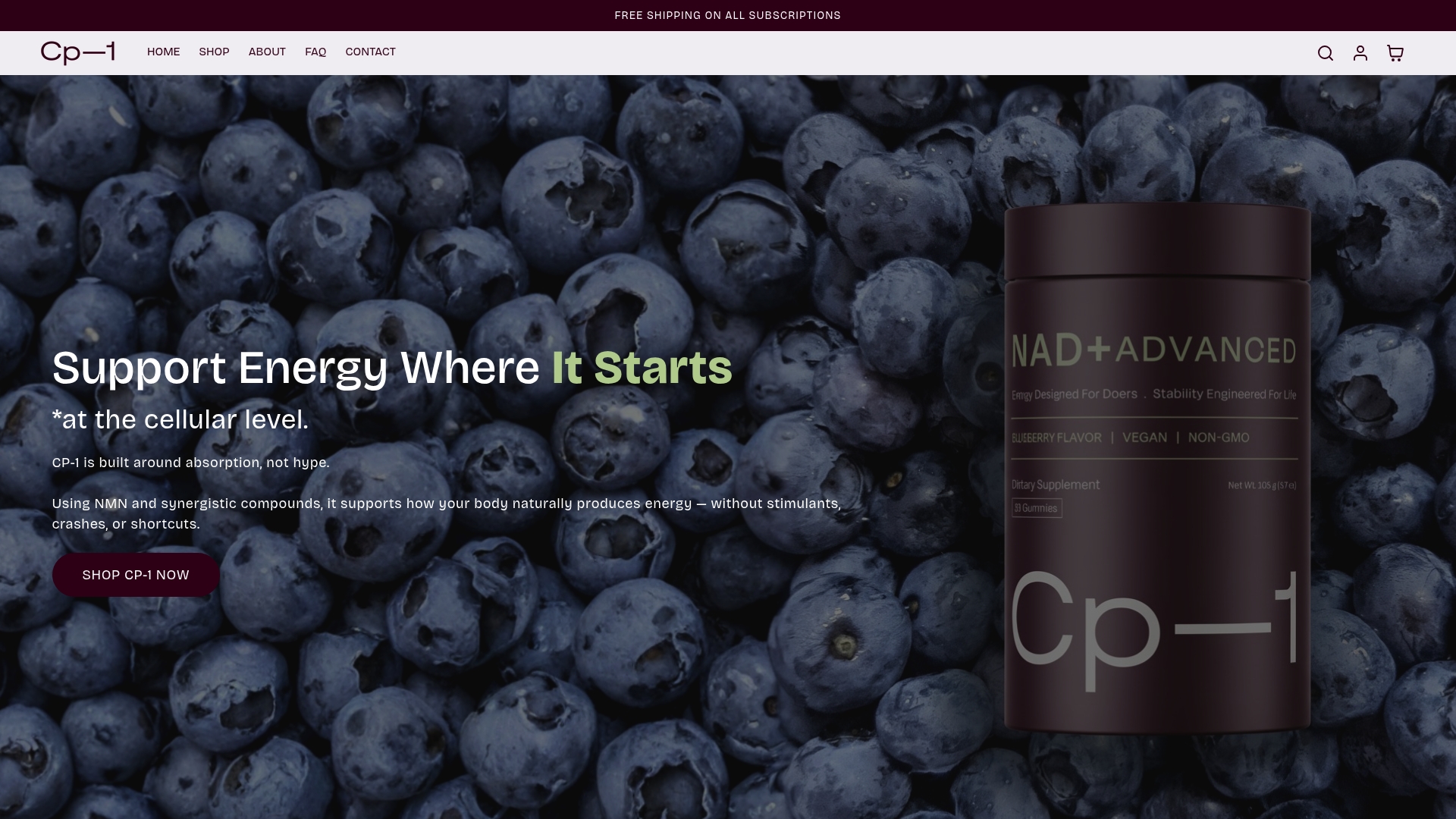
At CP-1, we built our formulas around the research, not the other way around. The CP-1 supplement was designed with NMN, CoQ10, lion’s mane, reishi, and turkey tail mushroom extracts working together because the evidence supports combining complementary mechanisms rather than betting everything on a single compound. Every batch is third-party tested, vegan and non-GMO certified, and manufactured in the US to standards that most brands in this space don’t meet. If you want to go deeper on how these ingredients work together, the NAD+ vs NMN breakdown on the CP-1 blog is a good next read. Ready to try something built with real intent? Explore the CP-1 NAD+ Advanced Supplement and see what formulating for the person actually taking it looks like.
FAQ
What does “mitochondrial support” actually mean?
Mitochondrial support refers to supplementing with compounds that help your mitochondria produce energy more efficiently, reduce oxidative damage, or promote the creation of new healthy mitochondria. The key distinction is whether a supplement produces real functional improvements or only changes a blood biomarker.
Are NMN and NR the same thing?
Not exactly, but a 2026 Nature Metabolism study found both raise circulating NAD+ comparably because both rely on gut microbial conversion to nicotinic acid before raising NAD+ levels. Individual response differs based on microbiome health.
Does CoQ10 actually improve energy levels?
Current evidence is mixed. A 2026 RCT found CoQ10 raised plasma levels in older adults without improving mitochondrial respiratory capacity or VO2max. It may benefit statin users or people with documented deficiency, but the broad “energy booster” claim isn’t strongly supported by functional outcome data.
Can you stack mitochondrial supplements safely?
Many combinations are well tolerated, but stacking compounds that affect blood pressure or interact with medications requires medical guidance. The PQQ and NMN combination has both mechanistic rationale and trial-level support for cognitive and mitochondrial benefits.
How does gut health affect NAD+ supplements?
Both NR and NMN depend on gut bacteria to convert them into a usable form for NAD+ production. Antibiotic use, GI disorders, or a depleted microbiome can significantly reduce how much NAD+ you actually generate from these supplements.