
Most gummy vitamins are not vegan, because gelatin is the default gelling agent in the supplement industry and it’s rendered from animal bones, skin, and connective tissue. Pectin-based and Certified Vegan gummies do exist and work just as well. The rest of this guide gives you the exact label checks to tell the two apart before you buy.
TL;DR:
- Verify the label for the absence of gelatin, carmine, beeswax, shellac, or fish gelatin under “Other Ingredients,” as these indicate non-vegan products.
- Ensure the vitamin D3 source is explicitly listed as lichen-derived, not lanolin, to confirm vegan suitability.
- Check for third-party testing seals and ask for the Certificate of Analysis when in doubt, as this confirms both potency and sourcing transparency.
- Recognize that pectin-based gummies rely on the same label checks as others, but vegan options generally have lower sugar content and verified nutrient forms.
- Prioritize brands with clear certification marks and transparency, avoiding reliance on vague claims like “natural” or “plant-based” alone.
Table of Contents
- Are Gummy Vitamins Vegan? A Quick Checklist Before You Buy
- Why Many Gummy Vitamins Aren’t Vegan: The Ingredient Deep-Dive
- How to Verify a Gummy Is Actually Vegan
- Are Gummy Vitamins Effective? What the Trade-Offs Actually Are
- Vegan Alternatives That Actually Work
- What CP-1 Looks for in a Vegan Chewable
- Why the “Just Check for Gelatin” Advice Falls Short
- A Vegan Gummy Built Around Verification, Not Guesswork
- Where to Verify These Claims Yourself
- Sources
Are Gummy Vitamins Vegan? A Quick Checklist Before You Buy
You don’t need a chemistry degree to spot a non-vegan gummy. You need about ten seconds and the “Other Ingredients” line on the label.
- Gelatin, period. If it’s on the label anywhere, the product is not vegan. No exceptions, no “small amount” loophole.
- Scan for carmine, cochineal, beeswax, shellac, or fish gelatin hiding under vague terms like “natural flavors” or “natural colors.”
- Look for an explicit vegan mark such as Certified Vegan (Vegan Action) or the Vegan Society trademark, or the words “pectin-based” printed on the front.
- Check the vitamin D source. Lichen means vegan; lanolin does not.
- Note the sugar content and any third-party testing claim (NSF, USP, or Informed-Choice) before checking out.
Why Many Gummy Vitamins Aren’t Vegan: The Ingredient Deep-Dive
Gelatin is the ingredient doing most of the damage here. It comes from boiling collagen out of animal skin, bones, and connective tissue, and it’s what gives a gummy its bounce and chew. On a label, it might just say “gelatin,” or it could show up as “hydrolyzed collagen.” Either way, it’s the single most common non-vegan ingredient in this entire category, according to GMMY’s ingredient breakdown.
Color is the next trap. Many gummies get their red or pink tint from carmine, also labeled cochineal extract, which is made from crushed insects. “Natural colors” on a front label can mean carmine, beet juice, or something else entirely. You can’t tell without reading the “Other Ingredients” panel.
Coatings matter too. Some manufacturers add a glossy finish using beeswax or shellac, the latter derived from the lac beetle, instead of plant-based waxes like carnauba.
Then there’s vitamin D3 choices important for bone health. Most D3 in supplements comes from lanolin, which is sheep’s wool grease. Lichen-sourced D3 is the vegan equivalent, and it performs comparably; some manufacturers still default to D2 instead, which research on nutrient bioavailability suggests may not convert as efficiently in the body as D3, according to a review on vitamin bioavailability.
Pro Tip: Never trust a front-label claim like “natural” or “plant-based” on its own. Those words aren’t regulated the way “Certified Vegan” is, so flip the bottle over every single time.
How to Verify a Gummy Is Actually Vegan
Reading a supplement label properly takes three steps, and skipping any one of them is how well-meaning shoppers end up with gelatin gummies anyway.
- Start with the Supplement Facts panel. Confirm the nutrient forms listed, especially D3 or B12, since methylcobalamin is the preferred vegan B12 form over cyanocobalamin.
- Read the “Other Ingredients” list line by line. This is where gelling agents, waxes, and colorants live, and it’s the section most people skip entirely.
- Confirm the D3 source in writing if it isn’t specified. “Vitamin D3” alone tells you nothing about whether it came from lanolin or lichen.
Trust marks worth looking for include the Certified Vegan logo from Vegan Action, the Vegan Society’s trademark, and separate third-party testing seals like NSF, USP, or Informed-Choice, which verify potency rather than vegan status but signal a manufacturer willing to be checked. If a label is ambiguous, email the company and ask two direct questions: “What is your vitamin D3 sourced from?” and “Do you have a current Certificate of Analysis for this batch?” A company that answers fast and specifically is one worth buying from again.
Pro Tip: Ask for the Certificate of Analysis (COA) before you buy in bulk. A brand that hesitates to share one is telling you something.
Are Gummy Vitamins Effective? What the Trade-Offs Actually Are
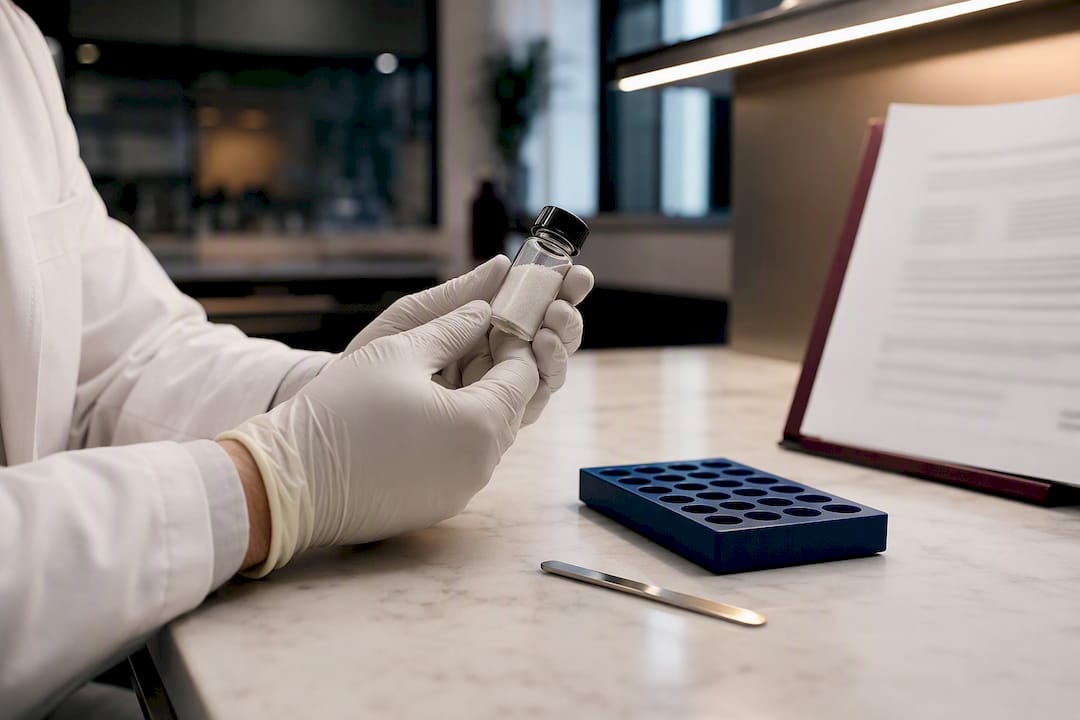
Gummy vitamins are regulated by the FDA as food products rather than drugs, which means the amount printed on the label doesn’t always match what’s actually inside the gummy. Healthline’s overview of gummy vitamins recommends sticking to brands that carry third-party testing seals for exactly this reason.
Registered dietitians generally view gummies as an adherence tool, not a nutritional upgrade. Verywell Fit’s dietitian-reviewed guidance notes that gummies commonly pack added sugars or sugar alcohols, and they typically carry a narrower mineral range than tablets because minerals like calcium or magnesium are too bulky to fit gummy form in useful doses.
Gummies can help people who genuinely can’t or won’t swallow pills. That’s a real win for kids and for adults with swallowing difficulty. But it comes with trade-offs vegans need to weigh alongside everyone else.
- Watch added sugar if you’re insulin-sensitive or managing blood glucose.
- Expect lower doses of minerals like iron, calcium, and magnesium compared to tablets.
- For vegans specifically, pectin-based gummies with verified D3 and B12 sourcing solve the adherence problem without the ethical trade-off.
Vegan Alternatives That Actually Work
Pectin, agar-agar, and starch are the three plant-based gelling agents doing the job gelatin used to do, and they produce a gummy that chews and dissolves almost identically. When you’re checking a pectin-based gummy, confirm the same things you’d check on any label: D3 source, B12 form, and sugar content, since “vegan” doesn’t automatically mean “low sugar.”
If gummies aren’t a requirement, several non-gummy formats solve the same nutrient gaps cleanly:
- Lichen-sourced D3 instead of lanolin-derived D3, in tablet or capsule form.
- Algae-based DHA and EPA as a direct swap for fish oil.
- Methylcobalamin B12 in sublingual or tablet form for faster absorption.
- Cellulose capsules instead of gelatin capsules, which solve the same animal-derived problem in pill form.
For kids, look specifically for low-sugar, pectin-based lines and treat any gummy vitamin as a supplement to a normal diet, not a replacement for one.
What CP-1 Looks for in a Vegan Chewable
We built CP-1 around the same scrutiny we’re asking you to apply to every bottle on the shelf. Our formula is vegan and non-GMO certified, manufactured in the US under GMP standards, and third-party tested batch by batch, not just at launch. That’s not marketing language. It’s the checklist we run internally before anything ships.
If you’re evaluating any vegan gummy, including ours, apply this short list:
- Certified vegan status, not just a “plant-based” claim on the front.
- Third-party batch testing with a Certificate of Analysis available on request.
- A clearly stated D3 source, ideally lichen, printed without ambiguity.
Transparency isn’t a nice feature. It’s the baseline we think every supplement label owes the person swallowing it.
Why the “Just Check for Gelatin” Advice Falls Short
Most guidance on this topic stops at “check for gelatin,” and that’s not wrong, it’s just incomplete. Gelatin is the obvious offender. Carmine, beeswax, shellac, and lanolin-derived D3 are the ones that slip past people who think they’ve already done their homework.
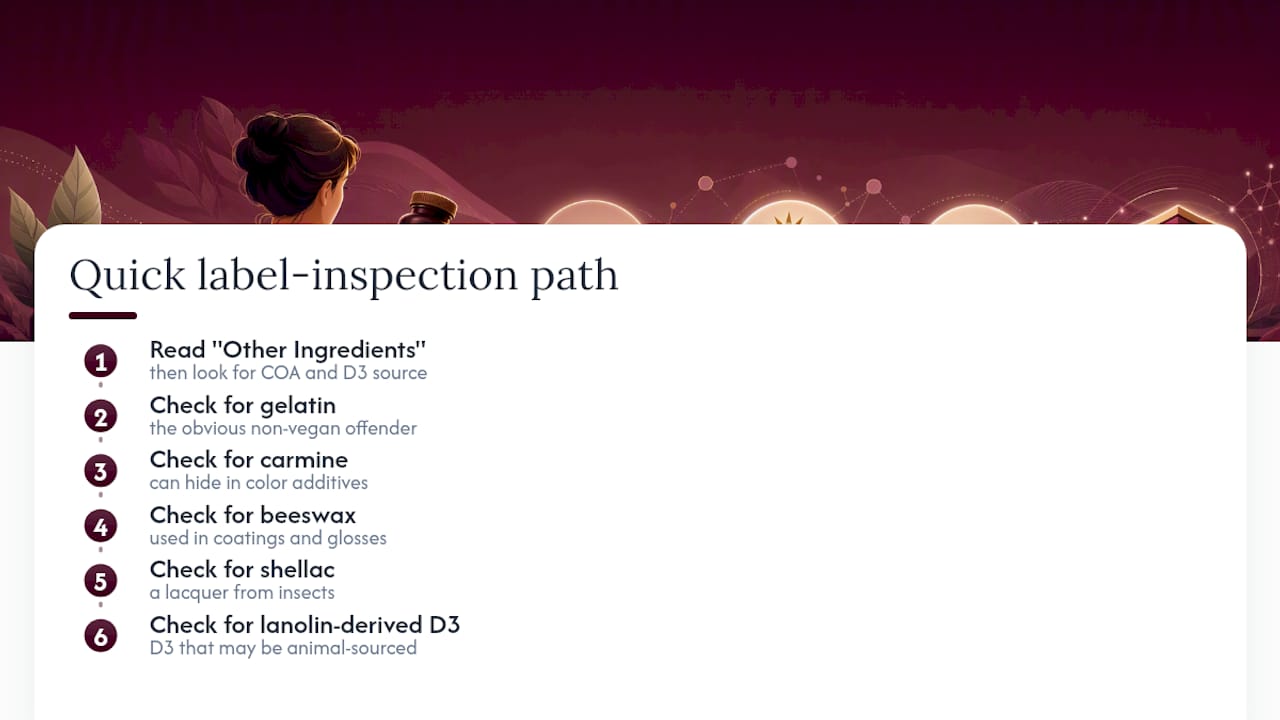
The bigger issue is trust, not vigilance. You shouldn’t have to run a forensic label investigation every time you restock vitamins. That’s exactly why third-party testing and explicit certifications matter more than front-label buzzwords like “natural” or “clean.” A company that publishes its Certificate of Analysis and states its D3 source outright is telling you something about how it operates, not just what’s in this one bottle.
If you take one thing from this, let it be this: prioritize brands that make verification easy, not brands that make the best-sounding claims. Read the “Other Ingredients” line before you read the marketing copy. The ingredient panel doesn’t lie. The label design sometimes does.
— Hugo
A Vegan Gummy Built Around Verification, Not Guesswork
If you’ve made it this far, you already know the checklist: certified vegan, third-party tested, transparent about sourcing. CP-1’s NAD+ Advanced Supplement is formulated to meet that exact bar. It’s a vegan, non-GMO chewable made in the US under GMP-certified manufacturing, combining NMN, Lion’s Mane, Reishi, Turkey Tail, and CoQ10 for cellular energy, cognitive clarity, and immune support.
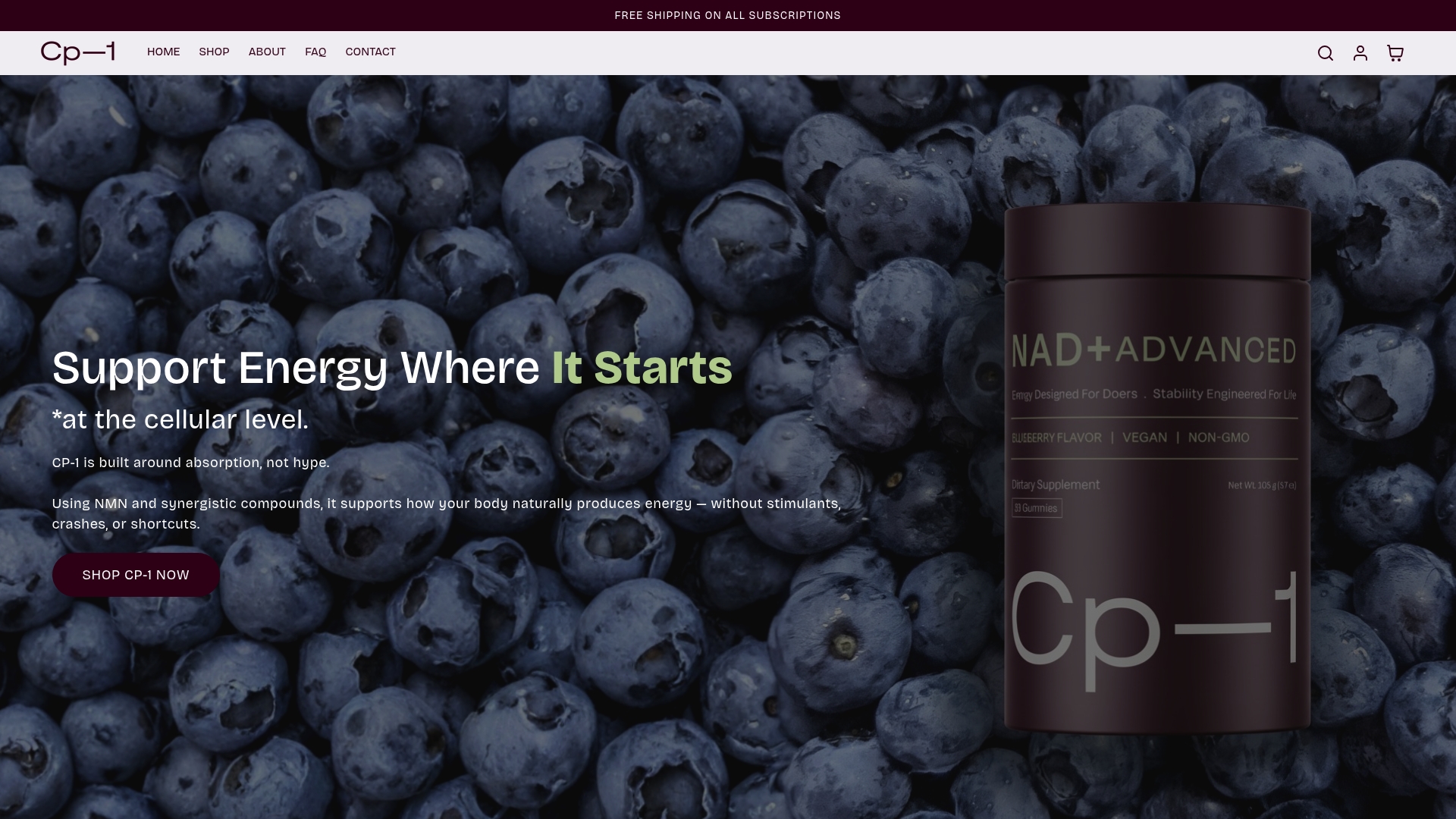
It’s built for people who want the convenience of a gummy without the ingredient guessing game, whether you’re vegan by principle or just tired of flipping bottles over in the vitamin aisle. Before you buy anything, including this, run the label through our supplement label reading checklist and confirm the third-party testing standards behind it. If it holds up, see the full CP-1 formula and check current availability.
Where to Verify These Claims Yourself
For deeper reading beyond this checklist, Healthline’s gummy vitamin guide covers FDA food regulation and label accuracy. Verywell Fit’s dietitian roundup breaks down sugar and dosing trade-offs. VegNews’s gelatin-free gummy guide lists specific vegan options and hidden additives to watch for.
This article is general information, not a substitute for advice from a qualified doctor. Consult a qualified healthcare professional about your own circumstances before acting on anything here.