

Best Bodybuilding Workouts: Build Muscle That Lasts
The best bodybuilding workouts are defined by three non-negotiable principles: compound multi-joint lifts, progressive overload, and structured training frequency. These are not suggestions. They are the foundation of every program that actually builds muscle and strength over time. Whether you are brand new to the gym or running a six-day split, these principles determine your results. Resistance training programs that ignore any one of them produce stalled progress, not gains. This guide breaks down the most effective routines for every experience level, the exercises that matter most, and how to program them so you keep moving forward.
What are the best bodybuilding workouts for beginners?
A beginner’s program should do one thing well: build a base. That means a 3-day full-body split built around foundational multi-joint lifts performed consistently every week. Training major muscle groups three times per week accelerates movement skill acquisition and produces faster strength outcomes than a split routine at this stage. That frequency matters because beginners are still wiring the neurological pathways that make compound lifts feel natural.
The six exercises every beginner program needs are the squat, deadlift, bench press, overhead press, barbell row, and pull-up or lat pulldown. These six movements cover every major muscle group and teach the body to produce force through full ranges of motion. Beginners should target 4–6 weekly sets per movement, starting in the 8–12 rep range and progressing toward 6–10 reps as strength improves. Stop each set with 1–3 reps still in the tank, not at absolute failure.
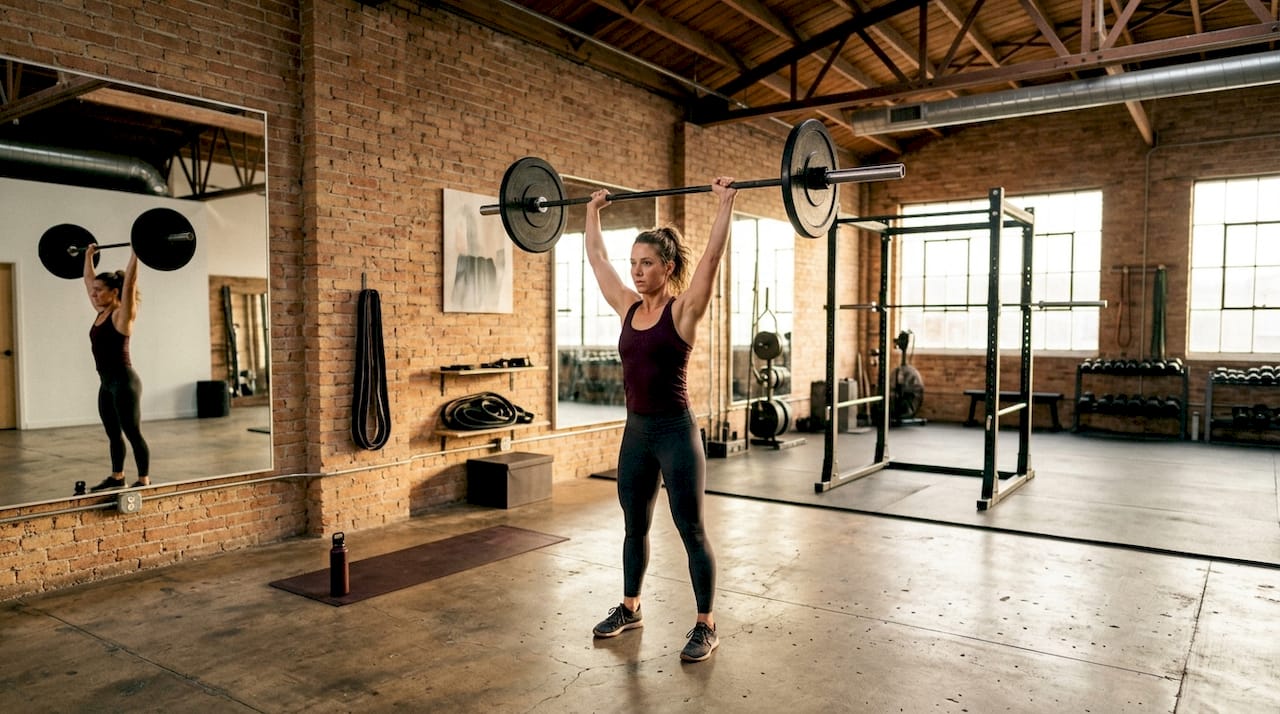
Form is the real work at this stage. Starting with lighter weights to perfect movement patterns is not optional. It supports the neurological adaptations that make strength training safe and productive long term. Ego lifting, meaning loading the bar beyond what you can control, sacrifices form and slows progress. The lifters who advance fastest in their first year are the ones who treat technique as the primary goal, not the weight on the bar.
Pro Tip: Rest 2–3 minutes between compound sets. Shorter rest periods feel harder but reduce the quality of each set, which limits the training stimulus your muscles actually receive.
A sample beginner week looks like this:
- Monday: Squat, bench press, barbell row (3 sets each, 8–12 reps)
- Wednesday: Deadlift, overhead press, lat pulldown (3 sets each, 8–12 reps)
- Friday: Squat variation, bench press variation, barbell row variation (3 sets each, 8–10 reps)
How do intermediate and advanced splits differ from beginner programs?
The shift from beginner to intermediate training is not about adding more exercises. It is about adding more focused volume per muscle group. Intermediate lifters benefit from 5- or 6-day splits after completing a foundational 12-week program, because their recovery capacity and movement competence can now handle greater demands. The two most common structures are Push/Pull/Legs (PPL) and the Arnold Split.
| Split | Training days | Focus | Best for |
|---|---|---|---|
| Push/Pull/Legs | 6 days | Chest/shoulders/triceps, back/biceps, legs | Intermediate lifters wanting volume |
| Arnold Split | 6 days | Chest/back, shoulders/arms, legs | Experienced lifters with strong recovery |
| Upper/Lower | 4 days | Upper body, lower body alternating | Intermediate lifters transitioning from 3-day |
| Full-body split | 3 days | All major groups each session | Beginners and returning lifters |
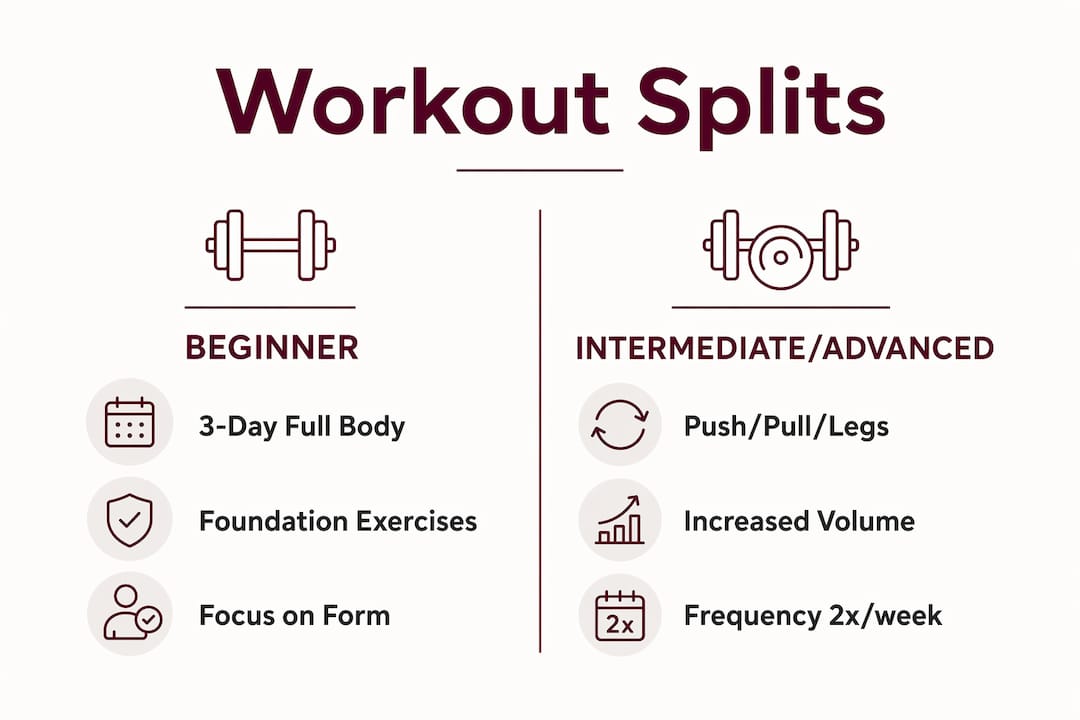
Push/Pull/Legs trains each muscle group twice per week across six sessions. That frequency keeps the muscle protein synthesis signal elevated without requiring marathon sessions. The Arnold Split, named after Arnold Schwarzenegger’s training approach, pairs antagonist muscle groups like chest and back in the same session, which allows for higher volume and a natural pump effect. Advanced splits like the Arnold Split demand greater recovery and fatigue management. Consistency with a simpler program usually yields better results for most lifters who are not yet advanced.
Volume management separates good intermediate programming from garbage programming. Each muscle group needs roughly 10–20 working sets per week to drive hypertrophy, but that number means nothing if recovery is compromised. Sleep, nutrition, and stress all affect how much volume your body can absorb. More sessions do not automatically mean more muscle. They mean more demand on your recovery system.
What are the top muscle gain exercises every bodybuilder needs?
Free weights build more functional muscle than machines. Training with barbells, dumbbells, and kettlebells leads to better overall muscle development because they require stabilizer muscles and coordination that machines simply bypass. A machine chest press is easier to perform, but the barbell bench press recruits the rotator cuff, serratus anterior, and core in ways a fixed-path machine cannot replicate.
The non-negotiable compound lifts for muscle mass are:
- Barbell squat: The single best lower-body mass builder. Trains quads, hamstrings, glutes, and spinal erectors simultaneously.
- Conventional or Romanian deadlift: Builds the entire posterior chain. No other exercise loads the hamstrings and glutes under this much tension.
- Barbell bench press: The standard for upper-body pushing strength and chest development.
- Overhead press: Builds shoulder width and tricep mass. Also reveals shoulder mobility issues early.
- Barbell or dumbbell row: The primary horizontal pull. Builds the thickness of the upper back and lats.
- Pull-up or weighted pull-up: The best vertical pull for lat width and bicep development.
Isolation exercises like dumbbell curls, tricep pushdowns, and lateral raises belong in every program, but they belong after the compound work. They fill in the gaps that multi-joint lifts leave behind. The most common mistake lifters make is spending too much time on isolation work and not enough time getting stronger on the big six. Isolation exercises do not build mass. They refine it.
Pro Tip: For the best chest workout results, pair the barbell bench press with incline dumbbell press and cable flyes in the same session. The flat press builds mass, the incline targets the upper chest, and the cable flye adds stretch-position tension.
How do you apply progressive overload for sustainable muscle growth?
Progressive overload is the mechanism behind every muscle gain you will ever make. Without it, your body has no reason to grow. The most reliable method for applying it is double progression: add reps before adding weight. This keeps the training stimulus increasing without jumping load too fast and breaking form.
Here is how double progression works in practice:
- Set a rep range. Choose a target range, such as 8–12 reps for upper body or 6–10 reps for lower body compound lifts.
- Work the top of the range. When you can complete all sets at the top of the range with perfect form, you are ready to add weight.
- Add weight in small increments. Recommended increments are 2.5kg for upper body lifts and 5kg for lower body lifts per progression step.
- Drop back to the bottom of the rep range. After adding weight, your rep count will fall. Work back up to the top again before adding more.
- Track every session. Write down the weight, sets, and reps for each exercise. You cannot manage what you do not measure.
More volume is not always better. Too many sets or exercises compete with recovery and increase the risk of burnout. The goal is to add the minimum effective dose of training stress that forces adaptation. When progress stalls, the answer is rarely more volume. It is usually better sleep, better nutrition, or a deload week to let the body catch up.
A deload is a planned week of reduced volume or intensity, typically every 6–8 weeks. It is not a sign of weakness. It is how experienced lifters stay healthy and keep progressing for years instead of burning out in months. Pair your training with a full body workout plan that accounts for recovery, not just effort.
Key Takeaways
The most effective bodybuilding programs combine compound lifts, double progression, and structured recovery to produce consistent, long-term muscle and strength gains.
| Point | Details |
|---|---|
| Start with a 3-day full-body split | Beginners build faster on full-body frequency than on muscle-group splits. |
| Master compound lifts first | Squat, deadlift, bench press, and row drive the majority of muscle growth. |
| Use double progression | Add reps before adding weight to keep gains coming without breaking form. |
| Free weights outperform machines | Barbells and dumbbells recruit stabilizers that fixed-path machines cannot activate. |
| Recovery drives results | Volume only works when sleep, nutrition, and stress allow the body to adapt. |
Why the boring stuff is what actually works
I have watched a lot of people spin their wheels in the gym. They chase new programs every six weeks, add more exercises when progress stalls, and treat intensity as a substitute for consistency. I get the frustration. When you are not seeing results, doing something different feels like the answer. It almost never is.
Consistency and quality of execution matter more than any program you could find online. Focusing on proper positions and progressions week after week is what produces sustainable gains. The lifters I respect most are not the ones doing the most exotic training. They are the ones who have been squatting and pressing and pulling with good form for years, adding weight slowly, and showing up when they do not feel like it.
The supplement industry has the same problem. Most products are designed to make you feel like something is happening, not to actually support your training. That is why I care so much about what goes into Cp-1. When you are putting in real work in the gym, you deserve real support for your cellular energy and recovery, not a placebo dressed up in a flashy label. If you want to build tolerance to potent herbal supplements safely, that knowledge matters as much as your training program.
The bottom line is this: pick a program that matches your experience level, execute it with discipline, and add weight when the rep range allows. Do that for two years and you will be ahead of 90% of people who ever set foot in a gym.
— Hugo
Cp-1 and the science behind your training results
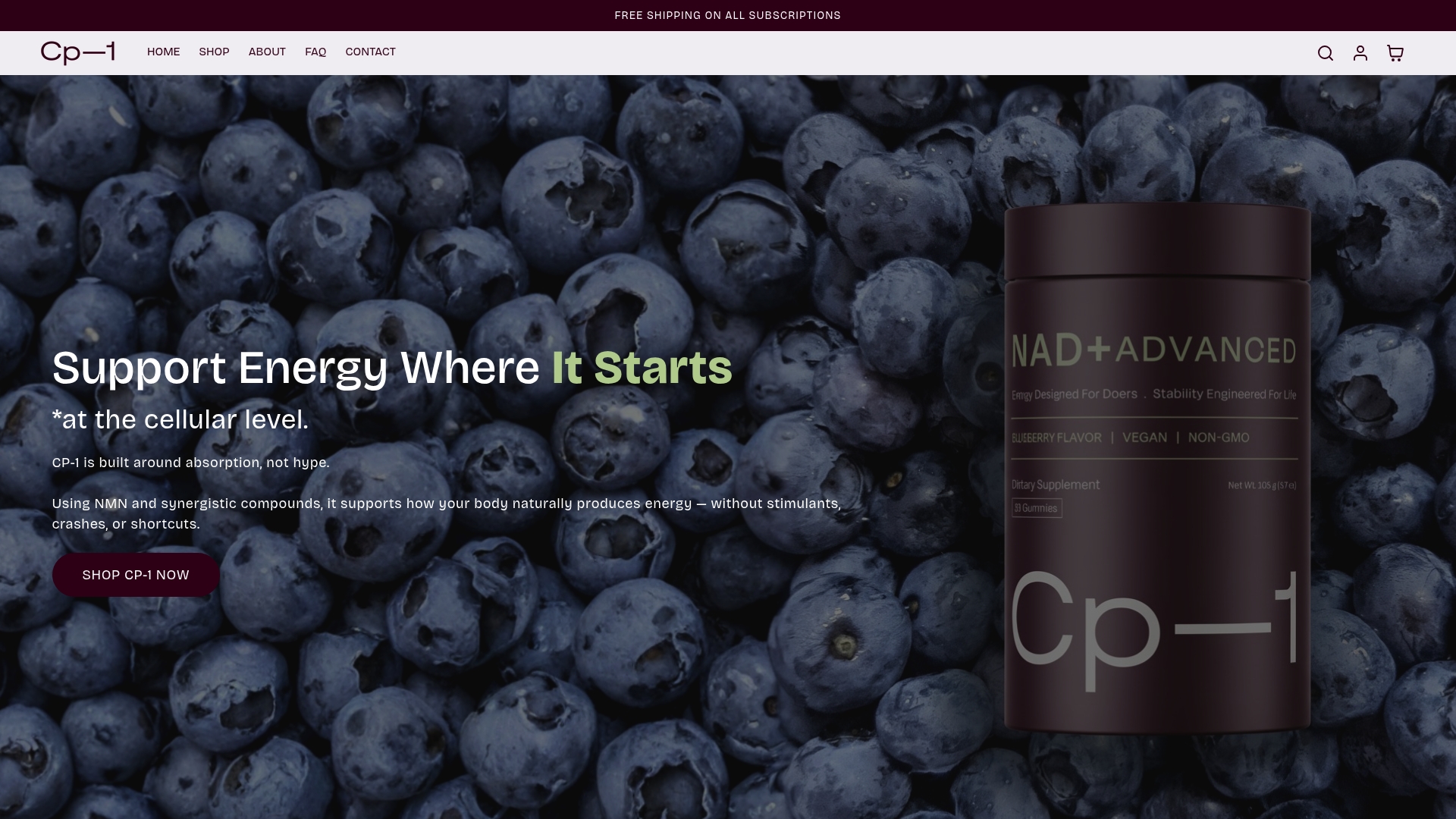
Building muscle takes more than a good program. Your cells need energy to perform, recover, and grow. Cp-1 is built around ingredients like NMN, coenzyme Q10, and lion’s mane mushroom extract, all chosen to support NAD+ production, mitochondrial energy, and mental clarity during hard training blocks.
If you want to understand what actually works in the supplement space, Cp-1’s sports nutrition guide cuts through the noise with research-backed answers. For those working on body composition alongside strength, the body recomposition guide pairs training strategy with nutrition principles that support real results. No hype. No garbage ingredients. Just honest information to complement the work you are already putting in.
FAQ
What is the best bodybuilding workout split for beginners?
A 3-day full-body split is the most effective starting point. Training each major muscle group three times per week accelerates skill acquisition and produces faster strength gains than a body-part split.
How many sets per muscle group should I do each week?
Most lifters benefit from 10–20 working sets per muscle group per week. Beginners should start at the lower end with 4–6 sets and increase volume gradually as recovery capacity improves.
Why are free weights better than machines for muscle growth?
Free weights require stabilizer muscles and coordination that machines bypass. Barbells and dumbbells produce better overall muscle development because they load the body through natural movement patterns.
What is double progression and how does it work?
Double progression means adding reps before adding weight. Once you hit the top of your target rep range with perfect form, you increase the load by 2.5kg for upper body or 5kg for lower body lifts.
How often should I change my bodybuilding program?
Stick with a program for at least 8–12 weeks before switching. Changing programs too frequently prevents the consistent progressive overload that drives muscle and strength gains over time.