

The Best CellTheory.com Alternatives for NAD+ and Longevity
Cp-1 is the top recommended alternative to celltheory.com for longevity-focused NAD+ and cognitive supplements. It combines transparent NMN dosing with third-party Certificates of Analysis (COAs), GMP-certified US manufacturing, and a vegan/non-GMO chewable gummy format that most capsule-only brands simply don’t offer.
Here’s the short version before we go deeper:
- Dose transparency + third-party COAs: Cp-1 publishes ingredient amounts and lab verification, so you’re not guessing whether the NMN dose is real or just a label claim.
- Manufacturing credentials: US-based, GMP-certified, vegan, non-GMO — the credentials that separate serious supplement makers from the rest.
- Best for: Longevity-focused adults who want cognitive support, cellular energy, and immune resilience in one convenient daily gummy.
One more thing worth knowing upfront: Cell Theory is listed as deadpooled on Tracxn, meaning the brand has effectively exited the market. If you’ve been searching for celltheory.com alternatives, that’s exactly why.
Table of Contents
- What are the best celltheory.com alternatives for NAD+ supplements?
- How do you choose a safe, effective NAD+ supplement?
- NMN vs. NR vs. NAD+: which ingredient is right for you?
- What to expect: safety, timeline, and cost
- Why Cp-1 is the recommended pick among these alternatives
- Key Takeaways
- The criteria that actually separate real supplements from marketing copy
- Cp-1 is available direct-to-consumer for NAD+ and cognitive support
- Useful sources for further research
What are the best celltheory.com alternatives for NAD+ supplements?
The table below compares Cp-1 against Cell Theory and the two dominant ingredient categories you’ll encounter while shopping.

| Cp-1 | Cell Theory | NMN-based supplements (category) | NR-based supplements (category) | |
|---|---|---|---|---|
| Primary active ingredient | NMN (Nicotinamide Mononucleotide) | NMN | NMN | NR (Nicotinamide Riboside) |
| Form | Chewable gummy | Capsule | Capsule / powder | Capsule |
| Dose per serving | Disclosed per label | Not publicly listed | Varies widely | Varies widely |
| Third-party COA | Yes | Not confirmed | Varies by brand | Varies by brand |
| Certifications | GMP, vegan, non-GMO, US-made | Not confirmed | Varies | Varies |
| Subscription option | Yes | N/A (deadpooled) | Common | Common |
| Best for | Cognitive focus, longevity, convenience | N/A | NAD+ precursor support | Alternative NAD+ pathway |
Three things stand out from this comparison:
- Choose Cp-1 if you want a verified NMN dose, COA-backed quality, and a format that’s actually enjoyable to take every day.
- Prefer NMN-class products if your primary goal is direct NAD+ precursor support with clinical research behind the ingredient class.
- Red flag to avoid: Any brand that hides doses inside a “proprietary blend” or can’t produce a third-party COA. That’s a dealbreaker, full stop.
How do you choose a safe, effective NAD+ supplement?
Dose transparency and third-party COAs are the single most important criteria. Everything else is secondary. Here’s a practical checklist before you hand over your credit card:
Checklist: what to verify before buying
- Ingredient clarity and dose: Every active ingredient should have a milligram amount listed. No exceptions.
- Third-party COA: A certificate of analysis from an independent lab confirms potency and purity. Dose transparency and COAs outrank marketing copy every time.
- GMP/US manufacturing: Good Manufacturing Practice certification means the facility meets federal quality standards.
- Refund and subscription policy: Understand the cancellation terms before you subscribe. Vague policies are a warning sign.
- Clinical references for active ingredients: The brand should point to published research on NMN, NR, or their cognitive-support co-ingredients, not just make claims.
Red flags that should stop you cold:
- Proprietary blends with no individual doses listed
- No COA available or COA from an unrecognized lab
- Claims like “reverses aging” or “clinically proven” with no citation
- No stated manufacturing location or certifications
Questions worth asking customer support:
- “Can you send me the current COA for this product?”
- “Where is this manufactured, and is the facility GMP-certified?”
- “What is your cancellation policy for subscriptions?”
Pro Tip: If a brand can’t answer the COA question within 24 hours, treat that as your answer.
NMN vs. NR vs. NAD+: which ingredient is right for you?
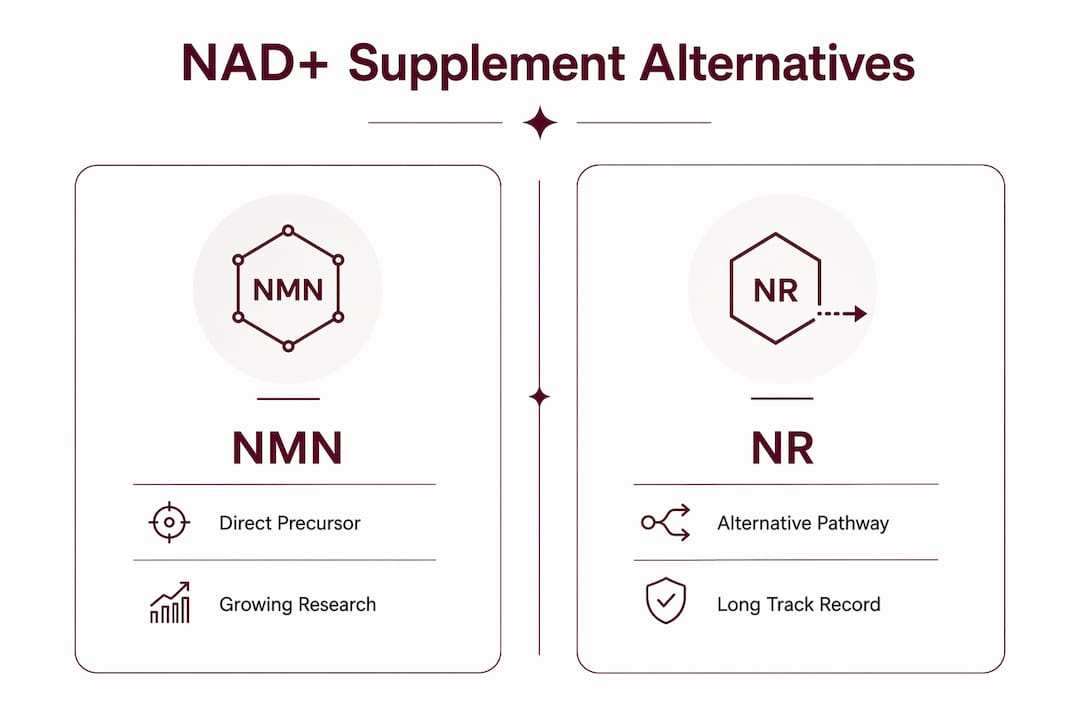
NMN is the better choice for buyers who want a direct NAD+ precursor with a growing body of human research behind it; NR is a well-studied alternative that follows a slightly different cellular pathway. Here’s what each actually does:
NMN (Nicotinamide Mononucleotide): A direct precursor to NAD+. Your cells convert it into NAD+ through a single enzymatic step. Typical doses in research range from 250 mg to 500 mg daily. Cp-1 uses NMN as its primary active ingredient, with a disclosed dose per serving.
NR (Nicotinamide Riboside): Also converts to NAD+, but via a different pathway. NR has a longer clinical track record, with trials from brands like Tru Niagen and Elysium Basis. Some buyers prefer NR for its established human safety data; others prefer NMN for its more direct conversion route.
NAD+ (direct): Taking NAD+ orally is largely degraded before absorption. Most researchers and clinicians favor precursors like NMN or NR over direct NAD+ supplementation for this reason.
Why pair lion’s mane, CoQ10, and adaptogens?
- Lion’s mane mushroom supports nerve growth factor (NGF) production, which underpins cognitive function and neuroplasticity. Cp-1 includes lion’s mane alongside NMN.
- CoQ10 supports mitochondrial energy production and acts as an antioxidant. It complements NMN because both target cellular energy, just through different mechanisms.
- Reishi and turkey tail mushrooms (both in Cp-1) are adaptogens that support immune resilience and stress response, rounding out the formula beyond pure NAD+ support.
Modern cellular research increasingly uses multi-omics approaches to map how these pathways interact, which is why brands that reference mechanistic studies carry more credibility than those that don’t.
Safety notes: Lion’s mane and NMN are generally well-tolerated in healthy adults. People on blood thinners, immunosuppressants, or chemotherapy should consult a clinician before adding any of these ingredients. Pregnant or breastfeeding individuals should avoid NAD+ precursor supplements without medical guidance.
What to expect: safety, timeline, and cost
Most people notice subjective effects, like improved mental clarity or steadier energy, within two to four weeks of consistent use. Measurable biomarker changes, such as NAD+ blood levels, typically take longer, often eight to twelve weeks or more.
Safety checklist:
- Consult a clinician if you take prescription medications, especially blood thinners or immunosuppressants
- Avoid if pregnant or breastfeeding unless cleared by a physician
- Start at the lower end of the dose range and assess tolerance before increasing
- NMN and NR are not stimulants; they don’t cause the jitteriness associated with caffeine-based energy products
Timeline expectations:
- Weeks 1–4: Subjective improvements in focus, energy steadiness, and sleep quality are the most commonly reported early signals
- Weeks 8–12+: Cellular and biomarker changes take longer; don’t abandon a quality product after two weeks
Cost: Quality NAD+ supplements with verified COAs and GMP manufacturing typically run $1.50–$3.00 per serving. Subscriptions usually reduce the per-serving cost meaningfully. For more on cellular energy support and what the evidence says, Cp-1’s editorial covers it in detail.
Why Cp-1 is the recommended pick among these alternatives
For a longevity-focused buyer who wants cognitive support, NAD+ precursor activity, and immune resilience in a single daily product, Cp-1 is the clearest choice among celltheory.com substitutes.
Here’s why it holds up against the decision criteria:
- NMN with disclosed dosing: No proprietary blend hiding the real amount
- Third-party COA available: Independent lab verification of potency and purity
- GMP-certified, US-based manufacturing: Meets federal quality standards
- Vegan and non-GMO certified: Matters to a significant portion of the longevity-focused buyer base
- Chewable gummy format: Better absorption surface area compared to hard capsules, and far easier to stick with daily
- Subscription option: Reduces per-serving cost without locking you into an opaque cancellation policy
- Multi-ingredient formula: NMN + lion’s mane + reishi + turkey tail + CoQ10 addresses cognitive focus, mitochondrial energy, and immune health together
When a different category makes more sense: If you’re enrolled in a clinical trial using NR specifically (such as those associated with Tru Niagen or Elysium Basis), or if a physician has recommended a prescription NAD+ therapy, those clinical contexts warrant staying in that lane. Cp-1 is a consumer supplement, not a clinical intervention.
Pro Tip: Check the supplements and aging guide on Cp-1’s site before buying anything in this category. It gives you the biological context to evaluate any brand’s claims, not just Cp-1’s.
Key Takeaways
Cp-1 is the strongest celltheory.com alternative for buyers who need verified NMN dosing, third-party COAs, and a multi-ingredient formula that covers cognitive focus, cellular energy, and immune support.
| Point | Details |
|---|---|
| Cell Theory has exited the market | The brand is listed as deadpooled, making alternatives a practical necessity for former customers. |
| COAs and dose transparency are non-negotiable | Always verify third-party lab reports before purchasing any NAD+ supplement. |
| NMN vs. NR depends on your goal | NMN offers a direct NAD+ conversion route; NR has a longer clinical track record. |
| Timeline is weeks to months | Expect subjective improvements in two to four weeks; biomarker changes take eight to twelve weeks or more. |
| Cp-1 covers the full checklist | NMN, lion’s mane, CoQ10, GMP-certified US manufacturing, COAs, vegan, non-GMO, and subscription pricing. |
The criteria that actually separate real supplements from marketing copy
Most buyers in this category get distracted by ingredient lists and miss the two things that actually matter: whether the dose is real and whether an independent lab confirmed it. A formula with ten impressive ingredients at sub-therapeutic doses is, functionally, a placebo. I’ve seen it over and over.
When I evaluate a NAD+ supplement, the first thing I look for is a COA from a recognized third-party lab, not a house lab the brand controls. The second thing is a milligram amount next to every active ingredient. If either of those is missing, the rest of the label is noise.
Here’s the exact sequence I run on any product page: find the COA link, check the lab name, verify the tested potency matches the label claim, then look at the manufacturing statement. If the page buries those details or doesn’t include them at all, that tells me everything. Company stability signals like funding status and manufacturing locality are practical proxies for product reliability in an industry where brands exit without warning, as Cell Theory did.
The supplement industry has a real problem with formulas designed for a marketing deck, not for the person swallowing them. Buyers who learn to read COAs and demand dose transparency are the ones who stop wasting money.
Cp-1 is available direct-to-consumer for NAD+ and cognitive support
If you’ve been searching for a celltheory.com replacement that actually checks every box, Cp-1 is built for exactly that. It’s a chewable NMN gummy with lion’s mane, reishi, turkey tail, and CoQ10, manufactured in the US under GMP standards, third-party tested, vegan, and non-GMO.
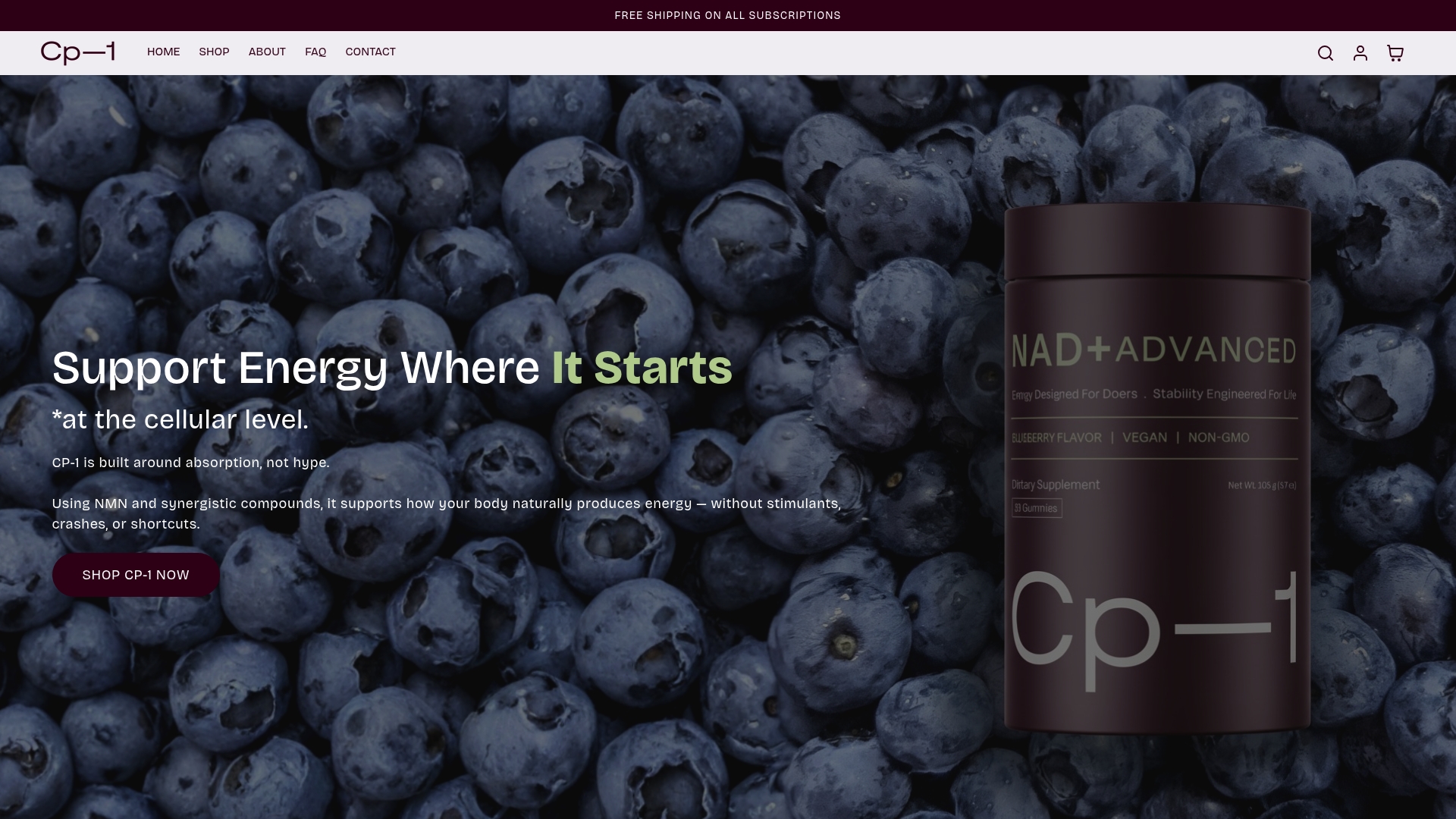
Before you order, run through these quick checks on the product page: confirm the COA link is live and from an independent lab, verify the NMN dose per serving is listed explicitly, review the subscription cancellation policy, and look for the GMP and US manufacturing statement. All of those are present on the Cp-1 site.
Subscriptions reduce the per-serving cost without hidden lock-in terms. If you’re also comparing recovery-focused formulas, this fitness recovery supplement roundup is worth a read for context on how ingredient categories stack up across different wellness goals.
Try Cp-1 directly and check the COA before your first order.
Useful sources for further research
These sources are worth bookmarking if you want to verify ingredient claims, understand the science behind NAD+ precursors, or assess brand stability before buying.
- Cell Theory company profile, Tracxn: Confirms Cell Theory’s deadpooled status and provides competitive context for the supplement market, including funding signals from adjacent brands.
- Cellarity: multi-omics drug discovery: Explains how modern cellular research uses AI and multi-omics to map biological pathways, useful context for evaluating mechanistic claims made by supplement brands.
- Best cell biology software, Gitnux: Covers how automated lab pipelines and reproducible analyses are used to validate ingredient potency, directly relevant to understanding what a credible COA process looks like.
- How supplements enhance cognitive performance, Cp-1: Cp-1’s editorial on the mechanisms behind cognitive-support ingredients, including lion’s mane and CoQ10.
- Nootropic supplement alternatives, Cp-1: Useful for buyers comparing nootropic-focused formulas across brands.
This article is general information, not medical advice. Confirm current ingredient research and any health considerations with a qualified clinician or your primary care provider before starting a new supplement.