

Does protein powder expire? Shelf life, signs, and safety
You grab that tub of protein powder from the back of your cabinet, and right there on the label is a “best by” date from eight months ago. Most people either toss it without thinking or shrug and scoop anyway. Protein powder’s expiration date signals peak quality for taste, texture, and nutritional effectiveness, not an instant safety cutoff. Understanding the difference could save you money, protect your health, and help you make smarter choices about every supplement you buy.
Table of Contents
- How long does protein powder last?
- What happens after the expiration date?
- Red flags: Signs your protein powder is bad
- How to store protein powder for maximum freshness
- The truth most supplement users miss about expiration dates
- Upgrade your supplement routine with science-backed options
- Frequently asked questions
Key Takeaways
| Point | Details |
|---|---|
| Expiration is not a hard cutoff | Protein powder can be safe after its expiration date if stored properly and free from obvious spoilage. |
| Quality does decline | Taste, nutrition, and mixability fade over time, making freshness important for best results. |
| Trust your senses | Discard protein powder if you notice odd smell, clumping, color change, mold, or insect activity. |
| Storage is critical | Keep protein powder sealed, cool, and dry to maximize its shelf life and prevent contamination. |
How long does protein powder last?
Let’s start by uncovering what those printed dates really mean, and how long your protein powder may actually last.
When a manufacturer prints a “best by” or “expiration” date on a container, they’re telling you when the product is expected to deliver peak performance. That’s flavor, mixability, and full nutritional potency. It is not a warning that the product turns dangerous the next morning. Most people treat these dates like a hard deadline, and that’s where a lot of good, safe protein powder ends up in the trash.
Unopened protein powder typically lasts 1 to 2 years from the manufacturing date. Once you break the seal, that timeline shortens, and quality can begin declining over the following months rather than years. The difference between opened and unopened really does matter because oxygen and humidity start doing their work the moment the lid comes off.
Manufacturing and packaging methods play a significant role here too. Powders packaged with nitrogen flushing (a technique that removes oxygen from the container before sealing) stay fresher longer than those without it. Dense, resealable bags and hard plastic tubs with foil liners protect better than flimsy containers. If your protein came in a thick, vacuum-sealed tub, it’s going to hold up better over time compared to a bag with a basic zip closure.
“Shelf life is more about how a product is made and stored than the date stamped on it. The date is an estimate, not a guarantee.”
The type of protein matters too. Whey, casein, egg white, and plant-based proteins like pea or rice all have slightly different degradation timelines. For a closer look at how plant-based options hold up specifically, the breakdown of pea protein shelf life is worth reading.
Here’s a quick reference for what you can expect from common protein powders under normal conditions:
| Protein type | Unopened shelf life | After opening |
|---|---|---|
| Whey concentrate | 1.5 to 2 years | 3 to 6 months (best quality) |
| Whey isolate | 2 years | 3 to 6 months |
| Casein | 1.5 to 2 years | 3 to 6 months |
| Egg white protein | 1 to 1.5 years | 2 to 4 months |
| Pea protein | 1 to 2 years | 4 to 6 months |
| Brown rice protein | 1 to 2 years | 4 to 6 months |
Pro Tip: If you buy in bulk, keep the second tub sealed until you’ve finished the first. That simple habit can add months to the usable life of your second container.
What happens after the expiration date?
Now that you know how long your protein powder can last, let’s look closely at what actually changes, and what to watch for, after that date passes.
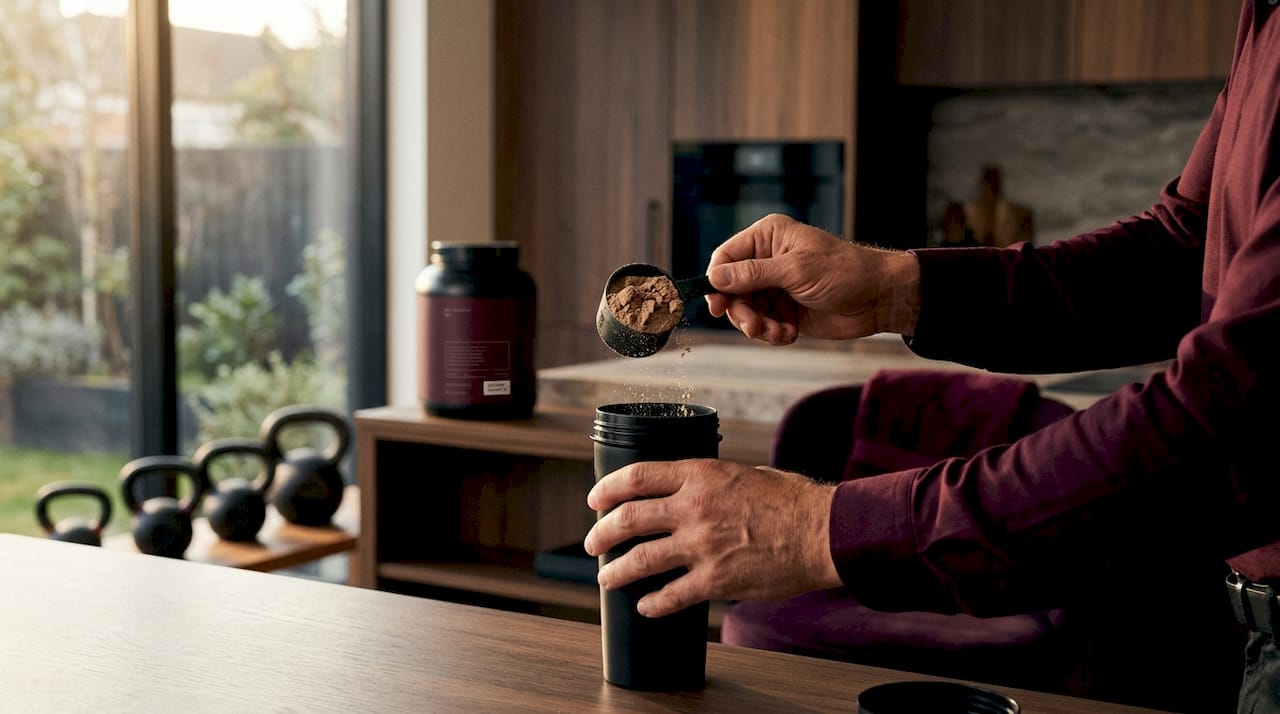
The short answer is: the powder doesn’t suddenly transform into something dangerous. The longer answer is more nuanced and actually more useful. Several things degrade over time, and understanding which ones matter most for your goals helps you make a clear-eyed decision.
Protein powder is considered shelf-stable when kept dry and sealed, meaning it doesn’t spoil the way fresh food does. There’s no sudden rot, no rapid bacterial bloom in a dry environment. But quality absolutely changes, and some of those changes are worth paying attention to.
Here’s what typically degrades after the printed date:
- Flavor. This is usually the first and most noticeable change. Fats in whey-based powders oxidize over time, producing a stale, sometimes bitter taste. Artificial flavors can also dull significantly.
- Mixability. Protein powder that once blended smoothly can start to clump, resist mixing, and leave grainy residue. This happens as moisture slowly penetrates the container and the powder absorbs it.
- Amino acid potency. Lysine in particular is susceptible to a chemical reaction called the Maillard reaction, which occurs when amino acids bind with sugars over time, reducing their biological availability. This is especially relevant if your protein powder has added sugars or lactose.
- Vitamin and mineral content. If your protein powder is fortified with vitamins, those degrade faster than the protein itself. B vitamins and vitamin C are especially sensitive to heat, light, and time.
- Microbial risk from moisture. This is the real safety concern, and it isn’t tied to the date on the label. If moisture gets in, through improper storage or a compromised seal, bacteria and mold can grow. That’s the actual danger, not the number printed on the container.
The reason supplement quality directly affects your results is that degraded ingredients simply don’t perform the same way. It’s one of the reasons we care so deeply about standards at every stage of production. A supplement that’s been sitting poorly for six months past its date may still look fine but deliver a fraction of what you’re paying for.
The frustrating reality is that the supplement industry doesn’t always make this easy to evaluate. That’s why understanding how supplement manufacturing quality connects to product safety matters as much as knowing the date on the label.
Red flags: Signs your protein powder is bad
While age matters, your senses are often your best tool for spotting problems. Here’s how to tell if a powder is still safe to use.
Most people make one of two mistakes. They either trust the date completely and throw away perfectly good powder, or they ignore obvious signs of spoilage because the date hasn’t technically passed yet. Neither approach is right. Your nose, eyes, and taste buds are genuinely powerful indicators.
Here’s a numbered checklist for evaluating your protein powder before every use:
- Look at the color. Fresh protein powder has a consistent, expected color. Yellowing in a white or light-colored powder, unusual spots, or dark patches are warning signs.
- Check for clumping. Small clumps that break apart easily when pressed are often just from slight humidity and may be fine. Hard, solid chunks that don’t break up easily suggest significant moisture exposure.
- Smell it directly. Trust your nose. A rancid, sour, musty, or stale smell that’s different from what it normally smells like means something has gone wrong.
- Look for mold or insects. These are immediate discard situations. No exceptions. If you see anything growing or moving, that container goes straight in the trash.
- Taste a small amount. If everything else seems okay but you’re still unsure, taste a small dry amount. Significantly off flavor, bitterness beyond what’s normal, or a chemical taste means it’s time to let it go.
The practical rule is simple: when in doubt due to off smell, mold, insects, or unusual texture, discard the powder. The risk comes from moisture-driven contamination, not normal aging.
Here’s a comparison to make the decision easier:
| What you observe | What it likely means | Action |
|---|---|---|
| Normal color, no smell change | Still good quality | Safe to use |
| Slight clumping, breaks apart easily | Minor humidity exposure | Use soon, taste first |
| Strong rancid or sour smell | Fat oxidation or spoilage | Discard |
| Hard solid clumps throughout | Significant moisture exposure | Discard |
| Visible mold or dark spots | Contamination | Discard immediately |
| Unusual insects or debris | Contamination | Discard immediately |
| Color change or yellowing | Oxidation or degradation | Discard |
Pro Tip: Store a small amount of your protein powder in a labeled zip-lock bag right after opening a new container. If you ever question the main tub later, you can compare fresh powder directly against what’s in the tub using smell and appearance.
Choosing supplements with rigorous quality standards to begin with reduces the risk of these problems. If you want guidance on making safe supplement choices from the start, that knowledge goes a long way. And if you’re just getting started with building a reliable supplement stack, learning about safe supplement storage from day one prevents a lot of headaches later.
How to store protein powder for maximum freshness
To make your protein investment last, let’s cover simple ways you can store it for maximum quality and safety.
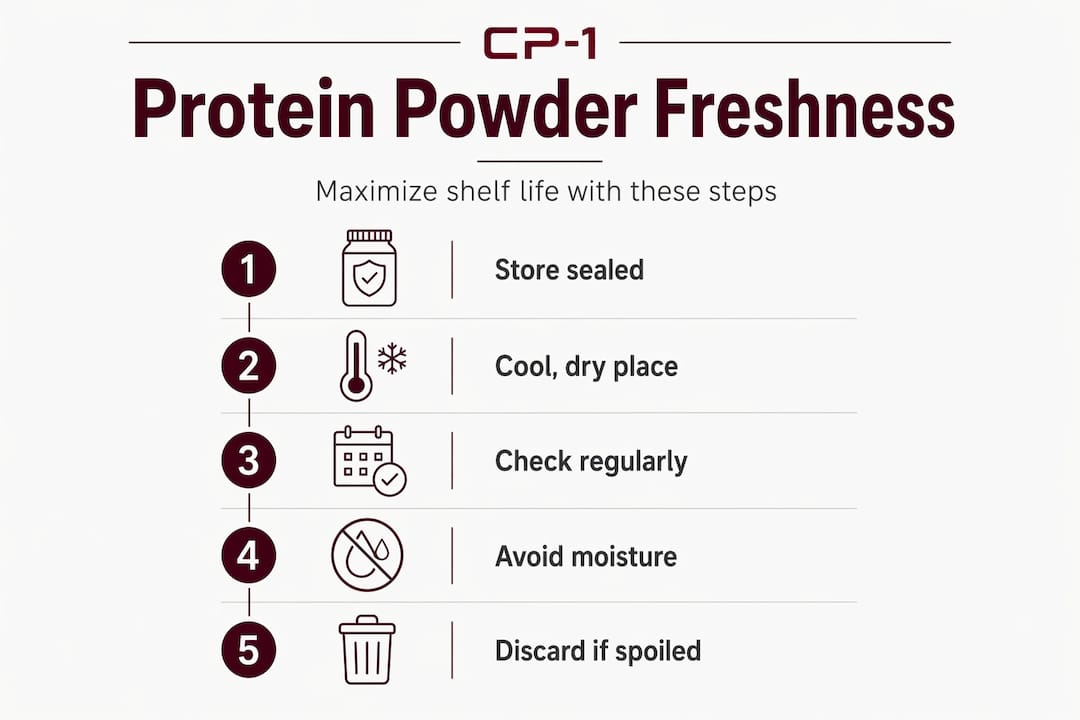
This is the section most articles skip past with generic advice, but storage is genuinely the biggest variable you can control. The date on the label assumes average storage conditions. If you store your powder better than average, it may hold up longer than the label suggests. Store it worse, and it may degrade well before that date.
When stored properly in cool, dry, and sealed conditions, protein powder may remain usable well beyond the printed date, though taste and nutritional quality will slowly decline. The key is controlling moisture, heat, and light.
Here are the storage practices that actually make a difference:
- Keep it sealed tightly. Every time you open the container and close it loosely, you allow more oxygen and humidity inside. Press the lid down firmly, and if your container uses a bag, squeeze out excess air before sealing.
- Store in a cool location. Heat accelerates fat oxidation and amino acid degradation. A pantry away from the stove or dishwasher is much better than a cabinet right above heat-generating appliances. Aim for storage below 70°F (21°C).
- Avoid the bathroom and gym bag. These environments are high in humidity and temperature fluctuation. That combination is exactly what you want to avoid. The powder sitting in your gym locker is taking damage every day.
- Keep it away from direct light. UV light degrades vitamins and can accelerate oxidation. A dark cabinet or opaque container is ideal.
- Don’t transfer to a glass jar unless it’s airtight. Decorative jars or containers that don’t seal properly actually expose powder to more air than the original tub.
- Delay opening a second container until you’ve finished the first. This one seems obvious but it’s often ignored when people buy in bulk or forget what they already have open.
- Consider the refrigerator for opened powder in humid climates. If you live somewhere with high humidity year-round, storing an opened container in the fridge in an airtight bag can extend quality meaningfully. Just bring out what you need and reseal quickly.
The relationship between quality supplement manufacturing and storage is tightly connected. A well-made product with quality packaging gives you the best foundation, but your storage habits determine how long that foundation holds.
The truth most supplement users miss about expiration dates
I’ll be honest. The expiration date anxiety around protein powder frustrates me, not because people are wrong to care about safety, but because the thing most people fear (the date itself) often isn’t the real risk, while the actual risks get ignored.
The expiration date signals peak quality for taste and nutrition, not an instant safety line. But I’ve seen people throw away powder three days after the printed date while storing it in a cabinet above the stove in a loosely closed tub. That powder was probably compromised long before the date. Meanwhile, a well-stored, unopened container might still be genuinely useful several months past its label.
The real risk factors are contamination from moisture and improper storage, not the calendar. No one talks enough about that. Instead, the industry leans into fear because throwing things away means buying more. I’m not interested in that game.
What really matters is the source quality of what you buy, how it was made, how it was stored before it reached you, and how you store it after. Those are the variables that determine whether your protein powder actually delivers the benefits of quality supplements you’re expecting.
The myth that “expired means dangerous” wastes money and creates unnecessary anxiety. The opposite myth, that any powder is fine as long as it smells okay, ignores real quality loss that matters for your results. The truth is in the middle, and your senses combined with good storage habits are more reliable than a date stamp ever will be.
Don’t let the supplement industry’s vague labeling practices keep you guessing. Get to know your powder. Pay attention to how it looks, smells, and tastes when fresh so you have a real baseline for comparison later.
Upgrade your supplement routine with science-backed options
If understanding protein powder shelf life has you thinking more carefully about what goes into your supplement routine, that’s exactly the mindset that leads to better results. Quality, storage, and source integrity all compound over time.
At CP-1, we build supplements around ingredients that are third-party tested, manufactured in the US to strict standards, and formulated for people who actually care what they’re putting in their bodies. If you’re done guessing whether what you’re taking is worth it, you can explore our supplement options or head straight to our trusted supplement sources to see what sets our approach apart. Real quality, real transparency, no garbage.
Frequently asked questions
Is expired protein powder safe to consume if it smells normal?
If there’s no off smell, visible mold, or unusual texture, protein powder is likely safe to consume but may have lost some nutritional potency or flavor quality. Protein powder kept dry and sealed is shelf-stable and doesn’t spoil the way fresh food does.
How can I tell if my protein powder has gone bad?
Look for clumping that won’t break apart, unusual odors, color changes, off taste, or any visible mold or insects. When you notice off smell, mold, insects, or unusual texture, discard it immediately rather than risk it.
Does protein powder lose its protein content after it expires?
Protein content declines slowly over time, but vitamins, mixability, and flavor typically worsen faster after the printed date. The expiration date reflects peak quality for nutrition and taste, not the moment protein disappears from the formula.
How should I store protein powder to make it last longer?
Store it in a cool, dry, tightly sealed container away from heat, direct light, and humidity at all times. Proper cool, dry, sealed storage can keep protein powder usable and reasonably effective beyond the printed date.