
Most people who take NMN report nothing worse than mild, short-lived stomach upset. Serious adverse events have not shown up in the small human trials run so far, though those trials are still too limited to rule out rare risks. Common complaints include nausea, headache, flushing, or sleep changes, and they usually fade on their own. If you’re pregnant, breastfeeding, have a history of cancer, advanced liver disease, or take prescription medication, talk to a clinician before you start.
TL;DR:
- Most NMN side effects are mild, including gastrointestinal discomfort, headaches, and sleep changes, often dose-dependent and usually transient.
- Short-term human trials at doses around 250 mg daily show good tolerability, but long-term safety data, especially over years, is still lacking.
- People with pregnancy, cancer, severe liver disease, or on specific medications should consult a doctor before starting NMN due to limited safety research in these groups.
- Product formulation quality matters, as fillers and artificial ingredients can cause side effects, making third-party testing and transparent manufacturing essential.
- Current evidence supports starting with lower doses and monitoring symptoms, especially if taking higher doses long-term or combining NMN with other supplements or medications.
Table of Contents
- What Are the Most Common NMN Side Effects?
- Who Should Talk to a Doctor Before Trying NMN?
- What Do Human Clinical Trials Say About NMN Safety?
- How Can You Reduce or Manage NMN Side Effects?
- Can NMN Interact With Medications or Other Supplements?
- Does Product Quality Affect NMN Safety?
- What NMN Doses Have Been Tested in Human Trials?
- What Don’t We Know Yet About NMN Safety?
- How Does CP-1 Approach NMN Safety and Quality?
- Where CP-1 Fits If You’re Ready to Try NMN
- Sources
- FAQ
What Are the Most Common NMN Side Effects?
I get asked this constantly, and the honest answer is: less dramatic than people expect. When you look at what actually shows up in human NMN trials, the pattern is consistent. Mild, transient, and usually gone within days.
Gastrointestinal complaints top the list. Nausea, abdominal discomfort, bloating, and occasional diarrhea are the most frequently reported issues, and they tend to be dose-dependent. Someone jumping straight to 1,000 mg on day one is far more likely to feel it in their gut than someone who eases in at 250 mg. That’s not a guess. It’s the same pattern you see with almost any new supplement that shifts cellular metabolism.
Beyond the gut, a smaller number of users report:
- Headache — usually mild and temporary, often tied to starting a new supplement routine generally, not NMN specifically
- Flushing or a warm sensation — more common with niacin-family compounds like niacinamide than with NMN itself, but occasionally reported
- Sleep changes — some people notice vivid dreams or trouble falling asleep, especially when dosing later in the day
- Fatigue or jitteriness — rare, but reported in a small subset of users, likely tied to individual metabolism
Here’s the part that gets skipped in most of the breathless “NAD booster” marketing copy: several trials show placebo groups reporting similar GI complaints. A 12-week trial of 250 mg/day NMN in healthy adults found the supplement tolerable with no major lab abnormalities, and the GI symptoms that did occur weren’t severe. That’s the kind of nuance that matters. Not every stomach gurgle after taking a gummy is proof the ingredient is the problem.
Adverse-event reports across small NMN trials mostly fall into the mild GI or headache category, with severe events rarely documented in the published literature.
Product formulation matters just as much as the raw ingredient. Sugar alcohols, sucralose, artificial flavoring, or fillers used to make a capsule or gummy palatable can cause the exact same bloating and discomfort people blame on NMN itself. If you switch brands and the side effects disappear, the excipients were probably the real culprit, not the NMN.
Who Should Talk to a Doctor Before Trying NMN?
This is the section I wish more longevity content actually took seriously instead of glossing over with a generic “consult your doctor” disclaimer and moving on. Some groups have real, specific reasons to pause before adding NMN to their routine.
Pregnancy and breastfeeding. There’s no adequate safety data on NMN use during pregnancy or lactation. Not “it’s probably fine,” not “likely safe.” Just an absence of research, which means routine use isn’t recommended.
Current or past cancer. This one deserves more attention than it usually gets. NAD+ fuels cellular energy production, and cancer cells are notoriously good at hijacking metabolic pathways for their own growth. There’s a theoretical concern that boosting NAD+ could support tumor metabolism in someone with active or recent cancer. Cleveland Clinic’s guidance on NAD+ supplements specifically flags this, and it’s the reason anyone with a cancer history should loop in their oncologist first, not skip the conversation because a supplement label sounds harmless.
Advanced liver disease. The liver processes most oral supplements, and NMN is no exception. Safety data in people with significant liver impairment is limited. If you have known liver disease, ask your doctor about baseline liver enzyme testing before and after starting.
People on specific medications. This includes:
- Blood sugar medications (insulin, metformin, sulfonylureas) — NAD+ precursors may influence glucose metabolism in ways that aren’t fully mapped out
- Blood pressure medications — limited interaction data exists
- Blood thinners like warfarin or DOACs — again, the interaction data just isn’t there yet
The general rule I tell people: don’t self-prescribe high doses long-term without periodic check-ins and relevant labs. NMN isn’t a “more is always better” ingredient, and treating it like one without any oversight is how people turn a low-risk supplement into an unnecessary gamble.
What Do Human Clinical Trials Say About NMN Safety?
Here’s where the marketing hype and the actual data diverge. NMN has plenty of trials behind it now, more than most trendy longevity ingredients, but every single one comes with real limitations worth understanding before you draw conclusions.
The most cited safety trial gave healthy volunteers 250 mg/day for 12 weeks. Researchers found it tolerable with no major lab abnormalities, and blood NAD+ levels rose as expected. GI complaints did occur, but they weren’t severe, and in some cases mirrored what the placebo group reported.
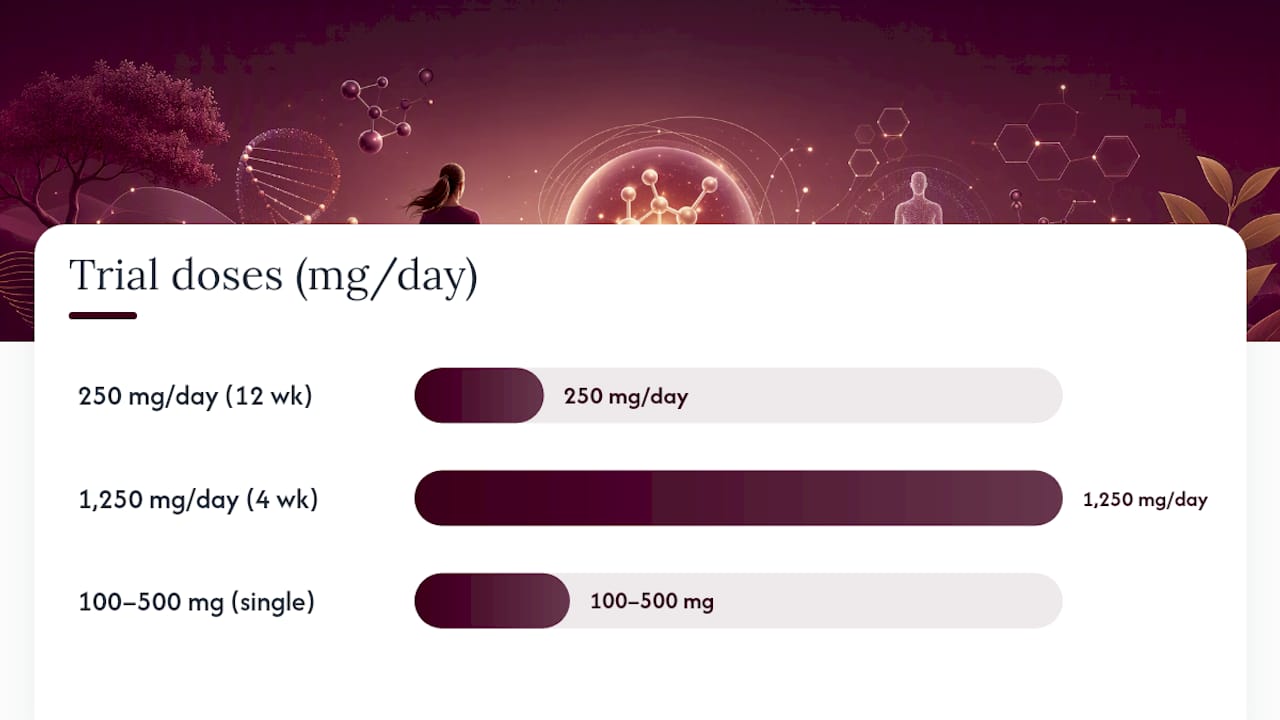
A separate line of research pushed the dose higher. A randomized, double-blind, placebo-controlled 4-week trial gave 31 healthy adults 1,250 mg/day of beta-NMN. No severe adverse events showed up, and lab values stayed clinically unremarkable. That’s a reasonably reassuring result for short-term higher-dose use, but a 31-person, 4-week study can’t tell you what happens at month 12 or year 3.
Single-dose studies testing 100 mg to 500 mg have generally reported no severe adverse events either, which supports the idea that NMN is well-tolerated in acute exposure.
| Trial Design | Dose | Duration | Sample Size | Reported Outcome |
|---|---|---|---|---|
| Randomized, healthy adults | 250 mg/day | 12 weeks | Small cohort | No major lab abnormalities; mild GI symptoms similar to placebo |
| Randomized, double-blind, placebo-controlled | 1,250 mg/day | 4 weeks | 31 adults | No severe adverse events; no meaningful lab changes |
| Single-dose studies | 100 to 500 mg | One-time | Small cohorts | No severe adverse events reported |
The pattern across all of it is genuinely encouraging for short-term tolerability. But here’s what nobody selling NMN wants to highlight: these trials share the same structural weaknesses.
- Sample sizes are small, often under 50 participants
- Study durations max out around 12 weeks; nothing tracks people for years
- Participants are almost always healthy volunteers, not people with chronic conditions
- Long-term outcomes like cancer incidence or cardiovascular events simply haven’t been studied
There’s active research trying to close these gaps. Ongoing trials registered on Clinicaltrials are testing different dosing schedules and longer follow-up periods, but results aren’t in yet. Until they are, “well tolerated in the short term” is the accurate summary. “Proven safe long-term” is not something the current evidence supports.
How Can You Reduce or Manage NMN Side Effects?
If you already feel a little queasy after your first NMN dose, don’t panic and don’t assume something’s wrong with you. Most of this is manageable with a few practical adjustments.
- Start low and go slow. A common starting protocol is 250 mg/day for one to two weeks before increasing, rather than jumping straight to a higher dose. This mirrors the dosing approach used in the tolerability trials that showed the cleanest safety profiles.
- Split your dose. Taking half your daily amount in the morning and half in the afternoon can reduce the GI hit compared to one large dose at once.
- Take it with food. An empty stomach amplifies nausea and bloating for almost any supplement, and NMN is no exception. Pairing it with a meal and adequate water intake blunts a lot of the discomfort people report.
- Reassess the formulation, not just the ingredient. If symptoms persist after a few weeks, check what else is in the product. Sugar alcohols, sucralose, and heavy flavoring agents are common, overlooked triggers.
- Track what you’re experiencing. A simple symptom diary, noting dose, timing, food intake, and how you felt, makes it much easier to tell whether something is a normal adjustment period or an actual reaction worth flagging to a doctor.
For anyone with underlying health conditions, baseline labs before starting (a liver panel, fasting glucose) and a follow-up check a few weeks in gives you and your clinician real data instead of guesswork about how your body is responding.
Pro Tip: If you notice vivid dreams or trouble sleeping, try shifting your NMN dose earlier in the day. NAD+ metabolism ties into cellular energy production, and taking it too close to bedtime is a common, easily fixed cause of sleep disruption.
Know when to stop and get medical attention immediately: signs of an allergic reaction (swelling, hives, difficulty breathing), severe or bloody GI symptoms, chest pain, fainting, or any new, unexplained neurological symptom. None of these are typical NMN reactions, and they warrant a call to your doctor, not a wait-and-see approach.
Can NMN Interact With Medications or Other Supplements?
The honest answer is that interaction data for NMN is thin, which cuts both ways. It means researchers haven’t found alarming interactions, but it also means the absence of red flags isn’t the same as a clean bill of health.
A few categories deserve real caution:
- Antidiabetic medications. Insulin, metformin, and similar glucose-lowering drugs interact with metabolic pathways that NAD+ precursors also touch. Monitor blood glucose closely if you’re combining NMN with any of these.
- Chemotherapy and immunomodulators. Given the theoretical concern about NAD+ and tumor metabolism, anyone undergoing cancer treatment should loop in their oncologist before adding NMN, full stop.
- Anticoagulants and antiplatelet drugs. Warfarin, aspirin therapy, and similar medications don’t have robust interaction data with NMN, so review this combination with the prescribing clinician rather than assuming it’s fine.
- Other NAD-boosting supplements. Stacking NMN with nicotinamide riboside, niacinamide, or multi-ingredient longevity blends increases your total exposure to overlapping pathways. If you’re combining products, introduce them one at a time so you can actually tell what’s causing what.
If you take a multi-ingredient supplement that pairs NMN with mushroom extracts or CoQ10, the same logic applies: isolate new ingredients when you can, especially if you’re already managing a chronic condition or a complex medication list. This isn’t a reason to avoid NMN. It’s a reason to be deliberate about how you introduce it.
Does Product Quality Affect NMN Safety?
Here’s something the industry doesn’t talk about enough: a meaningful chunk of “NMN side effects” people report aren’t actually caused by NMN. They’re caused by what else is in the bottle.
Supplement oversight in the US is looser than pharmaceutical regulation, and the PEMF Therapy Side Effects: What You Need to Know resource highlights how such regulatory gaps can impact safety surveillance and adverse event reporting, a concern that also applies to supplement quality variation between brands. Two products can list “NMN” on the label and deliver wildly different actual content, purity, and contaminant levels. Third-party testing and certificates of analysis (COAs) exist specifically to close that gap by verifying what’s actually in the product matches what’s on the label.
A few concrete things to check before you buy:
- Request the COA. A brand that won’t show you third-party test results confirming NMN content and screening for contaminants isn’t one you should trust with your body.
- Confirm GMP certification. Good Manufacturing Practice standards, especially from a US-based facility, are a meaningful (though not foolproof) signal of manufacturing consistency.
- Read the full ingredient list. Sugar alcohols like erythritol or maltitol, sucralose, and heavy artificial flavoring are common GI irritants that have nothing to do with NMN itself.
- Check allergen statements. If your product includes mushroom extracts or other bioactive add-ins, make sure you’re not walking into an allergen you didn’t expect.
- Prefer transparency over marketing claims. A brand that talks about dosing specifics and testing methodology is a better sign than one that just talks about “cellular renewal.”
Pro Tip: If a product claims a dose but the price seems too good to be true relative to competitors testing similar amounts, that’s often a sign of corner-cutting on purity, not a genuine bargain.
What NMN Doses Have Been Tested in Human Trials?
If you’re trying to figure out what a “reasonable” starting dose looks like, the honest answer is: stick to what’s actually been studied in humans, because plenty of products on shelves are dosed well beyond anything with published safety data behind it.
| Dose Range | Trial Type | Duration | Safety Outcome |
|---|---|---|---|
| 100 to 500 mg | Single-dose studies | One-time | No severe adverse events reported |
| 250 mg/day | Randomized trial | 12 weeks | Tolerable; mild GI symptoms similar to placebo group |
| 1,250 mg/day | Randomized, double-blind, placebo-controlled | 4 weeks | No severe adverse events; small sample size (31 adults) |
Short-term tolerability has been consistently good across this range, but there’s no formal tolerable upper intake level established for NMN. That’s not a technicality. It means there’s no regulatory ceiling telling you “beyond this amount, you’re in unstudied territory,” so the burden falls on you to make an informed choice rather than assume more is automatically better.
The practical takeaway: doses supported by actual RCTs, generally in the 250 mg range for sustain daily use, are the more evidence-backed starting point. Anyone considering meaningfully higher doses, especially long-term, is better off doing that under a clinician’s guidance with periodic labs rather than freelancing it based on a forum post or an influencer’s routine.
What Don’t We Know Yet About NMN Safety?
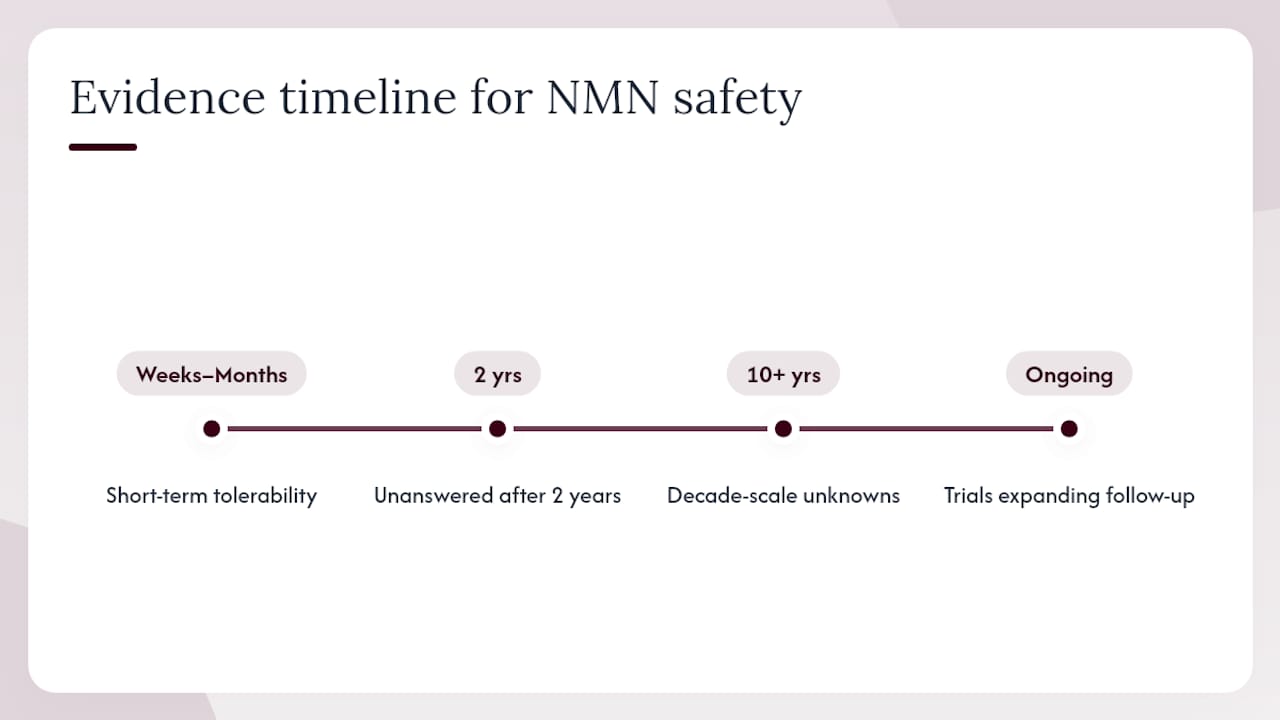
Short-term data looks reassuring. Long-term data barely exists. That gap is the single biggest thing missing from the NMN safety conversation right now, and it’s worth sitting with instead of glossing over.
None of the current human trials run long enough to answer questions like: what happens after two years of daily use? Does sustained NAD+ elevation carry any measurable cancer risk over a decade, given the theoretical concern researchers already flag for people with active cancer? Are there cardiovascular effects that only show up after prolonged use? The honest answer to all three is: nobody knows yet.
Safety reviews consistently note this as the field’s central limitation, not a minor footnote. Small trials with healthy volunteers over a few weeks or months simply aren’t built to catch rare or delayed harms. That’s true of most new supplements in their early research years, and NMN is no exception to that pattern.
Ongoing registered trials on ClinicalTrials.gov are working toward longer follow-up periods and larger cohorts, which will eventually close some of these gaps. Until that data exists, treat NMN the way you’d treat any promising but relatively young supplement: encouraging early evidence, real unknowns still on the table, and a reasonable case for caution if you fall into a higher-risk category.
How Does CP-1 Approach NMN Safety and Quality?
I built CP-1 because I got tired of watching this industry treat “trust me” as an acceptable substitute for actual transparency. When you’re formulating something people take every day for years, the safety conversation isn’t optional marketing copy. It’s the whole job.
That’s why the approach here starts with the same principle the trial data supports: conservative, evidence-aligned dosing rather than chasing the biggest number on a label. CP-1’s ingredients are manufactured in US-based, GMP-certified facilities, with third-party testing to verify what’s actually in the product, not just what the label claims. Every batch is vegan and non-GMO, and the formula skips the sugar alcohols and heavy sweeteners that cause a lot of the “side effects” people mistakenly blame on NMN itself.
None of that replaces what your doctor can tell you about your specific situation. If you’re pregnant, managing a cancer history, or on medications that interact with metabolic pathways, that conversation happens with a clinician, not with a supplement label. What responsible manufacturing does is remove the variables that shouldn’t be part of the equation in the first place: contamination, mislabeled dosing, or fillers that irritate your gut for no good reason. Supplements are one piece of a health strategy. They work best when the product itself isn’t the thing you have to worry about.
— Hugo
Where CP-1 Fits If You’re Ready to Try NMN
If everything above has you thinking “okay, I want to try this, but I want the quality piece handled,” that’s exactly the gap CP-1 NAD+ Advanced Supplement was built to close.
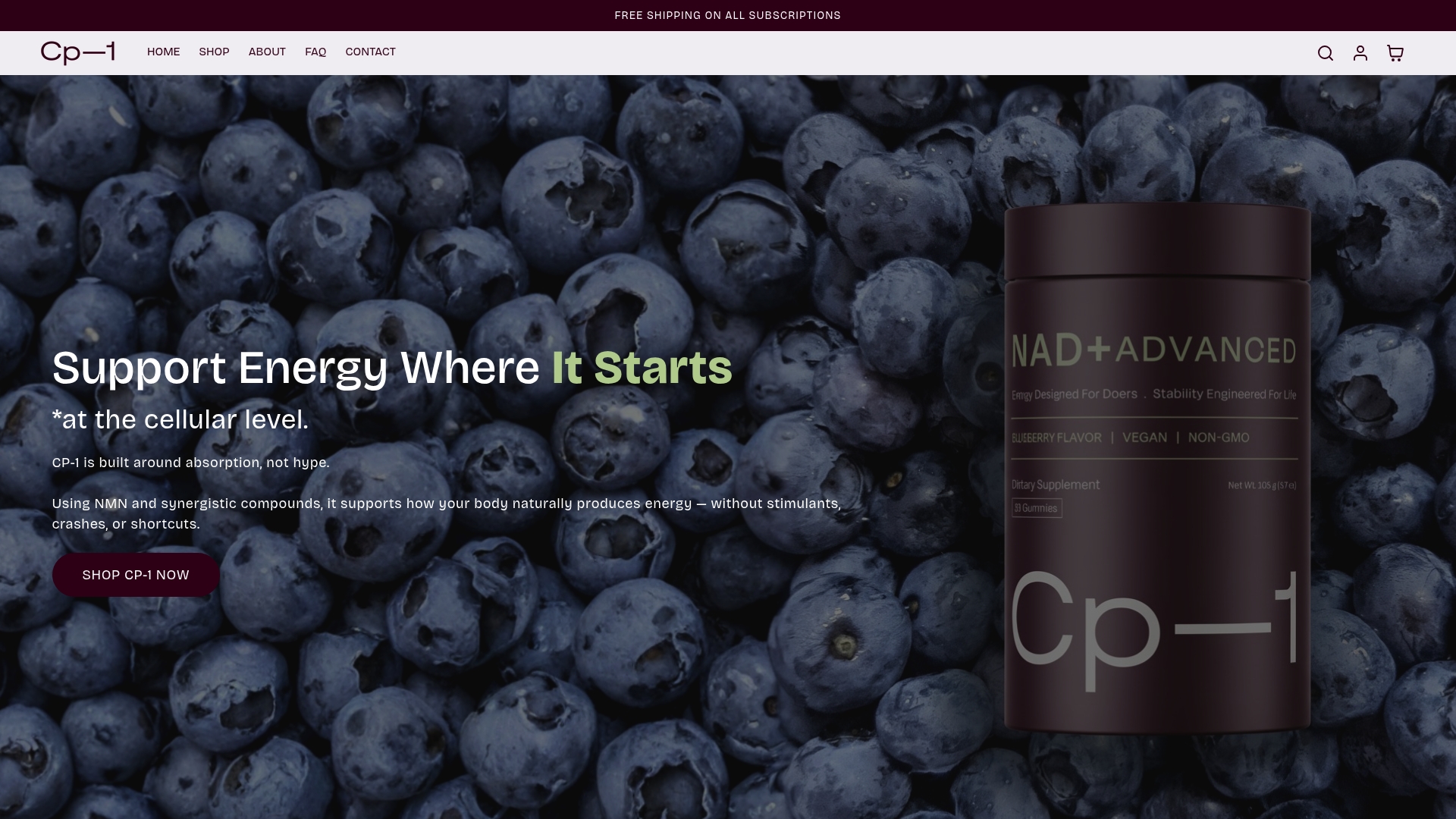
The formula combines NMN with lion’s mane, reishi, and turkey tail mushroom extracts plus CoQ10, in a chewable gummy manufactured in a US-based, GMP-certified facility and backed by third-party testing. No sugar alcohols, no sucralose, no filler ingredients doing the job flavor should be doing. That matters directly to everything covered in this guide: a big chunk of reported “NMN side effects” trace back to formulation choices, not the NMN itself, and CP-1’s approach is built around eliminating those variables rather than hiding behind vague “premium” language.
Dosing follows a conservative, trial-informed philosophy rather than an arbitrary “more is better” number, and a subscription option is available if you decide to work it into a daily routine. If you fall into any of the higher-risk categories discussed here, pregnancy, active medication use, a cancer history, talk to your clinician first. Then, when you’re ready, check out the CP-1 collection and see whether the formula fits what you’re looking for.
This article is general information, not a substitute for advice from a qualified doctor. Consult a qualified healthcare professional about your own circumstances before acting on anything here.
FAQ
What Are the Risks of Taking NMN?
The main risks documented in human trials are mild, short-term effects like GI discomfort, headache, and sleep changes. Serious adverse events haven’t been reported in small trials, but long-term safety data, including cancer and cardiovascular outcomes, is not yet available.
What Happens If You Take NMN Every Day?
Daily use at trial-tested doses like 250 mg has shown good short-term tolerability over 12 weeks, with increased blood NAD+ and no major lab abnormalities. There’s no long-term human data yet on daily use beyond a few months.
What Shouldn’t You Take NMN With?
Be cautious combining NMN with chemotherapy or immunomodulating drugs, blood sugar medications, and anticoagulants, since interaction data is limited for all three. Stacking multiple NAD-boosting supplements at once also makes it harder to identify what’s causing any side effects you notice.
Is NMN Toxic to the Liver?
Current human trials, including a 12-week study at 250 mg/day, haven’t shown major liver-related lab abnormalities in healthy volunteers. People with advanced liver disease should still consult a clinician first, since safety data specific to that population is limited.
Is NMN Safe for Long-Term Use?
Short-term trials of up to 12 weeks suggest good tolerability, but no study has tracked NMN use for years. That gap is why longevity-focused users are encouraged to pair supplementation with periodic clinician check-ins rather than assuming indefinite safety.