
Cognitive enhancement is the systematic process of improving brain function through measurable habits, structured training, and deliberate testing. The most effective approach is not a single supplement or a weekend productivity hack. It is a step by step cognitive enhancement system built on baseline measurement, proven lifestyle foundations, and monthly progress cycles. Adults who follow this kind of structured plan consistently outperform those who chase trendy quick fixes. This guide gives you exactly that: a practical, research-backed framework you can start this week.
What is step by step cognitive enhancement?
Step by step cognitive enhancement, known in cognitive science as structured nootropic self-optimization, means improving brain performance one measurable variable at a time. You start by knowing where you stand, then you add one intervention, track the result for 30 days, and decide whether to keep it. That is the entire method. The power is in the structure, not the complexity.
Before you add anything, you need a baseline. Reaction time, working memory span, and sustained attention are the three core metrics worth tracking. Free tools like the Cambridge Brain Sciences platform and simple reaction time apps give you a starting number in under 10 minutes. Track your mood and energy level daily in a plain notebook or a spreadsheet. These numbers are your control group.

| Baseline assessment | Tool | Frequency |
|---|---|---|
| Reaction time | Free online reaction timer | Weekly |
| Working memory span | Cambridge Brain Sciences | Bi-weekly |
| Sustained attention | Simple focus timer test | Weekly |
| Mood and energy | Journal or spreadsheet | Daily |
| Sleep quality | Sleep tracker or journal | Daily |
The table above gives you a repeatable measurement system. Without it, you are guessing. With it, you can see whether a new habit is actually working or just feels like it is.
Pro Tip: Set a fixed 10-minute “measurement window” each morning before coffee. Consistent timing eliminates the noise that comes from testing at different points in your day.
What lifestyle foundations actually drive cognitive performance?
Lifestyle is not the boring prerequisite you skip to get to the interesting stuff. It is the intervention. About 40% of dementia risk is modifiable through lifestyle choices. That means the habits you build right now have a direct, measurable effect on your brain’s long-term performance.
Sleep is the most underrated cognitive tool available. Seven to nine hours of quality sleep per night is the standard, and consistent wake times within ±30 minutes produce significant gains in memory consolidation and attention. Irregular sleep schedules fragment the deep sleep stages where your brain clears metabolic waste and consolidates new learning.
Aerobic exercise is the second pillar. Twenty to forty minutes of daily movement, whether a brisk walk, cycling, or swimming, increases brain-derived neurotrophic factor (BDNF). BDNF is a protein that supports neuron growth and synaptic plasticity. You do not need a gym membership. A consistent daily walk beats an occasional intense workout every time.
Nutrition rounds out the foundation. The Mediterranean and MIND dietary patterns are the most studied for brain longevity. Both emphasize leafy greens, berries, olive oil, fish, and nuts. Harvard Medical School experts consistently prioritize physical activity and plant-based nutrition over supplements for memory and brain health. Supplements are adjuncts. They are not replacements for these three foundations.
- Sleep 7–9 hours with a fixed wake time (±30 minutes)
- Exercise aerobically for 20–40 minutes daily
- Follow Mediterranean or MIND dietary patterns
- Practice slow-paced breathing: 4–6 breaths per minute for 3–5 minutes before focused work
- Track mood and energy daily to spot lifestyle gaps early
Pro Tip: Build a 20-minute wind-down routine before bed: dim lights, no screens, and 5 minutes of slow breathing at 4–6 breaths per minute. This activates the parasympathetic nervous system and shortens sleep onset time.
How do you structure a weekly cognitive training plan?
Cognitive training works when it targets specific domains, progresses in difficulty, and stays consistent. The three core domains are attention, emotional regulation, and cognitive integration. Rotating through them prevents burnout and trains the brain more completely than repeating one exercise type.
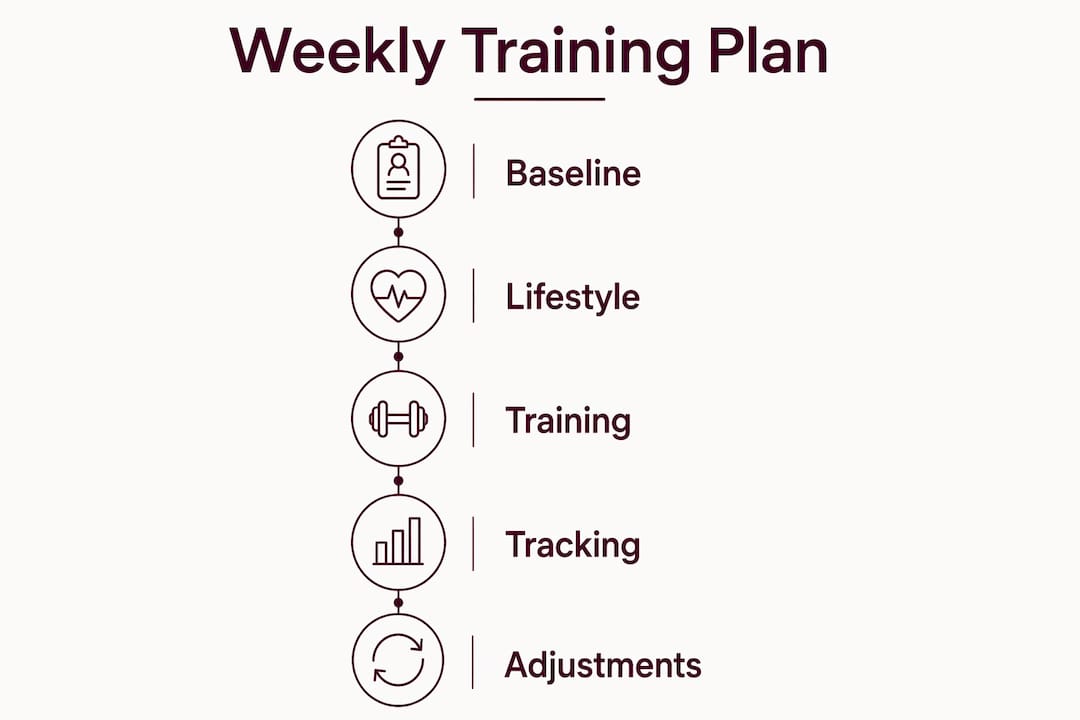
A beginner routine runs 5 sessions per week, 15–20 minutes each, totaling 75–100 minutes weekly. That is a realistic starting point. After 8–12 weeks, you can progress to 5–6 sessions per week at 20–30 minutes each. The key is session quality over session length.
Here is a sample beginner week:
- Monday: 5 minutes of focused attention practice (single-task reading, no interruptions) + 5 minutes of active review
- Tuesday: 3 minutes of paced breathing for emotional regulation + 10 minutes of Dual n-Back training
- Wednesday: 15 minutes of focused reading with written recall afterward
- Thursday: 5 minutes of paced breathing + 10 minutes of working memory exercises
- Friday: 15 minutes of cognitive integration: learn something new and connect it to existing knowledge
The minimum effective dose for attention training is 5 minutes of focused practice. For emotional regulation, 3 minutes of paced breathing at 4–6 breaths per minute is enough to reset your cognitive state before a deep work block. These are not large time commitments. They are precise, repeatable inputs.
Watch for the adaptation plateau. When a session feels too easy for three consecutive weeks, that is your signal to increase difficulty or switch exercise types. Tracking weekly difficulty ratings helps you spot this before your gains stall. Neuroplasticity requires progressive challenge, not repetition of comfortable tasks.
Pro Tip: Use the Dual n-Back task 3 times per week for working memory gains. It is one of the few cognitive training exercises with transfer effects to real-world fluid intelligence.
How do you track progress and run 30-day experiments?
Tracking is where most people fail. They add three new habits at once, feel better after two weeks, and have no idea which one worked. The one-variable-at-a-time rule is non-negotiable. Change one thing, measure it for 30 days, then decide.
A 30-day cognitive intervention starts with your baseline metrics already in place. You introduce one new habit or supplement. You track your reaction time, memory, attention, mood, and energy every day. At the end of the month, you compare week 4 averages to your baseline. Trends matter more than single data points.
Here is how to evaluate your results:
- Retain the intervention if two or more metrics improved and no metrics declined
- Drop it if no metrics improved after a full 30-day cycle
- Modify it if results are mixed: adjust dose, timing, or duration before retesting
| Tracking metric | Method | Review cadence |
|---|---|---|
| Reaction time | Weekly online test | Weekly average |
| Memory and attention | Bi-weekly assessment | Monthly comparison |
| Mood and energy | Daily journal score (1–10) | Weekly trend |
| Sleep quality | Tracker or journal | Weekly average |
| Session difficulty | Weekly self-rating | Monthly review |
The most common mistake is changing multiple variables at once. You add a new supplement, start waking up earlier, and cut caffeine in the same week. Three weeks later you feel sharper, but you cannot attribute the gain to anything specific. Changing multiple variables simultaneously produces unreliable conclusions and wastes months of effort.
Pro Tip: Keep a simple Google Sheet with one row per day. Log five numbers: reaction time, mood, energy, sleep hours, and session quality. Monthly patterns become obvious in under five minutes of review.
Key Takeaways
A structured, measurable approach to cognitive enhancement consistently outperforms random habit stacking, producing reliable, attributable gains in attention, memory, and mental endurance.
| Point | Details |
|---|---|
| Baseline first | Measure reaction time, memory, and attention before adding any intervention. |
| Lifestyle is the intervention | Sleep, exercise, and diet drive more cognitive gain than any supplement alone. |
| Train in cycles | Rotate attention, emotional regulation, and cognitive integration across 5 sessions per week. |
| One variable at a time | Test a single new habit for 30 days before adding or changing anything else. |
| Watch for plateaus | When sessions feel easy for 3 weeks straight, increase difficulty to maintain neuroplasticity. |
What I have learned after years of testing cognitive routines
The biggest mistake I see is people skipping the boring part. They want the supplement stack, the advanced biohacking protocol, the nootropic that changes everything. But they have not slept consistently in months, they barely move, and they eat whatever is convenient. No supplement fixes that. Supplements are adjuncts, not foundations.
The second thing I have learned is that consistency with modest routines beats intensity every single time. A 12-week daily walk and fixed sleep schedule will do more for your cognition than a 30-day extreme protocol followed by two months of nothing. Your brain responds to repetition and predictability. It does not respond to bursts.
There is also an inverted-U effect worth knowing. Stimulants and high-arousal interventions improve performance up to a point, then they hurt it. High-baseline performers are especially vulnerable to this. More is not always better. The goal is the right dose at the right time, not the maximum dose.
What actually works is less exciting than the supplement industry wants you to believe. Fix your sleep. Move daily. Eat real food. Then add structured training. Then, and only then, consider whether a well-formulated supplement like Cp-1 fits your specific gaps. That sequence matters. Reverse it and you are wasting money and time.
— Hugo
Cp-1 and your cognitive enhancement plan
If you have built your lifestyle foundation and want to add a well-formulated supplement to your 30-day testing cycle, Cp-1 is worth a serious look. Cp-1 contains NMN (Nicotinamide Mononucleotide), lion’s mane mushroom extract, reishi mushroom extract, turkey tail mushroom extract, and coenzyme Q10. These ingredients support NAD+ production, mitochondrial energy, and the kind of sustained mental clarity that makes your training sessions actually count.
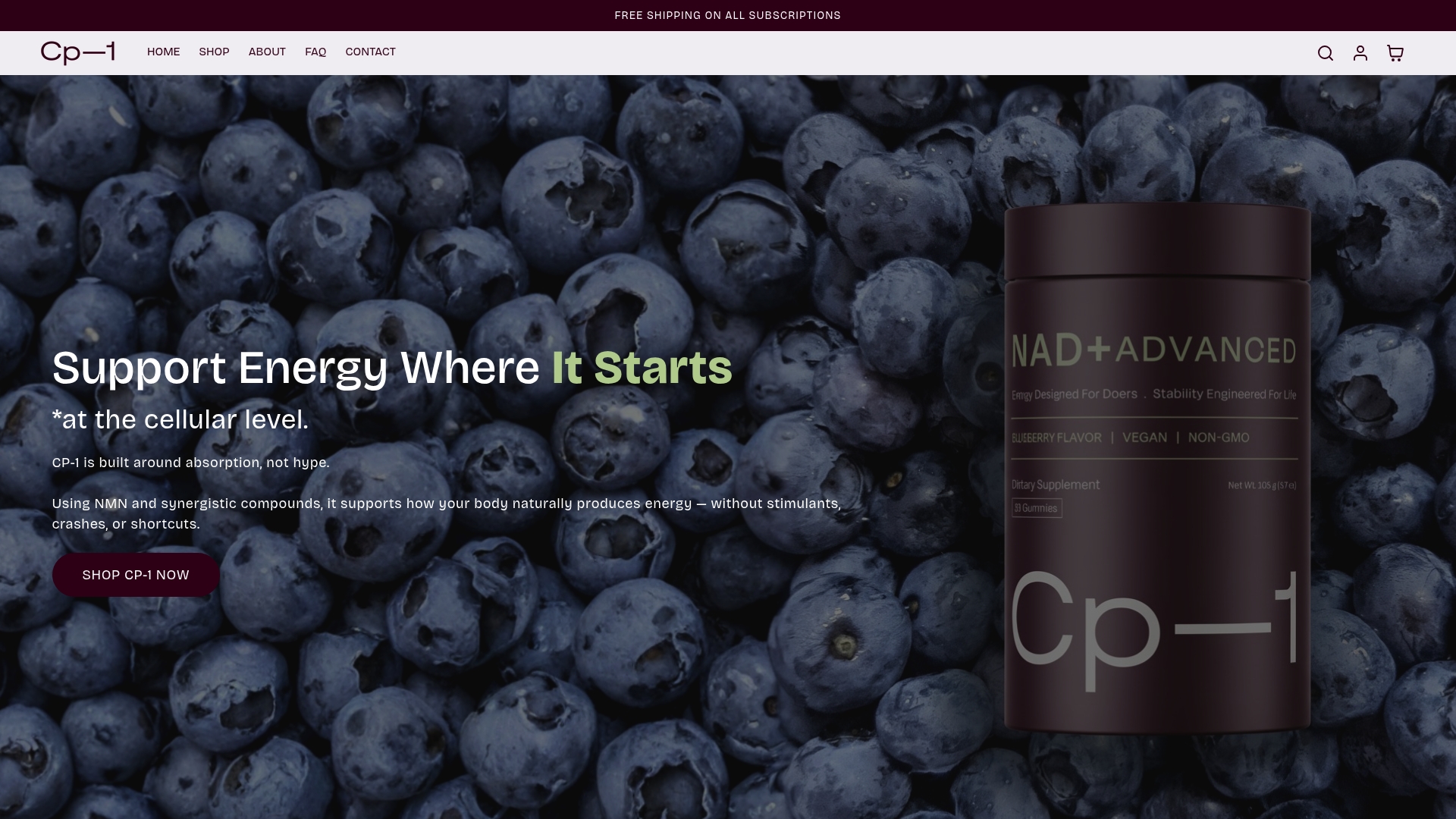
Cp-1 is vegan, non-GMO, third-party tested, and made in the US. It is not designed to replace your sleep or your daily walk. It is designed to support the system you have already built. If you want to see how it fits into a structured cognitive training routine, or learn more about how supplements support performance, the resources at Cp-1 give you the detail you need to make an informed call.
FAQ
What is cognitive enhancement?
Cognitive enhancement is the deliberate improvement of brain functions like memory, attention, and processing speed through lifestyle habits, training, and targeted supplementation. The most effective approaches combine sleep, exercise, nutrition, and structured mental practice.
How long does it take to see results from cognitive training?
A consistent 12-week routine produces measurable cognitive gains in most adults. Daily walks and fixed sleep schedules outperform short-term high-intensity efforts for sustained improvement.
What are examples of cognitive enhancement supplements for biohackers?
Common cognitive enhancement supplement examples include NMN, lion’s mane mushroom extract, coenzyme Q10, and reishi mushroom extract. Cp-1 combines all four with turkey tail mushroom extract in a single vegan, third-party tested formula.
Should I start with supplements or lifestyle changes?
Start with lifestyle changes. Harvard Medical School experts confirm that physical activity and plant-based nutrition produce stronger brain health outcomes than supplements alone. Add supplements only after your sleep, exercise, and diet are consistent.
What is the one-variable rule in cognitive self-testing?
The one-variable rule means you change only one habit or supplement at a time during a 30-day testing cycle. Changing multiple variables simultaneously makes it impossible to know which intervention produced the result.