
Focus is a trainable cognitive skill, not a fixed trait you either have or lack. Knowing how to enhance focus daily comes down to a handful of deliberate habits: managing your environment, timing your energy cycles, and protecting your sleep. Mindfulness practiced for just 10 minutes daily produces measurable attention gains in as little as two weeks. That means you do not need a personality overhaul. You need a system. This article breaks down the science and the practical steps so you can build real, sustained attention starting today.
What daily habits directly improve focus and how they work
The most effective daily focus techniques target your brain’s natural attention cycles rather than fighting against them. Three habits stand out above the rest: mindfulness meditation, single-tasking, and structured work-rest blocks aligned to your ultradian rhythm.
Mindfulness meditation trains your brain to notice when attention drifts and redirect it. Ten minutes each morning is enough to see results. The practice builds the mental muscle that keeps you on task during deep work sessions.

Single-tasking protects the neural pathways that support sustained attention. Heavy multitaskers perform worse on both attention tests and memory tasks. That is not a minor penalty. It means media-multitasking actively weakens your ability to concentrate over time.
Ultradian rhythm-aligned work blocks match your natural brain cycles. Aligning work to ultradian rhythms means working in roughly 90-minute blocks, then taking a 15–20 minute recovery break. Your brain peaks and troughs on this schedule whether you plan for it or not.
- Practice 10 minutes of mindfulness each morning before checking your phone
- Work on one task at a time with all other tabs and apps closed
- Set a timer for 90 minutes of focused work, then take a real break
- Write down distracting thoughts as they arise instead of acting on them
- Use implementation intentions: “If I feel the urge to check social media, I will write it on my list and return to my task”
Pro Tip: Write your single most important task on a sticky note before you open your laptop. That physical cue keeps your brain anchored to the right priority when digital distractions compete for your attention.
The implementation intention technique deserves special mention. Instead of relying on willpower to resist distractions, you plan your response in advance. “If X happens, I will do Y.” This pre-commitment reduces the mental load of decision-making mid-task and keeps you on track without burning cognitive energy.
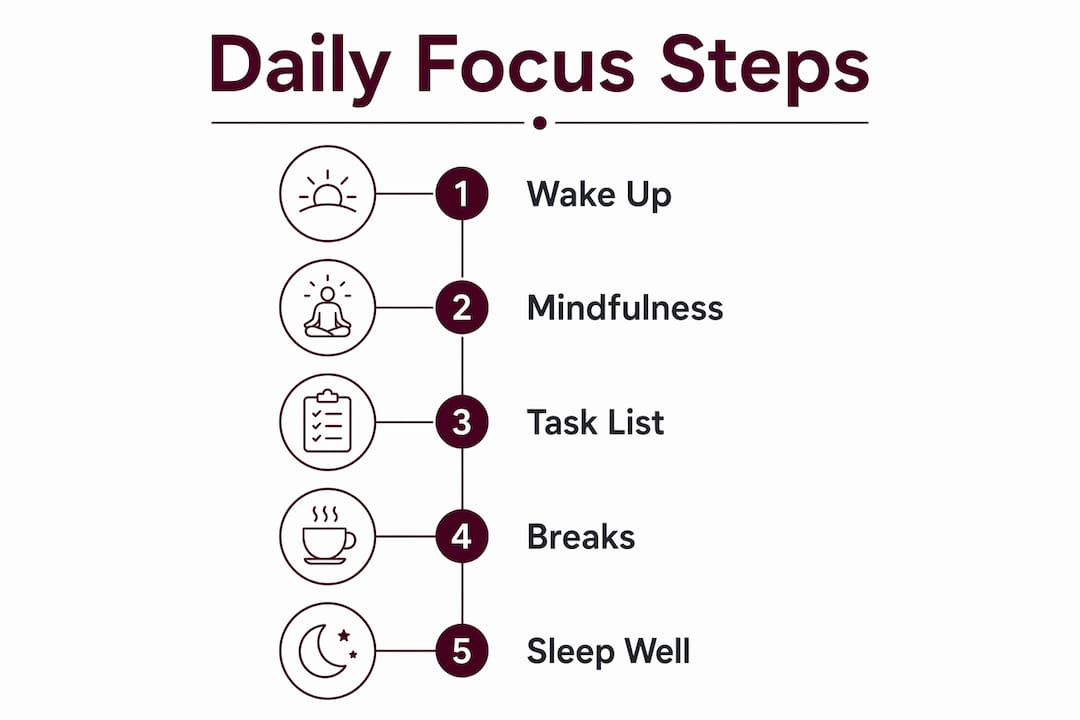
How does your environment shape your ability to concentrate?
Your environment does more cognitive work than your willpower ever will. Focus is best built through environmental engineering, not through gritting your teeth and pushing through distractions. The good news is that environmental changes are fast to implement and immediately effective.
- Remove your phone from the room. The physical presence of a smartphone depletes working memory capacity even when the screen is off and face-down. Out of sight genuinely means out of mind in this case.
- Schedule email and message checks. Checking messages reactively fragments your attention into dozens of micro-interruptions. Batch your inbox to two or three set times per day and protect the rest of your time.
- Eliminate visual clutter. A clean desk reduces the number of competing stimuli your brain has to filter. Less filtering means more capacity for the task in front of you.
- Take nature breaks. A 10-minute walk outside or even a view of greenery restores directed attention through what researchers call involuntary attention restoration. Your brain rests without going offline.
- Protect your focus blocks with social signals. Headphones, a closed door, or a simple “do not disturb” status on messaging apps tell others you are unavailable. Fewer interruptions mean fewer recovery cycles.
Pro Tip: Turn your phone completely off during your first 90-minute work block of the day. Not silent. Off. The difference in mental clarity is immediate and noticeable.
Taking a 10-minute break every hour prevents cognitive depletion and sustains focus across a full workday. That means breaks are not a reward for finishing work. They are a required part of the process. Skipping them costs you more time than taking them.
How do sleep, nutrition, and caffeine timing affect your focus?
Lifestyle factors are the foundation that every other focus technique sits on. Without them, mindfulness and environmental design deliver a fraction of their potential.
Quality sleep of 7–9 hours is the single biggest lever for cognitive performance. Sleep consolidates memories, clears metabolic waste from the brain, and recharges the prefrontal cortex that governs attention and decision-making. Every focus strategy you layer on top of poor sleep is fighting an uphill battle.
Caffeine timing matters more than most people realize. Delaying caffeine 90–120 minutes after waking allows your natural cortisol peak to do its job first. Cortisol is your body’s built-in alertness signal. Drinking coffee the moment you wake up blunts that signal and sets you up for a harder crash later in the morning.
| Lifestyle factor | Recommended practice | Why it matters |
|---|---|---|
| Sleep | 7–9 hours per night | Consolidates memory and restores attention capacity |
| Caffeine timing | 90–120 minutes after waking | Maximizes alertness and reduces afternoon crash |
| Afternoon caffeine | Avoid after 2 p.m. | Late caffeine disrupts sleep onset and quality |
| Nutrition | Prioritize whole foods, omega-3s, leafy greens | Supports stable blood sugar and brain cell function |
| Cognitive offloading | Write tasks and ideas down | Frees working memory for the task at hand |
Nutrition plays a supporting role that most people underestimate. Stable blood sugar keeps attention steady. Omega-3 fatty acids found in fatty fish, walnuts, and flaxseed support the structural integrity of brain cell membranes. Leafy greens provide folate and antioxidants that protect against cognitive decline. None of these are magic. Together, they create the biological conditions where focus can actually happen.
- Eat a protein-rich breakfast to stabilize blood sugar through the morning
- Avoid ultra-processed foods that cause blood sugar spikes and crashes
- Stay hydrated. Even mild dehydration impairs short-term memory and attention
- Use a notebook or app to offload tasks and ideas so your working memory stays clear
How does age affect focus and what can you do about it?
Age-related cognitive slowdown begins around 45, affecting processing speed and memory retrieval. This is normal biology, not inevitable decline. The brain retains significant plasticity well into later decades, and the right strategies can compensate for most of what changes.
The key shift after 45 is moving from passive attention to intentional attention. Younger brains filter distractions more automatically. Older brains benefit from building that filter deliberately through environment and habit.
- Listen actively. Paraphrase what someone says before responding. This reinforces encoding and reduces the memory gaps that feel like focus failures.
- Seek quiet environments. Background noise competes more aggressively with attention as processing speed slows. A quieter workspace is not a preference. It is a performance tool.
- Prioritize social engagement. Regular conversation and mentally stimulating social interaction preserve cognitive reserve. Isolation accelerates decline.
- Integrate cognitive support supplements. Ingredients like lion’s mane mushroom extract and NMN support nerve growth factor production and NAD+ levels, both of which decline with age and affect mental clarity.
- Build in more recovery time. Older brains need slightly longer to consolidate information. Shorter, more frequent breaks outperform long grinding sessions.
The practical takeaway is this: age changes the conditions for focus, not the ceiling. Adapting your workflow to match your biology is not giving up. It is working with your brain instead of against it. CP-1 was built with exactly this kind of person in mind, someone who wants real cognitive support grounded in biology, not marketing.
Key takeaways
Consistent daily habits, not willpower alone, are the proven path to sharper focus, better memory, and sustained mental clarity.
| Point | Details |
|---|---|
| Mindfulness builds attention | Ten minutes of daily mindfulness produces measurable focus gains within two weeks. |
| Environment beats willpower | Removing your phone from the room protects working memory better than self-control alone. |
| Sleep is non-negotiable | Seven to nine hours of quality sleep is the single most powerful focus lever available. |
| Caffeine timing matters | Delaying your first coffee 90–120 minutes after waking maximizes alertness and reduces crashes. |
| Age requires adaptation | Cognitive slowdown after 45 is normal. Intentional habits and targeted support can offset most of it. |
What I’ve learned about focus that most articles get wrong
Most focus advice treats attention like a tank you fill up once in the morning and drain through the day. That model is wrong, and it leads people to grind through exhaustion instead of working with their biology.
What I have found, both personally and in building CP-1, is that focus is rhythmic. It rises and falls in roughly 90-minute cycles. The people who protect those cycles, who actually stop and recover before they feel depleted, consistently outperform the ones who push through. Mind-wandering during breaks is not wasted time. It is when your brain consolidates what it just processed and generates the connections that feel like creative insight.
The other thing most articles miss is the role of patience. Focus does not improve in a day. Two to four weeks of consistent habit practice is the realistic timeline. People quit after three days because they do not feel different yet. That is the exact moment the habit is starting to take hold.
My honest advice: pick two habits from this article, not ten. Do them every day for a month. Then add one more. The step-by-step approach to focus improvement is slower than you want and faster than you expect.
— Hugo
What CP-1 offers for focus and daily mental clarity
CP-1 was built for people who take their cognitive performance seriously and are tired of products that overpromise and underdeliver.
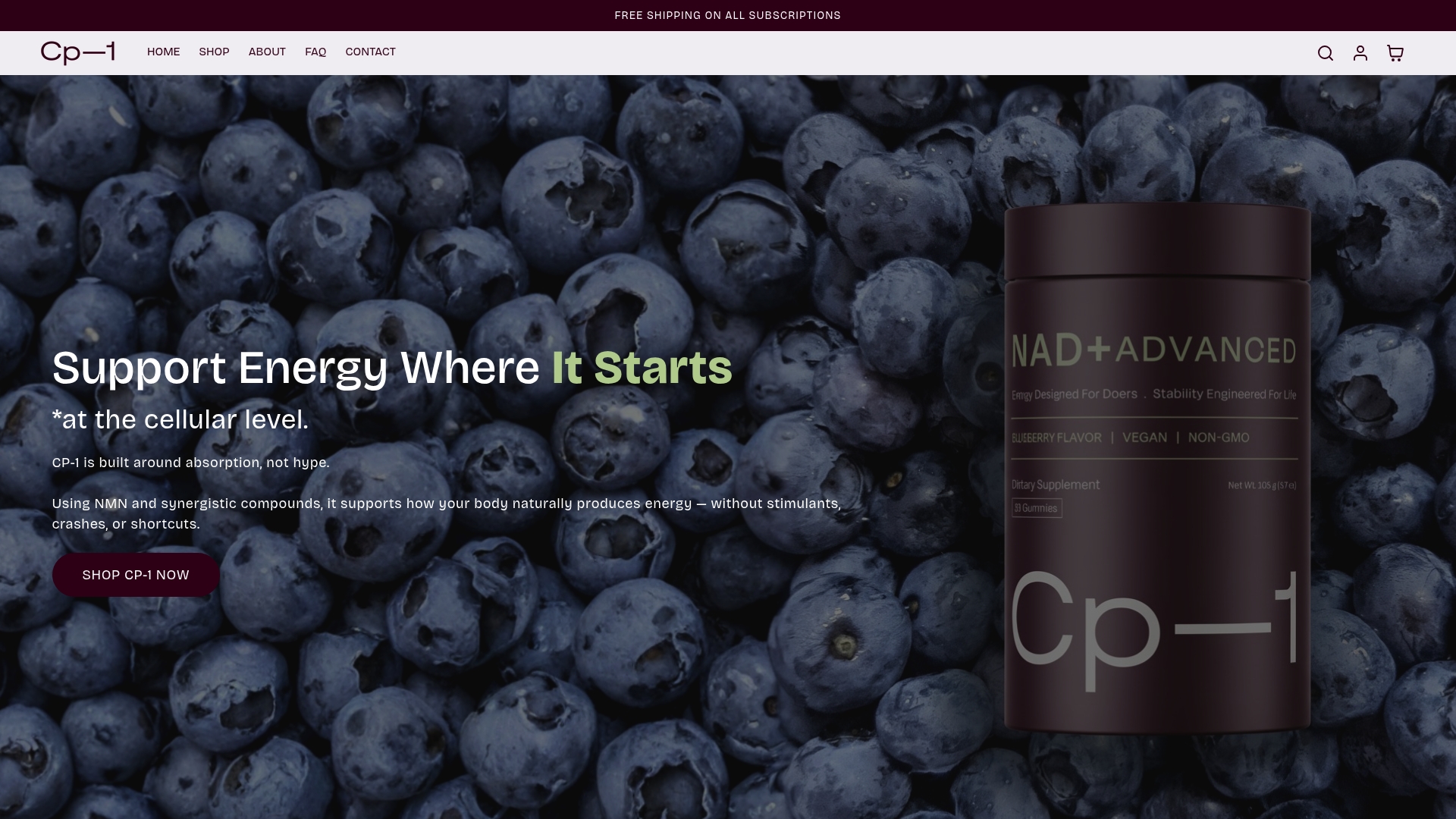
The CP-1 supplement combines NMN, lion’s mane mushroom extract, reishi mushroom extract, turkey tail mushroom extract, and coenzyme Q10. These ingredients support NAD+ production, mitochondrial energy, and nerve growth factor, all of which directly affect how clearly and consistently you think. Every batch is third-party tested, vegan, non-GMO, and manufactured in the United States. If you want to pair the lifestyle habits in this article with real biological support, explore CP-1’s approach to natural cognitive enhancement. The natural energy and focus checklist is a solid place to start building your daily workflow.
FAQ
How long does it take to improve focus with daily habits?
Measurable focus gains appear in as little as two weeks with consistent practice. Most people see meaningful improvement within 2–4 weeks of daily mindfulness and structured work blocks.
Does removing your phone really help concentration?
Yes. The physical presence of a smartphone reduces working memory capacity even when the device is off. Removing it from the room is more effective than relying on self-control.
What is the best time to drink coffee for focus?
Delay your first coffee 90–120 minutes after waking. This lets your natural cortisol peak do its job and makes caffeine more effective while reducing the mid-morning crash.
How does sleep affect daily focus?
Sleep of 7–9 hours consolidates memories and restores the prefrontal cortex, which governs attention and decision-making. Without adequate sleep, every other focus strategy delivers diminished results.
Can older adults improve their focus?
Age-related cognitive changes begin around 45 but are not irreversible. Intentional listening, quieter environments, social engagement, and targeted cognitive support strategies can offset most of the practical impact on daily attention.