
Turkey tail supplements are usually well tolerated, but gastrointestinal upset (bloating, gas, nausea, diarrhea) is common, and rare allergic reactions or drug interactions are possible. Supplements aren’t FDA-reviewed for safety or efficacy, and doses vary by brand. If you’re on chemotherapy, immunosuppressants, anticoagulants, or antidiabetic medication, talk to your doctor before you start.
TL;DR:
- Gastrointestinal upset, such as bloating, gas, and diarrhea, is common in the first week of turkey tail supplement use, especially at higher doses.
- Rare allergic reactions, including anaphylaxis, can occur, particularly in individuals with mushroom or mold allergies, requiring immediate medical attention if symptoms develop.
- Turkey tail may interact with blood sugar, blood thinners, and certain cancer treatments, necessitating consultation with a healthcare professional before use.
- Quality varies widely; choosing products with third-party testing, clear labeling, and GMP certification reduces safety risks related to contaminants and inconsistent dosing.
- Long-term safety data is limited, and supplement dosing is unstandardized, so starting with low doses and consulting a doctor is advised, especially for vulnerable groups.
Table of Contents
- What Are the Common Turkey Tail Side Effects?
- Could Turkey Tail Cause a Serious Allergic Reaction?
- What Drugs Interact With Turkey Tail Mushroom?
- Who Should Avoid Turkey Tail Mushroom Supplements?
- How Does Turkey Tail Dosage Compare to Clinical PSK Studies?
- How Can You Choose a Safer Turkey Tail Supplement?
- Why Manufacturing Standards Matter for Turkey Tail Safety
- Is Turkey Tail Worth the Risk for You?
- Where Can You Find a Quality-Tested Turkey Tail Supplement?
- Sources
- FAQ
What Are the Common Turkey Tail Side Effects?
Most turkey tail side effects show up in the gut, not anywhere more dramatic. People report bloating, gas, nausea, diarrhea, and occasionally heartburn, especially in the first week or two of use. These reactions mirror what shows up in clinical reviews of medicinal mushroom trials, where mild gastrointestinal symptoms were the most frequently logged complaint.
A couple of cosmetic quirks turn up too. ConsumerLab’s safety review notes reports of dark stools and fingernail discoloration in some trial participants. Neither is dangerous on its own, but both are worth mentioning to a clinician if they show up alongside other symptoms.
Trial data also suggests a dose relationship: higher extract amounts tend to produce more gastrointestinal complaints. That’s a good argument for starting low and paying attention, rather than jumping straight to a maximum label dose.
A few practical habits help you sort out normal adjustment from a real problem:
- Start with a partial dose for the first three to five days and note how your digestion responds.
- Take it with food if you notice nausea on an empty stomach.
- Track symptoms in a note app, since bloating that fades in a week is different from bloating that gets worse.
- Stop and call your provider if diarrhea persists past a few days or you notice blood in your stool.
Could Turkey Tail Cause a Serious Allergic Reaction?
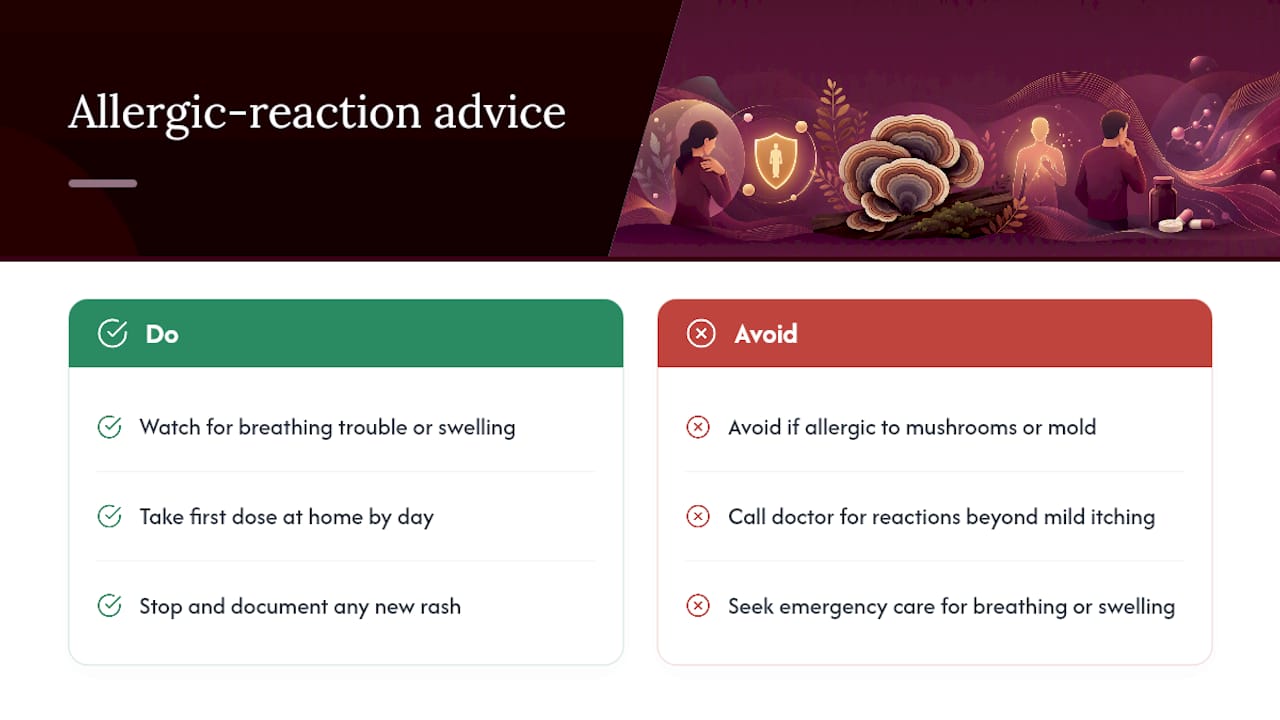
Anaphylaxis from turkey tail is rare, but it’s real, and it’s the one reaction that turns “mild inconvenience” into “call 911.” Watch for difficulty breathing, tightness in the throat, swelling of the face or tongue, hives spreading across the body, or a sudden drop in blood pressure. NCBI’s review of medicinal mushroom toxicity documents anaphylaxis as a possible, if uncommon, outcome, particularly in people with existing mushroom or mold sensitivities.
If you already carry a mushroom allergy, a mold allergy, or a history of reacting to fungal supplements, your risk is meaningfully higher. Anyone in that group should read up on mold sensitization and mushroom allergy risk before trying turkey tail at all.
Pro Tip: Take your first-ever dose at home, during the day, when you can get to a phone or an emergency room quickly if something goes wrong.
Any reaction beyond mild itching warrants a call to your doctor; anything involving your breathing or swelling means emergency care, not a wait-and-see approach.
What Drugs Interact With Turkey Tail Mushroom?
Turkey tail’s active compounds, PSK and PSP, are polysaccharides that stimulate immune activity and appear to influence how the body handles certain medications. The interaction evidence isn’t extensive, but it’s specific enough to take seriously.
- Antidiabetic drugs. Lab data point to possible CYP2C9 inhibition, which raises the theoretical risk of low blood sugar when turkey tail is combined with drugs like glyburide. HelloPharmacist’s interaction summary flags this as a moderate, monitor-worthy interaction.
- Chemotherapy and immunosuppressants. Because PSK/PSP ramp up immune signaling, they may work against drugs designed to suppress immune activity, and animal studies suggest altered exposure to agents like cyclophosphamide and tamoxifen.
- Anticoagulants. The bleeding-risk signal is largely theoretical, but anyone on warfarin or similar blood thinners should ask about extra INR monitoring before adding turkey tail.
Pro Tip: Bring the actual supplement bottle to your next medication review, not just the name. Extract type and concentration change the interaction picture, and your pharmacist can’t evaluate what they can’t see.
Who Should Avoid Turkey Tail Mushroom Supplements?
Some people should treat turkey tail as a “check with your doctor first” supplement rather than a shelf-grab. The immune-stimulating action that makes it interesting for wellness use is exactly what makes it risky for certain conditions.
- Anyone with a known mushroom or mold allergy, given the documented anaphylaxis risk.
- Organ transplant recipients or anyone on immunosuppressive drugs or biologics, since reviews of medicinal mushroom safety flag immune stimulation as a potential conflict with suppressive therapy.
- People actively undergoing chemotherapy or immunotherapy, who need their oncology team’s sign-off first.
- Pregnant or breastfeeding people, since safety data here is essentially absent.
- Anyone on anticoagulants or antidiabetic medications, due to the interaction signals above.
How Does Turkey Tail Dosage Compare to Clinical PSK Studies?
Here’s where a lot of marketing gets ahead of the evidence. Clinical trials of PSK and PSP, largely conducted with pharmaceutical-grade extracts, commonly used moderate daily doses and reported generally acceptable tolerability, according to a clinical review of medicinal mushroom trials.
The problem is that pharmaceutical PSK used historically in Japan isn’t the same product as what’s sitting on a US supplement shelf. Standardization, purity, and polysaccharide concentration all differ, and the National Cancer Institute’s PDQ summary is direct about this: results from that clinical context don’t transfer automatically to unregulated OTC extracts.
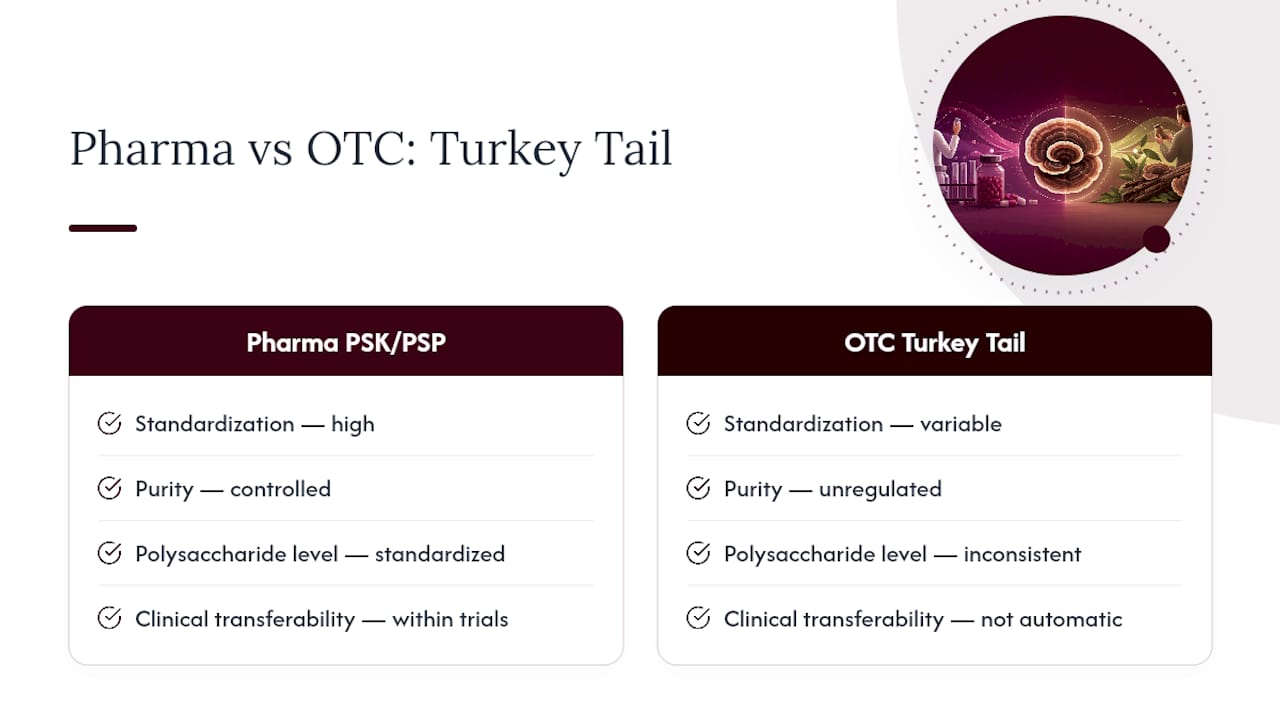
The FDA does not review dietary supplements for safety or efficacy before they reach store shelves, and there’s no standardized dosing requirement for turkey tail products sold as supplements. Long-term safety data at high doses in healthy adults simply doesn’t exist yet. The practical move is conservative dosing, a medical check-in before starting, and honest symptom tracking rather than assuming a trial dose applies to your bottle.
How Can You Choose a Safer Turkey Tail Supplement?
Product quality is the risk factor you actually have some control over. Mushrooms absorb whatever is in their growing environment, including heavy metals, and Medical News Today’s safety overview points to contamination as a genuine concern with unverified brands.
- Look for a third-party certificate of analysis (COA) covering heavy metals and mycotoxins, ideally from a lab following USP or NSF protocols.
- Confirm the label states the extract type, beta-glucan or polysaccharide content, and dose per serving, not just “turkey tail mushroom powder.”
- Skip anything hiding behind a vague proprietary blend with no breakdown of ingredient amounts.
- Verify GMP manufacturing, a real manufacturer address, and visible contact information.
Pro Tip: A COA that’s more than two years old, or one that doesn’t list a batch number matching your bottle, isn’t worth much. Ask the brand for one that matches what you’re actually holding. Our supplement label reading checklist walks through exactly what to look for before you buy.
Why Manufacturing Standards Matter for Turkey Tail Safety
Everything above comes down to one uncomfortable truth: turkey tail’s safety profile depends heavily on who made it and how. That’s the standard CP-1 built the CP-1 NAD+ Advanced Supplement around, with US-based, GMP-certified manufacturing, third-party testing, and vegan, non-GMO ingredients, because the mushroom itself carries risk when sourcing and testing get skipped.
This article draws on regulatory summaries from the FDA and NCI, toxicity reviews from NCBI, and interaction data from clinical pharmacology sources, compiled and edited by Hugo for CP-1’s editorial team. The practical takeaway holds regardless of which brand you choose: verified sourcing and transparent testing are what turn a plausible-benefit ingredient into something you can actually trust in your body.
Is Turkey Tail Worth the Risk for You?
Turkey tail’s promise is real, but so is the gap between a promising compound and a safe, well-made product sitting in a bottle on a shelf. I think the wellness industry has done readers a disservice by talking endlessly about PSK’s history in Japanese oncology while glossing over the fact that almost none of that data describes the unregulated extract most people are actually buying.
That doesn’t mean skip it. It means treat the decision the way you’d treat any active compound: check with your clinician, especially if you’re managing cancer treatment, diabetes, or blood thinners, and look at the certificate of analysis before you look at the marketing copy. If you want a place to start comparing products against that standard, our breakdown of turkey tail’s core benefits is a reasonable next stop.
— Hugo
Where Can You Find a Quality-Tested Turkey Tail Supplement?
Some supplements attempt to address concerns such as contamination risk, vague labeling, and unverified sourcing. Some products combine turkey tail with ingredients like lion’s mane, reishi, NMN, and CoQ10, and describe manufacturing standards including GMP certification, third-party testing, and use of vegan, non-GMO ingredients without fillers or undisclosed concentrations.
If everything above made you want to double-check what’s actually in your supplement, that instinct is correct. Review the certificate of analysis before you buy anything, start at a conservative dose regardless of brand, and talk to your clinician first if you’re on chemotherapy, anticoagulants, or antidiabetic medication. When you’re ready to compare a transparently tested option, browse the CP-1 collection and check the sourcing details for yourself.
This article is general information, not a substitute for advice from a qualified doctor. Consult a qualified healthcare professional about your own circumstances before acting on anything here.
Sources
- Medicinal Mushrooms: Bioactive Compounds, Potential Health Benefits and Toxicity — NCBI Bookshelf
- Dietary Supplements | FDA
- Mushrooms (PDQ®)–Patient Version — National Cancer Institute (NCI)
- Turkey Tail Mushroom and Glyburide Interaction — HelloPharmacist
- Consumerlab
FAQ
What Should You Not Mix With Turkey Tail?
Be cautious combining turkey tail with anticoagulants, antidiabetic drugs like glyburide, and chemotherapy or immunosuppressant medications, since interaction data suggests possible effects on blood sugar and drug metabolism. Always run new supplements past your prescribing doctor or pharmacist first.
Is It Safe to Take Turkey Tail Every Day?
Daily use appears generally well tolerated in people without allergies or the medication concerns noted above, based on tolerability data from clinical trials. Long-term safety data beyond trial periods is still limited, so periodic breaks and clinician check-ins are reasonable.
How Does Turkey Tail Make You Feel?
Most people notice nothing dramatic beyond mild digestive adjustment in the first week, such as bloating or gas that settles down. Some report a subjective sense of steadier energy or immune support, though this isn’t something formal trials measure directly.
Who Should Not Take Turkey Tail?
People with mushroom or mold allergies, transplant recipients, anyone on immunosuppressive therapy, active chemotherapy patients, and pregnant or breastfeeding people should avoid turkey tail without medical clearance. The same caution applies to anyone on anticoagulants or antidiabetic drugs, given the interaction concerns covered above.
Can Turkey Tail Cause Nausea?
Yes, nausea is one of the more commonly reported turkey tail side effects, particularly at higher extract doses. Taking it with food and starting at a lower dose typically reduces this effect.