

Cognitive Resilience: What It Is and How to Build It
Cognitive resilience is the ability to maintain cognitive performance despite measurable adverse brain-related change. That definition comes directly from the Trans-NIH Resilience Working Group, and it matters because it explains something researchers have puzzled over for decades: why two people with nearly identical amounts of Alzheimer’s pathology in their brains can function so differently. One person shows significant memory loss; the other is still sharp at 85. The difference is not luck. It is cognitive resilience. The Alzheimer’s & Dementia journal and the National Institutes of Health have both flagged this as one of the most clinically significant concepts in aging research today.
Table of Contents
- How do researchers actually measure cognitive resilience?
- What can you actually do to build cognitive resilience?
- Why does cognitive resilience matter for aging, dementia, and everyday life?
- What are the real limits of current cognitive resilience research?
- Key Takeaways
- The part most guides skip
- Cp-1 supports the biology behind cognitive resilience
- Useful sources and further reading
How do researchers actually measure cognitive resilience?
Measuring resilience is harder than it sounds. You cannot observe it in a single snapshot. By definition, you need to know both the degree of brain-related adversity a person carries and how well they function despite it. That requires longitudinal data, and most studies that claim to measure resilience are actually measuring proxies.
The main measurement approaches fall into four categories:
| Method | What it captures | Key limitation |
|---|---|---|
| Standardized cognitive batteries / composite scores | Overall cognitive function across domains (memory, processing speed, executive function) | Does not directly measure pathology burden |
| Neuroimaging (MRI, PET amyloid/tau) | Brain structure, atrophy rates, amyloid and tau deposition | Expensive, not widely available outside research settings |
| Fluid biomarkers (amyloid-beta, tau, neurofilament light) | Molecular markers of pathology and neurodegeneration | Invasive (CSF) or still-developing (blood-based) |
| Genetic association studies | Polymorphisms linked to resilience tendencies | Explains a small fraction of variance; population-level, not individual |
The Frontiers in Aging Neuroscience review makes a point that gets overlooked in popular coverage: resilience should always be defined relative to a specific adverse factor. Saying someone is “cognitively resilient” without specifying resilient to what (amyloid burden? white matter lesions? traumatic brain injury?) is not a meaningful claim. This is why the CRUS and composite cognitive reserve proxies are useful as covariates but not as direct resilience measures.
“Resilience is not a single trait measured once. It is a relationship between brain-level adversity and functional outcome, and it can only be confirmed by tracking both over time.” — Frontiers in Aging Neuroscience
Pro Tip: If you are reading a study that claims to identify “cognitively resilient” individuals, check whether the study measured actual pathology burden (via imaging or biomarkers) or just used education and occupation as proxies. The latter is measuring reserve, not resilience.
The PubMed-indexed clinical literature reinforces this point: studies that combine neuroimaging with longitudinal cognitive assessment give the most reliable resilience estimates, while cross-sectional designs with proxy measures are suggestive at best.
A real methodological challenge is reverse causation. People who are cognitively active may be active because they are cognitively healthy, not the other way around. Separating cause from effect requires long follow-up periods, ideally starting before any signs of decline, and most existing cohorts did not enroll participants early enough.
What can you actually do to build cognitive resilience?
This is where the evidence gets both encouraging and honest. Some lifestyle factors have strong human trial data behind them. Others are supported mainly by observational studies or animal models. Knowing the difference matters, because the supplement industry in particular has a habit of treating preclinical findings as clinical proof.
Here is a prioritized breakdown by evidence strength:
- Physical exercise (strong evidence): Aerobic exercise is the most consistently supported modifiable factor for cognitive health in older adults. Randomized trials show benefits for memory, executive function, and hippocampal volume. Aim for a recommended amount of moderate-intensity activity per week, consistent with American Heart Association guidelines.
- Cognitive stimulation (strong-to-moderate evidence): Mentally demanding activities, especially those that are novel and challenging, are associated with higher cognitive reserve and better resilience outcomes. Learning a new language, musical instrument, or complex skill builds more reserve than passive activities. The Neurotrack clinical resource highlights lifelong cognitive engagement as one of the most consistent lifestyle correlates in superager research.
- Social engagement (moderate evidence): Socially active adults show slower cognitive decline in longitudinal cohorts. The mechanism likely involves both cognitive stimulation and stress buffering. Quality of social connection appears to matter more than quantity.
- Sleep (moderate evidence): The glymphatic system clears amyloid and tau primarily during deep sleep. Chronic sleep deprivation is associated with higher amyloid accumulation. Seven to nine hours of quality sleep is the current recommendation for adults.
- Cardiovascular risk management (strong evidence for risk reduction): Hypertension, diabetes, and obesity in midlife are among the strongest modifiable risk factors for dementia. Managing these directly reduces the pathology burden that resilience has to overcome.
- Hearing and vision correction (emerging evidence): Untreated hearing loss is now recognized as one of the largest modifiable dementia risk factors. Hearing aids appear to reduce cognitive decline in high-risk older adults, though large RCT data are still accumulating.
- Stress management and explanatory style (moderate evidence): Martin Seligman’s research on explanatory style shows that interpreting adversity as temporary, specific, and controllable is associated with higher psychological resilience. Evidence-based strategies like cognitive reappraisal and mindfulness-based stress reduction are trainable skills with measurable effects on stress biomarkers and cognitive performance.
- Nutrition (moderate evidence): The MIND diet (a hybrid of Mediterranean and DASH diets) is the most studied dietary pattern for cognitive health. It emphasizes leafy greens, berries, nuts, fish, and olive oil while limiting red meat and processed foods.
- Purposeful engagement (limited but consistent evidence): Volunteering and having a sense of purpose are associated with slower cognitive decline in several large cohorts, possibly through stress reduction and continued cognitive engagement.
Pro Tip: The biggest mistake people make is treating these as an either/or list. The evidence suggests these factors interact: exercise improves sleep quality, social engagement reduces stress, and better cardiovascular health reduces the pathology burden that resilience has to absorb. Stack them.
A Harvard T.H. Chan School of Public Health study found higher cognitive resilience among some oldest-old groups, supporting the idea that modifiable factors can influence resilience even at advanced ages. That is not a guarantee, but it is a meaningful signal that it is never too late to start.
Why does cognitive resilience matter for aging, dementia, and everyday life?
The practical stakes here are real. Dementia affects millions of Americans, and the gap between brain pathology and functional decline is where cognitive resilience lives. Building resilience does not mean you will never develop pathology. It means your brain may tolerate more of it before function breaks down.
The clearest real-world illustration comes from “superager” research. Superagers are individuals in their 80s and beyond who maintain memory and cognitive function comparable to people decades younger. Northwestern University’s Feinberg School of Medicine has been studying this group systematically, and the findings are striking: superager brains shrink more slowly than their peers’ brains, and their cortical thickness in memory-related regions resembles that of people in their 50s and 60s. Lifestyle patterns in this group cluster around high social engagement, regular physical activity, and lifelong cognitive challenge.
“Superagers are not just lucky. Their brains show measurably slower atrophy in regions critical for memory, and their lifestyle patterns are consistent enough to suggest these are not random outcomes.” — Northwestern Feinberg School of Medicine
For caregivers, the resilience framework changes how you interpret a loved one’s status. A person with a confirmed dementia diagnosis who is still managing daily tasks reasonably well is not “not that bad yet.” They may be demonstrating genuine resilience, and the goal of care should include protecting the factors that support it: sleep, social connection, physical activity, and sensory health.
Pro Tip: If you are supporting an older adult, cognitive rest after any neurological event matters too. Post-concussion protocols, for example, emphasize cognitive rest as a recovery tool that protects the brain’s capacity to adapt.
A composite picture of resilience in practice: consider an 82-year-old woman with moderate amyloid burden on PET imaging who still manages her finances, drives locally, and hosts a weekly card game. Her neurologist notes that her cognitive test scores are higher than her imaging would predict. That gap, function exceeding what pathology alone would suggest, is cognitive resilience in action.

What are the real limits of current cognitive resilience research?
The honest answer is that we know more about what resilience looks like than about how to reliably produce it. Several major limitations shape what the evidence can actually tell us.
| Limitation | What it means in practice |
|---|---|
| Heterogeneous definitions | Studies use different operational definitions, making cross-study comparisons unreliable |
| Reverse causation | Cognitively active people may be active because they are healthy, not the other way around |
| Measurement bias | Most resilience studies rely on proxy measures (education, occupation) rather than direct pathology assessment |
| Population sampling | Many cohort studies over-represent educated, white, high-income participants, limiting generalizability |
| Short follow-up periods | Resilience is a longitudinal concept; many studies lack the follow-up length to confirm it |
The distinction between “resistance” (not accumulating pathology) and “resilience” (tolerating pathology) is still being worked out. Most lifestyle intervention studies cannot tell you whether a participant accumulated less pathology or simply tolerated the same amount better. That distinction matters enormously for understanding mechanisms and designing interventions.
“The field is at a defining moment. We have consensus on what cognitive resilience means, but the mechanisms that drive it and the interventions that reliably build it remain open questions.” — NIH National Institute on Aging
Open research priorities include: identifying which molecular pathways are most modifiable, determining whether resilience built in midlife transfers to late life, and designing clinical trials that measure pathology burden directly rather than relying on proxy measures. The Alzheimer’s & Dementia journal has called for longitudinal study designs as the standard for resilience research going forward.
Key Takeaways
Cognitive resilience, the ability to maintain function despite brain-related adversity, is shaped by biology, lifestyle, and the interaction between them, and the strongest evidence points to exercise, cognitive engagement, and cardiovascular health as the most modifiable levers.
| Point | Details |
|---|---|
| Operational definition | Cognitive resilience is maintained cognitive function despite measurable brain-related adversity, per the Trans-NIH framework. |
| Measurement requires longitudinal data | A single cognitive test cannot confirm resilience; you need both pathology burden and function tracked over time. |
| Strongest modifiable factors | Aerobic exercise, cognitive stimulation, social engagement, and cardiovascular risk management have the most consistent human evidence. |
| Supplements as adjuncts | NMN and lion’s mane target relevant biological pathways, but direct human cognitive outcome data remain early-stage. |
| Cp-1 as a practical adjunct | Cp-1’s NAD+ gummy combines NMN, lion’s mane, reishi, turkey tail, and CoQ10 to support the mitochondrial and NAD+ pathways relevant to brain health, alongside lifestyle strategies. |
The part most guides skip
Most articles on cognitive resilience end with a tidy list of lifestyle tips and leave you feeling like the science is more settled than it is. I want to push back on that a little.
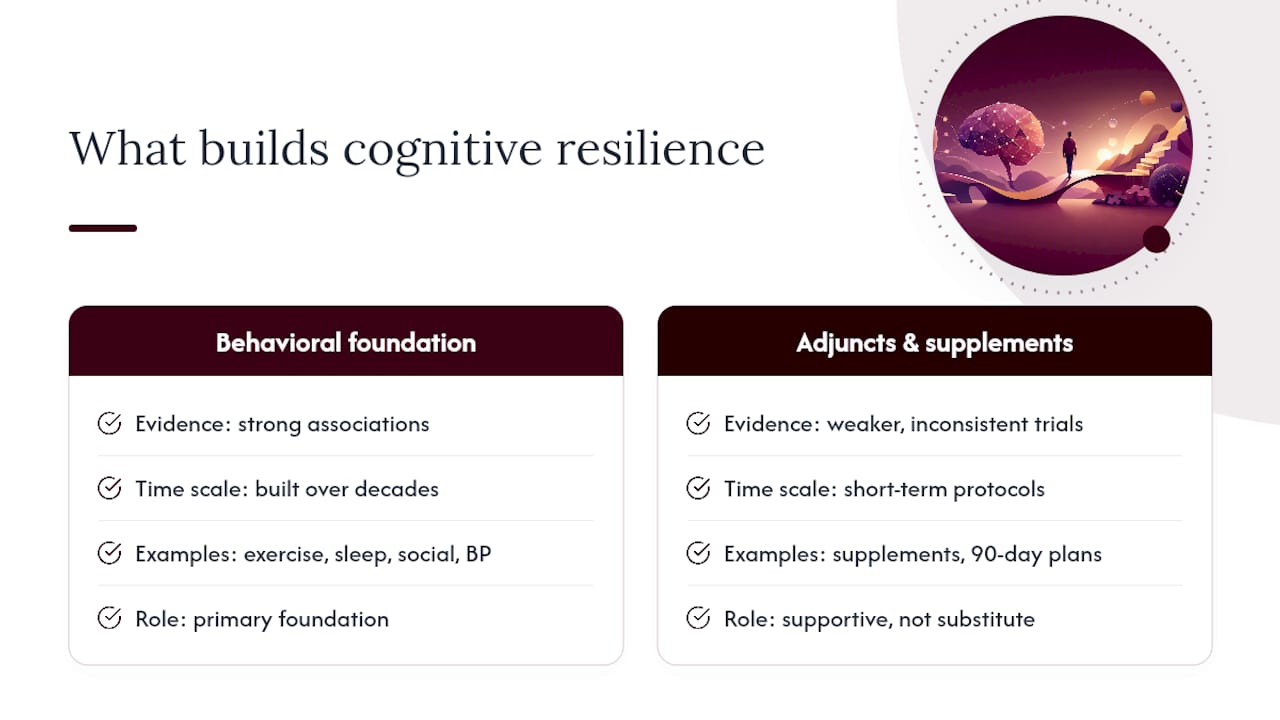
The honest picture is this: we have strong evidence that certain lifestyle factors are associated with better cognitive outcomes in aging. We have much weaker evidence that any single intervention reliably builds resilience in a person who is already showing decline. The superager research is inspiring, but superagers are not a recipe. They are an existence proof that the brain can age better than we expect. What drives that in any individual is still partly unknown.
What I think gets underestimated is the compounding effect of consistent, unremarkable habits. Not a 90-day protocol. Not a single supplement. The people who show up in the resilient cohorts are the ones who have been exercising, staying socially connected, sleeping adequately, and managing their blood pressure for decades. The biology of resilience is built slowly, and it is built mostly through behavior.
Supplements like the ones in Cp-1 target real biological pathways: NAD+ metabolism, mitochondrial function, neuroinflammation. Those pathways matter. But they are most relevant as support for a foundation that is already in place, not as a substitute for one that is not. If your sleep is poor, your cardiovascular risk is unmanaged, and you are socially isolated, no gummy is going to close that gap. Get the foundation right first. Then consider what adjuncts make sense for your situation, ideally with a clinician who knows your health history.
This is general information, not medical advice. Confirm any supplement or intervention decisions with a qualified healthcare provider.
Cp-1 supports the biology behind cognitive resilience
If you have done the work on lifestyle and you are looking for a well-formulated adjunct that targets the mitochondrial and NAD+ pathways relevant to brain health, Cp-1 is worth a serious look. The CP-1 NAD+ Advanced Supplement is a chewable gummy containing NMN, lion’s mane, reishi, turkey tail, and CoQ10, manufactured in a GMP-certified US facility, third-party tested, vegan, and non-GMO. Every ingredient is dosed transparently. No proprietary blends hiding what you are actually getting.
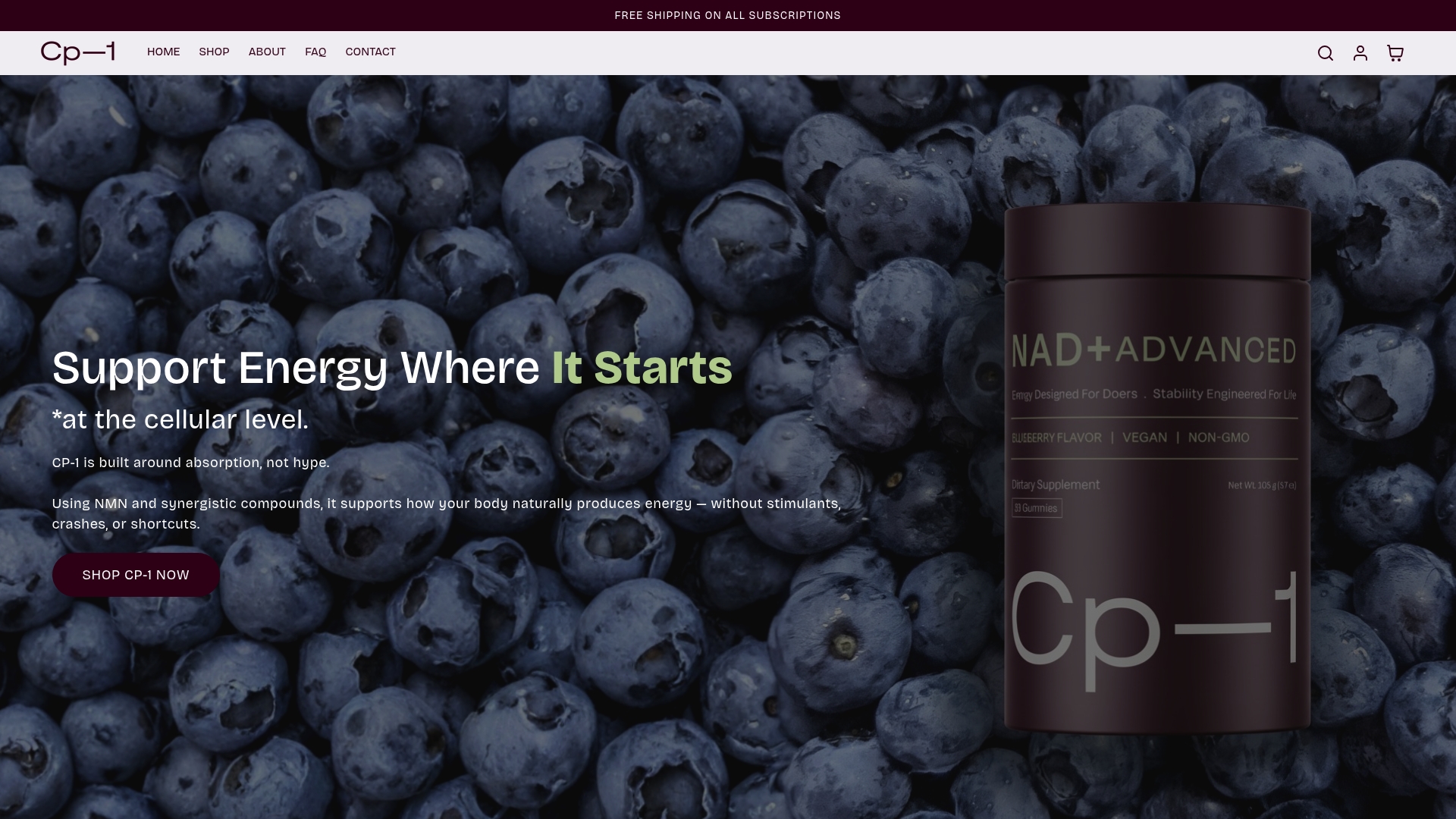
The formulation targets the specific biological mechanisms that resilience research points to: NAD+ replenishment for neuronal energy metabolism, lion’s mane for NGF support, and CoQ10 for mitochondrial antioxidant defense. These are not random ingredients assembled for a marketing deck. They are chosen because they address real pathways. Cp-1 is not a replacement for exercise, sleep, or cardiovascular care. It is designed to support the biology that those habits are already building.
Talk to your doctor before starting, especially if you are on medications. Then explore CP-1 and decide whether it fits your plan.
Useful sources and further reading
- Framework for Terms Used in the
- Cognitive reserve and resilience: A defining moment for an emerging field
- Molecular Neuroscience of Cognitive Resilience - Frontiers
- Cognitive Resilience (and How to Build It!) - Neurotrack
- Evidence-Based Resilience Building Strategies: What Actually Works | Simply Psychology
- Less cognitive decline, more cognitive resilience among ‘oldest-old,’ study finds - Harvard T.H. Chan School of Public Health
- Superager brains shrink more slowly than peers’ brains - Feinberg News
- pubmed.ncbi.nlm.nih.gov/36093713/
- Alzheimer’s & Dementia journal (resilience-related review)