
Brain fog isn’t just having an off day or forgetting where you left your keys. It’s a persistent, frustrating cognitive state that can make you feel like you’re thinking through wet cement, and millions of adults deal with it without ever getting a clear explanation for why. If you’ve found yourself rereading the same sentence four times, losing your train of thought mid-conversation, or feeling mentally drained before noon, you’re not imagining it. This guide breaks down what brain fog actually is, what triggers it, and what you can realistically do to get your mental sharpness back.
Table of Contents
- Understanding brain fog: More than just feeling tired
- Causes and risk factors for brain fog
- How brain fog shows up in long COVID and beyond
- Why there’s no single definition (and why that matters)
- Practical steps to address brain fog naturally
- A fresh perspective: What most guides miss about brain fog
- Ready to take the next step in your mental wellness?
- Frequently asked questions
Key Takeaways
| Point | Details |
|---|---|
| Brain fog is real | It refers to cognitive difficulties like trouble focusing and memory lapses, not just feeling tired. |
| Many possible causes | Factors range from stress and sleep loss to chronic illness or medication changes. |
| No single solution | Addressing brain fog requires identifying individual triggers and making small, consistent changes. |
| Track your symptoms | Journaling patterns and seeking professional guidance helps you find relief more effectively. |
| Natural steps help | Adjusting lifestyle, nutrition, and daily routines can boost mental clarity for many people. |
Understanding brain fog: More than just feeling tired
Now that we’ve recognized brain fog is a very real experience for many adults, let’s explore what it actually is and what it feels like.
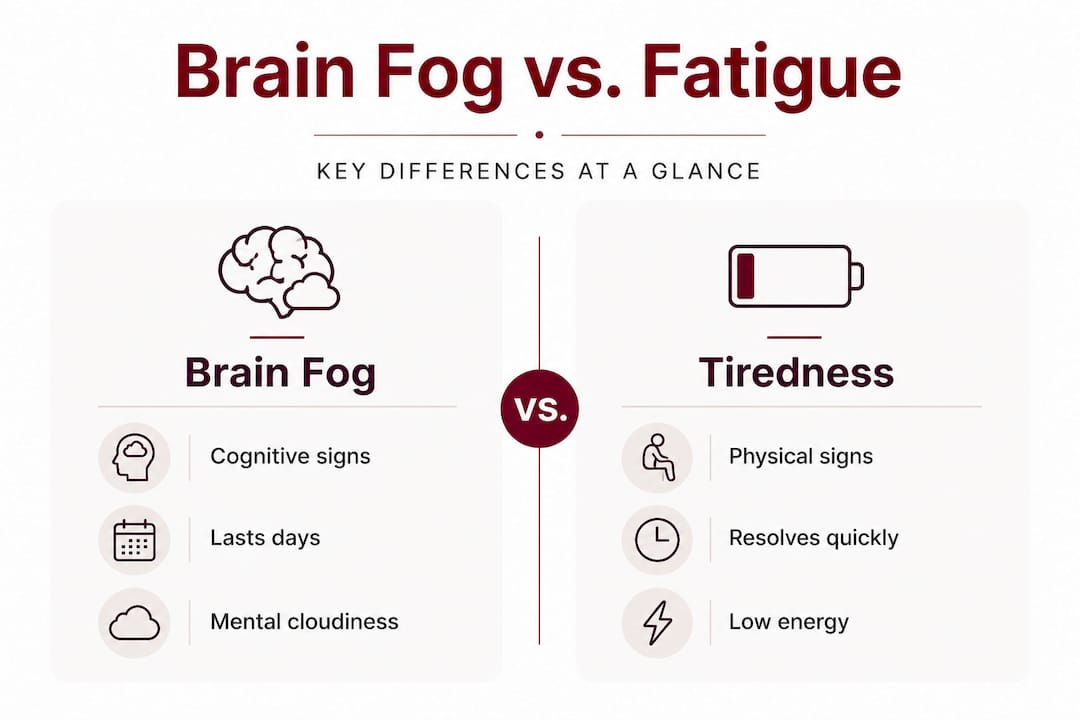
The word “tired” doesn’t do brain fog justice. Tiredness usually goes away after a good night’s sleep. Brain fog sticks around. It’s a pattern of symptoms that affects how you think, remember, and focus, and it often shows up when you least expect it, even after you’ve slept for eight hours and had your coffee.
According to the Cleveland Clinic, brain fog is a collection of cognitive symptoms affecting memory, focus, and concentration that can make everyday tasks feel harder than they should. Importantly, it’s usually temporary, but its duration varies widely from person to person.
Here’s what brain fog commonly looks like in real life:
- Difficulty concentrating on a task for more than a few minutes
- Forgetting words mid-sentence or blanking on familiar names
- Mental fatigue that hits even after low-effort work
- Slowed thinking where simple decisions feel unreasonably hard
- Feeling “spaced out” or disconnected from what’s happening around you
“Brain fog is not just stress or laziness. It’s a genuine disruption in how your brain is processing information, and it deserves to be taken seriously.”
What separates brain fog from regular tiredness is this: tiredness is mostly physical. Brain fog is cognitive. You might feel physically fine yet still be unable to hold a clear thought for more than 30 seconds. That gap between your body and your mind is one of the clearest signs something else is going on underneath the surface.
Causes and risk factors for brain fog
With a clear understanding of what brain fog feels like, it’s important to know where it comes from and what can make it worse.
Brain fog rarely has a single cause. More often, it’s the result of multiple overlapping factors stacking on top of each other. The Cleveland Clinic notes that brain fog is not a single diagnosis and can show up after illness, as a medication side effect, or alongside various underlying conditions.

Here are some of the most common contributors:
| Category | Examples |
|---|---|
| Sleep issues | Chronic sleep deprivation, poor sleep quality, insomnia |
| Mental health | Anxiety, depression, burnout |
| Hormonal changes | Pregnancy, menopause, thyroid imbalances |
| Medical conditions | Autoimmune diseases, diabetes, ADHD, autism spectrum |
| Nutritional gaps | Low B12, low iron, vitamin D deficiency |
| Medications | Chemotherapy, antihistamines, certain antidepressants |
| Post-illness states | Long COVID, post-viral fatigue syndromes |
| Lifestyle factors | High stress, poor diet, sedentary behavior |
What makes this list tricky is that most of these causes don’t announce themselves clearly. You might be running on a nutrient deficiency for months before it starts showing up as cognitive sluggishness. Stress tends to creep up quietly. Hormonal shifts happen gradually.
- Poor sleep is probably the most common and most underestimated trigger
- Nutritional gaps, especially low B12 and vitamin D, often go undetected for years
- Chronic stress keeps cortisol elevated, which actively interferes with memory and learning
- Medications like antihistamines have well-documented effects on cognitive sharpness
Pro Tip: Start keeping a simple daily symptom journal. Track your sleep, meals, stress levels, and any brain fog episodes. After two to three weeks, patterns start to emerge that you’d never catch otherwise. It’s one of the most practical things you can do before your next doctor’s appointment.
How brain fog shows up in long COVID and beyond
Some people notice brain fog following illness, and that’s especially apparent with the lingering effects of COVID-19.
Long COVID changed the conversation around brain fog in a major way. It forced researchers, clinicians, and the general public to take cognitive symptoms more seriously as real, measurable health concerns rather than vague complaints. And for good reason.
Research published in Nature Reviews Neurology describes post-COVID-19 condition, commonly called long COVID, as a state where cognitive impairment persists for 12 to 24 months or longer in some patients. The proposed mechanisms include immune dysregulation, microvascular dysfunction, and neuroinflammation, all of which disrupt normal brain function at a cellular level.
“In long COVID, the brain isn’t just tired. It’s dealing with an ongoing physiological response that keeps interfering with normal cognitive processing.”
Here’s how long COVID brain fog compares to other fatigue-related syndromes:
| Feature | Long COVID fog | Chronic fatigue syndrome | General burnout fog |
|---|---|---|---|
| Duration | Months to years | Months to years | Weeks to months |
| Physical fatigue | Often significant | Severe | Mild to moderate |
| Cognitive symptoms | Memory, focus, processing speed | Similar pattern | Focus and motivation |
| Known trigger | Post-viral | Often post-viral | Psychological stress |
| Research status | Active and growing | Established but limited | Limited |
What makes post-viral brain fog particularly frustrating is how misunderstood it still is. Many people are dismissed as anxious or deconditioned when the actual cause is far more biological. If you’re navigating this territory, it’s worth reading up on energy and brain health options that target cellular function, not just surface-level stimulation.
Beyond long COVID, similar foggy patterns show up after other viral illnesses, during recovery from surgery, and in people managing autoimmune conditions. The common thread is often systemic inflammation affecting how efficiently the brain can work.
Why there’s no single definition (and why that matters)
While long COVID helped spotlight brain fog, there’s still genuine debate among experts about what this term even means.
This is where things get a bit complicated, and honestly, understanding this complexity helps you become a smarter advocate for your own health. Brain fog doesn’t have one clean clinical definition. A study in Trends in Neurosciences00017-7) describes brain fog as a term used with heterogeneous definitions00017-7), meaning different researchers and clinicians mean different things when they say it. This makes diagnosis and treatment inherently more complicated.
“Without a shared definition, brain fog is often used as a catch-all that may actually be obscuring distinct conditions that require different approaches.”
Here’s why the lack of a standard definition matters to you directly:
- There’s no single blood test or brain scan that confirms “brain fog”
- Symptoms overlap with depression, anxiety, ADHD, and hormonal conditions
- Treatment strategies vary depending on which underlying cause is most significant
- What works for someone with post-viral fog may not work for someone with stress-related fog
This is one reason that identifying brain fog causes early and systematically is so valuable. The more specific you can get about your own symptom pattern, the better positioned you are to find an approach that actually helps.
Research tools are catching up, though. Scientists are developing better cognitive assessment frameworks, standardized questionnaires, and fatigue-cognition scales to map out what’s happening in the brain more precisely. We’re not quite there yet for routine clinical use, but the field is moving in the right direction.
Practical steps to address brain fog naturally
Knowing that brain fog often reflects a mix of factors, the best path forward is a tailored and holistic approach.
The most honest thing that can be said here is that there’s no single fix. Brain fog warrants identifying reversible contributors with a clinician rather than assuming a single cause is responsible. That said, there are real, practical steps you can take right now that have solid support behind them.
-
Prioritize sleep quality, not just quantity. Aim for consistent sleep and wake times. Even minor disruptions to your sleep cycle can significantly impair working memory and processing speed the next day.
-
Reduce and manage stress actively. Chronic stress elevates cortisol, which literally shrinks the hippocampus over time, the part of your brain most involved in memory. Meditation, breathwork, and physical exercise all have research support for lowering cortisol.
-
Check for nutritional gaps with your doctor. Low B12, iron, and vitamin D are among the most common and most fixable contributors to cognitive sluggishness. A simple blood panel can reveal a lot.
-
Review your medications with a healthcare provider. Some common medications, including antihistamines, sleep aids, and certain anxiety medications, are well-known for causing cognitive side effects. Don’t stop anything on your own, but have an honest conversation with your prescriber.
-
Add gentle cognitive exercise and movement. Regular physical activity increases blood flow to the brain and supports the growth of new neural connections. Even a 20-minute walk is measurably beneficial.
-
Consider targeted supplementation carefully. Some supplements for cognitive performance show genuine promise, particularly ingredients like lion’s mane mushroom and NMN that support brain-derived neurotrophic factor (BDNF) and cellular energy. You can also explore non-stimulant cognitive boosters that don’t rely on caffeine or stimulants to push your brain forward.
-
Build a consistent daily structure. Small, repeatable routines reduce the cognitive load on your brain. Daily energy and clarity tips can help you build that rhythm without it feeling like a chore.
The research on functional mushrooms is also worth your attention. Ingredients like lion’s mane have been studied for their ability to support nerve growth factor, which plays a direct role in how well neurons communicate. And emerging tools to measure brain fog are helping researchers and clinicians quantify what’s actually changing as people make these lifestyle adjustments.
Pro Tip: Don’t try to overhaul everything at once. Pick two or three changes, stick with them for four to six weeks, and actually evaluate whether anything has shifted. Small, consistent changes done reliably beat a dramatic protocol you can’t sustain.
A fresh perspective: What most guides miss about brain fog
Before we wrap up, here’s a perspective that goes beyond typical tips, especially for those who’ve tried everything and still feel stuck.
Most brain fog advice is painfully generic. Sleep more. Eat better. Reduce stress. Those things matter, but they fail the person who’s already doing all of that and still can’t think clearly. The real gap isn’t information. It’s personalization.
Brain fog is not the same experience for everyone. Your fog might be worst in the mornings. Someone else’s might peak mid-afternoon. Yours might be tied to hormonal cycles or specific foods. Another person’s is directly linked to anxiety spikes. Treating all of these with the same advice is like prescribing the same glasses prescription to everyone with blurry vision.
Emerging tools to measure brain fog are helping researchers quantify these differences, using fatigue and altered cognition scales to map the specific dimensions of each person’s experience. That science is telling us something important: your fog is yours, and your approach to clearing it needs to be tailored accordingly.
Here’s what I think most guides also miss: mental health is not a side issue in this conversation. Anxiety, burnout, and mood dysregulation are deeply intertwined with cognitive clarity. Ignoring your mental health while trying to fix your focus is like trying to run on a flat tire. You might move, but not very far.
If you’ve cycled through supplements and sleep fixes without lasting results, it’s worth looking honestly at your stress load, emotional wellbeing, and whether anxiety might be a bigger driver than you’ve acknowledged. That’s not a failure. That’s useful information. Building a practical workflow for clarity that actually accounts for your mental health alongside your physical health is where lasting change tends to happen.
Ready to take the next step in your mental wellness?
If you’ve read this far, you clearly take your cognitive health seriously, and that matters. Brain fog is real, it has identifiable causes, and there are real steps you can take to start feeling sharper.
At CP-1, we built our formula specifically for people who are tired of being sold hype. Our supplement combines NMN, lion’s mane, reishi, turkey tail mushroom extract, and coenzyme Q10 to support NAD+ production, cellular energy, and cognitive function at the source. Everything is third-party tested, vegan, non-GMO, and made in the USA. If you’re ready to support your brain with ingredients that are actually backed by research rather than a marketing slide deck, we’d love for you to explore CP-1 and see how it fits into your approach to mental clarity.
Frequently asked questions
Is brain fog a disease?
No, brain fog is not a disease but a cluster of cognitive symptoms that may result from various underlying causes, as Cleveland Clinic notes it can follow illness, medication use, or accompany conditions like anxiety or hormonal shifts. Treating it effectively means identifying and addressing those root causes.
How long does brain fog usually last?
The duration varies widely, from a few hours during a stressful day to many months in post-viral cases. Research in Nature Reviews Neurology notes that in long COVID, cognitive and fatigue symptoms can persist for 12 to 24 months or longer.
When should I see a doctor for brain fog?
If brain fog is persistent, getting worse, or making it hard to function at work or in daily life, it’s time to talk to a healthcare professional. A provider can rule out underlying conditions and help you identify reversible contributors that might be at the root of your symptoms.
Are supplements effective for brain fog?
Some supplements, particularly those targeting cellular energy and neurological support, show genuine promise in research. Results vary by person and underlying cause, so speaking with a healthcare provider before starting any new regimen is always the right first move.
Can brain fog impact young adults too?
Yes, absolutely. Brain fog is not just a middle-age or older-adult issue. Stress, poor sleep, nutritional gaps, and conditions like anxiety or ADHD can all produce significant cognitive symptoms in younger adults. Age does not protect you from it.