

Why Supplement for Cognitive Function: A Science-Based Guide
Supplementing for cognitive function means using specific vitamins, minerals, and compounds to support brain health, memory, and mental performance. The industry calls this category “nootropics” or cognitive enhancement supplements, and the science behind it is more nuanced than most marketing suggests. A meta-analysis of 13 trials covering 2,451 participants found that omega-3 PUFAs significantly improved global cognitive function in people with mild cognitive impairment. That result matters, but it also comes with a caveat: the benefits were clearest in people who already had measurable cognitive challenges, not in healthy adults with normal brain function.
Why supplement for cognitive function at all?
The honest answer is that it depends on who you are. Supplements for brain health are not magic pills that make a sharp mind sharper. They are tools that fill specific gaps, support cellular processes, and protect against decline. The strongest case for cognitive supplementation exists when your body is running low on something your brain needs to function well. Think of it less like upgrading a new computer and more like replacing a failing battery.
The science points to a few mechanisms that actually matter. Neuronal membrane integrity, neurotransmitter synthesis, mitochondrial energy output, and inflammation control all influence how well you think, focus, and retain information. Certain compounds directly support these pathways. Others are sold on hope and a good label.

Pro Tip: Before spending money on any cognitive supplement, get a basic blood panel. Knowing your actual omega-3 index, B12, and vitamin D levels tells you where real gaps exist.
Which supplements have the strongest scientific support?
Not all cognitive enhancement supplements are created equal. A small group has earned consistent research backing, and understanding why they work helps you use them correctly.
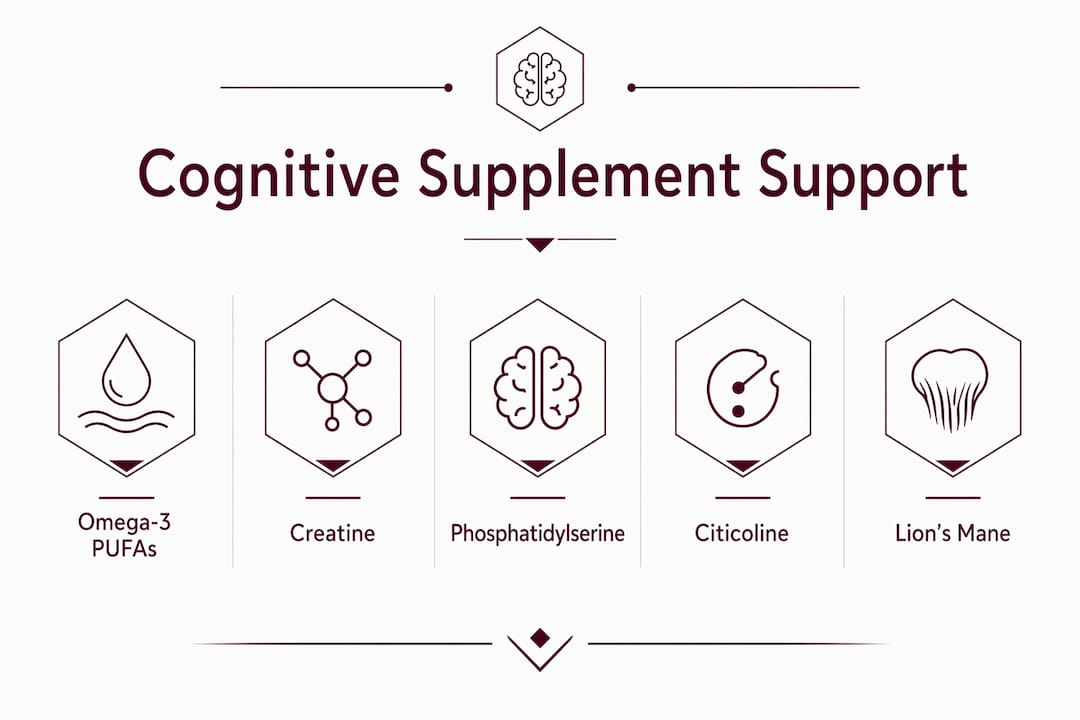
| Supplement | Mechanism | Evidence Strength | Best Target Group |
|---|---|---|---|
| Omega-3 PUFAs (DHA+EPA) | Neuronal membrane health, anti-inflammation | Strong (MCI populations) | Older adults, deficient individuals |
| Creatine monohydrate | ATP energy production in neurons | Moderate to strong | Older adults, vegetarians |
| Phosphatidylserine | Structural membrane support | Moderate | Adults with early cognitive decline |
| Citicoline | Choline precursor, neurotransmitter synthesis | Moderate | Adults with memory concerns |
| Lion’s Mane mushroom | Nerve growth factor stimulation | Emerging | General adults, neuroprotection |
Omega-3 fatty acids are the most studied. DHA (docosahexaenoic acid) makes up a significant portion of brain cell membranes. When DHA levels drop, membrane fluidity suffers, and so does signal transmission between neurons. EPA (eicosapentaenoic acid) controls neuroinflammation. Together, they form the backbone of evidence-backed brain supplementation.
Creatine monohydrate surprises most people. It is not just for athletes. A February 2026 review confirmed favorable effects on memory and processing speed, particularly in older adults. Vegetarians and older adults show the largest gains because they typically have the lowest baseline creatine levels. That pattern tells you something important: the lower your starting point, the more room a supplement has to help.
Phosphatidylserine and citicoline work as structural and neurotransmitter precursors. Phosphatidylserine supports the outer layer of brain cell membranes. Citicoline converts to choline in the body, which feeds acetylcholine production. Acetylcholine is the neurotransmitter most directly tied to memory and learning.
Lion’s Mane mushroom is the most interesting emerging ingredient. It stimulates nerve growth factor (NGF), which supports the survival and growth of neurons. Cp-1 includes lion’s mane extract in its formula specifically for this neuroprotective mechanism. The science-backed benefits of functional mushrooms are real, though large-scale human trials are still catching up to the early findings.
Why do most brain supplements on the market fall short?
The supplement industry has a credibility problem. Harvard experts confirm there is no solid proof that most commercial brain health supplements improve thinking or memory. The FDA does not require supplement companies to prove their products work before selling them. That gap between marketing claims and clinical evidence is enormous.
Several specific problems drive this:
- Study heterogeneity: Trials use different doses, durations, cognitive tests, and participant profiles. Results are hard to compare or pool reliably.
- Small sample sizes: Many positive studies involve fewer than 100 participants. Small samples inflate effect sizes and fail to replicate.
- Healthy adult bias: Most trials showing null results recruited healthy adults with normal cognition. Supplements mainly aid those with deficiencies or early cognitive decline. Testing them on cognitively healthy people is like testing blood pressure medication on people with normal blood pressure.
- Publication bias: Positive results get published. Null results often do not. The published literature skews optimistic.
- Baseline nutritional status ignored: Vitamin-based supplements show no significant improvement in unselected MCI populations, largely because researchers do not screen for deficiency first.
Pro Tip: When evaluating any cognitive supplement, look for randomized controlled trials (RCTs) with at least 100 participants, a placebo control, and a duration of 12 weeks or longer. Anything shorter rarely shows meaningful cognitive change.
The honest framing is this: evidence-backed supplements function as maintenance tools, not shortcuts to intelligence. Expecting a dramatic cognitive upgrade from a capsule is the wrong expectation entirely.
How does diet and lifestyle compare to supplementation?
Diet and lifestyle are the foundation. Supplements are the finishing layer. Getting that order wrong is one of the most common mistakes adults make when trying to improve mental clarity.
Strict adherence to the Mediterranean diet consistently links to improved cognitive function and delayed cognitive decline across a systematic review of 88 studies. That is a larger body of evidence than any single supplement category can claim. The Mediterranean diet works because it delivers omega-3s, polyphenols, B vitamins, and antioxidants together, in food form, with the fiber and cofactors that support absorption.
The lifestyle pillars that support cognition most consistently are:
- Aerobic exercise: Increases brain-derived neurotrophic factor (BDNF), which promotes neuron growth and connectivity
- Mediterranean-style diet: Provides the raw materials your brain needs without the inflammation that processed foods cause
- Quality sleep: Clears metabolic waste from the brain through the glymphatic system during deep sleep
- Stress management: Chronic cortisol damages the hippocampus, the brain region most tied to memory
- Reduced ultra-processed food intake: A study of 72,083 participants linked ultra-processed foods to higher dementia risk
| Factor | Cognitive Benefit | Evidence Base | Replaces Supplements? |
|---|---|---|---|
| Mediterranean diet | Delays decline, improves memory | 88-study systematic review | Partially yes |
| Aerobic exercise | Increases BDNF, improves processing speed | Multiple large RCTs | Partially yes |
| Quality sleep | Clears brain waste, consolidates memory | Strong mechanistic evidence | No |
| Omega-3 supplementation | Supports membrane health in deficient adults | 13-trial meta-analysis | No |
| Creatine supplementation | Improves memory in older adults | Multiple RCTs | No |
Supplements fill gaps that diet and lifestyle cannot always close, especially as you age or if your diet is restricted. A vegetarian who avoids fish will likely be low in DHA. An older adult with reduced stomach acid may absorb B12 poorly from food. In those cases, supplementation is not optional. It is corrective.
How to personalize cognitive supplementation for best results
Generic supplement stacks are mostly a waste of money. Personalization is what separates a supplement that works from one that does nothing. Here is a practical process:
-
Get a baseline blood panel. Test omega-3 index, vitamin B12, folate, vitamin D, and homocysteine. These markers directly reflect brain health risk and tell you where deficiencies exist before you spend anything.
-
Assess your diet honestly. If you eat fatty fish twice a week, your omega-3 needs may already be met. If you eat mostly plant-based foods, creatine and DHA supplementation become much more relevant. Supplement effectiveness varies greatly by personal factors including genetics, gut absorption, and baseline nutrient levels.
-
Consider your age and cognitive status. Adults over 50 face natural declines in NAD+ production, mitochondrial efficiency, and neuroplasticity. Ingredients like NMN (Nicotinamide Mononucleotide) support NAD+ levels, which fuel cellular energy in neurons. Cp-1 combines NMN with lion’s mane, reishi, turkey tail mushroom extracts, and coenzyme Q10 specifically to address these age-related gaps. Learn more about supplements and aging to understand which ingredients matter most at different life stages.
-
Start with one or two targeted supplements. Do not take ten things at once. You cannot identify what is working. Start with the supplement most relevant to your identified deficiency or risk factor, run it for 12 weeks, and assess.
-
Consult a healthcare provider. This is not a formality. Some supplements interact with medications. B vitamins in high doses can mask B12 deficiency symptoms. A clinician can interpret your blood work and help you avoid unnecessary risk.
-
Monitor and adjust. Cognitive change is subtle. Keep a simple log of sleep quality, focus duration, and mood. Retest blood markers after 90 days. Adjust based on results, not on how a product makes you feel in week one.
Key Takeaways
Cognitive supplements work best as targeted maintenance tools for people with specific deficiencies or early cognitive decline, not as universal brain boosters for healthy adults.
| Point | Details |
|---|---|
| Best candidates for supplements | Adults with nutrient deficiencies, mild cognitive impairment, or restricted diets benefit most. |
| Strongest evidence | Omega-3 PUFAs and creatine monohydrate have the most consistent research support for cognitive benefits. |
| Diet comes first | The Mediterranean diet outperforms isolated supplements across a systematic review of 88 studies. |
| Personalization matters | Blood testing before supplementing prevents wasted money and identifies real gaps. |
| Realistic expectations | Cognitive benefits from supplements are subtle and long-term, not dramatic or immediate. |
What I’ve learned about cognitive supplements after years of frustration
I spent years trying products that promised mental clarity and delivered nothing. The supplement industry is full of formulas designed for a marketing deck, not for the person swallowing them. That frustration is what pushed me to actually read the research and build something different.
Here is what I know now: the people who benefit most from cognitive supplements are not the ones who are already performing at their peak. They are the ones running on a depleted system. Low NAD+, low omega-3, poor sleep, and chronic stress create a ceiling on cognitive performance that no amount of willpower breaks through. Supplements that address those specific deficits can genuinely move the needle.
What I tell people is this: do not expect a supplement to make you smarter. Expect it to remove the friction that is slowing you down. That is a different promise, and it is one the evidence actually supports. The cognitive performance support that matters most is the kind that works quietly in the background, keeping your neurons fueled, your inflammation low, and your cellular energy production running efficiently.
The mistake I see constantly is people treating supplements as a substitute for sleep, exercise, and real food. They are not. They are a complement. Get the foundation right first, then use targeted supplementation to close the gaps your lifestyle cannot fully address. That approach is slower and less exciting than the marketing promises. It is also the one that actually works.
— Hugo
What Cp-1 offers for cognitive health support
Adults who want to support their cognitive health without stimulants or guesswork need formulas built on real ingredients at real doses.
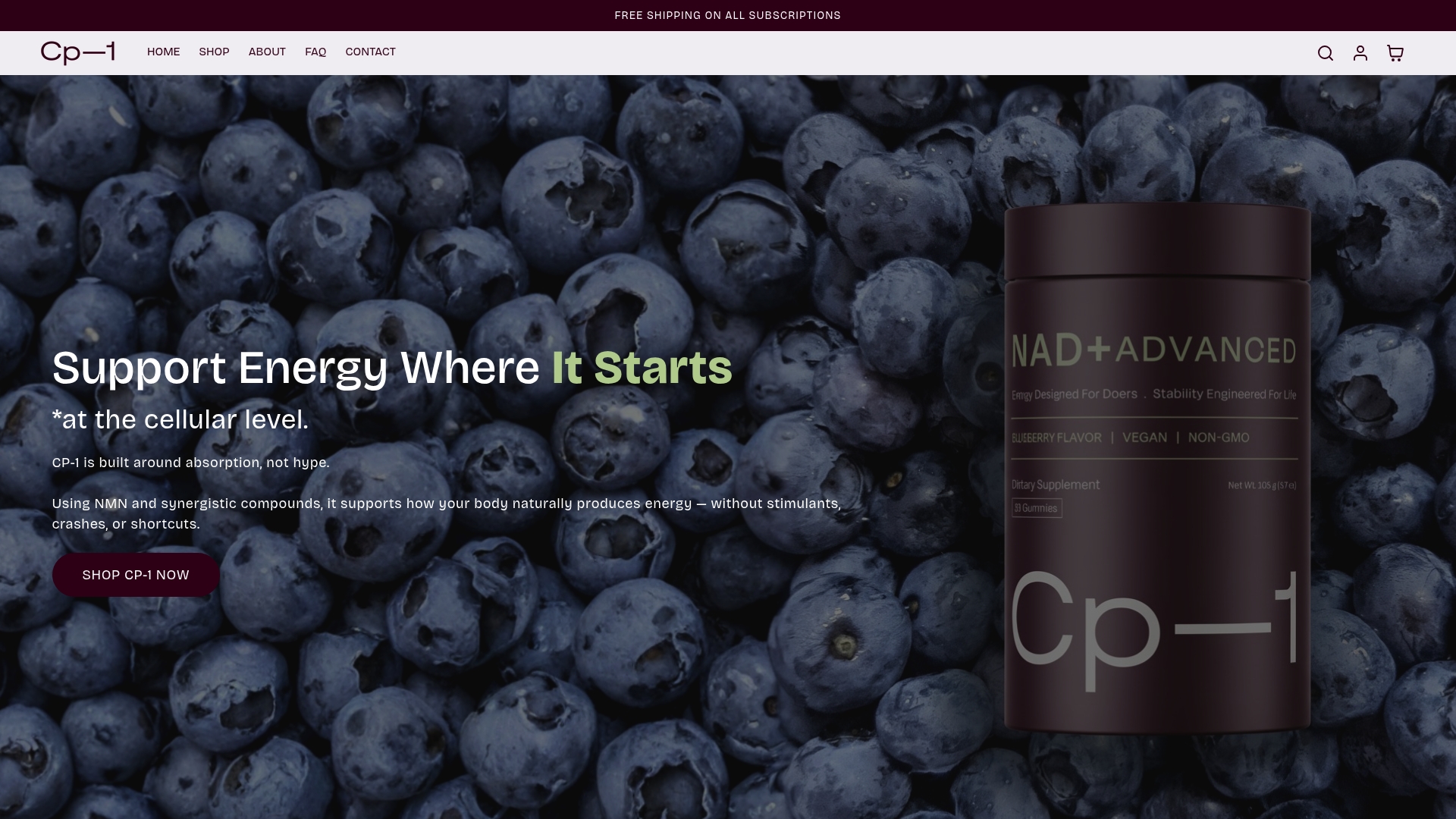
Cp-1 is formulated with NMN, lion’s mane mushroom extract, reishi mushroom extract, turkey tail mushroom extract, and coenzyme Q10. Each ingredient targets a specific mechanism: NAD+ production, nerve growth factor stimulation, mitochondrial energy, and antioxidant protection. The formula is vegan, non-GMO, third-party tested, and manufactured in the US. If you are ready to move past the noise and try a science-backed cognitive supplement built for long-term brain health, Cp-1 is worth a serious look.
FAQ
What does “supplementing for cognitive function” actually mean?
Cognitive supplementation means using specific vitamins, minerals, or plant compounds to support brain processes like memory, focus, and mental clarity. The goal is to fill nutritional gaps or support cellular mechanisms that influence how well your brain performs.
Which cognitive supplements have the best scientific evidence?
Omega-3 PUFAs (DHA and EPA) and creatine monohydrate have the strongest research support. A meta-analysis of 13 trials showed omega-3s significantly improved cognitive function in people with mild cognitive impairment.
Do brain supplements work for healthy adults with normal cognition?
The evidence is weak for cognitively healthy adults. Most research shows meaningful benefits only in people with nutrient deficiencies or early cognitive decline, not in those with already-normal brain function.
How long does it take for cognitive supplements to show results?
Most well-designed trials run for at least 12 weeks before measuring cognitive outcomes. Expect subtle, gradual improvements rather than immediate changes, and track sleep, focus, and mood to notice progress.
Is the Mediterranean diet better than supplements for brain health?
A systematic review of 88 studies found the Mediterranean diet consistently outperforms isolated supplements for cognitive health. Supplements work best as additions to a strong dietary foundation, not as replacements for it.