
Mushroom extracts have gone from niche health food stores to mainstream supplement shelves fast. Lion’s Mane, Turkey Tail, Reishi, and others are showing up in capsules, powders, and stacked formulas promising everything from sharper focus to a bulletproof immune system. But here’s the thing: natural doesn’t automatically mean proven, and popular doesn’t mean effective. If you’re serious about what you put in your body, you deserve a clear-eyed look at what the science actually says about mushroom extracts, not just the marketing copy written to sell them.
Table of Contents
- What are mushroom extracts and how do they work?
- What does the evidence say about mushroom extracts’ benefits?
- Potential risks and safety of mushroom extracts
- How to choose and use mushroom extracts wisely
- What most articles miss about mushroom extracts
- Explore quality supplements for holistic wellness
- Frequently asked questions
Key Takeaways
| Point | Details |
|---|---|
| Evidence is mixed | Some mushroom extracts have emerging benefits, but most claims need more human trials. |
| Safety requires diligence | Most people tolerate mushroom extracts, but those with certain health conditions need caution. |
| Turkey Tail stands out | Among many extracts, Turkey Tail has the best support for immune modulation. |
| Choose quality products | Opt for standardized, tested extracts and consult healthcare professionals when in doubt. |
What are mushroom extracts and how do they work?
Before you can evaluate whether a mushroom extract is worth your money, you need to understand what it actually is. A mushroom extract is a concentrated form of specific compounds found in the mushroom’s fruiting body or mycelium, pulled out using water, alcohol, or a combination of both. This is fundamentally different from eating whole mushrooms or taking a powdered whole mushroom supplement. An extract isolates the bioactive compounds, like beta-glucans (complex sugars that interact with your immune system), triterpenoids, and hericenones, at much higher concentrations than you’d find in the raw fungi.
Common types you’ll encounter include:
- Lion’s Mane (Hericium erinaceus): Associated with cognitive support and nerve growth factor (NGF) stimulation.
- Turkey Tail (Trametes versicolor): Best known for immune modulation, rich in polysaccharide-K (PSK) and polysaccharide-P (PSP).
- Reishi (Ganoderma lucidum): Often used for stress resilience and adaptogenic effects.
- Chaga (Inonotus obliquus): Studied for antioxidant properties.
Each of these works through different biological mechanisms. Many of the anti-inflammatory and immune effects come from the way these compounds interact with key cellular signaling pathways. The research shows that mushroom extracts modulate NF-κB, MAPK, and NLRP3 pathways, which are central to how your body regulates inflammation. Think of these pathways like traffic signals. When they’re working right, inflammation turns on when needed and shuts off when it’s done. Mushroom compounds appear to help keep that traffic moving smoothly.
That said, there’s a real challenge here that most brands won’t tell you about: bioavailability. Just because a compound is in a capsule doesn’t mean your body absorbs it efficiently. Many of the active polysaccharides in mushroom extracts have large molecular structures that can be difficult for the gut to process and deliver into systemic circulation. This is why extraction method and standardization matter enormously when you’re picking a supplement.
“Not every extract is created equal. A product with no standardization label is essentially telling you nothing about how much active compound you’re actually getting.”
Pro Tip: Always look for mushroom supplements that specify the percentage of beta-glucans on the label. If a product doesn’t list this, there’s a good chance it’s not standardized, which means potency could be wildly inconsistent from batch to batch.
Reading up on functional mushroom benefits before buying can save you from wasting money on products that look good on the surface but don’t deliver anything meaningful underneath.
What does the evidence say about mushroom extracts’ benefits?
Once you understand how mushroom extracts work in theory, the next logical question is: do they actually work in practice? This is where things get honest, and I think honesty matters more here than hype.
The evidence for mushroom extracts varies significantly depending on which mushroom you’re looking at and what health outcome you’re targeting. Here’s a straightforward breakdown:
| Mushroom | Primary use case | Evidence strength | Human trials available? |
|---|---|---|---|
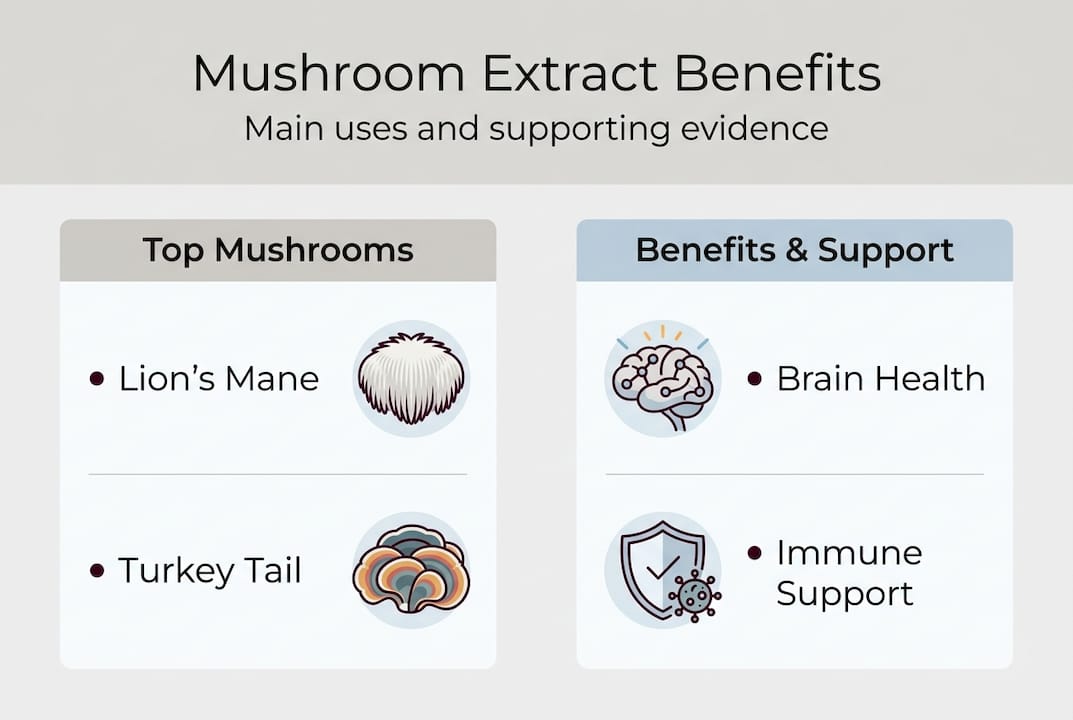
| Lion’s Mane | Cognitive function, mood | Moderate, promising | Yes, but limited |
| Turkey Tail | Immune modulation | Strongest overall | Yes, especially in oncology support |
| Reishi | Stress, sleep, adaptogen | Moderate | Some, mixed results |
| Chaga | Antioxidant support | Weak to moderate | Mostly lab and animal data |
What we know about Lion’s Mane:
Lion’s Mane has become the poster mushroom for brain health, and there’s a reason for that. Some randomized controlled trials (RCTs) show real benefits for focus and mood, particularly in older adults. One important nuance though: the clinical evidence shows mixed results across populations, with most of the stronger findings coming from older individuals experiencing mild cognitive decline, not necessarily healthy young adults looking for a productivity boost.
What we know about Turkey Tail:
Turkey Tail is where the evidence gets notably stronger. The strongest immune modulation data consistently points to Turkey Tail, particularly PSK extracts, which have been studied extensively in Japan as an adjunct therapy in cancer care. This doesn’t mean Turkey Tail cures anything, but the immune support research here is more robust and more replicated than most other mushrooms.
One critical callout you need to keep in mind: the vast majority of mushroom extract studies are still small-scale, short-duration, or conducted in animals. This is the honest truth most wellness blogs gloss over. A compelling mouse study is interesting. It is not the same as a large, peer-reviewed human clinical trial. Promising and proven are two different things.
If you’re interested in supporting cognition without stimulants, mushroom extracts like Lion’s Mane may be worth exploring, especially when combined with other well-researched compounds. But go in with realistic expectations.
No approved health claims exist yet for any of these mushrooms. Regulatory bodies like the FDA have not approved mushroom extracts to treat, prevent, or cure any disease. Any product making disease claims is stepping outside what the evidence currently supports.
Potential risks and safety of mushroom extracts
Benefits get all the attention. Safety? Not so much. Let’s fix that.
The good news is that mushroom extracts have a strong general safety profile. Animal toxicology studies show safety at up to 2000 mg/kg/day in rats, with mild gastrointestinal side effects being the most commonly reported issue in human users. For most healthy adults, typical doses of a quality extract are not going to cause serious harm.
That said, some people need to be more careful than others:
- People on blood thinners (like warfarin): Certain mushroom extracts, particularly Reishi, may have mild anticoagulant effects that could compound medication.
- People on immunosuppressants: Turkey Tail and other immune-modulating extracts could theoretically interfere with drugs designed to suppress immune activity, such as those taken after organ transplants.
- People with autoimmune conditions: Stimulating immune function when your immune system is already overactive could worsen symptoms.
- Pregnant or breastfeeding individuals: There’s simply not enough safety data to confidently recommend extracts during pregnancy.
- People with mushroom allergies: Obvious but worth stating.
Regarding mushroom extract safety, it’s also worth noting that product quality plays a huge role in safety outcomes. A contaminated or mislabeled product can create problems even if the mushroom itself is safe. This is why third-party testing matters, not just for efficacy, but for your protection.
“The supplement industry is not tightly regulated in the US. Products can sit on shelves claiming to contain X amount of a compound without any verification that they actually do.”
This is genuinely frustrating to me. When I was building CP-1, the number of products I found with misleading labels was staggering. Mushroom supplements are not exempt from this problem.
Key safety takeaways:
- Start with low doses and increase gradually.
- GI discomfort (bloating, loose stools) often resolves with time or lower dosing.
- Watch for allergic reactions in the first few days.
- Don’t assume a higher dose is more effective. It usually isn’t.
- Buy from brands that publish third-party testing results.
Pro Tip: Before adding any mushroom extract to your routine, have a quick conversation with your healthcare provider, especially if you’re managing a chronic condition or taking prescriptions. A 10-minute conversation could prevent a real problem.
How to choose and use mushroom extracts wisely
Now that you understand both the potential and the limits of mushroom extracts, the practical question is: how do you pick a good one and actually use it effectively?
Here’s a side-by-side comparison that matters when you’re shopping:
| Feature | Whole mushroom powder | Mushroom extract |
|---|---|---|
| Beta-glucan concentration | Lower | Higher |
| Bioavailability | Variable | Generally better |
| Standardization | Rarely standardized | Can be standardized |
| Cost | Lower | Higher |
| Best for | General nutrition | Targeted health support |
Whole mushroom powders aren’t worthless, but if you want a meaningful dose of active compounds, an extract is typically the better choice. The bioavailability challenges with these compounds mean that a concentrated, well-extracted product gives your body a better shot at absorbing what matters.
Here’s a practical numbered process for adding mushroom extracts to your routine:
- Identify your primary goal. Are you looking for immune support, cognitive function, or stress resilience? Your target mushroom should match your goal. Don’t just pick the trendy one.
- Research the extract method. Dual extraction (water plus alcohol) captures both water-soluble polysaccharides and fat-soluble triterpenoids. For full-spectrum effects, this matters.
- Check the beta-glucan percentage. Look for at least 20-30% beta-glucans on the label. No number means no accountability.
- Verify third-party testing. The brand should be able to show certificates of analysis (COAs) from independent labs. If they can’t or won’t, move on.
- Start with one mushroom. Don’t stack five different mushrooms at once when you’re first starting out. You won’t know what’s working or what’s causing any side effects.
- Give it time. Mushroom extracts are not stimulants. You’re not going to feel something within an hour. Most consistent benefits show up after 4 to 8 weeks of daily use.
- Combine thoughtfully. Mushroom extracts often work better as part of a broader wellness strategy rather than as standalone miracle solutions.
Watch out for red flags on supplement labels:
- Proprietary blends with no individual dosing listed
- No extraction ratio information
- Claims like “clinically proven to cure” anything
- Mycelium-on-grain products marketed as “full spectrum” without disclosing the grain filler content
The supplement industry has a lot of labels designed for a marketing deck, not for the person swallowing them. Don’t let impressive packaging substitute for actual transparency.
What most articles miss about mushroom extracts
Here’s my honest take: most wellness articles about mushroom extracts are either cheerleaders or skeptics. Neither position actually helps you make a smart decision.
The cheerleaders take one small animal study and write headlines like “Lion’s Mane reverses cognitive decline!” The skeptics see mixed human data and write off the entire category as overhyped nonsense. Both camps are missing the real picture.
The truth is more nuanced, and nuance is where real decision-making lives. Some mushroom extracts, particularly Turkey Tail for immune support and Lion’s Mane for cognitive function in older adults, have genuine research momentum behind them. The evidence isn’t at the level where a doctor will write you a prescription, but it’s enough to take seriously as part of a broader wellness approach. The key is understanding that effectiveness depends on the specific extract, the dose, the quality of the product, and what outcome you’re actually trying to support.
I’d also push back on the idea that you should wait for perfect evidence before acting. “More research is needed” is often used as a reason to do nothing, but the safety profile of quality mushroom extracts is solid, and the potential upside is real. Just don’t use them as a replacement for actual medical care, and don’t choose them based on what’s trending. Choose them based on what the evidence supports for your specific goal. Exploring nootropic alternatives grounded in research is a smarter move than chasing whatever mushroom appears on a podcast ad this week.
Read the studies. Ask questions. Work with someone who understands functional nutrition. That’s how you get actual results.
Explore quality supplements for holistic wellness
If you’ve done the research and you’re ready to move beyond generic mushroom powders, we built CP-1 for exactly that reason. CP-1 combines Lion’s Mane, Reishi, and Turkey Tail mushroom extracts alongside NMN, CoQ10, and other rigorously selected compounds, all manufactured in the US, third-party tested, and formulated for real absorption, not just a label that looks good.
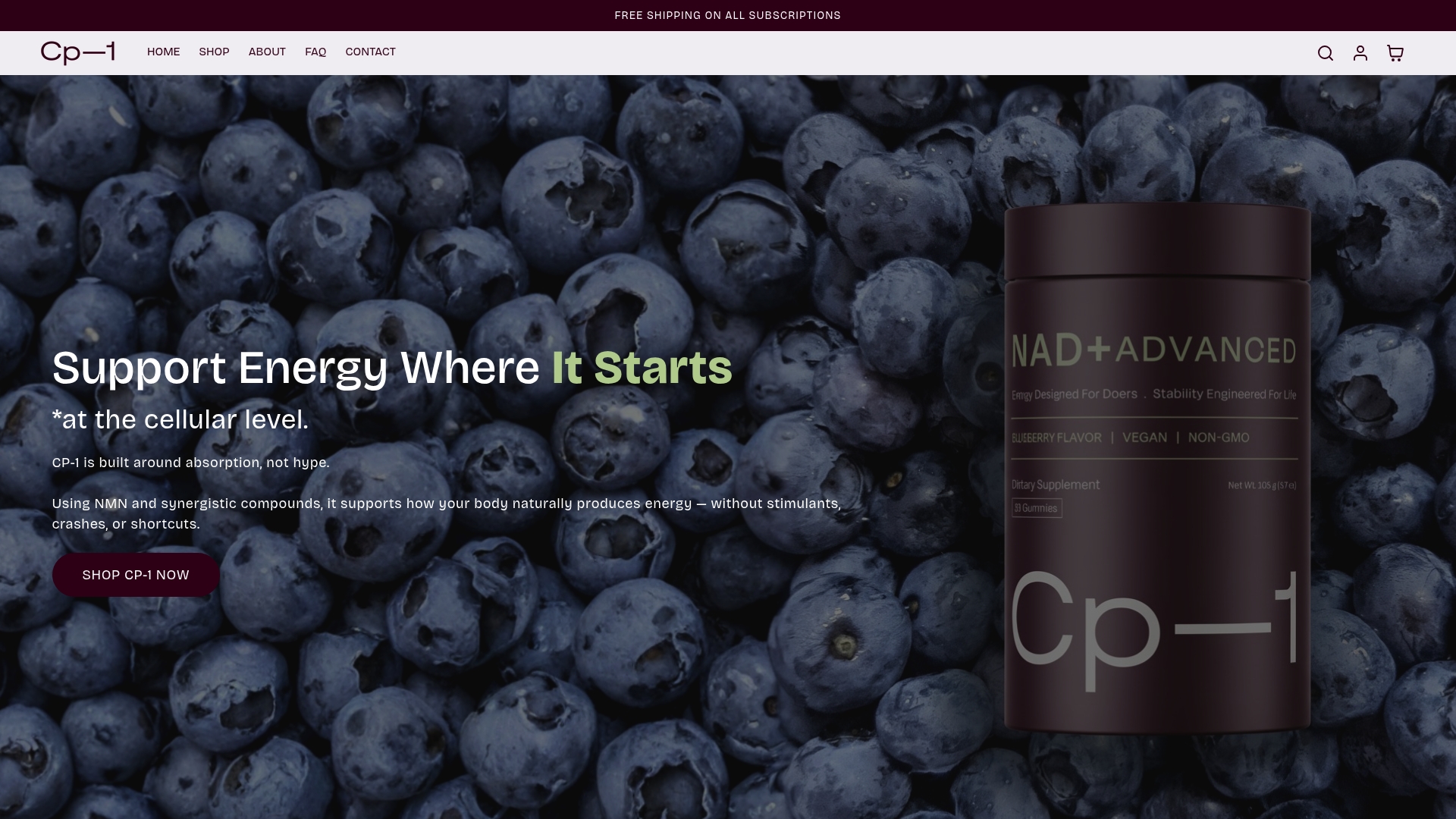
If you’re looking for a NAD+ Advanced Supplement that pairs cellular energy support with functional mushroom benefits in one formula, CP-1 is worth a serious look. No fluff, no filler, no exaggerated claims. Just a formula built around what the evidence actually supports. You can explore CP-1 wellness and see exactly what’s in every capsule and why.
Frequently asked questions
Are mushroom extracts safe for daily use?
Mushroom extracts are generally safe at typical doses for healthy adults, but anyone on blood thinners, immunosuppressants, or managing autoimmune conditions should consult their doctor before starting, as noted in current safety reviews.
Which mushroom extract has the best evidence for immune support?
Turkey Tail has the strongest research behind it for immune modulation, with robust data coming particularly from oncology support studies that measured real immune markers.
Can mushroom extracts improve brain function?
Lion’s Mane shows early but real promise for cognitive function and mood, though the current evidence is still limited in healthy young adults and should be considered promising rather than conclusive.
Are mushroom extracts standardized or regulated?
Mushroom extracts are not tightly regulated in the US, and not all products are standardized, so always look for brands that provide third-party certificates of analysis and clearly list beta-glucan percentages on the label.