
Cycle only the compounds that actually build tolerance, mainly stimulants and certain receptor-acting agents, and leave metabolic foundation supports running daily. If caffeine or a similar stimulant is losing its punch, start with a weekend reset: five days on, two days off. For stronger dependence-prone compounds, a 1 to 2 week full reset or a slow taper works better. Track your response and change one variable at a time.
TL;DR:
- Compounds that build tolerance mainly act through receptor downregulation or depletion, such as stimulants, nicotine, phenibut, and some prescription drugs, and require cycling or tapering.
- Metabolic support compounds like NMN, Lion’s Mane, CoQ10, and botanicals generally do not develop tolerance and are best used daily without cycling to maintain their long-term benefits.
- Cycling schedules should be tailored to each compound’s risk level, with weekend resets for stimulants and full two-week breaks for moderate adaptors like racetams, avoiding overlap for clarity.
- Tracking effects and dose changes daily helps determine if a reset is effective, with objective ratings and staggered schedules essential for proper assessment.
- Lifestyle factors such as sleep, diet, and stress management during off periods are crucial for effective receptor resensitization and enzyme normalization, especially for dependence-prone substances.
Table of Contents
- What Tolerance Actually Is (And Why Mechanism Matters More Than a Fixed Schedule)
- Which Nootropics Need Cycling, Which Don’t, and Why
- Cycling Schedules You Can Actually Follow
- Building Your Own Cycling Plan Step by Step
- Managing the Off Period Without Losing the Benefit
- How to Track Your Cycle and Know When It’s Working
- Where CP-1 Stands on Daily Foundations vs. Stimulant Cycling
- A Practical Starter Plan Worth Trying
- A Daily Foundation That Doesn’t Ask You to Cycle It
- Sources
- FAQ
What Tolerance Actually Is (And Why Mechanism Matters More Than a Fixed Schedule)
Tolerance isn’t one thing. It’s a catch-all word for at least three distinct biological events, and the one happening in your body determines whether cycling helps at all.
Receptor downregulation happens when a compound floods a receptor so often that your cells respond by pulling receptors back or turning down their sensitivity. This is caffeine’s game: adenosine receptors adjust to constant blockade, so the same 200 milligrams that once sharpened your morning barely registers after a few weeks. Research on caffeine and adenosine receptors shows this kind of tolerance can develop within days of consistent daily use, and a short break of a week or two reverses much of it.
Enzyme induction is a metabolic story rather than a receptor one. Your liver ramps up production of enzymes like CYP1A2 to clear a compound faster, so the drug leaves your system before it can do as much work. This is part of why heavy coffee drinkers process caffeine differently than occasional users, and it’s genetically variable. Some people carry CYP1A2 variants that make them fast metabolizers by nature, which means their “tolerance” partly reflects biology they were born with, not just behavior.
Neurotransmitter depletion is the third mechanism, and it’s the one people underestimate most. Compounds that force the release of dopamine or acetylcholine can, with heavy or prolonged use, outpace your body’s ability to resynthesize those neurotransmitters. This is a bigger concern with prescription stimulants and certain dopaminergic agents than with mild nootropics.
Broad literature on pharmacological tolerance ties all three mechanisms together, showing that receptor downregulation, enzyme induction, and depletion explain why some compounds demand a break and others simply don’t.
Pro Tip: Before you assume a compound needs cycling, ask which of the three mechanisms it triggers. If the answer is “none of the above,” you’re probably looking at a foundation supplement, not a tolerance risk.
This is the core argument for mechanism-based cycling instead of a blanket “cycle everything for a week every month” rule. A compound that works through metabolic support, like an NAD+ precursor, isn’t building the kind of tolerance a stimulant does, so cycling it accomplishes nothing except interrupting a benefit that takes weeks to accumulate.
Which Nootropics Need Cycling, Which Don’t, and Why
Not every ingredient in your stack carries the same tolerance risk, and lumping them together is how people end up cycling supplements that never needed a break in the first place.
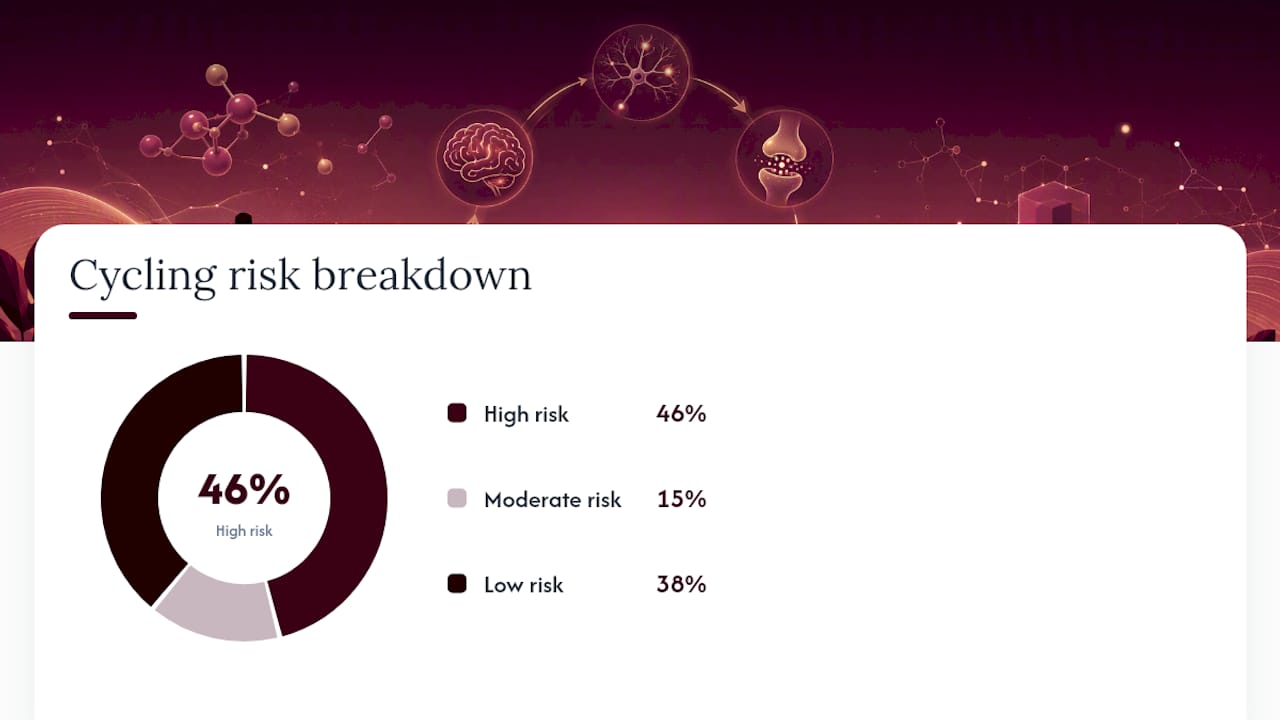
High-risk compounds work through receptor downregulation or depletion, and they show tolerance fastest.
- Caffeine and other stimulants act on adenosine receptors; tolerance can appear within days, and a weekend or full week off restores much of the original effect.
- Nicotine hits nicotinic acetylcholine receptors hard and builds dependence quickly, with withdrawal symptoms that go beyond simple loss of effect.
- Phenibut is a GABA-B agonist that carries real dependence risk with regular use; this one needs careful tapering, not casual cycling.
- Huperzine A inhibits acetylcholinesterase, and repeated use can desensitize the system it’s targeting, which is why most guides suggest limiting it to a few days a week.
- Prescription stimulants (used off-label as nootropics) carry significant dopaminergic tolerance risk and should be managed under medical supervision, not through a DIY cycling schedule.
- Kratom acts on opioid receptors and has a well-documented dependence profile that puts it closer to the withdrawal-risk category than a standard nootropic.
Moderate-risk compounds sit in a gray zone. Racetams and noopept work through glutamate and acetylcholine pathways that can show diminishing returns with continuous high-dose use, though the tolerance curve is slower and less predictable than caffeine’s. Modafinil raises separate concerns: it’s a wakefulness-promoting agent with dopamine reuptake effects, and while it’s not classically tolerance-forming the way caffeine is, repeated off-label use without medical guidance carries its own risk profile that deserves caution.
Low-risk, daily-friendly compounds generally work through metabolic support or broad modulatory action rather than blunt receptor stimulation, which is why the research consensus tends to favor consistent daily dosing over cycling for this group.
| Compound | Mechanism | Cycling need |
|---|---|---|
| Caffeine | Adenosine receptor blockade | Cycle (weekend or weekly reset) |
| Phenibut | GABA-B agonism | Cycle with taper, dependence risk |
| Huperzine A | Acetylcholinesterase inhibition | Cycle (limit frequency) |
| Nicotine | Nicotinic receptor agonism | Cycle with taper, dependence risk |
| Modafinil | Dopamine reuptake, wakefulness | Use cautiously, avoid daily reliance |
| Racetams/Noopept | Glutamate/acetylcholine modulation | Consider periodic cycling |
| L-theanine | GABA/glutamate modulation | Daily |
| Lion’s Mane | Nerve growth factor support | Daily |
| NMN | NAD+ precursor, metabolic | Daily |
| CoQ10 | Mitochondrial cofactor | Daily |
| Bacopa monnieri | Cholinergic modulation, antioxidant | Daily |
| Creatine | Cellular energy substrate | Daily |
Botanicals like Lion’s Mane, reishi, and Bacopa lean heavily on flavonoid and terpene compounds, and these tend to act through antioxidant and multi-target modulatory pathways rather than the kind of direct receptor blockade that produces classic tolerance. Terpene-rich botanicals show a similar pattern: broad, multi-pathway activity instead of a single receptor getting hammered into submission.
One interaction worth flagging: stacking multiple acetylcholinesterase inhibitors (Huperzine A alongside certain racetams, for example) can compound cholinergic side effects rather than simply adding benefits. Similarly, layering several dopaminergic compounds increases depletion risk faster than any single one would alone. Mechanism overlap, not ingredient count, is what actually raises risk.
Cycling Schedules You Can Actually Follow
Once you know which compounds need a break, the next question is how long and how often. Three templates cover most real-world stacks.
- Template A: the 5:2 weekend reset. Take your stimulant or mild receptor-acting compound five days a week, skip it Saturday and Sunday. This is the standard approach for daily caffeine users, and it works because adenosine receptor sensitivity partially rebounds within just a couple of days off. If two days isn’t restoring the effect you’re used to, that’s your signal to move to a longer reset.
- Template B: the short full reset (7 to 14 days). This is for compounds where a weekend doesn’t cut it, or for moderate adaptors like frequent racetam users. A full week to two weeks off allows more complete receptor and enzyme normalization, particularly for people who metabolize slowly or have been running a compound daily for months.
- Template C: long-course cycling (8 weeks on, 2 weeks off). This suits racetams and some glutamate modulators used at higher, sustained doses. The longer on-cycle reflects the slower tolerance curve of these compounds, but the 2-week break still matters, because continuous use without any reset eventually blunts the subjective effect even on a slow-building compound.
Pro Tip: Stagger your cycles instead of stacking them. If your caffeine reset falls on the same weekend as a racetam taper, you’ll have a rough couple of days and no clear read on which compound caused what. Offset them by at least a week.
The trick with staggering is keeping your foundation compounds, NMN, Lion’s Mane, CoQ10, running underneath the whole schedule without interruption. Those aren’t part of the tolerance conversation, so they don’t need to pause just because your stimulant is on a break. A compound-by-compound approach to nootropic tolerance generally backs this split: cycle the tolerance-formers, keep the metabolic supports constant.
Building Your Own Cycling Plan Step by Step
Most people never write their stack down, which is exactly why they can’t tell which ingredient is causing a plateau. Fix that first.
- Inventory everything you take, including dose and frequency. Write it down, not just in your head. If you’re taking caffeine, a racetam, and Lion’s Mane, you have three different tolerance profiles running at once.
- Assign each ingredient a category: high-risk (needs regular cycling), moderate-risk (periodic reset), or low-risk (daily is fine). Use the mechanism, not the marketing copy, to decide.
- Pick a schedule template for each high or moderate-risk item. Caffeine gets the 5:2 weekend reset. A racetam might get an 8-week-on, 2-week-off long cycle.
- Stagger the breaks so you’re not resetting three compounds in the same week and losing your baseline read on all of them simultaneously.
- Decide what happens during the off period. Does a dependence-prone compound need a taper instead of a cold stop? Do you need an alternative low-stimulant support to bridge the gap?
- Document your baseline before the break starts, and reassess with the same measure once it ends.
A few practical notes make this workflow hold up over months instead of just one cycle:
- Keep foundation compounds like NMN and CoQ10 out of the cycling schedule entirely; their benefit is cumulative, not tolerance-limited.
- Change one ingredient’s schedule at a time when you’re troubleshooting a plateau, or you won’t know what fixed it.
- Revisit your categories every few months, since a compound you’ve used heavily for a year may have shifted from moderate to high-risk for you personally.
If you want a broader primer on how to structure a stack before you get to the cycling stage, CP-1’s guide to safe nootropic use walks through dosing logic in more detail.
Managing the Off Period Without Losing the Benefit
A reset only works if the days off are actually restorative, and this is where most people undercut their own results.
For dependence-prone compounds like phenibut or nicotine, stopping cold can trigger real withdrawal: anxiety, insomnia, rebound cravings, and in phenibut’s case, symptoms serious enough to warrant medical supervision during a taper. A gradual dose reduction over one to two weeks is safer than an abrupt stop for anything in that category, and the same caution applies whether the compound is a supplement or a prescription stimulant you’ve been using off-label.
Lifestyle matters more during a reset than most people assume. Poor sleep or a stripped-down diet during your off days blunts the very recovery you’re trying to trigger, since receptor resensitization and enzyme normalization both depend on the same recovery processes that sleep and nutrition support generally. Treat your break like an active recovery period, not a passive waiting game.
Watch for these warning signs that call for medical attention rather than a DIY approach:
- Heart palpitations, chest pain, or severe anxiety after stopping a stimulant
- Seizure activity or hallucinations during a phenibut or benzodiazepine-adjacent taper
- Persistent insomnia or mood disruption lasting more than two weeks after stopping any dependence-prone compound
One specific caution: combining Huperzine A with prescription medications that also affect acetylcholinesterase, including certain Alzheimer’s drugs, can compound cholinergic side effects. Anyone on cholinergic medication should talk to a doctor before adding Huperzine A to a stack, cycled or not.
How to Track Your Cycle and Know When It’s Working
A cycle without measurement is just a guess with extra steps. The fix is a simple daily log, not a spreadsheet full of biomarkers.
Rate focus, mood, and energy on a 1 to 10 scale each day for a full baseline week before you change anything. Once your cycle starts, keep logging through the on-days and off-days alike, and note anything else that shifted, sleep quality, stress, diet, so you’re not attributing a bad day to tolerance when it was actually a bad night’s sleep.

Change one variable at a time. If you’re testing whether a weekend reset restores caffeine’s effect, don’t also swap your multivitamin or start a new sleep supplement that same week. You’ll never know which change did what.
When you restart after a break, ask two objective questions: did the subjective effect actually return, and can you get there on a lower dose than before? If both answers are yes, the reset worked. If your rating barely moved or you need the same dose as before the break, that’s a signal to lengthen the reset, from a weekend to a full week, or to reconsider whether that compound belongs in your stack at all.
- Log ratings daily, not just on days you remember to.
- Track dose alongside effect, since a restored effect at a lower dose is the real win.
- Reassess your whole stack every few months, not just the compound currently plateauing.
Where CP-1 Stands on Daily Foundations vs. Stimulant Cycling
The frustration behind certain supplement approaches is that many products promise cognitive support mainly through stimulants rather than metabolic consistency. That’s not what NAD+ metabolism, mitochondrial function, or immune resilience actually need. Those systems respond to consistency, not cycling.
Formulas containing NMN, Lion’s Mane, reishi, turkey tail, and CoQ10 are typically designed for daily use rather than a break-and-reset schedule. NMN works as a precursor your cells convert into NAD+ over time, and clinical evidence generally favors steady daily dosing over cycling for these NAD+ boosting compounds. Stopping and starting doesn’t protect you from anything, because there’s no receptor to desensitize.
The same logic applies to Lion’s Mane and CoQ10. These work through nerve growth factor support and mitochondrial cofactor activity, mechanisms that build benefit cumulatively rather than triggering the kind of tolerance caffeine does. If you want the deeper reasoning behind daily dosing for compounds like these, CP-1’s explainer on nootropic mechanisms breaks it down further.
Some notable formulation aspects include:
- Such supplements are often manufactured under GMP-certified standards and may undergo third-party testing.
- These formulations are commonly vegan and non-GMO, without fillers or unnecessary sugar added.
- They are often formulated as chewable gummies designed for consistency to support daily dosing mechanisms.
A low-stimulant daily foundation supplement may serve as a beneficial base layer underneath stimulant cycling regimens.
A Practical Starter Plan Worth Trying
Here’s the honest read: most people overcomplicate cycling because they’re trying to apply one rule to every ingredient in their stack. Don’t. Keep your foundation compounds running every day and reserve your cycling effort for the two or three ingredients actually built on receptor mechanisms.
Start simple. Weekend off for caffeine. If that doesn’t restore the effect after two or three tries, move to a two-week full reset. Stagger any racetam cycle so it doesn’t overlap with your caffeine break. Pick one metric, focus or energy, rate it daily, and set a calendar reminder for your reset dates so you’re not relying on memory. Don’t change your diet, sleep schedule, or add a new supplement during a test window; you’ll muddy your own data.
Your tolerance curve isn’t identical to anyone else’s. Genetics, age, and how long you’ve run a compound all shift the timeline, so treat every schedule here as a starting point to adjust, not a fixed rule.
— Hugo
A Daily Foundation That Doesn’t Ask You to Cycle It
Most of what you just read boils down to one theme: cycle the compounds that fight your biology, and leave the ones that support it running every day. That’s exactly the gap CP-1 was built to fill. Instead of another stimulant you’ll need a break-and-reset calendar for, CP-1’s NAD+ Advanced Supplement combines NMN, Lion’s Mane, reishi, turkey tail, and CoQ10 into a daily gummy designed for consistent cellular energy and mental clarity, not a caffeine-style spike and crash.
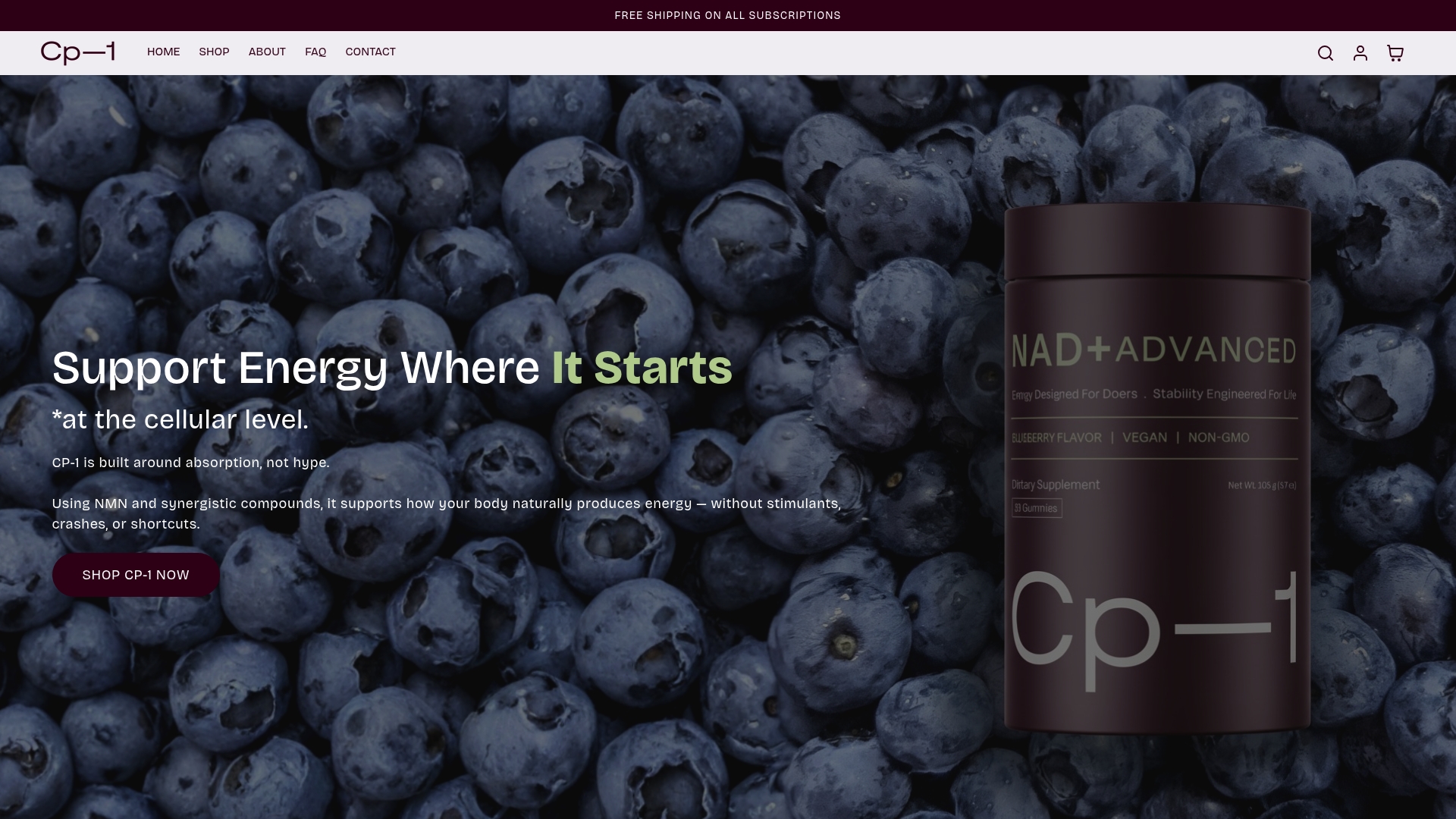
Every batch is made in the US under GMP-certified standards, third-party tested, and formulated without fillers or unnecessary sugar, so you’re not trading one questionable ingredient list for another. If your current stack is heavy on stimulants and light on real metabolic support, this is the layer worth adding underneath it. Check the product details and subscription options on the CP-1 collection page and see whether a daily foundation fits where your cycling schedule leaves a gap.
Sources
The claims in this guide draw on a mix of clinical literature and consumer health explainers, each covering a different piece of the tolerance puzzle.
- PubMed record on caffeine tolerance and adenosine receptors
- Healthline: Caffeine tolerance
- Innerbody: Best nootropics (2026)
This article is general information, not a substitute for advice from a qualified doctor. Consult a qualified healthcare professional about your own circumstances before acting on anything here.
FAQ
What Are the Top 5 Nootropics People Ask About?
The most commonly discussed nootropics span very different tolerance profiles: caffeine, L-theanine, Lion’s Mane, Bacopa monnieri, and NMN. Caffeine needs cycling due to adenosine receptor tolerance, while L-theanine, Lion’s Mane, Bacopa, and NMN are generally used daily since they work through metabolic or modulatory pathways rather than blunt receptor stimulation.
What Is the Downside of Nootropics?
The main downside is tolerance and, for certain compounds like phenibut, nicotine, or kratom, real dependence risk with regular use. Poorly matched stacking, especially combining multiple acetylcholinesterase inhibitors or dopaminergic agents, can also compound side effects rather than benefits.
Do I Need to Cycle L-Theanine?
No. L-theanine works through GABA and glutamate modulation rather than the kind of receptor downregulation that drives classic tolerance, so most guidance supports daily use without a break. It’s also commonly paired with caffeine specifically because it smooths the stimulant’s effect rather than competing with it for the same receptor pathway.
What Nootropic Is Commonly Associated With Podcast Discussions on Energy and Focus?
Stimulant-based nootropics and prescription-adjacent compounds get frequent mention in podcast and media discussions about focus, but name recognition and media buzz aren’t a substitute for mechanism-based guidance on tolerance and safety. What matters for your own stack is the mechanism a compound uses, not whether it’s trending in a headline.
Should I Cycle NMN or CoQ10?
No. Both work through metabolic and mitochondrial support pathways rather than receptor stimulation, so cycling interrupts a cumulative benefit without protecting against any real tolerance risk. Daily dosing is the approach CP-1’s NAD+ Advanced Supplement is built around for exactly this reason.