
For most people, continuous daily NMN beats cycling. Every clinical trial that produced measurable results used uninterrupted daily dosing. Your body’s NAD+ demand doesn’t take weekends off, so neither should your supplementation, unless you’re testing personal response, in which case a short, low-disruption break (like one day off per week) is the only version of cycling worth trying.
TL;DR:
- Continuous daily NMN use is supported by clinical trials showing steady NAD+ increases and modest functional benefits, with no serious adverse events reported.
- Doses between 250 mg and 900 mg daily produce dose-dependent NAD+ elevation, with higher doses correlating with better performance improvements and tolerability.
- Off-cycle patterns like one or two days off per week cause only minor NAD+ dips, but longer or repeated breaks can undo some of the gains achieved with daily supplementation.
- The body’s NAD+ decline mechanisms are ongoing, making matching supplementation to natural circadian rhythms and continuous dosing more biologically appropriate.
- Cycling NMN lacks research evidence and risks reducing benefits; the preferred approach remains daily dosing combined with progress tracking through subjective or objective markers.
Table of Contents
- What Human Trials Actually Used and Found
- Why Continuous Dosing Makes Mechanistic Sense
- Real-World Cycling Patterns and Their Trade-Offs
- How to Decide Whether to Cycle NMN
- Safety, Side Effects, and Who Should Be Cautious
- What Happens When You Stop and Restart NMN
- How CP-1’s Approach Lines Up With the Evidence
- The Honest Trade-Off Between Cycling and Consistency
- Get a Daily NMN Option Built for Consistency, Not Guesswork
- Sources
What Human Trials Actually Used and Found
No clinical trial has tested cycling NMN against continuous use. That’s not a gap in my knowledge. It’s a gap in the research itself, and it matters because every positive human result we have comes from people who took NMN every single day without breaks.
The strongest data point comes from a 12-week randomized, double-blind, placebo-controlled trial giving older men 250 mg of NMN daily. Whole-blood NAD+ rose significantly, and researchers also saw nominal improvements in gait speed and left-hand grip strength. Nobody in that trial skipped days to “reset” their receptors. They just took it, day after day, for three months.
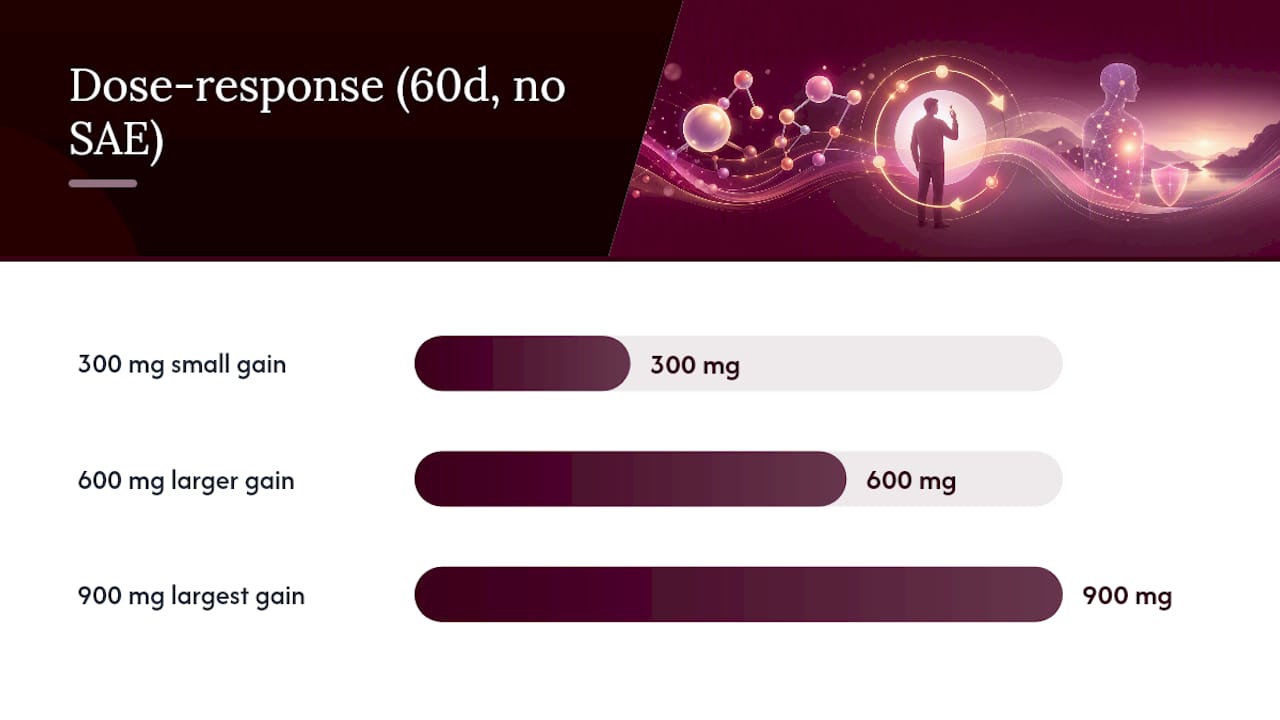
A separate dose-finding study pushed further, testing 300, 600, and 900 milligrams daily over 60 days. The Springer 2022 trial found a clear dose-response relationship: blood NAD+ climbed higher at higher doses, and six-minute walk distance improved along with it. Tolerability held up even at 900 mg, the highest dose tested in a controlled human trial to date.
Statistic callout: Across the dose-finding trial’s three arms, NAD+ concentrations rose in a dose-dependent pattern from 300 mg up through 900 mg daily, with functional walk-distance gains tracking the increase, and no serious adverse events reported at any dose over the 60-day period.
A broader 2024 review in Frontiers in Pharmacology pulled together the wider trial landscape and confirmed the pattern: most human studies run continuous daily dosing for three to twelve weeks. The review also flagged something honest researchers should say out loud: human effects tend to be more modest than what animal models predicted. Mice on NMN show dramatic metabolic shifts. Humans show real but smaller gains in blood NAD+ and modest functional improvements.
Here’s what the trial evidence actually supports:
- NAD+ levels rise measurably with daily NMN across multiple dose ranges (250 mg to 900 mg).
- Functional improvements, gait speed, grip strength, six-minute walk distance, show up but stay modest in size.
- No trial has reported serious adverse events at doses studied.
- Every trial producing these results used continuous, not cycled, dosing.
- Study durations cluster between 6 and 12 weeks, with one dose-finding trial running 60 days.
The limitations deserve equal airtime. Sample sizes in these trials run small, often a few dozen participants per arm. Durations top out around 12 weeks, so nobody has data on what happens at 6 or 12 months. Endpoints vary from study to study, making it hard to compare across trials directly. And the gap between animal and human results reminds us that NMN’s mechanism, while promising, hasn’t delivered the dramatic effects in people that it does in lab rodents.
Why Continuous Dosing Makes Mechanistic Sense
NAD+ decline doesn’t pause, so your intervention shouldn’t either. Aging reduces NAD+ availability through ongoing mechanisms, declining NAMPT activity, rising CD38 consumption, and increased cellular stress that burns through NAD+ faster than younger cells replace it. That decline runs continuously, every day, whether you’re supplementing or not. A five-day-on, two-day-off schedule doesn’t match a biological process that never takes a break.
There’s also a circadian angle worth understanding. NAD+ levels naturally rise and fall across a 24-hour cycle, peaking in the morning hours and dipping overnight. A single daily dose timed to that rhythm works with your biology. Stretching doses across multi-day cycles doesn’t align with anything your body does naturally. It’s an artificial pattern imposed on a system that runs on a 24-hour clock, not a weekly one.
The theoretical case for cycling usually leans on receptor downregulation, the idea that constant stimulation might desensitize NAMPT or CD38 pathways over time, the same logic bodybuilders apply to stimulants or hormones. It’s a fair question to ask. But no human trial has shown this happening with NMN. The enzymes involved in NAD+ synthesis and salvage don’t behave like adrenergic receptors flooded with a stimulant. NMN feeds a metabolic pathway rather than triggering a hormonal cascade, and nothing in the published data suggests your body adapts to it the way it adapts to caffeine or amphetamines.
What the mechanism actually tells us:
- NAD+ decline from aging is continuous, not episodic, so supplementation timed to match makes more physiological sense.
- Circadian NAD+ rhythms favor a single morning dose over multi-day on-off patterns.
- Adaptation concerns (NAMPT/CD38 desensitization) remain theoretical and unproven in human trials.
Real-World Cycling Patterns and Their Trade-Offs
People cycle NMN for reasons that have nothing to do with evidence: cost savings, a belief borrowed from other supplement categories, or a hunch that “more isn’t always better.” Here’s what actually happens to your NAD+ levels under each common pattern.
- Continuous daily dosing. This is what every positive trial used. NAD+ stays elevated at a steady state, and you get the closest match to the functional improvements documented in clinical research.
- Six days on, one day off. A minor dip in NAD+ during the off day, but the weekly average stays close to continuous dosing. This is the lowest-disruption compromise if you want a mental “reset” day without meaningfully losing ground.
- Five-on, two-off (weekday pattern). NAD+ starts drifting down by the second consecutive off day. Users following this pattern often report a lag before benefits feel “back” after resuming, since NAD+ doesn’t snap back instantly.
- Block cycling (8 to 12 weeks on, 2 to 4 weeks off). This produces the largest swings. NAD+ climbs over the on-block, then declines over the off-block toward baseline. If you’re chasing sustained energy or cognitive benefits, this pattern works against you for a full month or more at a stretch.
NAD+ decline during off-periods happens on a week-scale, not a day-scale, so a single skipped dose won’t undo three months of progress. But stack enough off-days together, and you’re asking your body to rebuild the elevation you just paid for. That’s the real cost of cycling: not danger, but wasted progress toward whatever benefit you were chasing in the first place.
How to Decide Whether to Cycle NMN
Start with three honest questions: What’s your actual goal? What’s your budget? And do you have any way to measure whether it’s working beyond how you feel that morning?
If your goal is long-term cellular support, energy production, cognitive clarity, general healthy aging, continuous dosing is the straightforward answer, because that’s what every trial showing benefit actually tested. If your goal is closer to short-term experimentation, curiosity about whether NMN is “doing anything” for you personally, a brief, deliberate break can serve as your own informal test.
Budget matters more than people admit. If cost is genuinely forcing the question, a lower daily dose taken continuously will likely serve you better than a higher dose taken in cycles. The dose-response data suggests NAD+ response tends to plateau somewhere near 600 mg daily for many adults, meaning you don’t necessarily need to chase 900 mg to see benefit.
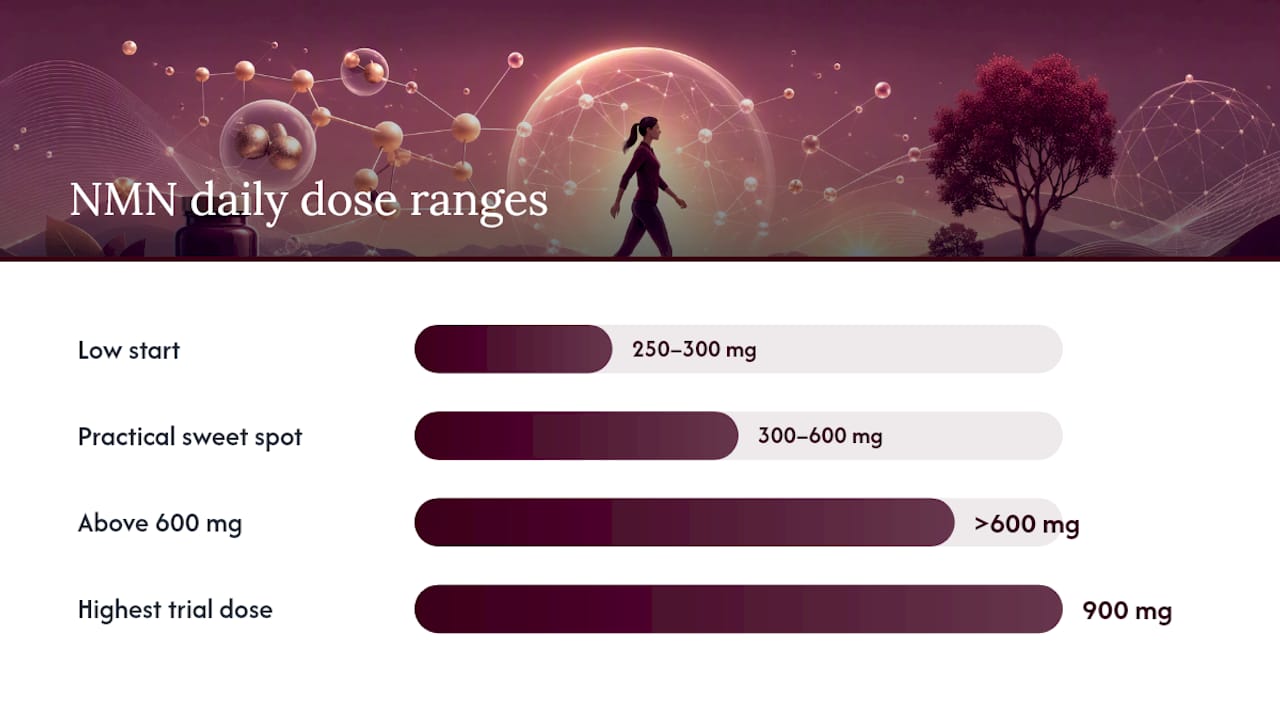
Here’s a practical dosing framework based on what trials actually used:
- 250 to 300 mg daily sits at the low end of the studied range and is a reasonable starting point.
- 300 to 600 mg daily is the practical sweet spot for most healthy adults, backed by dose-finding data.
- Above 600 mg, consider splitting the dose (morning and early afternoon) rather than taking it all at once, since higher single doses haven’t shown proportionally greater benefit.
- 900 mg is the highest dose tested in a controlled trial and shouldn’t be treated as a default target.
If you decide to cycle anyway, keep it minimal. A 6-on/1-off pattern does the least damage to steady-state NAD+. If you want to run a genuine block cycle, commit to at least 8 to 12 weeks on before evaluating, then reassess rather than guessing.
Pro Tip: If you want to know whether NMN is actually doing anything for you, don’t guess. Track two or three subjective markers, morning energy, afternoon mental clarity, workout recovery, on a simple 1 to 10 scale for two weeks before you change anything. That baseline makes any later comparison, cycled or not, actually mean something.
For readers who want objective data instead of relying on how they feel, an intracellular NAD+ panel or a homocysteine check (more on that below) gives you a number to track instead of a hunch.
Safety, Side Effects, and Who Should Be Cautious
NMN’s safety profile in human trials is genuinely reassuring, up to a point. Doses as high as 900 mg per day over 60 days were well tolerated with no serious adverse events reported. The mild effects that do show up, occasional GI upset, mild stimulation if taken too late in the day, are minor and dose-related rather than dangerous.
Statistic callout: Safety data up to 900 mg/day over 60 days and up to 250 mg/day over 12 weeks show good tolerability; the primary gap is long-term (>12 months) human safety data.
A few groups need extra care, and the caution applies whether you’re cycling or dosing continuously:
- Methylation load. NMN supplementation increases demand on your body’s methylation pathways. Some users report headaches that respond well to betaine (TMG) or B-vitamin support, and checking homocysteine levels periodically can flag whether your methylation cycle is keeping up.
- Active cancer. There’s a theoretical concern that boosting NAD+ could feed rapidly dividing cells, but no human trial has shown this happening. Anyone with active malignancy should talk to their oncologist before starting NMN, regardless of dosing pattern.
- Pregnancy and lactation. No safety data exists for these populations. Avoid NMN entirely and consult a clinician if you’re pregnant or nursing.
- Long-term use beyond 12 weeks. Trial data simply doesn’t extend past this window yet, so treat extended continuous use as informed personal choice rather than a fully proven long-term protocol.
None of these cautions change based on whether you cycle. They’re about the ingredient, not the schedule.
What Happens When You Stop and Restart NMN
Nothing dramatic. NAD+ levels drift gradually back toward your pre-supplementation baseline over a period of weeks, not days. There’s no withdrawal effect, no rebound crash, and no need for anything resembling a post-cycle protocol you’d see with hormonal compounds. NMN doesn’t suppress your body’s own NAD+ production the way exogenous hormones suppress natural hormone synthesis.
If you’re stopping to genuinely test whether NMN is doing anything for you, give it real time. A four-week break is long enough for NAD+ to settle meaningfully lower, which means you’ll actually notice if something feels different, rather than catching a false negative after three days.
Restarting is simple:
- Resume at your previous target dose rather than easing back in gradually.
- Re-check your subjective markers (energy, clarity, recovery) at the 8 to 12 week mark, the same window trials used to detect measurable change.
- If you have access to objective testing, an intracellular NAD+ panel gives you a real before-and-after number instead of relying on memory of how you felt weeks ago.
How CP-1’s Approach Lines Up With the Evidence
Some NAD+ supplements are dosed more for marketing than practical use. The trial evidence above points toward continuous, transparent dosing, which informed the product design.
A supplement combines NMN with lion’s mane, reishi, and turkey tail mushroom extracts plus CoQ10, manufactured under GMP-certified standards, third-party tested, vegan, and non-GMO. The goal is straightforward: give people a daily NAD+ support option they can trust without needing a chemistry degree to verify what’s actually in the gummy.
If you want deeper reading on how NMN stacks up against other NAD+ approaches, our NMN versus NAD comparison and our trial data on postmenopausal women cover ground this article didn’t have room for.
The Honest Trade-Off Between Cycling and Consistency
Cycling NMN isn’t dangerous, and I won’t pretend otherwise. But it’s a personal preference dressed up as a protocol, not an evidence-backed improvement over daily use. Every trial showing real NAD+ gains and functional benefit used continuous dosing, full stop. If you’re doing it for budget reasons or curiosity, a minimal 6-on/1-off pattern won’t cost you much. If you’re doing it because you assume your body needs a break, that assumption doesn’t hold up against what the mechanism actually tells us. My honest recommendation: default to continuous daily dosing, track how you feel, and treat any cycling experiment as personal data collection, not optimization.
— Hugo
Get a Daily NMN Option Built for Consistency, Not Guesswork
If continuous dosing is what the evidence supports, your supplement needs to be something you’d actually want to take every single day, not just tolerate. That’s the whole reason CP-1 exists. Too many NMN products on the market bury their actual dosing in proprietary blends or skip third-party testing entirely, which makes consistent daily use a leap of faith instead of an informed choice.
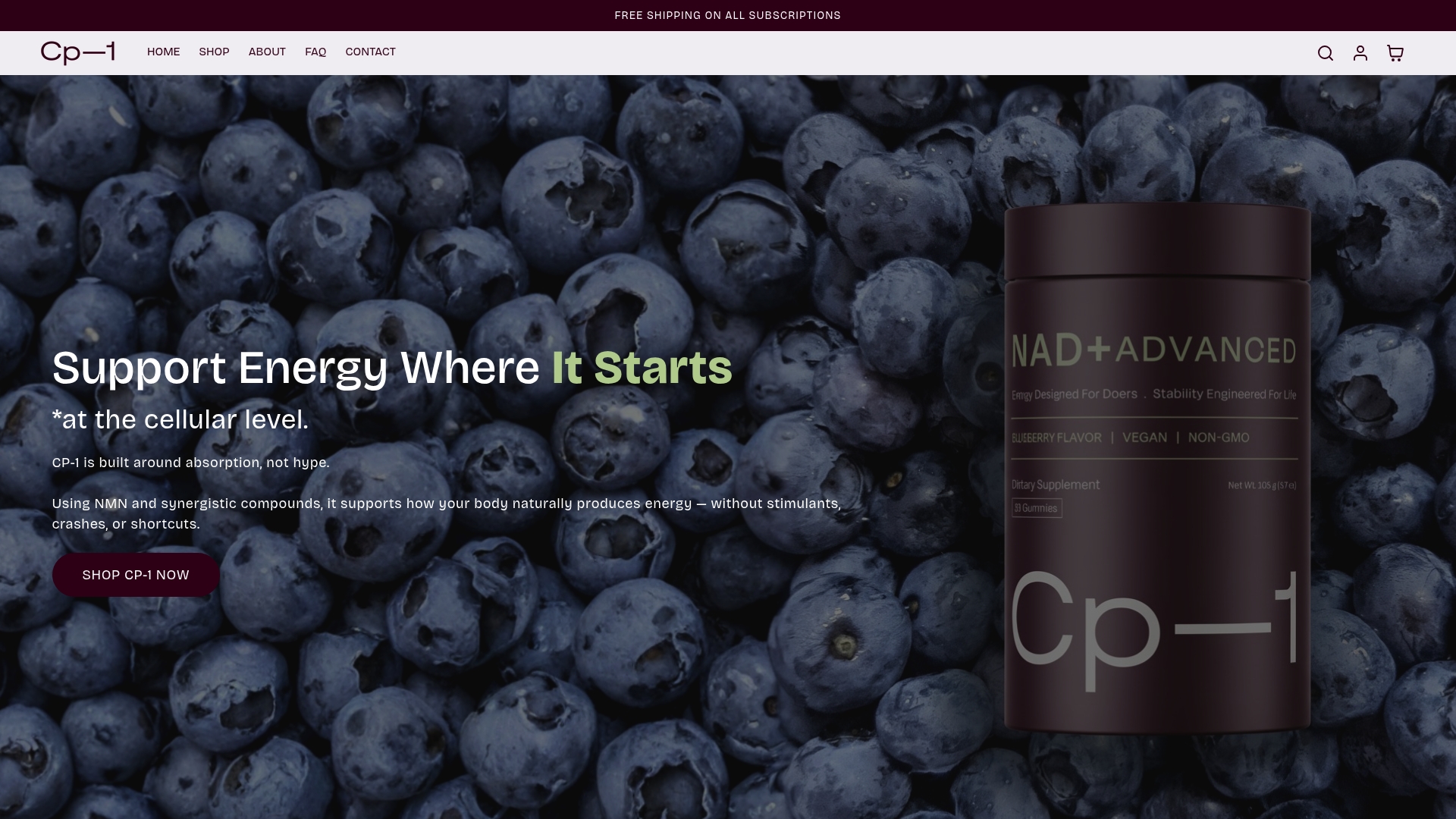
An NAD+ advanced supplement pairs NMN with lion’s mane, reishi, and turkey tail mushroom extracts and CoQ10 in a chewable gummy, manufactured under quality and ethical standards. If daily consistency is the strategy the research actually supports, and it is, then the product you choose should make that easy to stick with rather than something you’re tempted to cycle out of frustration. Visit the CP-1 product page to check current formulation details and start a one-time or subscription order.
Sources
The clinical picture on NMN cycling rests on a small but consistent body of trial data, none of which tested cycling directly:
- The Safety and Antiaging Effects of Nicotinamide Mononucleotide in Human Clinical Trials: an Update (PMC review)
- Dose-dependent NMN supplementation increases blood NAD and improves performance (Springer, 2022)
Readers interested in NAD+ support delivered through clinical infusion settings rather than oral supplementation can also review Ozari Health’s NAD+ therapy overview for a comparison of delivery methods.
This article is general information, not a substitute for advice from a qualified doctor. Consult a qualified healthcare professional about your own circumstances before acting on anything here.