

Focus Checklist for Productivity: Your 2026 Guide
A focus checklist for productivity is a structured set of daily tasks designed to protect your attention, reduce decision fatigue, and move you through high-impact work without burning out. Research shows the most effective checklists contain 8–12 items and take 45–60 minutes to complete. That range is not arbitrary. Fewer items leave your day unstructured; more items create stress before you even start. The core framework combines a morning preparation routine, dedicated focus blocks of 60–90 minutes, scheduled breaks, and a formal shutdown sequence. Each element targets a different cause of lost concentration, and together they form a system that actually holds.
1. What makes a focus checklist for productivity work?
The best productivity improvement checklists share one quality: they are built around your brain’s natural limits, not your ambitions. Most professionals load their lists with 20 tasks and wonder why nothing gets done. Limiting daily tasks to 3–5 high-impact items reduces stress and improves completion rates. That is the real insight. A long list is not a plan. It is a source of anxiety.
An effective checklist balances structure and simplicity. It tells you what to do, when to do it, and when to stop. The key components are:
- Morning preparation (10–20 minutes): consistent wake time, hydration, no phone for the first 30 minutes
- Priority identification: name your single most important task before opening email
- Focus blocks: 60–90 minutes of single-task work with all notifications off
- Scheduled breaks: at least one 10-minute break per hour of focused work
- Distraction controls: phone out of reach, browser blockers active
- Shutdown routine: log unfinished tasks and name tomorrow’s first priority
Pro Tip: Write your checklist the night before. Deciding what to do in the morning burns mental energy you need for actual work.
2. How to structure your day with focus blocks and breaks

Focus blocks of 60–90 minutes are the engine of a productive day. During a focus block, you work on one task only. No email, no Slack, no “quick checks.” Multitasking during these blocks does not save time. It fragments attention and forces your brain to reload context every time you switch, which costs more time than it saves.
Here is a practical daily structure that works for busy professionals and students:
- Morning setup (10–20 minutes): Review your checklist, confirm your top priority, and clear your workspace.
- First focus block (60–90 minutes): Tackle your most demanding task while your cognitive energy is highest.
- Break (10 minutes): Step away from your screen. Walk, stretch, or sit quietly.
- Second focus block (60–90 minutes): Move to your next priority task.
- Midday break (20–30 minutes): Eat away from your desk. This is not optional.
- Third focus block (45–60 minutes): Handle communication, lighter tasks, or creative work.
- Shutdown routine (10–15 minutes): Log loose ends, plan tomorrow’s first task, and close all work apps.
The shutdown routine matters more than most people realize. Unfinished tasks linger mentally through a phenomenon called the Zeigarnik effect. Writing them down signals to your brain that they are handled, which frees up mental bandwidth for rest and recovery.
Pro Tip: Set a hard alarm for your shutdown time. Without it, “just five more minutes” becomes two more hours and a worse next morning.
3. What strategies minimize distractions during focused work?
Willpower alone does not protect focus. Proactive environmental control outperforms self-discipline every time. The goal is to make distraction harder than the work itself.
Practical distraction control methods include:
- Remove your phone from the room. Placing it face-down on the same desk still pulls attention. Out of sight is the only standard that works.
- Use app-level blockers. Tools like Freedom and Cold Turkey add friction to distracting sites during focus blocks. Friction works because it interrupts the automatic behavior before it starts.
- Keep a holding list. When a random thought or task surfaces mid-block, write it down and return to it later. This prevents interruptions without losing the idea.
- Control your physical environment. Close your door, use noise-canceling headphones, or signal to others that you are unavailable.
Focus is a learned skill, not a fixed trait. Visualization and physical relaxation techniques help direct attention deliberately and make entry into flow states repeatable. The brain can be trained to concentrate, but only when the environment stops fighting against it.
Timeboxing and time blocking are two distinct strategies worth understanding. Time blocking groups similar tasks into calendar slots. Timeboxing assigns a fixed time limit to a single task. Timeboxing is sharper for protecting focus because it creates urgency and a clear endpoint. Use time blocking for planning your week and timeboxing for executing individual focus blocks.
4. How to build a morning routine that supports daily focus
A morning routine is the foundation of any checklist for better focus. The research is clear: start with 4–6 high-leverage habits and build from there. Adding too many items at once creates checklist overload, which defeats the purpose.
The table below shows a practical morning sequence with timing:
| Habit | Duration | Purpose |
|---|---|---|
| Consistent wake time | 0 minutes | Anchors your circadian rhythm |
| Hydration (16 oz water) | 2 minutes | Reverses overnight dehydration |
| No phone for 30 minutes | 30 minutes | Protects attention before demands arrive |
| Light physical movement | 10 minutes | Activates body and sharpens alertness |
| Review checklist and set top priority | 5 minutes | Directs focus before the day fragments it |
| Brief mindfulness or breathing exercise | 5 minutes | Reduces cortisol and prepares for deep work |
Physical activation before planning is not a wellness trend. It raises heart rate, increases blood flow to the prefrontal cortex, and measurably improves decision-making. Even a 10-minute walk counts. The step-by-step focus improvement approach pairs physical priming with clear priority-setting for exactly this reason.
Weekend routines deserve attention too. You do not need to replicate a full workday structure on Saturday, but keeping your wake time within one hour of your weekday schedule prevents the “social jet lag” that makes Monday mornings brutal.
Pro Tip: Identify your single most important task the night before. Writing it on a sticky note and placing it on your keyboard means you see it before anything else does.
5. How cognitive support fits into a focus and productivity system
Focus is not purely behavioral. The brain runs on cellular energy, and when that energy dips, concentration goes with it. Cognitive fatigue is a real physiological state, not just tiredness. It shows up as slower processing, poor recall, and the inability to stay on task even when the environment is perfect.
Older professionals face an additional challenge. Cognitive processing slows with age, making distraction shielding increasingly critical. The behavioral strategies in this checklist address the environmental side. The biological side requires equal attention.
Cp-1 is built around ingredients that support cellular energy production and mental clarity, including NMN (Nicotinamide Mononucleotide), lion’s mane mushroom extract, and coenzyme Q10. NMN supports NAD+ production, which powers mitochondrial function. Lion’s mane supports nerve growth factor, which is linked to cognitive performance. These are not stimulants. They work at the cellular level, which means the energy they support is sustained rather than spiked. A mindfulness checklist addresses the mental habits side; Cp-1 addresses the biological foundation underneath those habits.
Key takeaways
A focus checklist for productivity works because it removes the daily decisions that drain attention before real work begins.
| Point | Details |
|---|---|
| Limit your daily task list | Restrict tasks to 3–5 high-impact items to reduce stress and improve completion. |
| Use 60–90 minute focus blocks | Single-task work during timed blocks protects attention and prevents context-switching loss. |
| Take a 10-minute break per hour | Regular breaks reduce cognitive fatigue and sustain performance across the full day. |
| Build a shutdown routine | Logging unfinished tasks and naming tomorrow’s first priority clears mental load before rest. |
| Control your environment proactively | Remove phones, use blockers like Freedom or Cold Turkey, and keep a holding list for interruptions. |
What I have learned from actually using a focus checklist
The hardest part of building a focus system is not the checklist itself. It is resisting the urge to add more to it. I spent months treating my daily list like a brain dump, writing down everything I might possibly do. The result was a list that made me feel productive just by existing, while actual output stayed flat.
The shift that changed everything was cutting my daily list to three tasks. Not three categories. Three specific, completable tasks. The first week felt wrong. I kept thinking I was forgetting something. By week two, I was finishing my list by early afternoon and had mental space left for creative thinking, which had been missing for years.
Digital distraction was the other wall I kept hitting. Removing my phone from my desk felt dramatic the first time. Within three days, it was the single most effective thing I had done. The brain health research on distraction confirms what I experienced: willpower is not the right tool. Environment design is.
The shutdown routine took the longest to stick. It felt like extra work at the end of a long day. But the mornings after I completed it were noticeably cleaner. I knew exactly what to do first, and I did not spend 20 minutes reconstructing where I had left off. That clarity is worth the 15 minutes every time.
My honest advice: start with the morning sequence and the shutdown routine. Get those two anchors solid before adding anything else. The focus blocks will fall into place naturally once you have a clear start and a clean end.
— Hugo
What Cp-1 offers for focus and cognitive performance
Behavioral systems get you far. Biological support takes you further.
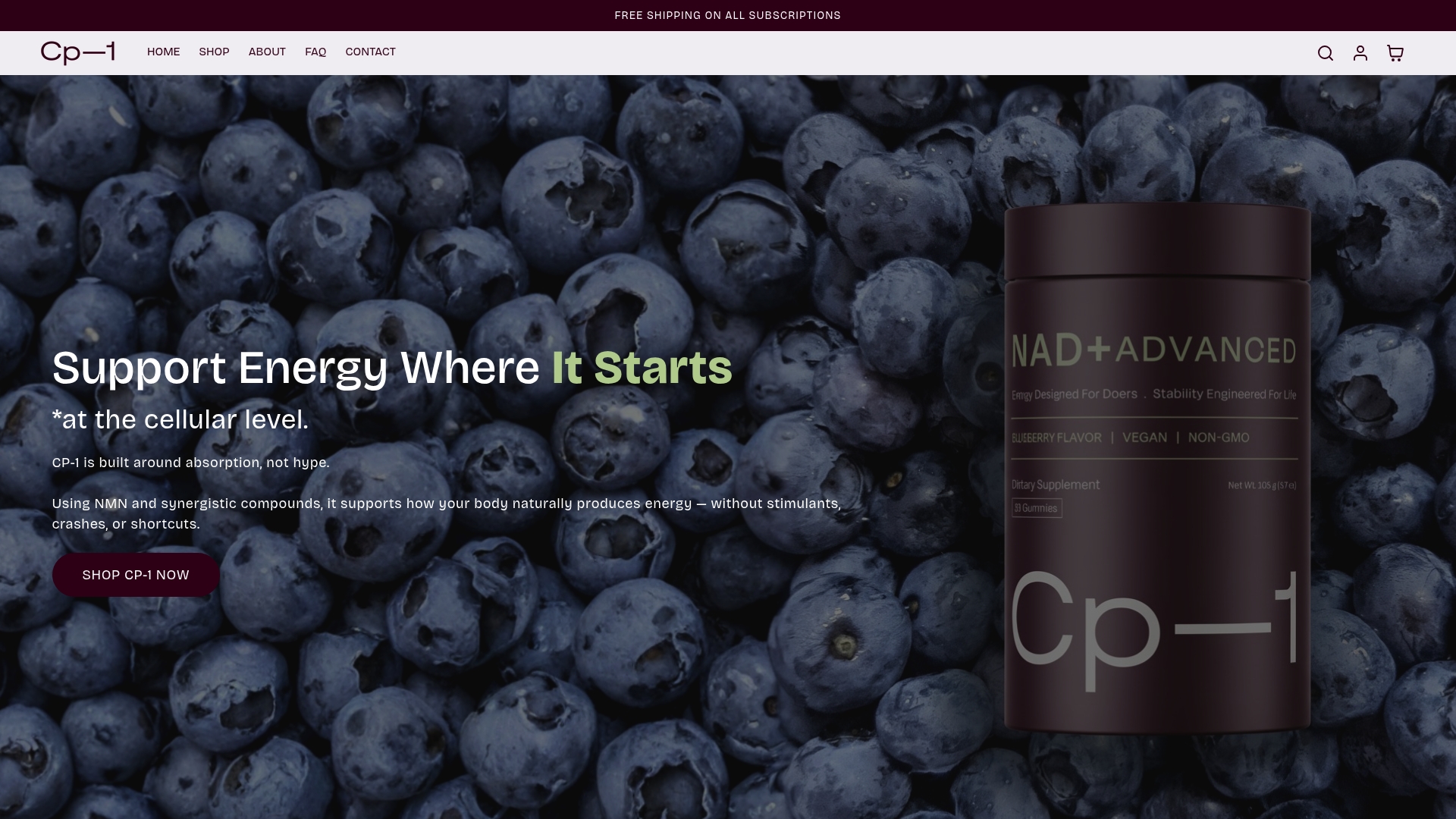
Cp-1 is a daily supplement built for people who take their cognitive performance seriously. It combines NMN, lion’s mane mushroom extract, reishi mushroom extract, turkey tail mushroom extract, and coenzyme Q10 to support NAD+ production, mitochondrial energy, and mental clarity without stimulants. Every batch is third-party tested, vegan, non-GMO, and manufactured in the US. If your focus checklist is the system, Cp-1 is the cellular energy support that keeps the system running. Pair your daily routine with a supplement that works at the level where focus actually starts.
FAQ
How many items should a focus checklist have?
Research supports 8–12 items for a morning focus checklist, taking 45–60 minutes total. Fewer items lack structure; more items create stress before the day begins.
How long should a focus block last?
Focus blocks work best at 60–90 minutes with strict single-tasking. Shorter blocks do not allow deep work to develop; longer blocks increase cognitive fatigue without a break.
How often should I take breaks during focused work?
Take at least one 10-minute break per hour of focused work. Regular breaks reduce cognitive fatigue and sustain performance across the full workday.
What is the difference between timeboxing and time blocking?
Time blocking groups similar tasks into calendar slots; timeboxing assigns a fixed time limit to a single task. Timeboxing is more effective for protecting individual focus sessions because it creates urgency and a defined endpoint.
Why does a shutdown routine improve next-day focus?
Unfinished tasks linger mentally through the Zeigarnik effect, disrupting rest and morning clarity. Logging loose ends and naming tomorrow’s first task signals to your brain that the work is handled, freeing mental bandwidth for recovery.